Why Is Donor Hair Limited for Transplants?

A hair transplant does not create new hair. It redistributes the hairs you already have, which is why is donor hair limited is one of the most important questions to answer before planning FUE. Your donor area is a valuable, finite resource. A skilled transplant plan protects it while using each available graft where it will make the most visible, natural-looking difference.
For many people considering a transplant, the concern is simple: “If I have thinning on top, why can’t every thin area be fully restored?” The answer involves biology, scalp anatomy, the progression of hair loss, and aesthetic judgment. A realistic plan is not about extracting the maximum possible number of grafts in one session. It is about creating coverage that still looks balanced years from now.
Why Is Donor Hair Limited?
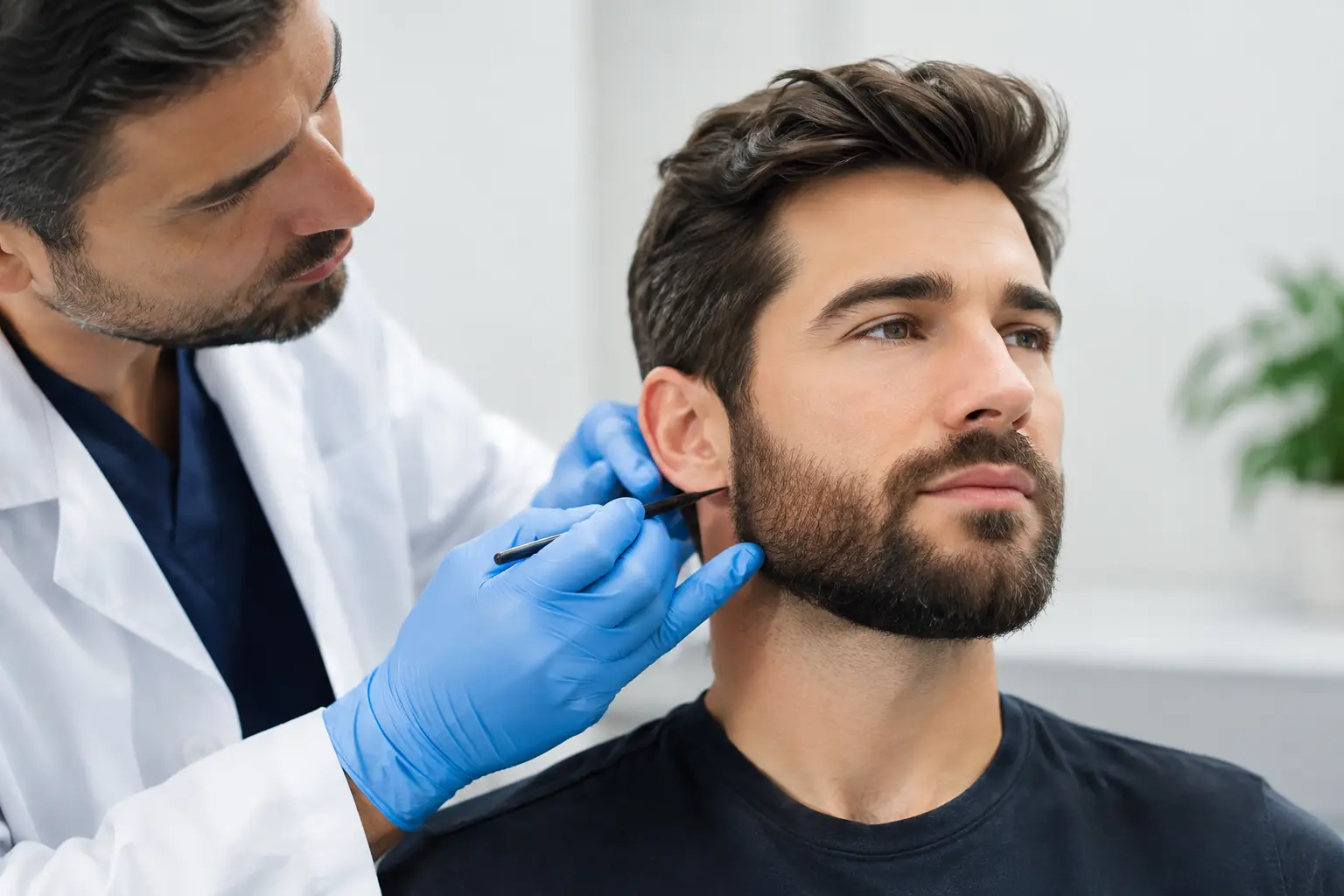
The donor area is usually the band of hair around the back and sides of the scalp. In most people with androgenetic hair loss, follicles in this region are more resistant to the hormone-related process that causes thinning on the hairline, temples, crown, and top of the scalp. When those follicles are transplanted, they generally retain much of that resistance.
However, “resistant” does not mean unlimited. Each follicular unit contains one to four hairs, and every graft removed leaves behind a small gap. During FUE, those tiny extraction sites heal discreetly when harvesting is carefully spaced, but taking too many grafts can reduce the appearance of density in the donor area. Overharvesting may create a moth-eaten or see-through look, especially with a short haircut.
The goal is to leave enough hair behind that the donor zone continues to look natural. That requires careful measurement of donor density, hair caliber, scalp contrast, curl pattern, and the size of the area that needs restoration. Someone with thick, wavy hair and low contrast between their hair and scalp may achieve excellent visual coverage with fewer grafts than someone with fine, straight hair and a high-contrast scalp.
Your safe donor supply is personal
There is no reliable one-size-fits-all graft number. A patient may hear that a friend received 2,500 grafts and assume the same number will work for them. But two people with the same degree of visible thinning can have very different donor capacity.
A thorough evaluation considers how many follicular units are present per square centimeter, how evenly they are distributed, whether there are signs of diffuse thinning in the donor zone, and how much hair should remain untouched for the future. Hair shaft diameter matters, too. Coarser hairs provide more coverage per graft, while finer hairs may require a different approach to create the same cosmetic effect.
This is why a scalp analysis and physician-led consultation are more useful than a quote based on photos alone. The quality of the donor hair is just as consequential as the quantity.
Hair Loss Can Continue After a Transplant
A transplant can restore areas affected by hair loss, but it does not stop the native, non-transplanted hair around it from continuing to thin. This is one of the biggest reasons donor grafts must be used thoughtfully.
Consider a patient in their thirties with a receding hairline and early crown thinning. Placing every available graft into a low, dense hairline may look appealing immediately. If the patient loses more hair behind that new hairline over the next decade, they may be left with an isolated strip of transplanted hair and too few donor grafts available to rebuild the surrounding area.
A responsible plan accounts for likely future loss. That may mean designing a mature, age-appropriate hairline rather than an aggressive teenage hairline, prioritizing the frontal area where hair has the strongest effect on facial framing, or preserving grafts for a later procedure. It can also mean recommending medical or regenerative treatments to help maintain vulnerable native hair.
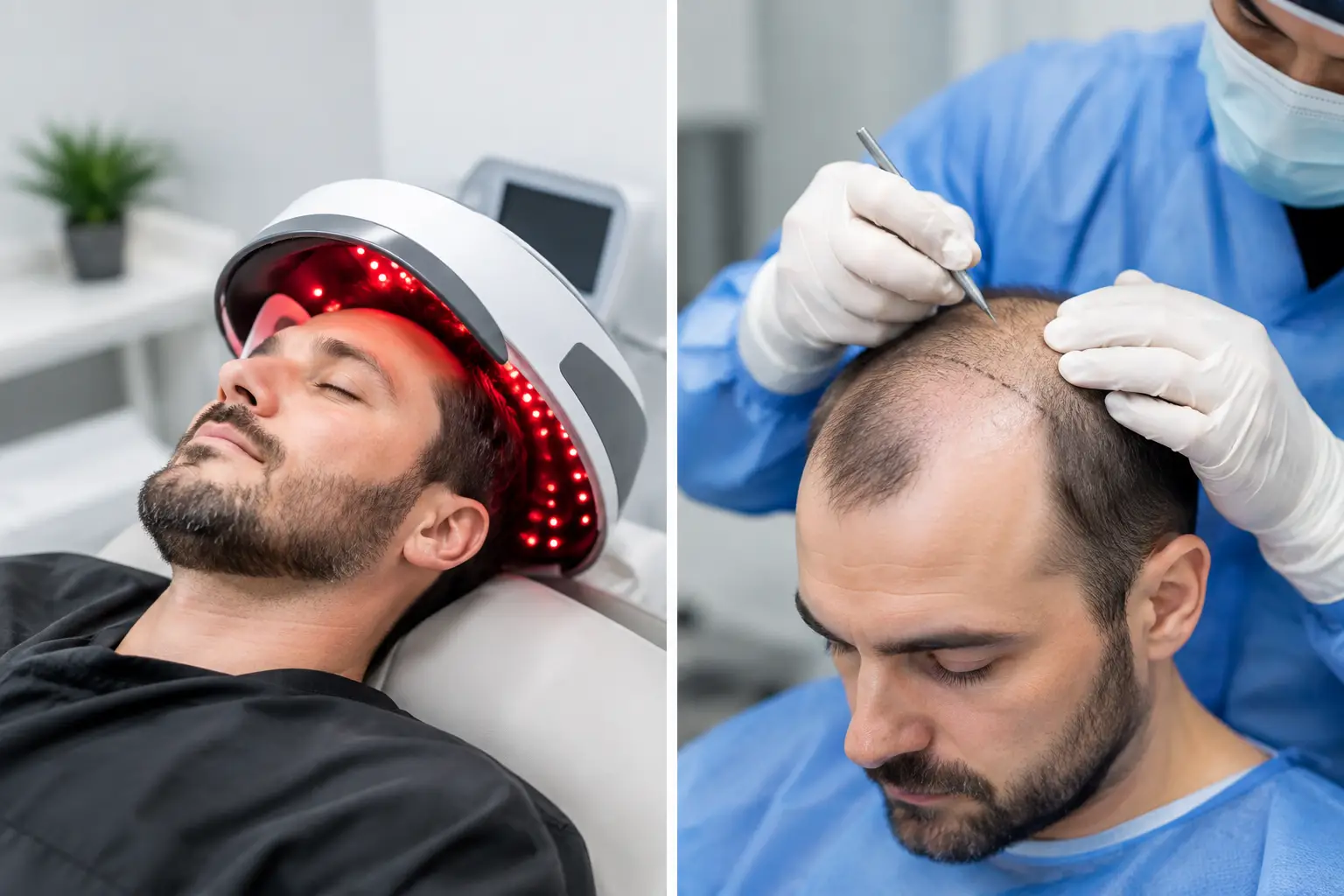
Medications, low-level laser therapy, and regenerative hair loss injections may be appropriate options depending on your diagnosis, medical history, and goals. These treatments do not replace a transplant when significant coverage is needed, but they can support existing hair and help protect the overall result.
Density Is Different From Coverage
A full head of natural hair has far more density than a surgeon can safely recreate with transplantation alone. Hair transplantation succeeds because the eye does not measure every follicle. It responds to framing, direction, texture, contrast, and the illusion of fullness.
That is why the front and hairline often receive priority. Even a moderate increase in density can make a meaningful difference in how a person looks in the mirror, on video calls, and in photographs. The crown, by contrast, can consume a large number of grafts because it is a broad area and the natural swirl pattern exposes the scalp from several angles.
There are trade-offs. A patient with limited donor supply may need to choose between stronger frontal density and broader but lighter coverage across the crown. Neither choice is automatically right. The best decision depends on your hair loss pattern, hairstyle, age, family history, and what matters most to your confidence.
Facial donor hair has limits, too
In select cases, beard hair may supplement scalp donor hair, particularly for adding coverage behind the hairline or in the crown. Beard hair can be coarser and can contribute useful visual density. It is not always suitable for the hairline, where softer, finer scalp hairs generally create the most natural transition.
Body hair may be considered in a narrower range of situations, but its growth cycle, texture, and predictability differ from scalp hair. These sources should be viewed as possible supplements, not a limitless backup supply. A precise plan respects how each type of hair will look after transplantation.
How FUE Protects the Donor Area
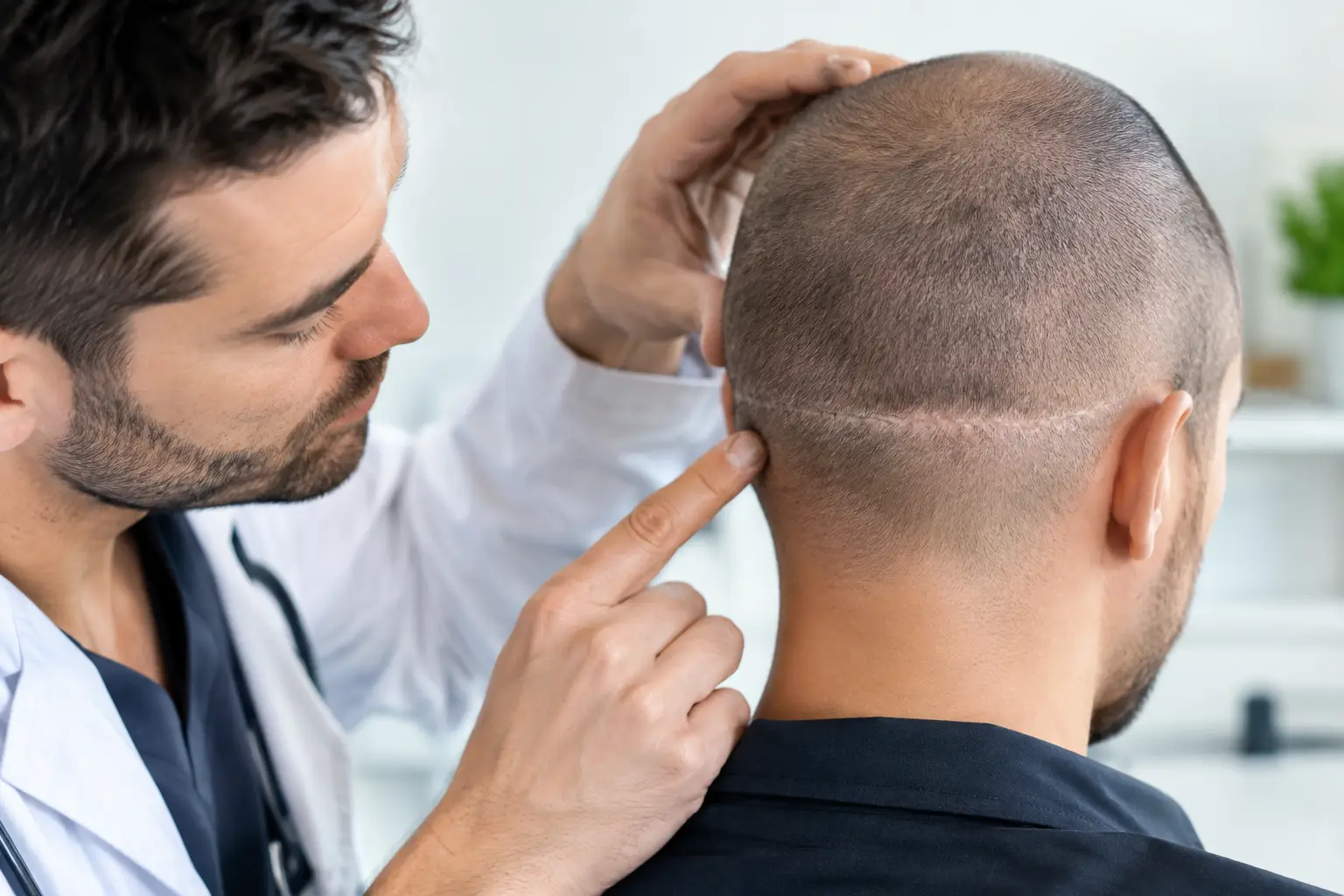
Follicular Unit Extraction removes individual follicular units rather than taking a strip of scalp. This gives patients flexibility in how they wear their hair and avoids a linear scar. It also allows the physician to distribute extractions across the donor zone rather than concentrating them in one place.
Still, FUE is not a license to harvest without limits. Advanced tools, including robotic-assisted FUE in appropriate candidates, can support consistency and efficiency during extraction. The technology does not replace clinical judgment. Graft selection, extraction spacing, hairline design, and recipient-site placement all require an experienced eye for long-term aesthetics.
At Austin Hair Clinic, treatment planning begins with understanding your donor capacity and your goals, not simply targeting the largest graft count. A plan may recommend one procedure, staged restoration, or a combination of transplant and non-surgical therapies. The right path is the one that protects both your appearance now and your options later.
Can You Increase Your Donor Supply?
You cannot create additional permanent scalp donor follicles. What you can do is make the most of the hair you have. Treating active thinning early may preserve native hair and reduce the number of grafts needed in the future. Maintaining a healthy scalp, following recommended treatment protocols, and avoiding poorly planned extraction procedures can also help protect your long-term options.
Be cautious about promises of “unlimited grafts” or guaranteed maximum density. A high graft number is not automatically a better result. If it compromises the donor area, creates an unnatural hairline, or fails to plan for ongoing loss, the short-term gain can become a long-term frustration.
The most reassuring answer to donor limitation is not that it can be ignored. It is that it can be managed with honest evaluation, strategic design, and a plan built around the way you want to look and live. A careful consultation can show you what your donor hair can realistically achieve – and how to use it wisely for confidence that lasts.