Laser Therapy vs Hair Transplant: Which Works?
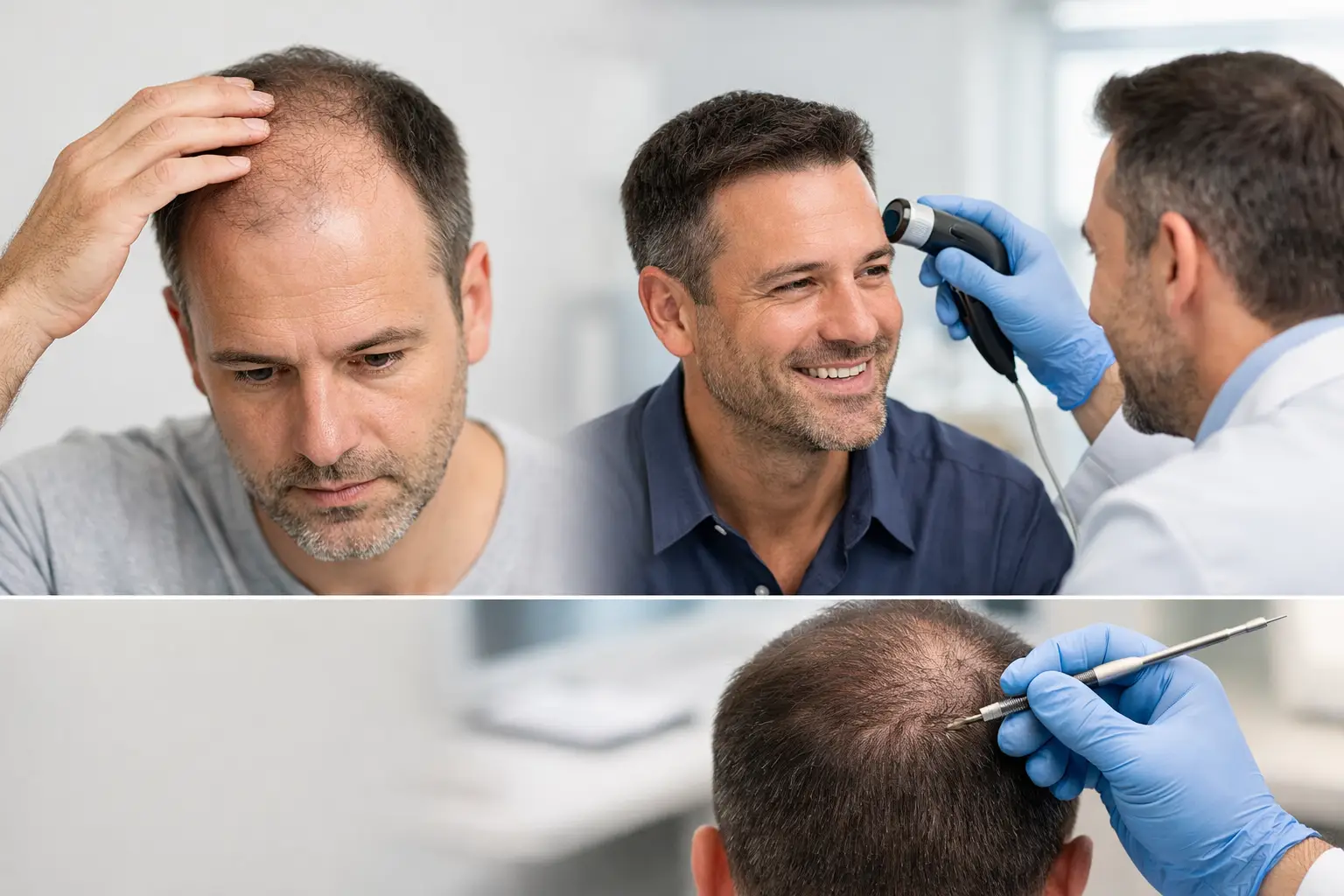
A widening part, more scalp showing under office lighting, or a hairline that no longer frames your face the way it once did can make hair loss feel urgent. Yet the right answer is rarely the fastest-sounding one. In the laser therapy vs hair transplant conversation, the better choice depends on whether your follicles are still producing hair, how much density you have lost, and what kind of change you want to see.
Low-level laser therapy can support weakened, existing follicles. A hair transplant moves healthy follicles from a fuller donor area to places where hair is permanently thin or absent. Both can have a place in a personalized plan, but they solve different problems.
Laser Therapy vs Hair Transplant: The Core Difference
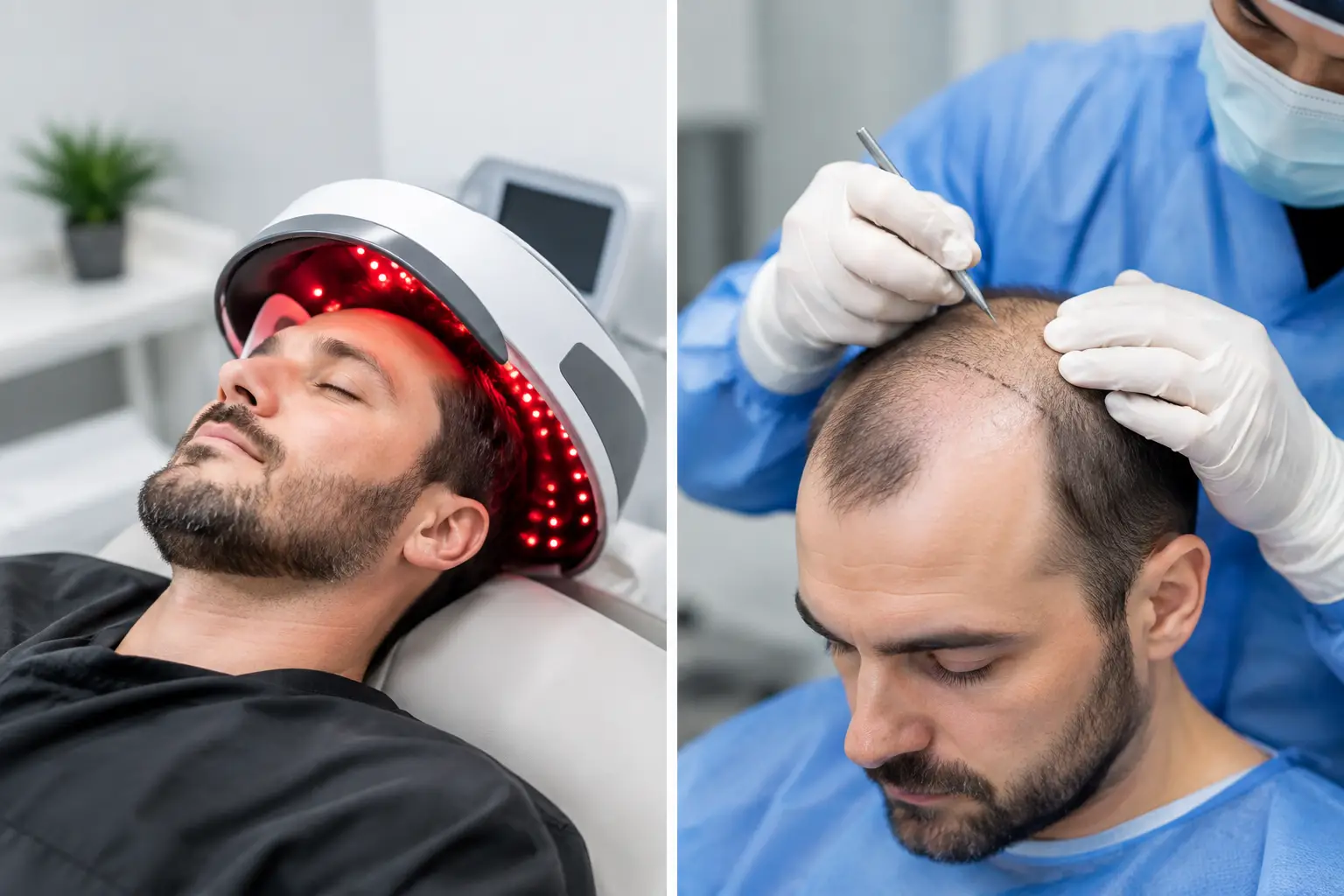
Low-level laser therapy, sometimes called LLLT or red-light therapy, uses specific wavelengths of light to stimulate cellular activity around the hair follicle. It is a non-surgical treatment delivered through devices such as laser caps, helmets, or in-office systems. The goal is not to create new follicles. Rather, it is to help struggling follicles function more effectively and potentially keep more hairs in the active growth phase.
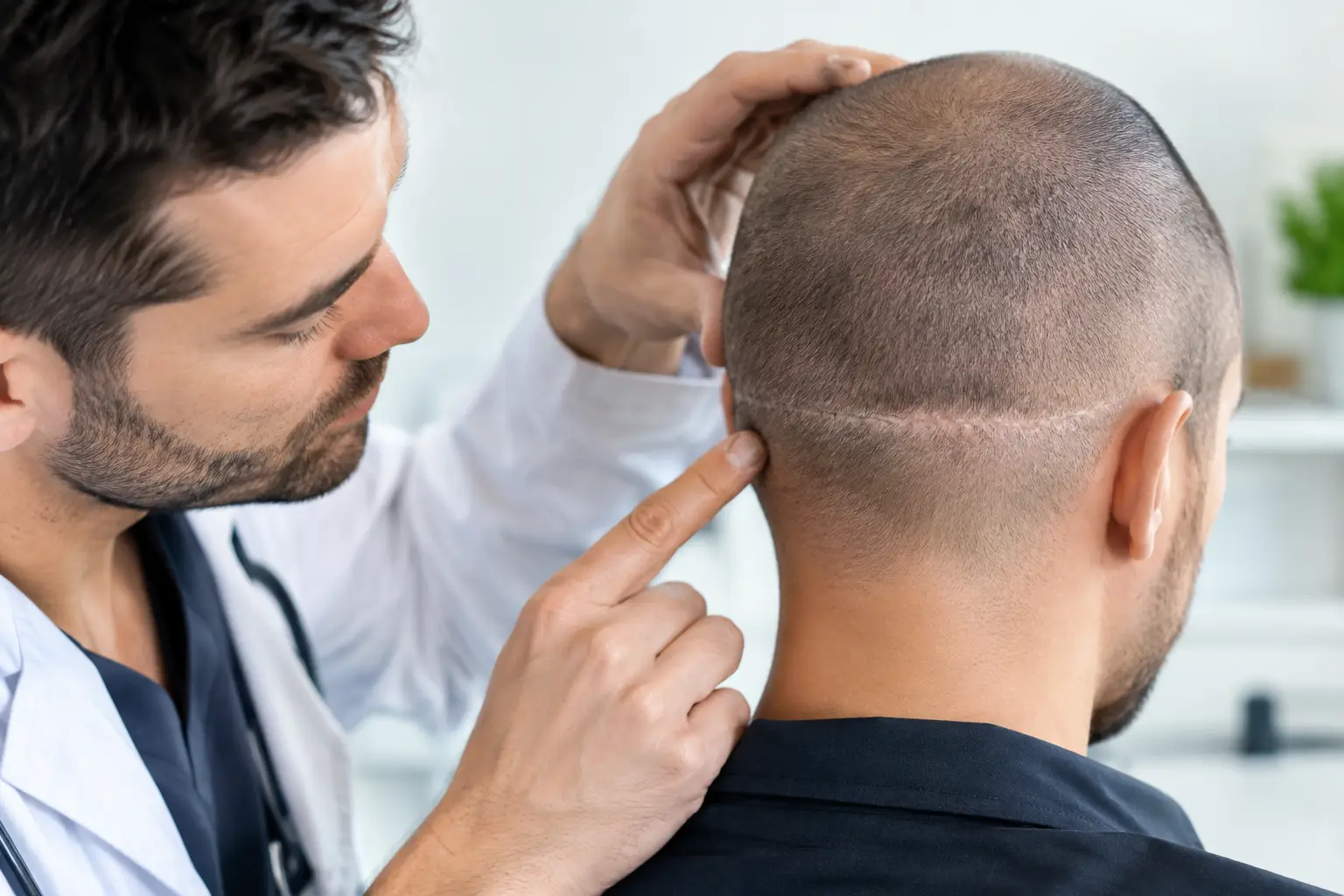
A follicular unit extraction, or FUE, hair transplant is a surgical procedure. Individual follicular units are carefully extracted from the donor area, typically the back and sides of the scalp, then placed into thinning areas with attention to hair angle, direction, and density. The transplanted follicles retain many of the characteristics of their donor location, which makes FUE a lasting option for appropriate candidates.
Put simply, laser therapy works with the hair you still have. A transplant redistributes healthy hair you already have. That distinction matters when deciding what outcome is realistic.
What Results Can You Expect?
Laser therapy is best viewed as a supportive, gradual treatment. Some patients notice reduced shedding, improved hair texture, or modest thickening over several months of consistent use. It tends to be most useful when thinning is early to moderate and follicles are still active. Results vary, and laser therapy cannot reliably restore a bare hairline, fill a long-standing bald crown, or replace follicles that are no longer viable.
Consistency is central to its value. Stopping treatment may allow genetically driven hair loss to continue, especially if the underlying cause is androgenetic alopecia. For that reason, laser therapy is often paired with physician-guided medication, nutritional support when appropriate, or regenerative hair loss injections.
A hair transplant can create a more visible structural change because it adds real follicular units to areas of loss. It can rebuild a receding hairline, increase coverage through the frontal scalp or crown, and restore facial hair in qualified patients seeking beard or eyebrow enhancement. The final result develops slowly, not overnight. Transplanted hairs commonly shed shortly after the procedure, then begin new growth in the months that follow. Meaningful improvement often appears around four to six months, with maturation continuing for 12 months or longer.
The quality of a transplant is not measured only by graft count. Natural-looking results depend on donor management, hairline design, graft placement, and a plan that respects how hair loss may progress over time.
Who Is a Better Candidate for Each Option?
Laser therapy may be a sensible first step for men and women who are noticing diffuse thinning, increased shedding, or early pattern hair loss. It can also appeal to patients who want a non-surgical option, have limited downtime, or are not ready for a procedure. It is not a substitute for a medical evaluation, however. Sudden shedding, patchy loss, scalp inflammation, hormonal changes, medication effects, and nutritional issues can require a different approach.
Hair transplant candidates generally need sufficient, stable donor hair and a clear understanding of what surgery can accomplish. A person in their twenties with rapidly progressing loss may benefit from stabilizing the pattern first rather than using too much donor hair too soon. Someone with very limited donor density may also need a conservative design or a non-surgical strategy.
Women can be candidates for hair transplantation as well, but the evaluation is particularly important. Diffuse thinning throughout the scalp can affect the donor area, changing whether surgery is advisable. A careful scalp analysis helps identify the pattern before recommending treatment.
Recovery, Commitment, and Day-to-Day Practicality
Laser therapy has little to no recovery time. The commitment is behavioral: using the device as directed, usually several times each week, and continuing long term if it is helping. It may be easy to start, but it asks for patience and consistency. Skipping sessions regularly makes it harder to assess whether the treatment is providing benefit.
FUE has a more defined recovery period. Most patients can return to many regular activities within days, though the scalp needs gentle care while the grafts settle. Temporary redness, scabbing, and swelling can occur. Exercise restrictions and post-procedure instructions are designed to protect the grafts during early healing.
The trade-off is straightforward. Laser therapy fits easily into a routine but may produce subtle improvement. A transplant requires a procedure and recovery, yet it can deliver a more substantial change in areas where hair is truly missing.
Cost: Think Beyond the Initial Price
Laser therapy usually has a lower upfront cost than surgical restoration, whether treatment is delivered in-office or through a medical-grade device. But it is an ongoing commitment. Over several years, device costs, complementary treatments, and maintenance can add up.
A hair transplant requires a larger initial investment because it involves surgical planning, physician oversight, graft extraction, and precise implantation. For patients with established hairline recession or visible scalp exposure, it may provide more meaningful value than spending years on treatments that cannot replace lost coverage.
Neither option should be chosen on price alone. The more useful question is whether the treatment can reasonably meet your goal. If your goal is to preserve early thinning, laser therapy may be a practical part of the answer. If your goal is to restore a defined hairline or fill an area that no longer grows hair, an FUE transplant may be more aligned with the result you want.
Why Combination Plans Often Make Sense
For many patients, this is not truly an either-or decision. A transplant can restore density where follicles have been lost, while laser therapy and other medical treatments may help preserve surrounding native hair. That combination can support a more balanced, long-term appearance.
For example, a patient with a receding hairline and early crown thinning may choose FUE to rebuild the frontal hairline while using non-surgical therapy to support the existing crown. Another patient may begin with laser therapy and medication, then reassess after several months before considering surgery. The sequence should be based on the pattern of loss, donor supply, medical history, and personal goals.
At Austin Hair Clinic, treatment planning begins with understanding the person behind the hair loss concern. A consultation can evaluate scalp health, donor availability, family history, and the changes you want to see in the mirror. That level of planning is especially valuable because a well-designed result should still look natural as you age.
Questions to Ask Before You Choose
Before committing to laser therapy or a transplant, ask what is causing your hair loss and whether it is still progressing. Ask how much improvement is realistic for your current level of thinning, how long results may take, and what maintenance will be needed. If surgery is being considered, ask how the donor area will be protected and how the hairline design accounts for future loss.
Be wary of promises that guarantee a full head of hair or immediate density. Ethical hair restoration is built on honest expectations. The best plan protects your donor hair, supports the hair you have, and prioritizes a result that looks like it belongs to you.
Hair loss can affect how you show up at work, in photos, and in everyday moments. A professional evaluation gives you a clearer path forward, whether that path starts with non-surgical support, a carefully planned transplant, or a combination designed to restore confidence on your terms.