Hairline Restoration Patient Example Explained
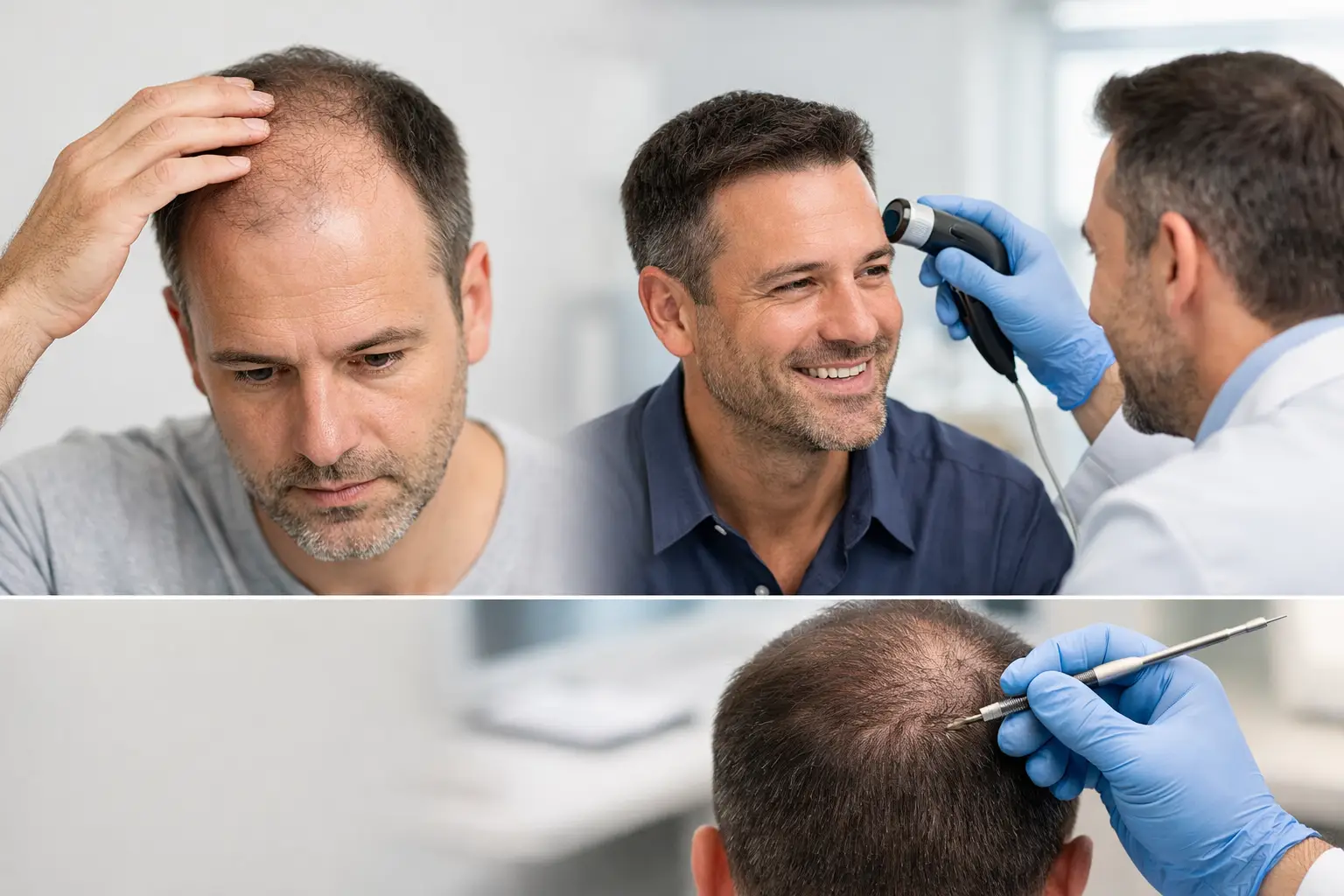
A receding hairline can change more than a photograph. It can affect how someone styles their hair, feels in meetings, or sees their reflection each morning. This hairline restoration patient example shows how a carefully planned FUE transplant can restore a more balanced frame to the face without creating an overly low or artificial-looking hairline.
The patient described below is a composite based on common concerns seen in consultation. Every person’s hair characteristics, donor supply, age, and pattern of future loss are different. A personal evaluation is the only way to determine whether a transplant is the right option and what a natural result may require.
Hairline Restoration Patient Example: Starting With the Right Plan
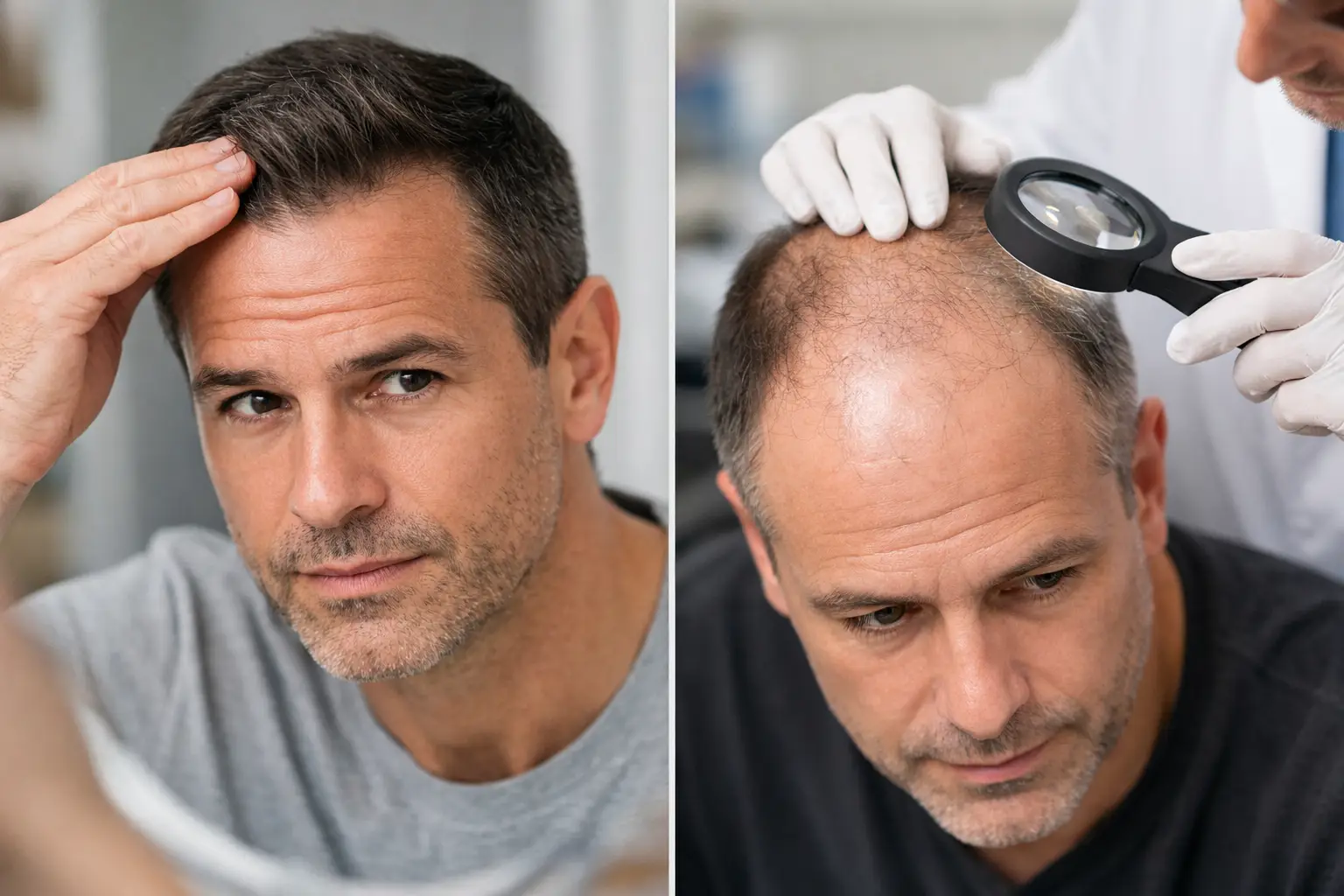
Consider a 38-year-old professional with gradual recession at both temples and thinning through the frontal hairline. He still has good density behind the receded area, but the corners have moved back enough that he has stopped wearing his hair short. His goal is not to recreate the hairline he had at 18. He wants to look rested, confident, and like himself.
During an evaluation, the first question is not simply, “How many grafts do I need?” A thoughtful hairline restoration plan starts with why the hairline changed, whether loss is continuing, and how the patient is likely to look over the coming years. A hairline that is placed too low can consume valuable donor grafts and may look unnatural if additional thinning occurs behind it.
For this patient, the physician evaluates scalp health, hair caliber, donor density, family history, current medications, and the progression of hair loss. The donor area, typically the back and sides of the scalp, needs to have enough healthy follicles to support a transplant while maintaining a natural appearance after extraction.
The recommended plan may include FUE hair transplantation to rebuild the frontal hairline and soften the temples, along with a discussion about medical therapy or regenerative treatments to help preserve existing hair. Transplantation moves permanent follicles, but it does not stop ongoing loss in untreated native hair.
Designing a Hairline That Fits the Face
Hairline design is where surgical precision and aesthetic judgment meet. A natural male hairline is rarely a straight line. It usually has subtle irregularity, softer transitions at the temples, and lower-density single hairs at the leading edge. Those details are what keep a restored hairline from looking plugged in or overly sharp.
In this example, the patient and physician review the proposed hairline in a mirror before the procedure. The design respects his facial proportions, age, and likely future hair loss. Rather than aggressively lowering the entire hairline, the plan fills the recessed corners and reinforces the frontal zone. This creates a meaningful visual change while protecting the patient’s long-term options.
The graft plan might call for approximately 1,600 to 2,200 follicular units, depending on donor characteristics and the degree of recession. A graft can contain one to several hairs. Single-hair grafts are typically selected for the very front of the hairline, while grafts with multiple hairs add density just behind it.
Hair texture also matters. Coarser or wavy hair can often provide stronger visual coverage with fewer grafts than very fine, straight hair. Patients with limited donor density may need a more conservative design, and that is not a compromise in quality. It is responsible planning for a result that continues to look believable over time.
Why FUE Is Often Chosen for Hairline Work
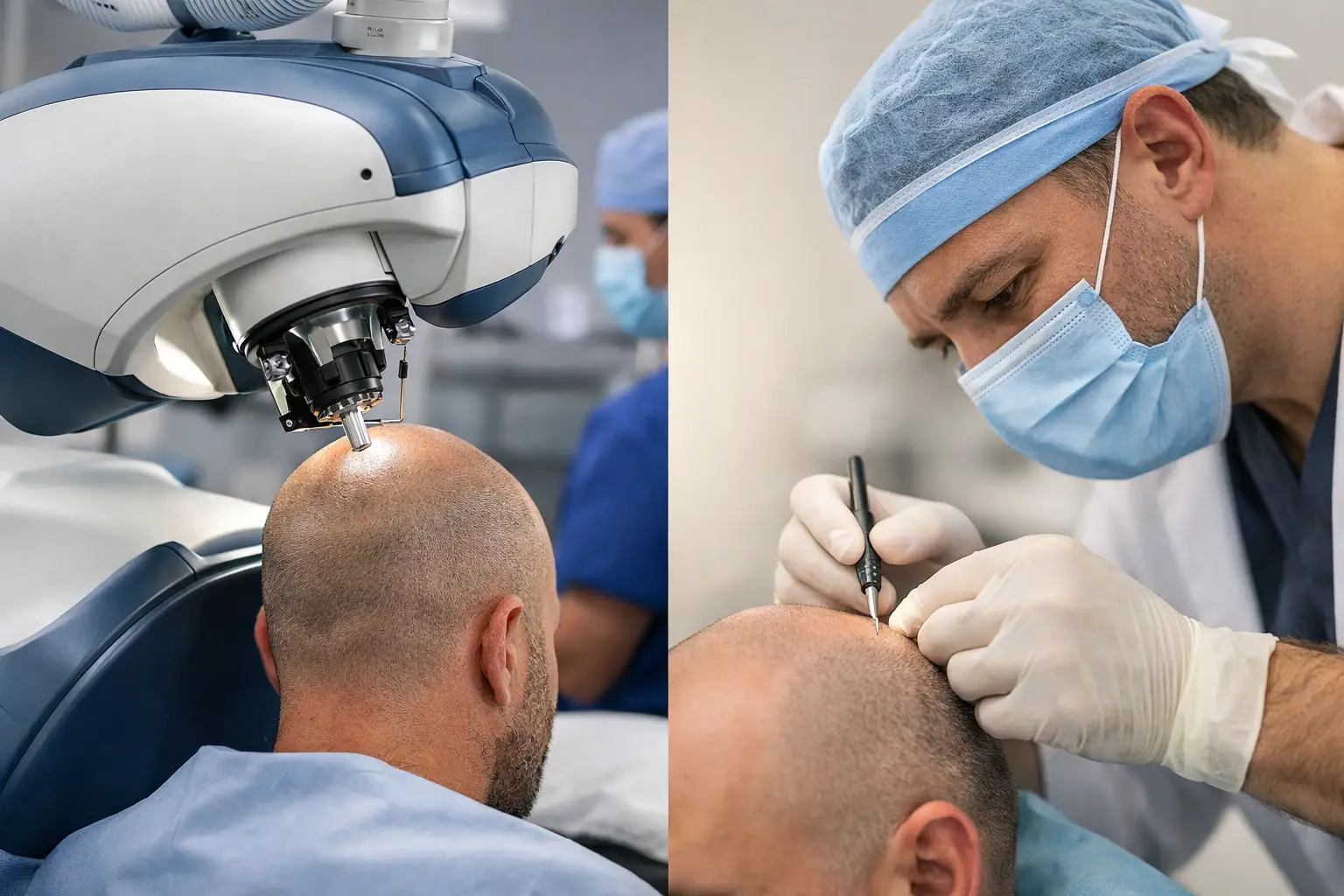
Follicular Unit Extraction, or FUE, removes individual follicular units from the donor area and places them into tiny recipient sites along the new hairline. Because follicles are extracted individually, FUE does not create a linear scar. Small extraction marks are generally difficult to notice once the hair has grown.
For a patient focused on the front of the scalp, FUE offers precise control over graft placement, angle, and direction. The artistry is especially important around the temple points and the first few rows of the hairline, where even small changes in direction can affect whether the result blends naturally with existing hair.
ARTAS robotic FUE may be appropriate for some candidates, particularly when donor harvesting precision and efficiency are priorities. However, candidacy depends on factors such as hair color contrast, curl pattern, donor characteristics, and the surgical plan. The best technique is the one that supports safe graft harvesting and the most natural aesthetic outcome, not simply the newest technology.
What the Procedure and Recovery Can Look Like
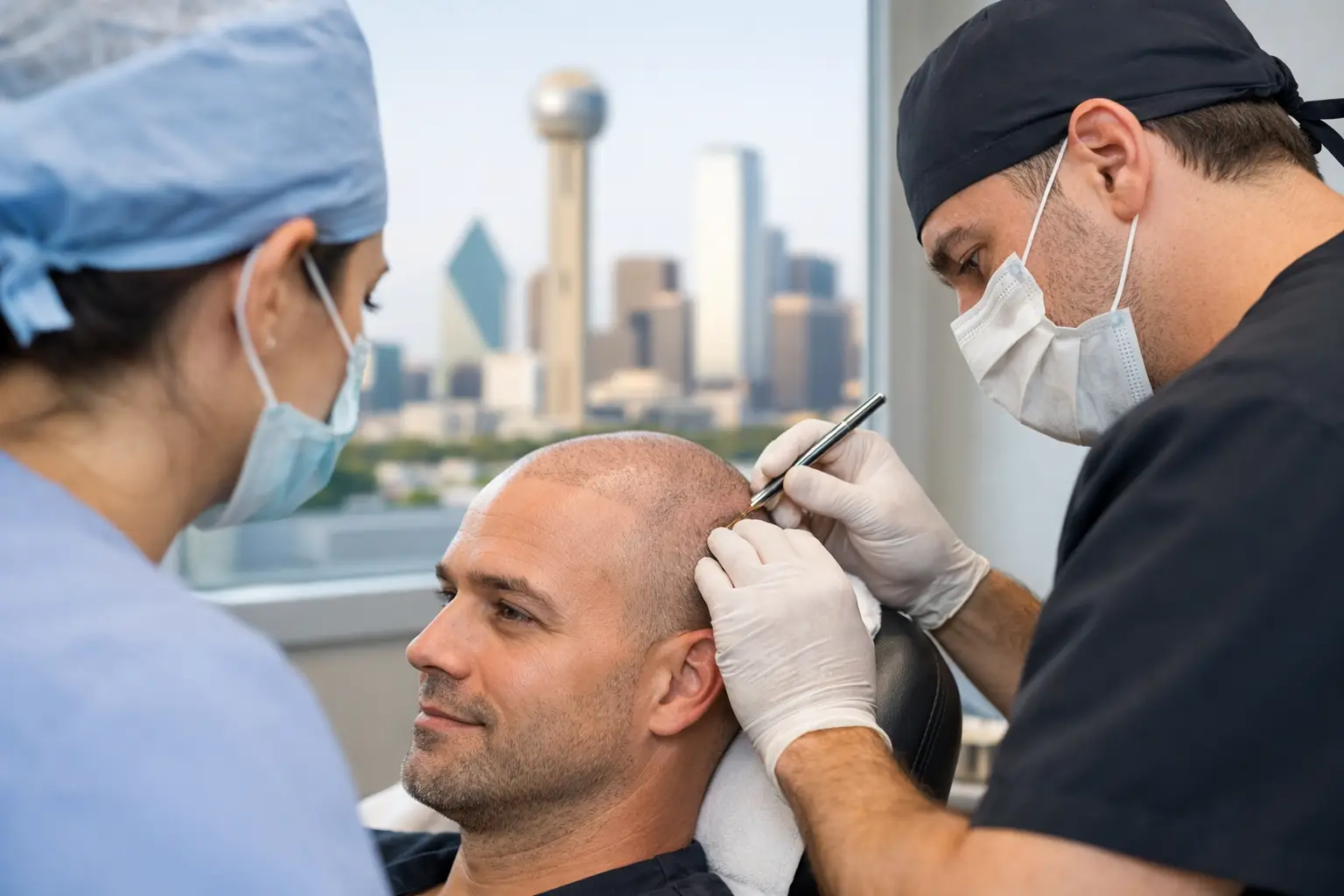
On procedure day, local anesthesia keeps the treatment area comfortable. The process includes preparing the donor area, extracting follicular units, creating recipient sites, and placing grafts one by one according to the established design. Depending on the number of grafts, treatment can take much of the day.
Most patients return home the same day. During the first week, it is normal to see mild redness, small scabs around the grafts, and some swelling. Detailed aftercare instructions help protect the transplanted follicles while the scalp heals. Patients generally need to avoid strenuous exercise, direct sun exposure, and any activity that could disrupt the grafts during the initial recovery period.
The newly transplanted hairs commonly shed within the first several weeks. This can be unsettling, but it is a normal part of the growth cycle. The follicles remain beneath the skin and begin producing new hair over the following months.
In this patient example, early growth may become visible around months three to four. The new hairline starts to look more established between six and nine months, while maturation can continue for 12 months or longer. Hair growth is gradual, which often helps the change look natural to coworkers, friends, and family.
The Result Is About More Than Hair Count
At the one-year mark, the patient sees a hairline that appears fuller and more proportionate to his face. The temples are less exposed, the frontal styling options are broader, and the transition into his existing hair is soft rather than abrupt. He can wear a shorter haircut without trying to conceal recession.
The visible improvement comes from more than the total graft number. It comes from conservative design, the use of fine single-hair grafts at the front, appropriate density placement, and the preservation of donor hair. A dense, low hairline may sound appealing at consultation, but a well-designed hairline that ages appropriately is often the more satisfying outcome.
Results can vary. Transplanted follicles are typically selected from areas resistant to pattern hair loss, yet native hair around the transplant can continue to thin. For that reason, many patients benefit from a personalized maintenance strategy that may include medication, low-level laser therapy, regenerative hair loss injections, or nutritional support when clinically appropriate.
Is a Hairline Transplant Right for You?
A hairline transplant can be a strong option for men and women with a stable or manageable pattern of loss, adequate donor supply, and realistic expectations. It may also help patients seeking to refine a naturally high hairline, restore hair after trauma, or improve density following prior procedures.
It may not be the first recommendation for every patient. Someone with rapidly progressing loss, diffuse thinning, scalp inflammation, or limited donor reserves may benefit from medical treatment and monitoring before surgery. Younger patients require particular care because the hairline designed today needs to remain appropriate as they age.
At Austin Hair Clinic, the consultation is designed to give patients a clear view of their options, including when a transplant makes sense and when a non-surgical approach should come first. The goal is not to sell a one-size-fits-all procedure. It is to create a plan that protects your long-term appearance as carefully as it improves your current confidence.
If your hairline has begun to change the way you feel about your appearance, a professional scalp analysis can turn uncertainty into a realistic, personalized path forward.