FUE Scar Visibility After Shaving: What to Expect
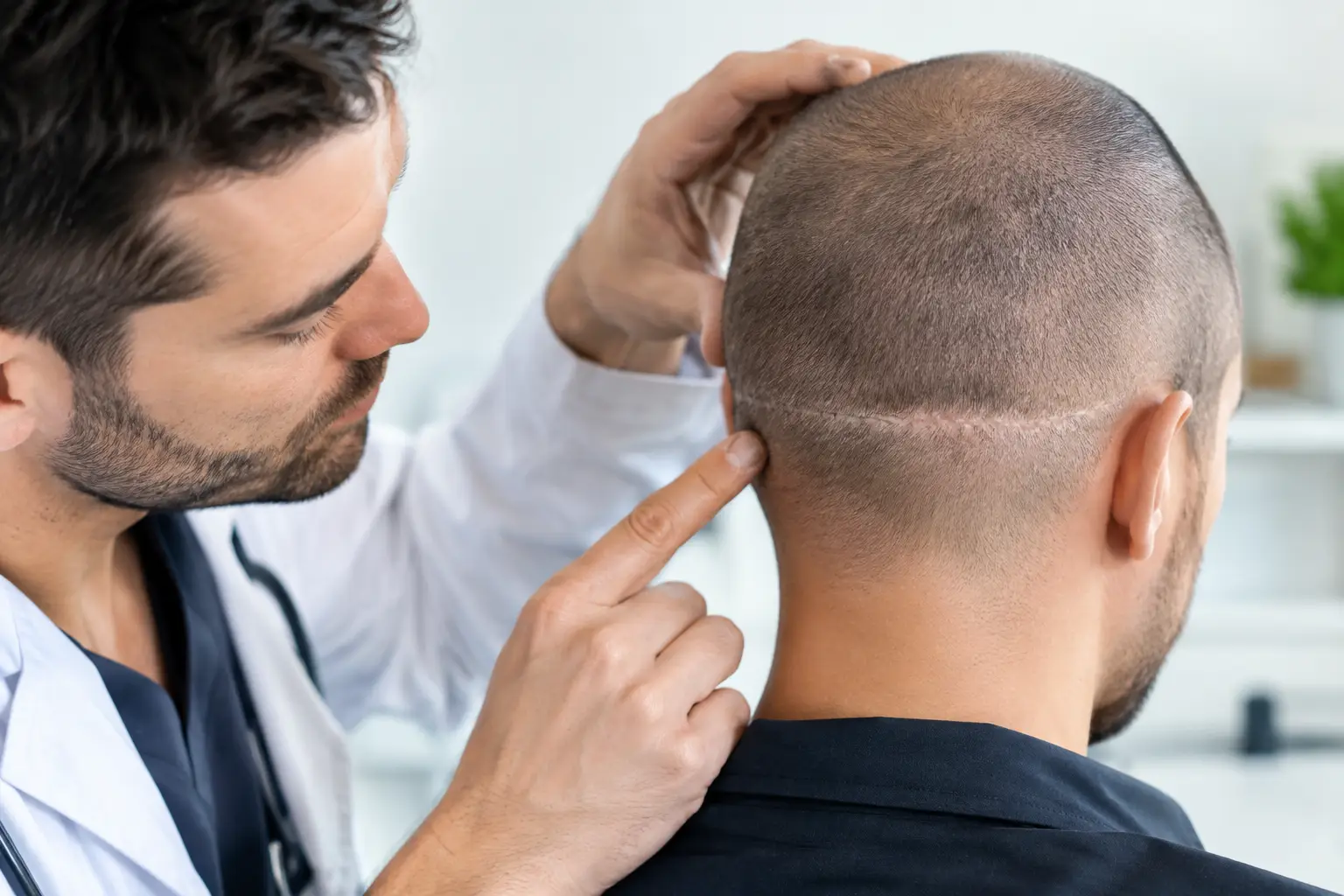
A close shave can make almost any scalp detail easier to see. That is why FUE scar visibility after shaving is a common and reasonable concern for people considering hair restoration, especially those who prefer a buzz cut, wear their hair short for work, or want the flexibility to change styles later.
FUE is designed to avoid the linear scar associated with strip surgery. Instead, individual follicular units are removed from the donor area with very small circular punches. Once healed, these extraction sites typically appear as tiny, scattered marks that are often difficult to notice under surrounding hair. Still, “difficult to notice” is not the same as invisible. The degree of visibility depends on your skin, hair characteristics, healing response, surgical planning, and how closely you shave.
A skilled FUE procedure is not only about placing grafts naturally in the thinning area. It also requires protecting the appearance of the donor area so you can feel confident from every angle.
Why FUE scars can show after shaving
Each FUE graft extraction leaves a small wound. As it heals, the site may become a pinpoint scar that is lighter, darker, slightly indented, or nearly indistinguishable from the surrounding scalp. When hair is kept longer, donor hair creates coverage and visual texture that softens these small changes in the skin. A shaved scalp removes that coverage.
This does not mean the scars are necessarily obvious. Many patients with well-planned FUE can wear very short hair comfortably. But with a razor shave or a zero-guard cut, the contrast between hair follicles and bare skin makes even subtle differences more visible.
Visibility also changes with lighting. Bright overhead lighting, direct sunlight, and flash photography can reveal scalp texture that is not noticeable in normal indoor settings. This is one reason online images of shaved donor areas can be misleading. A close-up photo under harsh light may look very different from how the scalp appears in everyday life.
What affects FUE scar visibility after shaving?
No physician can promise that FUE scars will be completely undetectable after a close shave. Honest planning means discussing the factors that influence your individual risk before surgery.
Skin tone and healing tendencies
Some patients heal with very little color change, while others are more prone to hypopigmentation, which creates lighter dots, or hyperpigmentation, which creates darker spots. Patients with a history of raised scars, keloids, or prolonged discoloration after cuts and acne should mention this during consultation.
Inflammation during healing can also affect the final appearance. Temporary redness is expected after FUE, but persistent irritation, picking, infection, or excess sun exposure can make healing less predictable.
Hair color, density, and curl pattern
The contrast between your hair and scalp matters. Dark hair against a light scalp, or light hair against a dark scalp, may make any donor-area irregularity more apparent when shaved close. Coarse, curly, or wavy hair often provides stronger visual coverage than very straight, fine hair.
Donor density is equally important. If extractions are spread thoughtfully across a healthy donor zone, the area can maintain a more even appearance. Removing too many grafts from a concentrated area can create a patchy look, particularly with short haircuts.
Extraction technique and punch size
FUE is not one identical procedure performed the same way for every patient. Punch size, graft handling, extraction pattern, and the physician’s experience all influence donor-area healing. Smaller punches can reduce the size of individual marks, but the right approach must also protect graft quality and avoid unnecessary trauma to the follicles.
The goal is not simply to remove as many grafts as possible. It is to harvest responsibly, preserve donor coverage, and create a result that looks natural both where hair is placed and where it is taken from.
The number of grafts needed
A patient seeking minor hairline reinforcement may require fewer grafts than someone restoring advanced thinning across the hairline, mid-scalp, and crown. Larger sessions can still be appropriate, but they demand careful distribution of extractions.
If your hair loss may progress over time, donor management becomes even more significant. A conservative strategy can preserve options for future treatment while helping the donor area remain discreet at shorter lengths.
How long do FUE donor scars take to settle?
In the first week after surgery, the donor area will have small scabs and visible healing sites. This stage is temporary and should not be judged as the final result. Scabs generally shed as instructed during the early recovery period, and redness commonly improves over the following weeks.
By several months, most patients see a much calmer, more natural-looking donor area. Scar maturation continues for many months, sometimes up to a year or longer. The final appearance depends on individual healing, but patience matters. A donor area that looks noticeable at two or three weeks is still in the active healing phase.
Follow your postoperative instructions carefully. Avoid scratching, strenuous activity before you are cleared, swimming too soon, and direct sun exposure on the healing scalp. Once your physician approves it, sun protection is especially helpful because healing skin can pigment more noticeably after ultraviolet exposure.
Can you shave your head after an FUE transplant?
Usually, yes, but timing matters. During early recovery, shaving can disturb scabs, irritate healing skin, or increase the chance of inflammation. Your care team will give you specific guidance based on how quickly you are healing and whether you are shaving the donor area, the recipient area, or both.
Many patients can return to a short haircut before they are ready for a razor shave. If maintaining a close-cut look is important to you, bring it up before scheduling surgery. Your physician can evaluate the donor area with that lifestyle preference in mind rather than treating it as an afterthought.
It is also wise to be realistic about the difference between a number-two clipper cut and a clean shave. A little length can provide meaningful camouflage, while a razor shave exposes every variation in scalp color and texture. That trade-off may be worthwhile for some patients and less appealing for others.
How to reduce the chance of noticeable donor scarring
The best strategy begins before the procedure. Choose a medical hair restoration practice that evaluates donor density, scalp condition, hair caliber, family history of hair loss, and your preferred hairstyle. A quality consultation should include a direct discussion of what can and cannot be achieved safely.
During surgery, thoughtful extraction spacing and conservative donor management are central to a natural-looking outcome. Advanced tools can support precision, but technology does not replace physician judgment. Every scalp has a finite donor supply, and preserving its appearance requires an individualized plan.
After surgery, protect the healing process. Follow washing instructions, take prescribed medications as directed, avoid smoking if applicable, and keep follow-up appointments. If you notice increasing pain, spreading redness, drainage, fever, or unusual swelling, contact your medical team promptly rather than trying to manage the issue at home.
For patients who already have visible donor scarring, options may exist depending on the cause and severity. These can include allowing more hair length for coverage, medical treatment for scalp inflammation, cosmetic scalp micropigmentation, or selected scar-revision approaches. The appropriate solution depends on an in-person examination.
Is FUE right for people who wear their hair very short?
FUE is often the preferred surgical option for patients who want to avoid a linear donor scar. However, it is not automatically scar-free, and it may not be the right fit for every person who plans to shave their head completely. If a razor-shaved look is non-negotiable, your consultation should focus on your personal scar risk, donor characteristics, and expectations under close viewing conditions.
At Austin Hair Clinic, this conversation is part of building a plan that respects both your hair restoration goals and the way you want to wear your hair. A natural result should support your confidence, not limit your choices.
The most reassuring next step is a professional donor-area assessment. When you understand your scalp, your healing profile, and the trade-offs of short hairstyles before treatment, you can move forward with clearer expectations and greater confidence.