ARTAS Versus Manual Extraction: Which FUE Fits?
A hair transplant can change how you see yourself in the mirror, but the technology behind it should never be chosen based on a marketing label alone. When comparing ARTAS versus manual extraction, the better option is the one that protects your donor hair, suits your hair characteristics, and supports a natural-looking plan for your goals.
Both methods are forms of FUE, or Follicular Unit Extraction. Both remove individual follicular units from the donor area, usually the back and sides of the scalp, before those grafts are placed into thinning areas. The meaningful difference is how the grafts are identified and harvested – and how much flexibility the surgical team has throughout the procedure.
ARTAS Versus Manual Extraction: The Core Difference
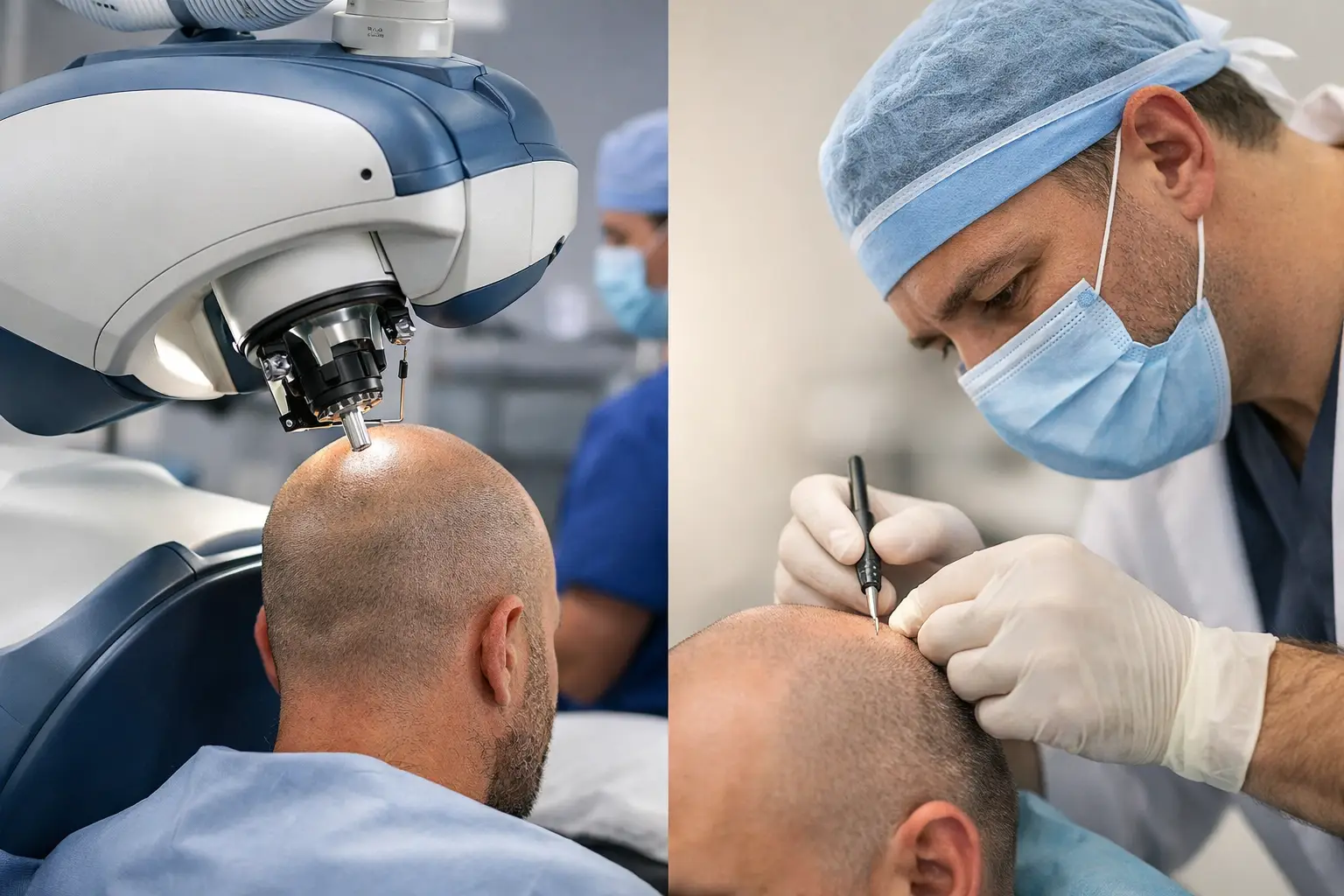
ARTAS is a robotic, image-guided system used during FUE hair transplantation. It uses digital imaging and algorithms to identify follicular units in the donor area and assist with harvesting them. The system is designed to provide consistent spacing and reduce the physical demands of repetitive graft extraction.
Manual extraction uses a hand-operated punch tool. An experienced physician or surgical team evaluates the direction, angle, curl, and grouping of each follicular unit, then removes selected grafts individually. This approach relies more directly on clinical judgment and technical skill at every stage of donor harvesting.
Neither approach changes the fundamental goal: preserve healthy follicles, avoid overharvesting, and transplant grafts in a way that looks believable as your hair grows in. ARTAS is not a replacement for a physician’s aesthetic judgment. Likewise, manual FUE is not inherently old-fashioned. Each can be an excellent option in the right hands and for the right patient.
How ARTAS Robotic FUE Can Help
For appropriate candidates, ARTAS offers a highly controlled way to harvest grafts. Its imaging system can assess the donor area repeatedly, helping the team distribute extractions rather than concentrating them in one location. That can be valuable for maintaining the visual density of the remaining donor hair.
The robotic system also supports consistency. FUE involves hundreds or thousands of small, repetitive movements. ARTAS can perform this portion of the process with a programmed level of precision, which may help streamline larger cases for patients with favorable donor hair characteristics.
Many patients are drawn to ARTAS because they want advanced technology and a minimally invasive experience. As with manual FUE, there is no linear scar. Instead, the donor area heals with tiny dot-like extraction sites that are typically difficult to notice once the hair has grown out.
Still, a robot does not design a natural hairline, decide the right density for your age, or determine whether your donor supply should be conserved for future needs. Those decisions require careful medical planning. A successful transplant depends on the entire process, from diagnosis and graft strategy to recipient-site creation and post-procedure follow-up.
Who may be a good ARTAS candidate?
ARTAS is often best suited to patients with relatively straight or wavy hair and sufficient contrast between hair and scalp. The system needs to recognize follicles clearly through its imaging technology. It may be less suitable when hair is very light, gray, tightly curled, or when there is limited contrast between hair and skin.
A stable donor area also matters. If donor hair is sparse, miniaturizing, or unevenly distributed, a physician may recommend a different approach or advise treating the underlying hair loss first. The goal is not simply to remove the maximum number of grafts. It is to preserve options and achieve an appearance that continues to look natural over time.
When Manual FUE May Be the Better Choice
Manual extraction gives the surgical team greater adaptability. Human hair does not grow at identical angles, and follicles can curve beneath the skin in ways that are not obvious from the surface. An experienced provider can adjust the tool, angle, and approach for individual grafts as needed.
This flexibility can be particularly useful for patients with curly or coarse hair, lower color contrast, prior transplant scars, or more complex donor patterns. Manual FUE may also be preferred for focused procedures, such as refining a hairline, filling a scar, or harvesting grafts for beard or eyebrow restoration.
Manual FUE can take more time because every extraction is performed by hand. But time alone is not a measure of quality. For many patients, the added customization is worth it, especially when the case requires careful selection of specific follicular units.
The strongest manual FUE results come from thoughtful donor management. A skilled physician does not harvest in a way that leaves the donor area visibly thinned. Instead, grafts are selected and spaced with the understanding that your donor supply is finite and your hair loss pattern may continue to evolve.
Precision Is More Than the Extraction Tool
It is easy to compare ARTAS and manual FUE as a technology question. In reality, the more important question is whether the overall surgical plan is precise.
Hairline design requires aesthetic restraint. A low, dense hairline may sound appealing at first, but it can look unnatural as a patient ages and can use donor grafts that may be needed later. The direction and angle of recipient-site placement are equally important. Even healthy grafts can look pluggy or unnatural if they are placed without attention to how native hair grows.
Graft survival also depends on proper handling, hydration, storage, and placement. ARTAS assists with harvesting, but it does not perform every step of a hair transplant. Manual extraction involves a different harvesting technique, yet it also depends on the same standards of graft care and recipient-site artistry.
For this reason, patients should look beyond a clinic’s equipment. Ask who evaluates your donor area, who creates the surgical plan, who designs the hairline, and how the team manages future hair loss. Those answers are more revealing than whether a procedure is described as robotic or manual.
Recovery, Scarring, and Results
Recovery is generally similar for ARTAS and manual FUE. Most patients can expect temporary redness, small scabs, and tenderness in the donor and recipient areas. These early signs are normal and usually improve as the scalp heals. Your care instructions may include gentle washing, avoiding strenuous activity for a short period, and protecting the scalp from direct sun exposure.
Transplanted hairs typically shed within the first few weeks. This can be unsettling, but it is a normal part of the growth cycle. New growth often begins around three to four months, with visible improvement continuing over several months. Many patients see their more mature result around 12 months, although growth timing can vary.
Both methods leave tiny extraction sites rather than the linear scar associated with FUT strip surgery. Scar visibility depends on healing, skin characteristics, extraction pattern, and whether donor harvesting was performed conservatively. No surgical procedure is completely scar-free, so honest expectations are essential.
Cost and Value: What Are You Actually Paying For?
ARTAS may cost more than manual FUE at some practices because of the technology and operating expenses involved. However, price should not be the deciding factor. A lower price is not a value if donor grafts are wasted, the hairline is poorly planned, or follow-up care is limited.
Your treatment cost can vary based on the number of grafts needed, the complexity of the case, whether you are restoring the scalp or facial hair, and the level of physician involvement. A careful consultation should explain what is included, what results are realistic, and whether nonsurgical treatments can help protect existing hair alongside surgery.
Medication, low-level laser therapy, regenerative injections, and personalized hair loss testing may all have a role in a long-term plan. Transplanting hair does not stop progressive thinning in non-transplanted areas. For many patients, combining restoration with medical hair preservation creates a more balanced and lasting cosmetic result.
Choosing the Right FUE Approach for You
The right choice depends on your donor density, hair texture, hair-to-skin contrast, degree of hair loss, goals, and tolerance for future progression. A patient with straight, dark donor hair and a broad area to restore may be an excellent candidate for ARTAS. Someone with tightly curled hair, a challenging donor area, or a highly customized restoration goal may benefit more from manual FUE.
There is also a middle ground. Some treatment plans use technology where it is helpful while relying on hands-on clinical judgment for areas that demand greater customization. The best recommendation should feel personalized, not predetermined by the equipment a clinic owns.
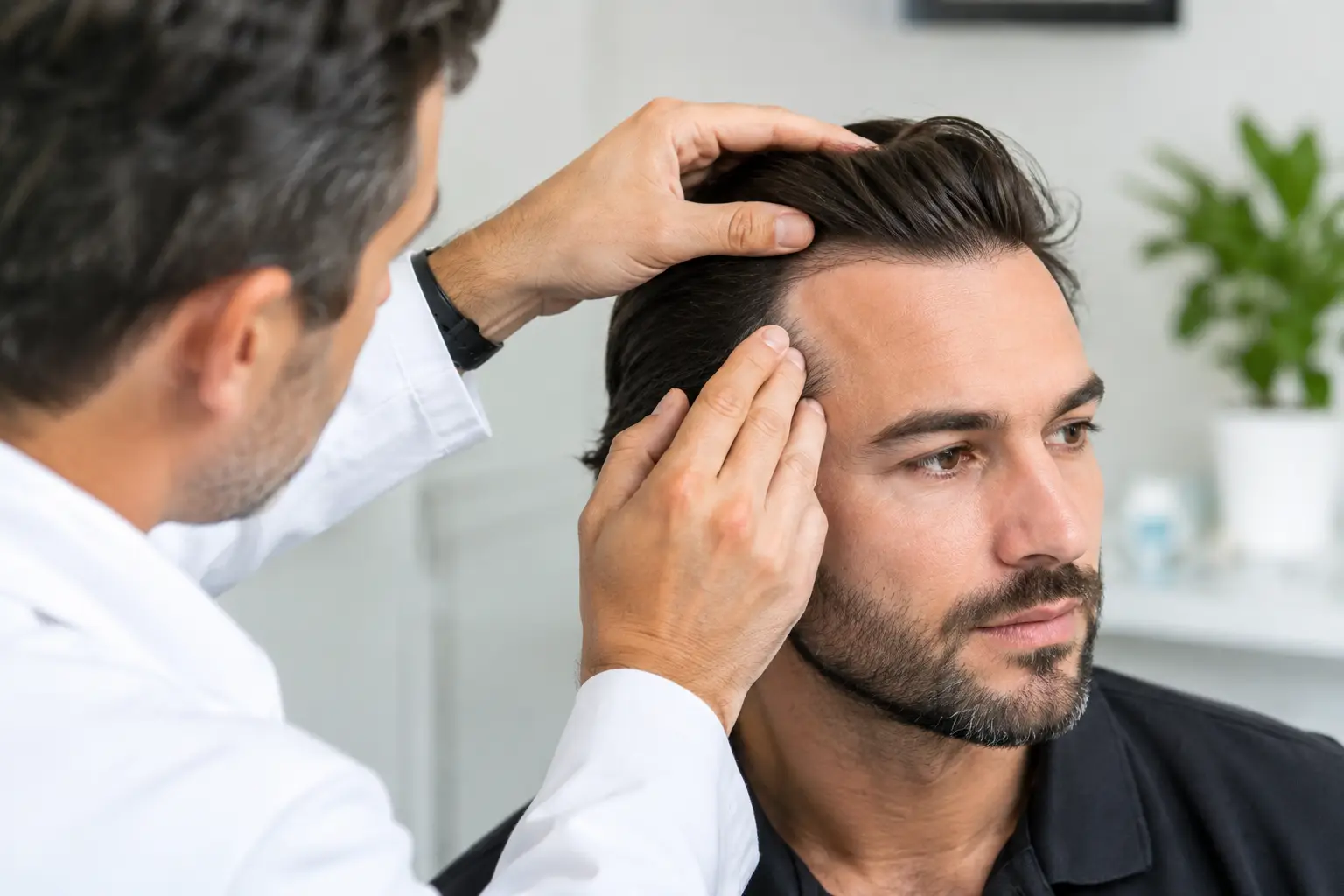
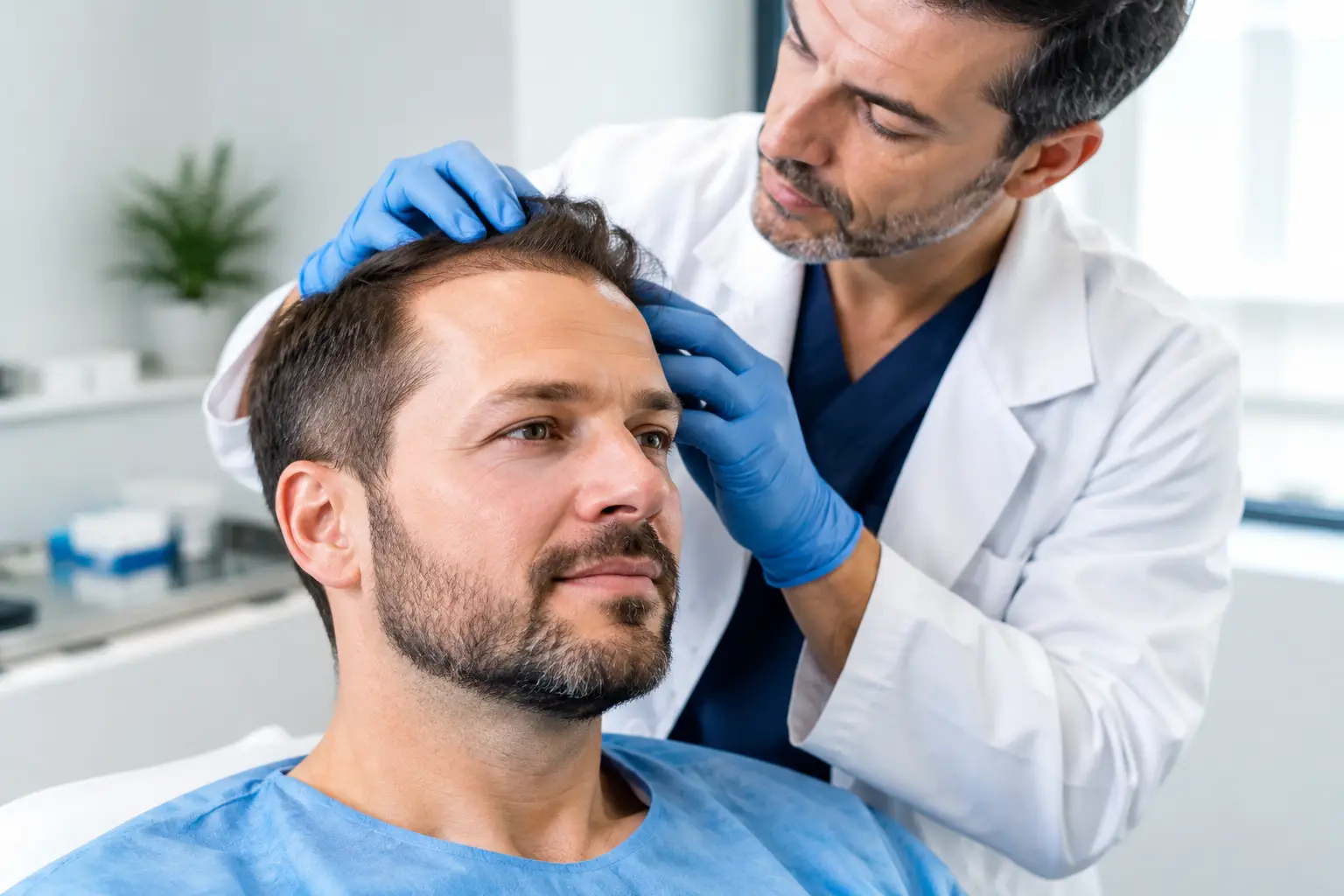
At Austin Hair Clinic, a consultation begins with a close look at your scalp, donor area, and pattern of loss before recommending a path forward. Whether robotic or manual extraction makes sense, the priority is the same: protect your donor hair and create results that fit your face, age, and future.
The most reassuring next step is not choosing a procedure from a list. It is sitting down with an experienced hair restoration physician who can explain what your hair can realistically support – and build a plan that helps you feel more like yourself again.