Hairline Design Principles for Natural FUE Results
A successful hair transplant is not defined by graft count alone. The hairline is the feature people notice first, and it can determine whether an FUE result looks naturally yours or appears overly sharp, low, or artificial. Thoughtful hairline design principles bring medical planning and aesthetic judgment together, creating a restoration that supports confidence now while protecting options for the future.
For men and women considering hair restoration, the goal is rarely to recreate a teenage hairline. It is to create a believable frame for the face, one that complements your age, hair characteristics, and likely pattern of future hair loss.
Why Hairline Design Matters So Much
The hairline sets the visual boundary of the face. A small adjustment in its height, shape, or density can make the forehead appear more balanced, soften the look of recession, or restore a more rested, youthful appearance. It also carries a high level of scrutiny. Unlike density placed farther back on the scalp, the front hairline is difficult to conceal if the design is too straight, too dense, or placed too low.
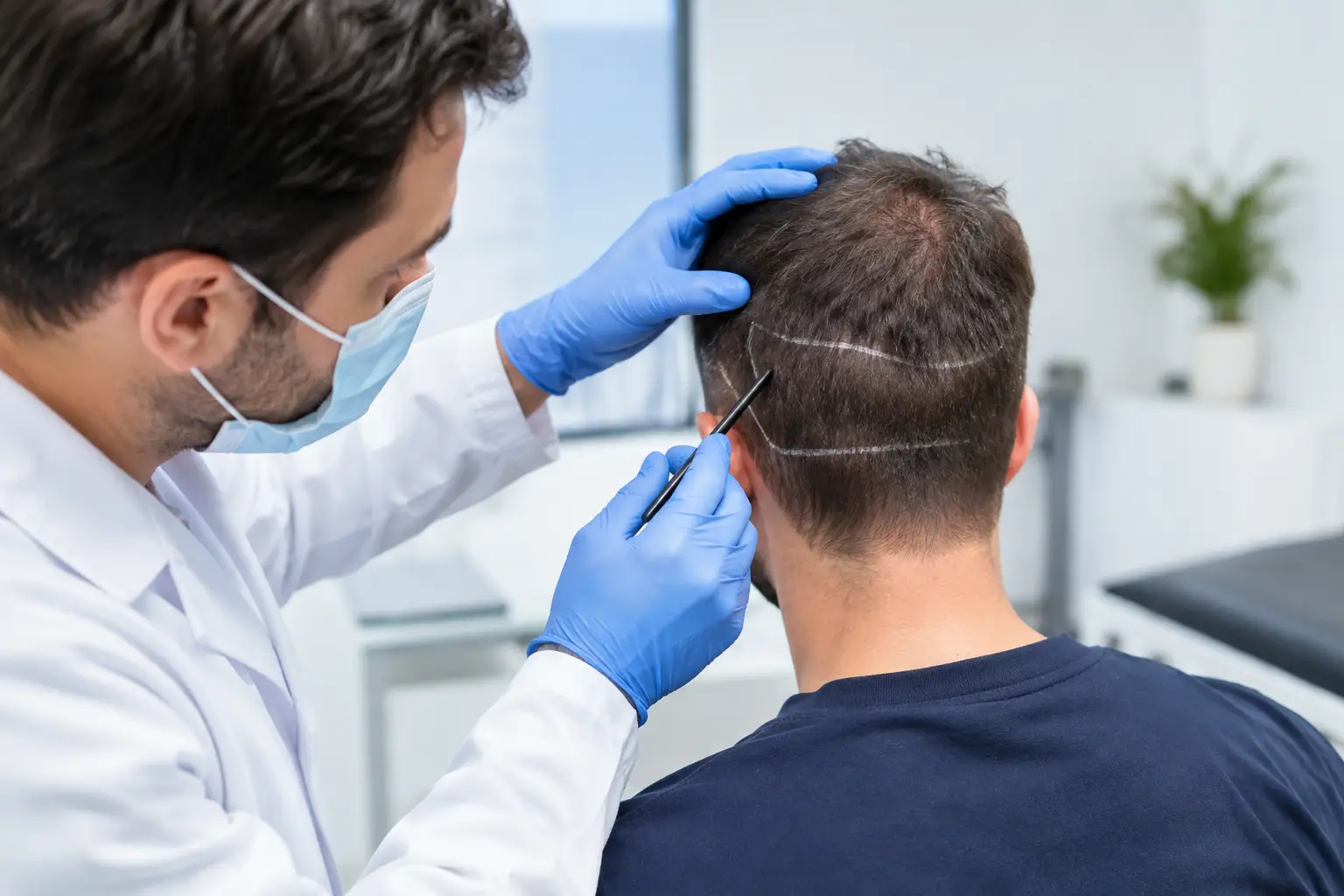
This is why hairline restoration requires more than placing follicles in a line. Each patient needs an individualized design based on facial anatomy, donor supply, existing hair, and the progression of their hair loss. A well-designed hairline should look appropriate from across the room and remain convincing under close inspection.
The Core Hairline Design Principles
A natural hairline is guided by several connected decisions. There is no single ideal template, because the most flattering and sustainable design depends on the patient.
Facial proportions come first
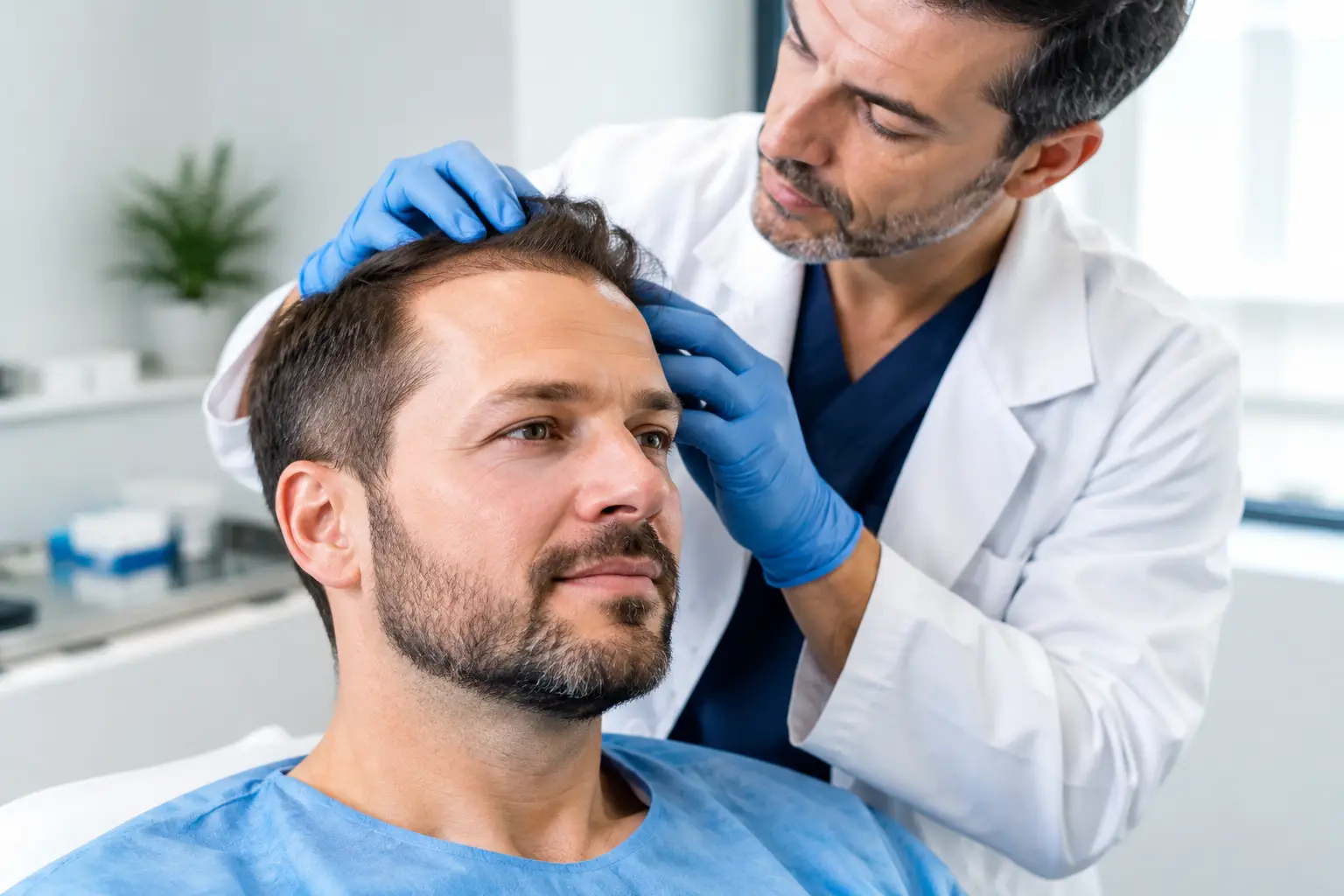
The forehead, brow position, facial width, and overall face shape all influence where a hairline belongs. During a consultation, a physician evaluates how the proposed hairline will relate to these features rather than relying on a standard measurement alone.
For example, lowering a high hairline may be appropriate for a patient with stable hair loss and strong donor density. But lowering it aggressively can make the face look disproportionate or consume grafts that may be needed later for the mid-scalp or crown. A slightly more conservative position often produces the most natural long-term result.
Age also matters. A mature male hairline usually sits higher and includes some recession at the temples. Designing a perfectly straight, low juvenile hairline for a man in his 40s or 50s may not match his facial features or look believable as he ages. For women, the approach may focus more on softening a broad forehead, rebuilding density along the frontal edge, or addressing traction-related thinning while maintaining a graceful, feminine contour.
Natural irregularity prevents an artificial look
Healthy hairlines are not ruler-straight. They have subtle variation, with individual hairs sitting at slightly different heights and angles. This irregularity is controlled, not random. The goal is a soft transition that resembles the way native hair naturally grows.
Experienced FUE planning typically places the finest single-hair follicular units at the leading edge. Slightly thicker grafts can be positioned behind them to build density without creating a harsh border. This gradation is one reason careful graft selection matters as much as the number of grafts transplanted.
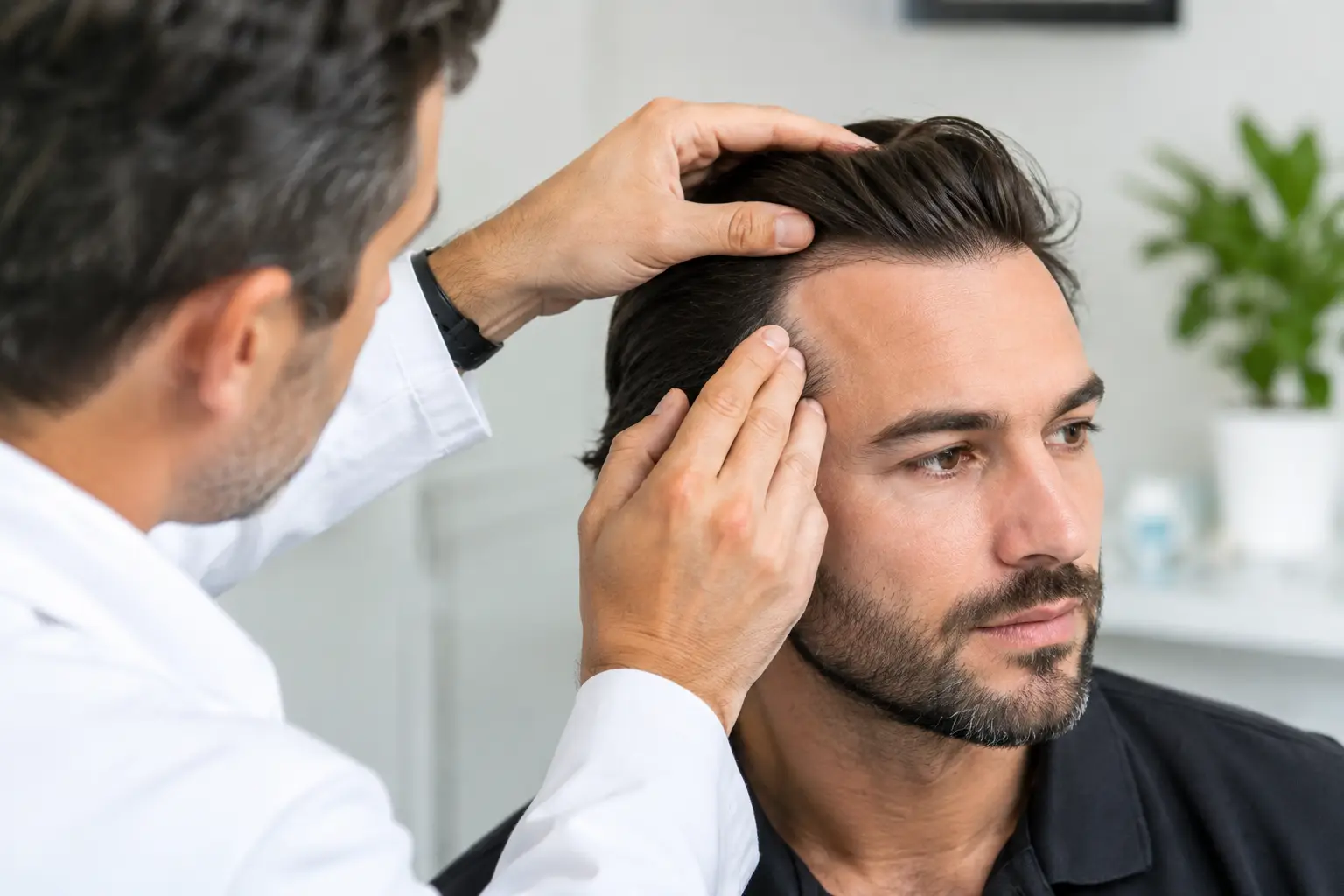
The corners and temples deserve equal attention. A hairline can look unnatural when the central area is restored but the transition into the temporal regions is abrupt. Depending on the patient’s anatomy and hair loss pattern, a physician may preserve or recreate subtle temple recession to keep the overall shape credible.
Hair direction and angle create realism
Follicles do not simply point forward. At the front of the scalp, hair typically emerges at a low, forward-facing angle. Along the corners, it changes direction as it follows the contour of the hairline. These details affect how the hair lies, how it catches light, and whether it blends with surrounding native growth.
Graft placement at the wrong angle can make even a dense transplant appear plug-like or upright. Advanced FUE techniques allow for precise recipient-site creation, but technology is only one part of the equation. The provider’s understanding of hair direction, curl pattern, shaft caliber, and visual density is what turns technical placement into an aesthetic result.
Donor supply must be protected
Every hair transplant plan works within a finite donor supply, usually hair taken from the back and sides of the scalp. Those follicles are valuable resources. A lower, denser hairline requires more grafts, and future thinning may increase the need for coverage behind it.
This is especially relevant for younger patients whose hair loss pattern is still developing. A conservative design can feel less dramatic at first, yet it may be the wiser choice if it preserves grafts for later treatment. Hair loss medications, low-level laser therapy, regenerative injections, and other physician-guided options may help support native hair and make a surgical plan more sustainable.
A responsible recommendation sometimes means delaying surgery, treating ongoing loss first, or designing a hairline that prioritizes long-term balance over a short-term transformation.
Hairline Design for Different Patient Goals
The best hairline for one patient may not be right for another. A professional who wants a subtle correction to early recession has different needs than someone with advanced frontal loss. Similarly, a woman with a stable high forehead may have different goals than a patient experiencing diffuse thinning.
For early recession, a modest reinforcement of the frontal corners and hairline may restore a more youthful frame without demanding a large number of grafts. For more extensive loss, the design may need to sit somewhat higher to preserve enough donor hair for density across a broader area.
Hair texture also changes the plan. Coarse, curly, or wavy hair can create more visual coverage with fewer grafts than fine, straight hair. Dark hair against light skin can create greater contrast, which may call for especially careful softening at the leading edge. These are not minor cosmetic details. They directly affect the graft strategy and the final appearance.
What Patients Should Ask During a Consultation
A hairline consultation should feel collaborative. You should be able to discuss what you see in the mirror, what feels most frustrating about your hair loss, and what level of change would feel authentic to you. Before-and-after photographs can be helpful, but another person’s hairline is not automatically the right model for your face or hair characteristics.
Ask how the proposed design accounts for future hair loss, donor capacity, and the medications or non-surgical therapies that may support your result. It is also reasonable to ask whether the plan uses single-hair grafts at the front, how temple angles will be handled, and what density is realistic in one procedure.
At Austin Hair Clinic, planning is centered on a personalized assessment rather than a one-size-fits-all drawing. Dr. Sanjeev Dubey and the clinical team evaluate the full picture, including scalp condition, existing density, donor availability, and your desired outcome, before recommending FUE, robotic FUE, medical therapy, or a combined approach.
A Hairline Should Age Well With You
The most effective hairline design does not compete with your natural features. It restores proportion, creates a soft and believable transition, and gives you a result that still makes sense years from now. That may mean choosing a design that is slightly more mature, preserving temple recession, or pairing transplantation with treatment for ongoing thinning.
Confidence often begins with seeing a version of yourself that feels familiar again. A careful consultation can help you pursue that change with a hairline designed not just to look good on procedure day, but to remain natural as your life and hair evolve.