Donor Area Assessment Before an FUE Hair Transplant
A hair transplant can only be as strong as the hair available to support it. Before planning a new hairline, fuller crown, or beard restoration, a thorough donor area assessment looks closely at the hair on the back and sides of the scalp. This step helps determine what can be safely moved, where it should be placed, and whether FUE is the right approach for your goals.
For patients considering hair restoration, this assessment is more than a quick look at donor density. It is the foundation for a natural-looking result that still protects your options if hair loss progresses over time.
What Is a Donor Area Assessment?
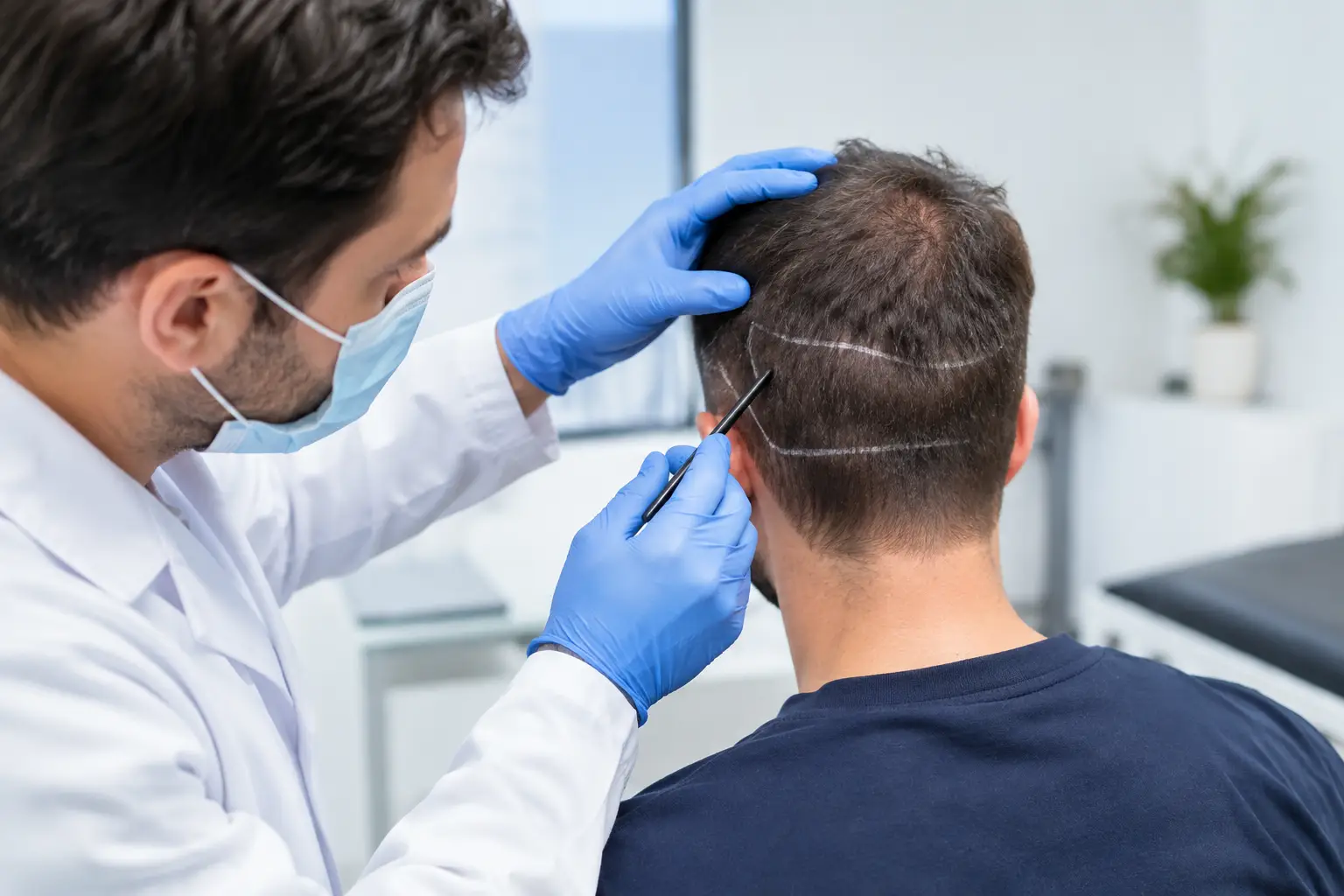
The donor area is the region of the scalp where permanent, genetically resistant hair follicles are typically harvested for transplantation. In most patients, this includes the back of the head and the areas above the ears. These follicles can retain their resistance to pattern hair loss after they are transplanted into thinning areas.
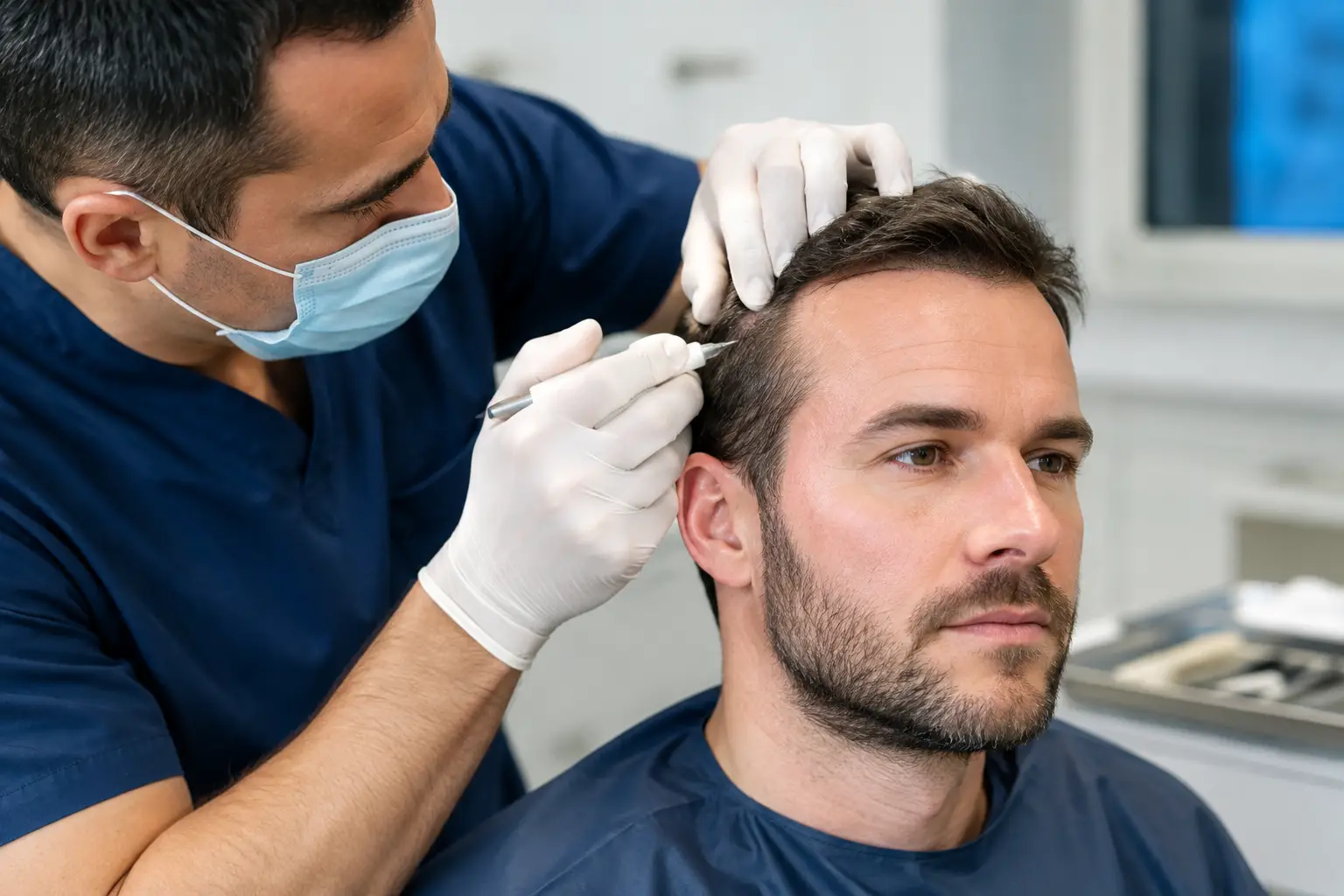
During an FUE consultation, the physician evaluates whether the donor region has enough healthy follicular units to provide meaningful coverage without making the back or sides of the scalp appear thin. A follicular unit may contain one to four hairs, and its hair count, thickness, and distribution all affect what a transplant can accomplish.
The goal is not to remove the highest possible number of grafts. The goal is to use an appropriate number of grafts strategically, creating visible improvement while preserving the donor area for the long term.
What Your Physician Evaluates in the Donor Area
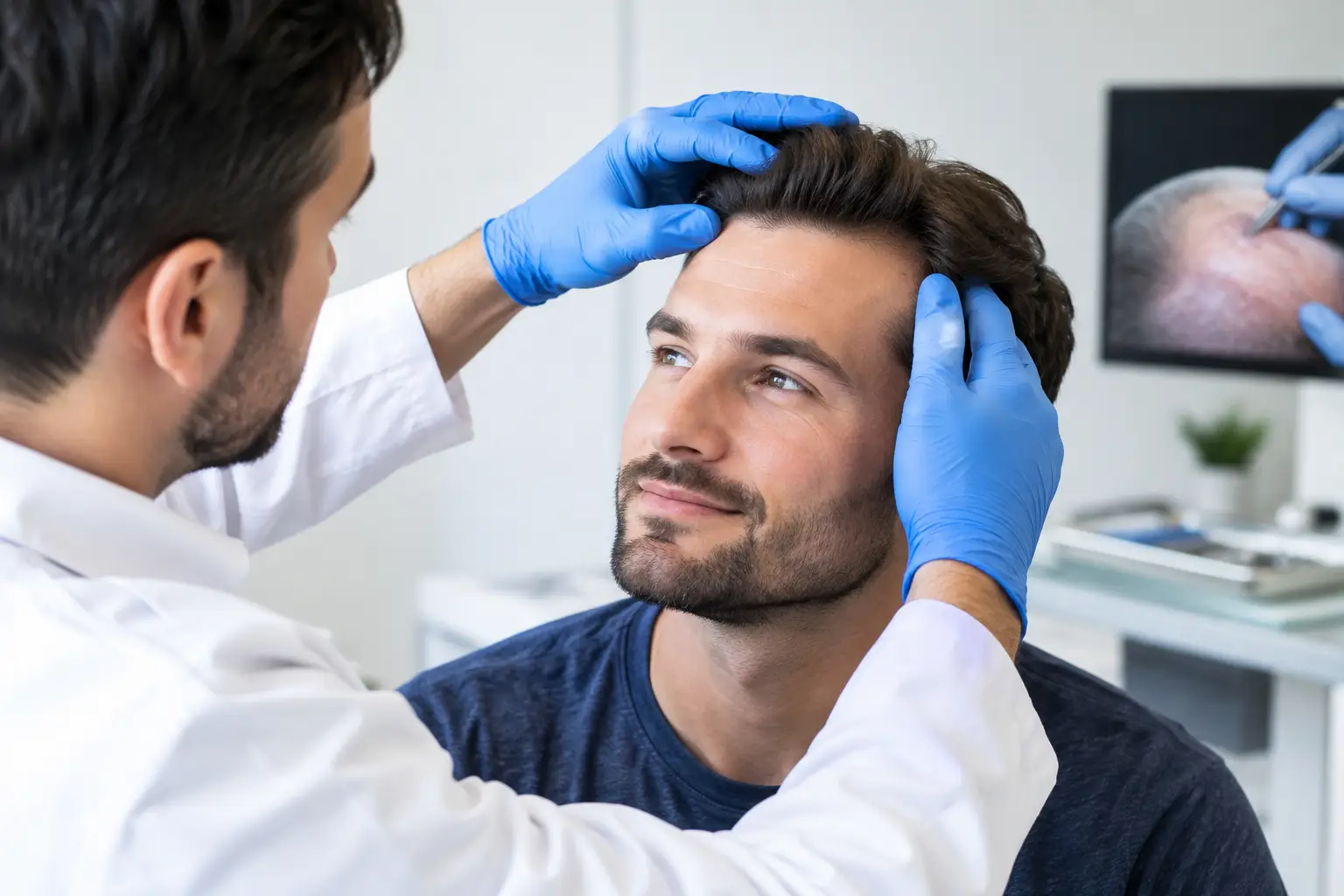
A proper assessment combines visual examination, close-up scalp analysis, medical history, and an honest discussion about your expectations. A patient with a high-density donor area may have more flexibility than someone with diffuse thinning throughout the scalp, but density is only one part of the picture.
Donor Hair Density and Distribution
Density refers to how many follicular units and individual hairs are present in a given area. Higher density can provide a stronger supply of grafts, but the distribution matters just as much. Hair that is unevenly distributed may limit how many follicles can be extracted from any one section.
FUE requires careful spacing between extractions. If grafts are harvested too closely together, the donor region can look patchy or see-through, particularly with a short haircut. Advanced extraction planning spreads harvesting across the safe donor zone to help maintain a natural appearance.
Hair Caliber, Texture, and Color Contrast
Not all hair creates the same visual coverage. Coarse hair generally produces more fullness per graft than fine hair. Wavy or curly hair can also create the appearance of greater density than straight hair because each strand occupies more space.
Color contrast matters as well. Dark hair against a lighter scalp can make thinning more visible, while hair and scalp with similar tones may create the appearance of better coverage. These details influence how many grafts may be needed to create an aesthetically satisfying result.
Donor Area Stability
The healthiest-looking donor area is not automatically a stable one. Some patients have diffuse miniaturization, meaning hair is thinning across the top, sides, and back of the scalp. In those cases, extracting follicles without recognizing the pattern could compromise the donor area or lead to transplanted hair that is less predictable over time.
A physician may examine hair shaft variation and signs of miniaturization to identify whether the donor region is suitable for transplantation. If active hair loss is affecting a broad area, medical treatment, laser therapy, or regenerative hair loss injections may be recommended before surgery or alongside it.
Scalp Health and Prior Procedures
Scalp inflammation, scarring, certain skin conditions, and previous hair transplant procedures can affect donor availability. Patients who have undergone prior FUT strip surgery may have a linear scar and a reduced amount of scalp available for harvesting. Previous FUE can also limit future graft supply, especially if too many grafts were removed.
This is why it is helpful to share your full treatment history, including medications, supplements, prior procedures, and any history of scalp irritation or shedding. Clear information supports safer planning.
Why the Safe Donor Zone Matters
The safe donor zone is the area most likely to contain hair that will remain resistant to typical male or female pattern hair loss. It is not exactly the same for every patient. Hair loss patterns, family history, age, and future risk of progression all help shape the plan.
Harvesting outside the stable zone may produce grafts that are more vulnerable to future thinning. That can create an uneven result years later, even if the transplant initially looks successful. A conservative, medically informed donor strategy may feel less dramatic than an aggressive graft estimate, but it often protects the appearance of both the transplanted area and the donor area over time.
For younger patients, this is especially significant. A lower, dense hairline may look appealing now, but it can require too many grafts and fail to account for future recession. A well-designed plan balances current concerns with the way hair loss may evolve.
How Donor Supply Shapes Your Hairline and Coverage Plan
Every transplant plan involves priorities. A patient with early recession may be able to focus on rebuilding a natural hairline and temple transition. Someone with more advanced hair loss may need to choose between maximizing frontal framing and spreading grafts across a larger area, such as the midscalp or crown.
The frontal hairline often has the greatest impact on appearance because it frames the face and is immediately visible in conversation, photos, and professional settings. At the same time, a crown can require a substantial number of grafts because of its size and circular growth pattern. There is no universal answer to where grafts should go first.
Your physician should explain the trade-offs in clear terms. If donor supply is limited, a plan that creates strong density everywhere may not be realistic in one session. A staged approach, medical therapy to preserve existing hair, or a more focused restoration area may offer a better long-term path.
FUE, ARTAS, and the Importance of Physician Planning
FUE removes individual follicular units rather than taking a strip of scalp. This can avoid a linear scar and can be a good choice for patients who prefer shorter hairstyles or minimally invasive harvesting. However, FUE still depends on precise donor management.
ARTAS robotic FUE can assist with identifying and harvesting appropriate follicular units in eligible patients. The technology can support consistency and efficiency, but it does not replace medical judgment. Hairline design, safe donor boundaries, graft allocation, and aesthetic planning require an experienced physician who understands both the technical and cosmetic sides of hair restoration.
At Austin Hair Clinic, donor evaluation is part of a personalized planning process led with attention to scalp health, donor preservation, and natural-looking outcomes. The right technology is valuable, but the right treatment plan matters more.
What to Expect During Your Consultation
A consultation should give you a realistic understanding of your candidacy rather than a one-size-fits-all graft quote. Expect a discussion about your hair loss history, family pattern of hair loss, current medications, styling preferences, and goals. Your scalp and donor area should be examined closely, often with magnification or scalp analysis.
You should also receive straightforward guidance about what surgery can and cannot achieve. If your donor supply is excellent, you may have more options for density and coverage. If it is limited, that does not necessarily mean treatment is off the table. It may mean the best solution combines a carefully planned transplant with therapies designed to preserve and strengthen existing hair.
Questions are welcome. Ask how many grafts may be safely available, how extraction sites will be distributed, whether your hair loss is stable, and how the plan accounts for future thinning. A thoughtful provider will be comfortable discussing those details.
A Careful Assessment Protects More Than Your Donor Hair
The best hair restoration plans are built around what your scalp can sustainably support, not an inflated graft number or a temporary trend. A detailed donor area assessment gives you the clarity to make a confident decision, whether that leads to FUE, non-surgical treatment, or a plan that combines both.
If you are considering a transplant, begin with a professional evaluation that looks beyond the thinning area you see in the mirror. Protecting the donor area today helps preserve your ability to enjoy natural-looking hair restoration for years to come.