What an FUE Transplant Can Do for Your Hairline
A thinning hairline can change more than the person in the mirror. It can affect how confidently you step into a meeting, style your hair for an event, or appear in photos with family and friends. An FUE transplant is designed to address that concern with your own living hair follicles, placed with careful attention to density, direction, and a natural-looking result.
For many people, the appeal is straightforward: FUE does not require removing a long strip of scalp, and it can restore areas affected by pattern hair loss, a receding hairline, or localized thinning. The right procedure, however, is never about simply moving the highest possible number of grafts. It is about protecting your donor supply and building a result that will still make sense as your hair changes over time.
What Is an FUE Transplant?
FUE stands for Follicular Unit Extraction. A follicular unit is a naturally occurring grouping of one to four hairs. During an FUE transplant, individual follicular units are harvested from the donor area, usually the back and sides of the scalp where hair tends to be more resistant to genetic hair loss. Those grafts are then prepared and placed into thinning or bare areas.
Because follicles are extracted one at a time using a small punch, FUE leaves tiny dot-like scars rather than a linear scar. Once healed, these marks are typically difficult to notice, especially when hair is kept at a moderate length. That makes FUE appealing to patients who prefer shorter hairstyles or who want a minimally invasive approach to surgical hair restoration.
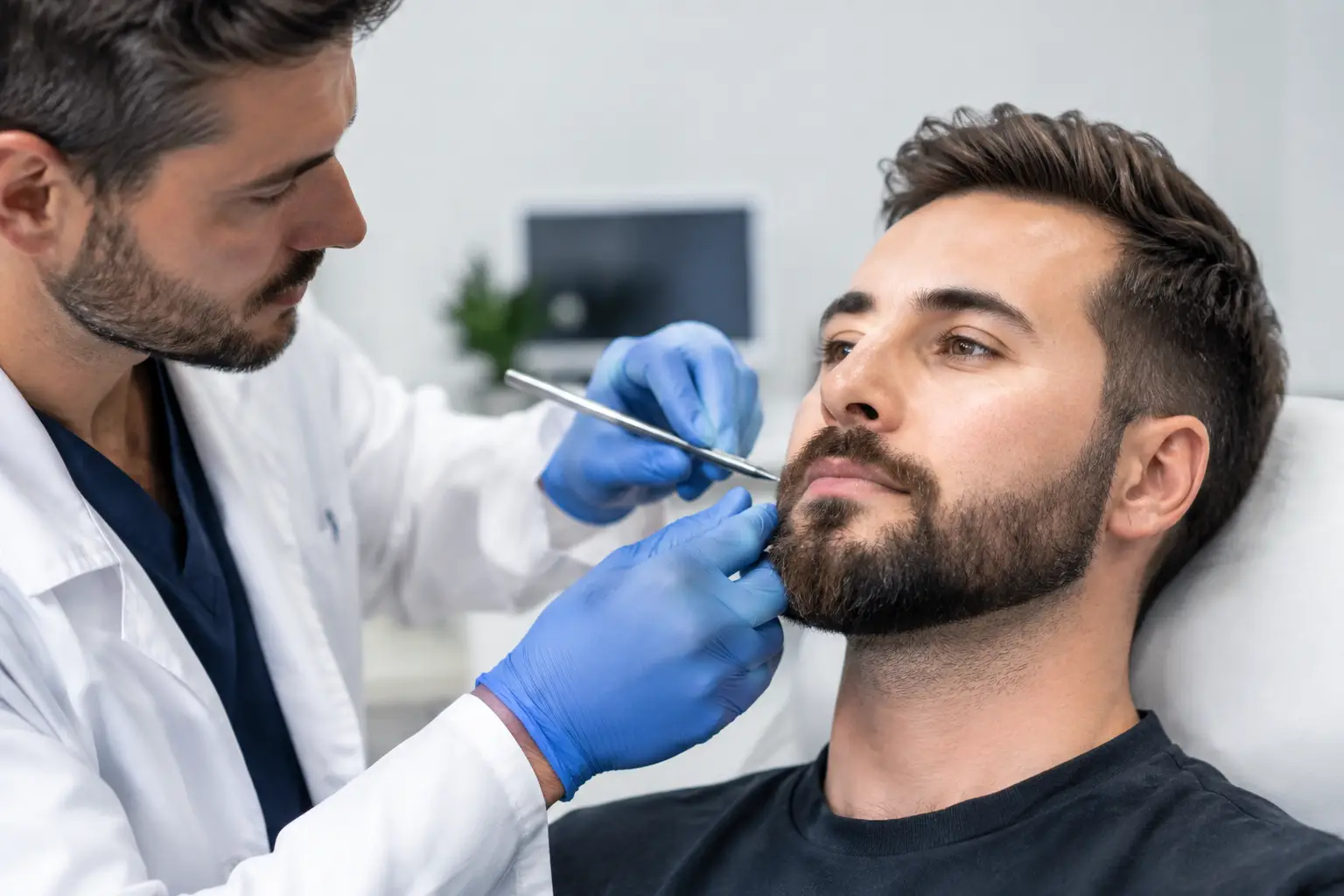
The procedure can be used to rebuild a receding hairline, add coverage through the frontal scalp or crown, and improve density in selected areas. It can also be adapted for facial hair restoration, including beard and eyebrow transplantation, when a patient has an appropriate donor supply and realistic goals.
Who Is a Good Candidate for FUE Hair Restoration?
The best candidates have stable or reasonably predictable hair loss, sufficient donor density, and a clear understanding of what surgery can achieve. Men and women of different ages can qualify, but candidacy is more nuanced than a single age range or hair-loss pattern.
A person with early thinning may benefit more from medical treatment, regenerative injections, low-level laser therapy, or a combination approach before considering surgery. Someone with advanced loss may be a candidate for transplantation, but their available donor hair must be planned carefully. If too many grafts are used in the hairline early on, there may be fewer options available if thinning progresses behind it.
Hair characteristics matter as well. Curl, color contrast between the scalp and hair, shaft thickness, and donor density can all influence the appearance of coverage. A skilled physician evaluates these details before recommending a graft range or designing a hairline. The goal is not to promise the hair density you had as a teenager. It is to create a balanced, age-appropriate result that looks believable from every angle.
The FUE Transplant Process, Step by Step
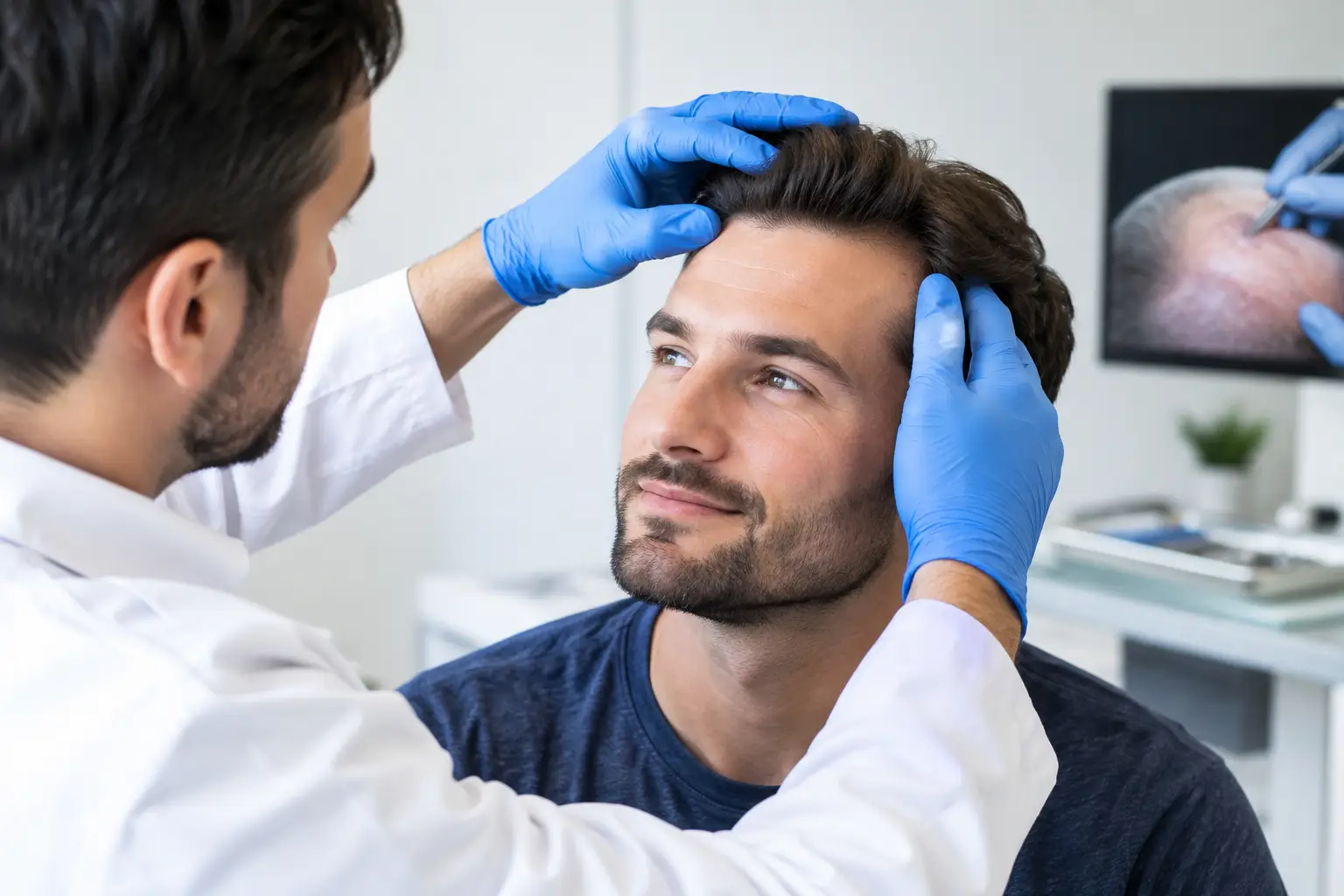
Your treatment should begin with a detailed scalp and hair assessment. This is where your provider reviews your hair-loss history, family history, current medications, donor area, and expectations. Photos and measurements help create a plan that considers both your immediate concerns and the likelihood of future thinning.
On procedure day, the donor and recipient areas are prepared, and local anesthesia is used to keep you comfortable. The physician and surgical team extract follicular units from the donor area, then sort and preserve the grafts while recipient sites are created. Site creation is a critical artistic and medical step. The angle, direction, spacing, and distribution of each site determine whether new growth blends naturally with your existing hair.
Grafts are then placed carefully into those recipient sites. Single-hair grafts are often used along the front of the hairline for softness, while naturally occurring multi-hair grafts can add density behind it. The procedure may take several hours, depending on the number of grafts and treatment areas.
Some patients are interested in ARTAS® robotic FUE, which uses image-guided technology to assist with follicle harvesting. Robotic assistance can offer precision and consistency in appropriate cases, but it is not a replacement for physician judgment. Hairline design, long-term planning, and graft placement still require an experienced medical team focused on the aesthetic result.
Recovery After an FUE Transplant
Most patients return home the same day. Mild swelling, tenderness, and redness are common in the first few days, while small crusts form around the transplanted grafts. Your care team will give you specific instructions for washing, sleeping position, activity restrictions, and protecting the grafts during the initial healing period.
Many people feel comfortable returning to desk work within several days, although visible signs of treatment can take longer to settle. Strenuous exercise, direct sun exposure, swimming, and anything that could rub or dislodge grafts should be avoided for the period recommended by your physician. The donor area usually heals quickly, but it still needs proper care.
One part of recovery surprises many first-time patients: transplanted hairs often shed within the first few weeks. This is expected. The follicles remain beneath the skin and enter a resting phase before producing new hair. Early growth commonly begins around three to four months, with more noticeable improvement developing over six to nine months. Final maturation can take 12 months or longer, particularly in the crown.
Natural Results Depend on Planning, Not Just Graft Count
It is easy to compare transplant options by the number of grafts offered. Graft count matters, but it does not tell the whole story. A high graft number is not automatically better if it compromises the donor area, creates an unnaturally low hairline, or ignores the pattern of future hair loss.
A thoughtful FUE transplant design considers facial proportions, existing density, age, and long-term hair-loss risk. For example, a patient in their late 20s with an actively receding hairline may need a more conservative design than someone in their 50s with stable loss. Women with diffuse thinning may require a different strategy than men with a defined receding pattern.
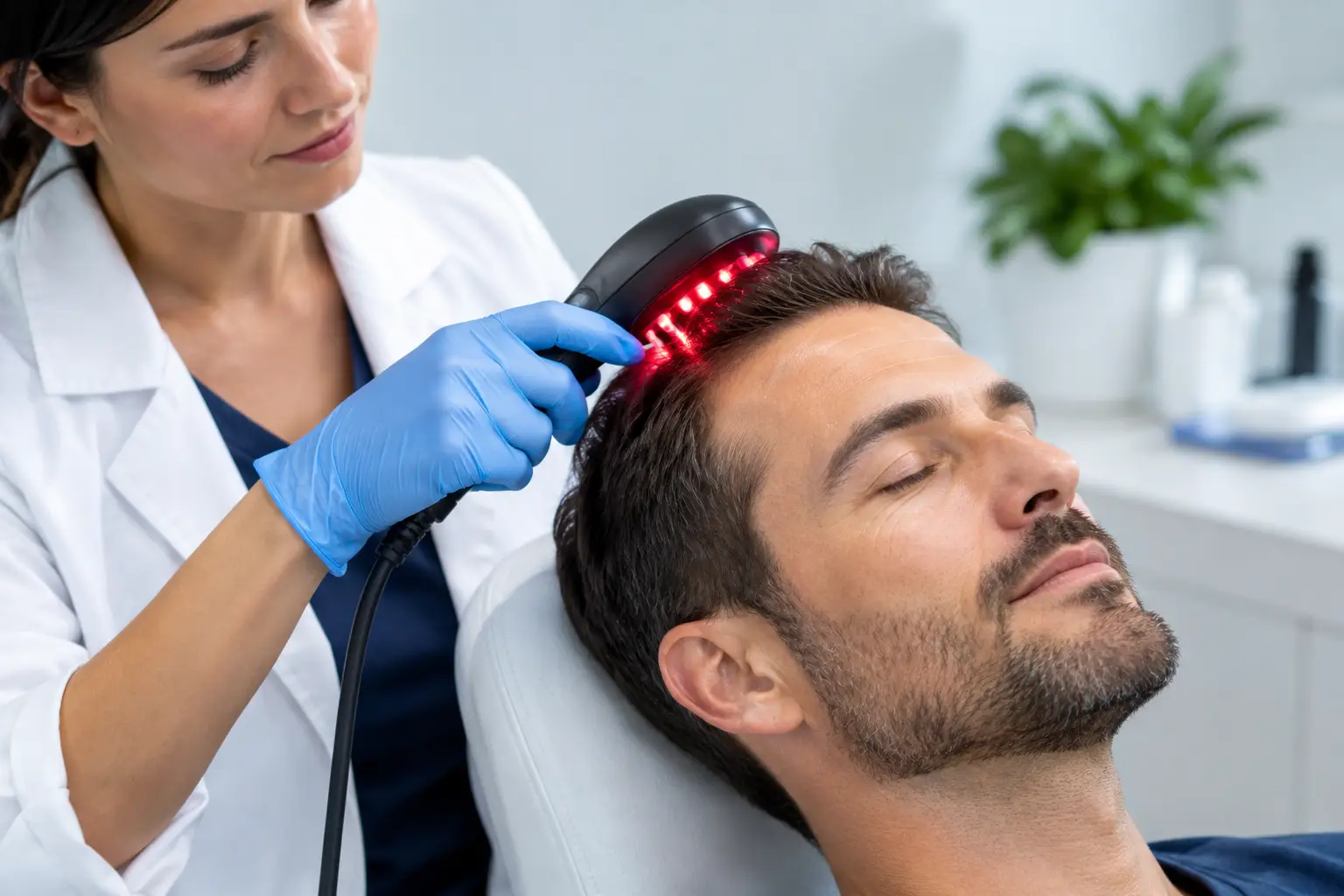
Medical therapies can also play an important supporting role. When appropriate, hair-loss medications, regenerative treatments, laser therapy, and nutritional support may help preserve existing hairs around a transplant. Surgery restores follicles where they are placed. It does not stop ongoing genetic hair loss in untreated areas.
Questions to Ask Before Choosing an FUE Provider
Before committing to treatment, ask who will evaluate your donor area, create your hairline design, and perform the key surgical steps. You should also ask how the practice plans for future hair loss, what recovery support is included, and whether you are a candidate for non-surgical treatment before or alongside surgery.
Reviewing before-and-after cases can be helpful, particularly cases involving patients with similar hair type, age, and hair-loss patterns. Look beyond the immediate after photo. A good result should have a natural hairline, an even transition into existing hair, and a donor area that remains visually intact.
At Austin Hair Clinic, personalized planning begins with an assessment of your hair loss, goals, and donor potential rather than a one-size-fits-all recommendation. That conversation can clarify whether FUE, ARTAS® robotic FUE, medical therapy, or a combined plan is the most sensible next step.
Frequently Asked Questions About FUE
Does an FUE transplant hurt?
Local anesthesia is used during treatment, so patients generally do not feel pain during the extraction and placement process. Some soreness or tightness can occur afterward, but it is typically manageable with the post-procedure plan provided by your physician.
Is an FUE transplant permanent?
Transplanted follicles from the donor area are generally resistant to the hormone-related process that causes pattern baldness, so they are intended to be long-lasting. Results still depend on proper technique, healing, and the progression of hair loss in non-transplanted areas.
Can women get FUE transplants?
Yes, but candidacy must be evaluated carefully. Women with stable thinning and a strong donor area may benefit from FUE. Diffuse thinning throughout the scalp can make surgical planning more complex, which is why a personalized evaluation is essential.
The most useful next step is not choosing a procedure from a list. It is getting a clear, medically guided answer about what your hair can realistically achieve, what should be preserved, and how a plan can support confidence for years to come.