Best Options for Hairline Restoration
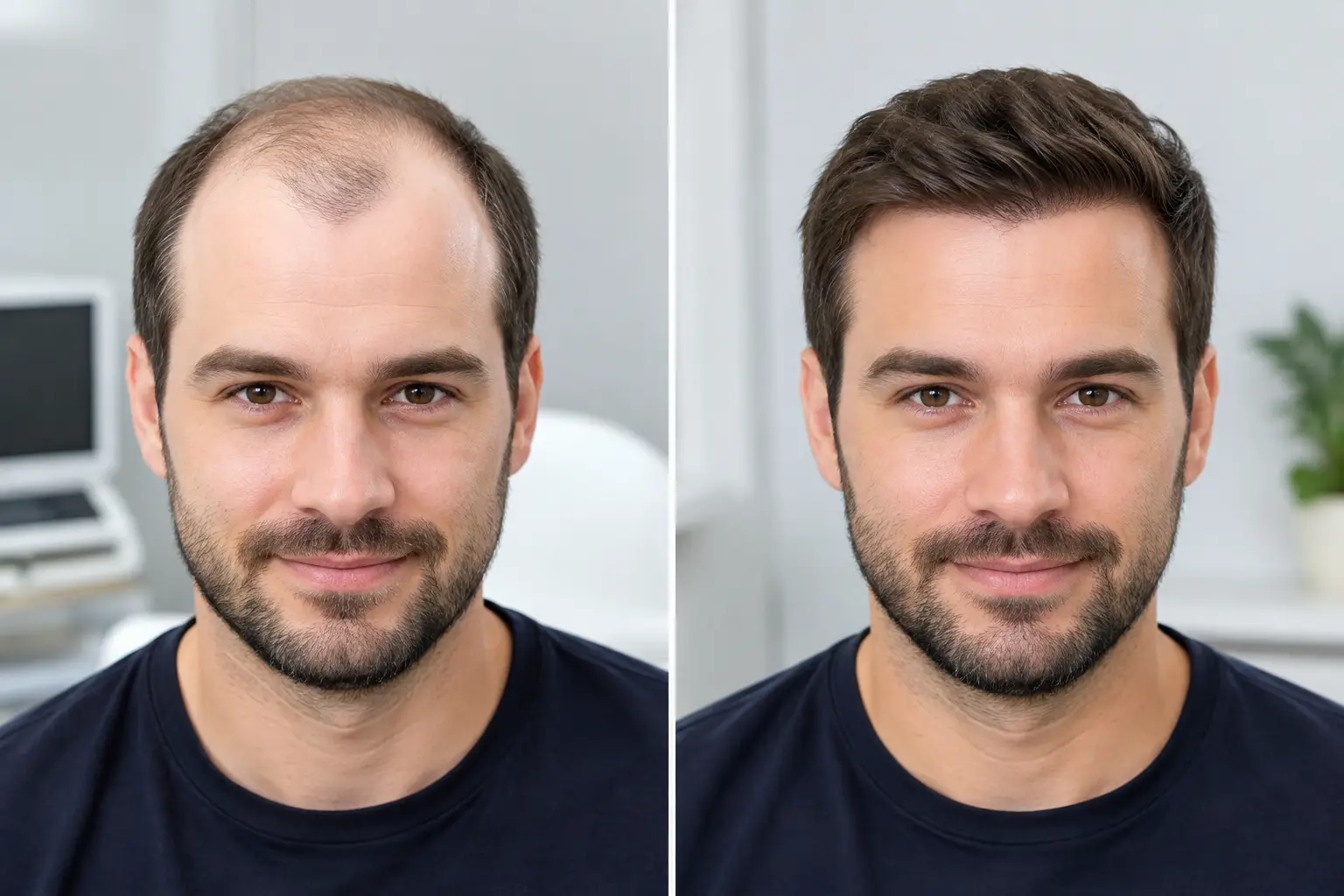
A changing hairline rarely happens all at once. For most people, it starts with subtle photos, more forehead showing in certain lighting, or the frustrating sense that your hairstyle no longer sits the way it used to. If you are researching the best options for hairline restoration, you are likely looking for more than a temporary fix. You want a solution that looks natural, fits your stage of hair loss, and gives you confidence when you look in the mirror.
The good news is that hairline restoration is no longer a one-size-fits-all decision. The best treatment depends on how much recession you have, how stable your hair loss is, your age, your donor hair quality, and how quickly you want to see change. For some patients, surgery is the clearest path to a restored hairline. For others, non-surgical treatment can slow further loss and improve density enough to delay or reduce the need for a procedure.
What makes a hairline restoration option the right one?
The hairline is one of the most technically demanding areas to treat. It is not just about filling in empty space. It is about shape, angle, density, and age-appropriate design. A hairline that is too low, too straight, or too dense in the wrong places can look unnatural even if the grafts grow well.
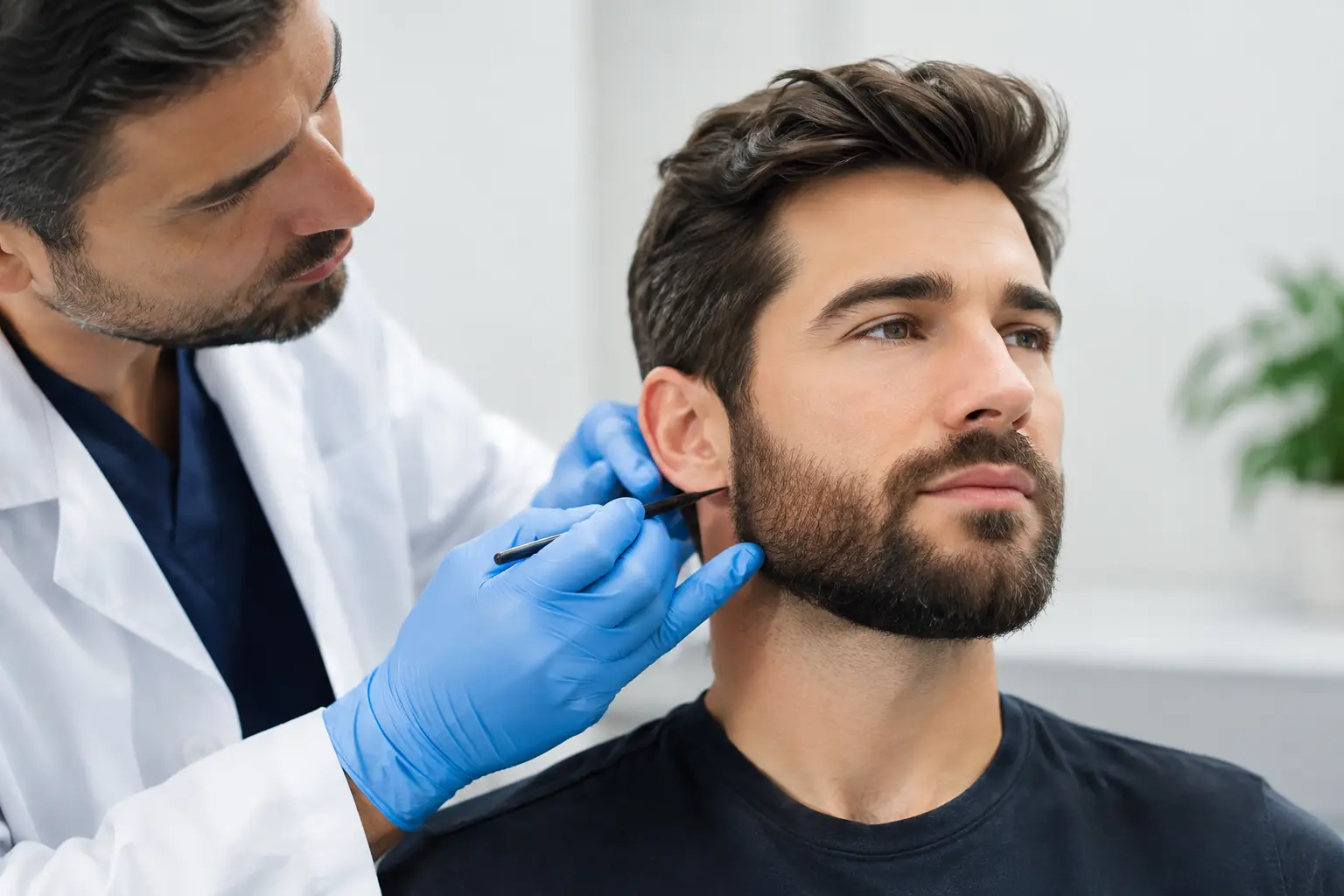
That is why the best approach starts with diagnosis, not guesswork. Some patients have a mature hairline that does not need aggressive correction. Others have active male or female pattern hair loss and need a broader plan that protects existing hair while restoring the front. The strongest results usually come from matching the treatment to the pattern, rather than chasing the fastest cosmetic change.
Best options for hairline restoration by treatment type
FUE hair transplant
For patients with a receding or uneven hairline, FUE is often the most effective long-term solution. Follicular Unit Extraction moves healthy hair follicles from a donor area, usually the back or sides of the scalp, into the hairline. Because those follicles are typically resistant to pattern hair loss, they can continue growing in their new location for years.
The appeal of FUE is precision. Individual grafts can be placed to recreate a natural-looking transition zone, soften temple recession, and rebuild density where it matters most. It also avoids the linear scar associated with older strip methods, which is important for patients who wear their hair shorter.
That said, FUE is not simply about moving hair forward. It requires careful planning around donor supply and future loss. If a patient is still losing native hair quickly, surgery without a maintenance plan can create an uneven result later. In those cases, combining FUE with medical therapy is often the smarter move.
Robotic FUE
Robotic-assisted FUE can be an excellent option for the right candidate, especially when consistency and graft harvesting precision are priorities. Advanced systems such as ARTAS® use imaging and digital mapping to help identify and harvest follicular units with accuracy.
For patients, the advantage is not that a robot replaces medical judgment. It is that technology can support a highly controlled extraction process. The artistry still matters most at the hairline, where design, angle, and placement determine whether the result looks believable. Robotic FUE can be a strong fit for patients who want advanced technology as part of a physician-led plan.
Hair loss medications
Medication is one of the most overlooked hairline treatments because it does not offer the instant visual change people imagine when they think about restoration. But for many men and some women, it is a foundational option.
Prescription medications can help slow ongoing loss and, in some cases, thicken miniaturized hairs near the hairline. This matters because preserving native hair often improves the final cosmetic result, whether or not surgery is part of the plan. Medication tends to work best when started earlier, before large areas become completely bare.
The trade-off is patience and consistency. Results take time, and not every patient responds the same way. Some will see stabilization more than regrowth. Others may not be ideal candidates based on health history, side effect concerns, or pregnancy-related considerations. Still, medication remains one of the best options for hairline restoration when the goal is to hold onto existing hair and support long-term planning.
Regenerative hair loss injections
Regenerative treatments can be a useful middle ground for patients who are not ready for surgery or who want to strengthen thinning areas alongside other therapies. These injections are designed to support the scalp environment and may help improve the quality of miniaturizing hair.
They are usually best suited for early-stage thinning rather than a deeply receded hairline with complete loss. In practical terms, they can help preserve and enhance what is still there, but they generally do not recreate a brand-new hairline the way a transplant can. Patients who understand that distinction tend to be happier with the outcome.
Low-level laser therapy
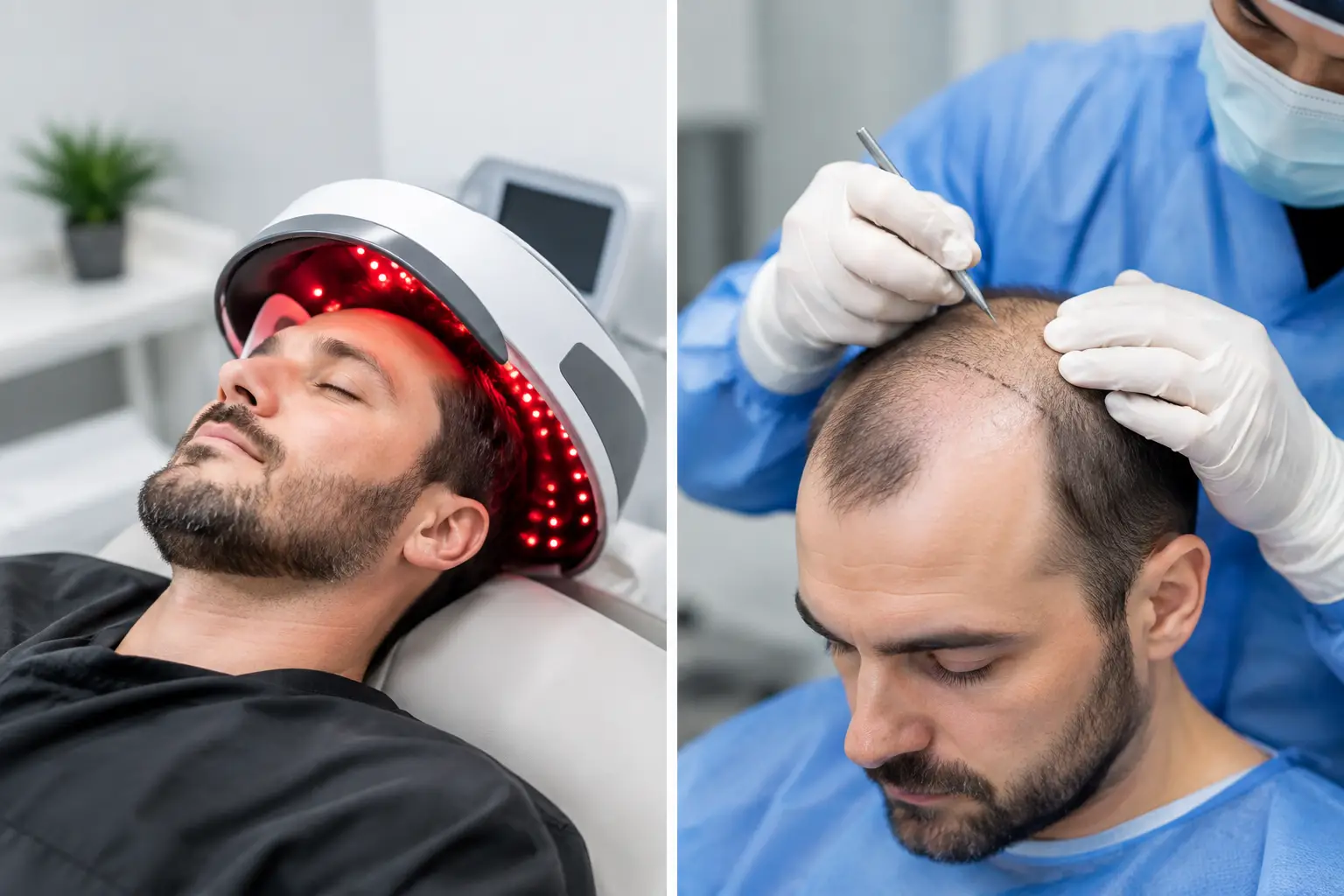
Laser therapy is another non-surgical option that can support hair health and improve thickness for some patients. It is low-risk, noninvasive, and easy to combine with other treatments.
On its own, laser therapy is usually not enough to rebuild a significantly receded hairline. Where it helps most is in a maintenance role. It may support existing follicles, improve overall hair quality, and complement medication or post-transplant care. For patients who want the least invasive place to start, it can be part of a sensible treatment plan, as long as expectations stay realistic.
Surgical vs non-surgical hairline restoration
If your hairline has noticeably receded and you want to put hair back where it is gone, surgery is usually the most direct option. A transplant physically restores follicles to the area, which is why it remains the standard for visible hairline reconstruction.
If you still have thinning hairs in the hairline and your main concern is progression, non-surgical treatment may be enough to stabilize loss and improve appearance. This is especially true for younger patients who are still early in the process and may benefit from preserving options for the future.
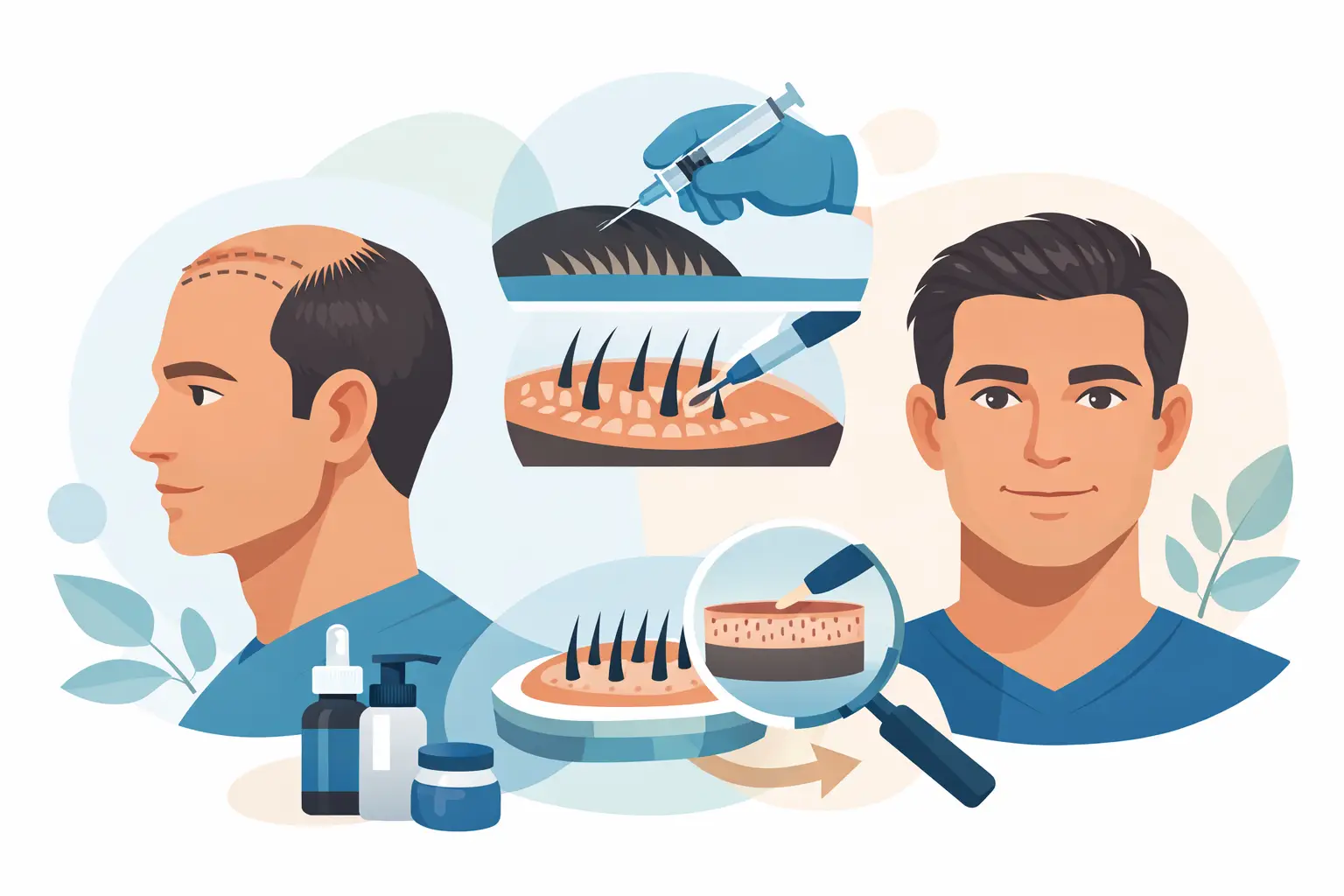
Many of the best outcomes involve both. A patient may use medication, laser therapy, or regenerative treatment to protect existing hair, then choose FUE to refine shape and density. That combination approach often looks more natural over time because it addresses both current recession and future change.
Who is a good candidate for each option?
A good FUE candidate usually has enough healthy donor hair, realistic expectations, and a level of hairline recession that warrants surgical correction. Candidates also need a design plan that fits their facial structure and age. The best hairlines do not look transplanted. They look like they belong.
A good medication candidate is someone with active thinning, especially if miniaturization is still present near the front. This can include patients who are not ready for a procedure or those preparing for one.
A good regenerative or laser therapy candidate is often in the earlier stages of loss or looking for supportive treatment to enhance a broader plan. These options can be helpful, but they are rarely a substitute for transplant surgery when the hairline is already significantly gone.
Women deserve especially careful evaluation. Female hairline changes can involve diffuse thinning, hormonal shifts, traction-related loss, or genetic pattern hair loss. The treatment path is often more individualized, which is why scalp analysis and diagnosis matter so much before selecting a procedure.
What patients often get wrong about hairline restoration
One common mistake is focusing only on the number of grafts. Graft count matters, but hairline restoration is more about placement strategy than brute volume. A smaller, well-designed procedure can look better than a larger one with poor planning.
Another mistake is assuming earlier is always better. Sometimes it is. Sometimes waiting a bit while stabilizing loss leads to a better long-term result. The right timing depends on the pattern and pace of change.
The third is believing every treatment works the same for everyone. Hair caliber, scalp contrast, curl pattern, donor density, and genetics all affect what is possible. The best treatment plan is personal, not generic.
Choosing the best options for hairline restoration with confidence
The most reliable path forward is a medical evaluation that looks at both restoration and prevention. That means examining the donor area, mapping the recession pattern, reviewing family history, and discussing whether your hair loss appears stable or active. It also means being honest about your goals. Some patients want a strong cosmetic change now. Others want a conservative plan that ages well and protects flexibility.
At Austin Hair Clinic, that kind of planning is central to the process. Advanced options matter, but so does restraint, design judgment, and physician oversight. The right treatment should restore more than hair. It should restore confidence without making you look overdone or overtreated.
If your hairline has been bothering you for a while, the next useful step is not guessing between trends. It is finding out what your hair is likely to do next, and choosing a plan that still makes sense years from now.