ARTAS Robotic Hair Transplant Explained
Hair loss usually becomes real in ordinary moments – bright bathroom lighting, a video call camera angle, a photo someone else took. When that shift happens, many patients start researching an ARTAS robotic hair transplant because they want a solution that feels advanced, precise, and natural-looking. That instinct makes sense. For the right candidate, ARTAS can be an excellent way to restore hair with the benefits of FUE and the added consistency of robotic assistance.
What is an ARTAS robotic hair transplant?
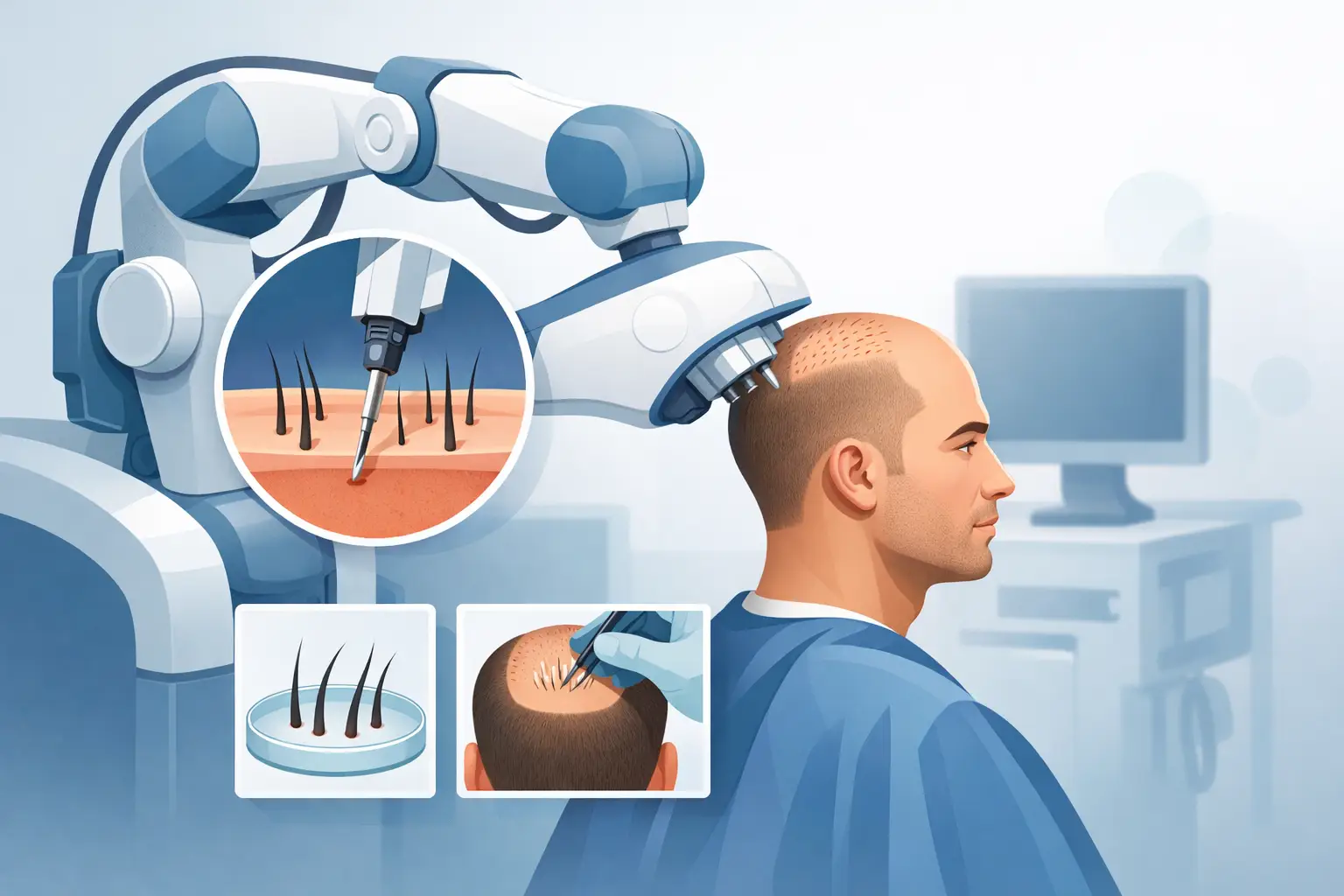
ARTAS is a robotic-assisted system used during FUE, or Follicular Unit Extraction. In FUE, individual hair follicles are removed from a donor area, usually the back and sides of the scalp, and then transplanted into thinning or balding areas. Instead of removing a strip of scalp as in FUT, FUE works follicle by follicle.
With an ARTAS robotic hair transplant, the robotic system helps identify and harvest suitable follicular units from the donor zone. It uses digital imaging and algorithm-based selection to assist with speed, spacing, and precision during extraction. The goal is to collect healthy grafts while preserving the appearance of the donor area.
That matters because a hair transplant is not just about moving hair. It is about managing a limited donor supply wisely. A well-performed procedure has to balance graft quality, donor preservation, and natural placement in the recipient area.
How ARTAS robotic FUE differs from manual FUE
Patients often assume robotic means fully automated. It does not. ARTAS assists the harvesting phase, but physician planning, graft strategy, hairline design, and overall aesthetic judgment still matter a great deal.
Manual FUE relies on the surgeon and team to score and extract follicles by hand using specialized tools. ARTAS robotic FUE uses imaging and robotic guidance to assist with identifying and scoring follicular units. In practical terms, the difference is less about replacing medical skill and more about adding technology to one part of the process.
For some patients, that added consistency is appealing. The system can help reduce operator fatigue during extraction and may support efficient graft harvesting in appropriate candidates. At the same time, manual FUE can still be an excellent option, especially when the patient has hair characteristics, donor limitations, or cosmetic goals that benefit from a more customized manual approach.
This is why the best question is not, “Is ARTAS better?” It is, “Is ARTAS better for your scalp, your pattern of loss, and your goals?”
Who is a good candidate for an ARTAS robotic hair transplant?
An ARTAS robotic hair transplant is often a strong fit for men with pattern hair loss who want FUE and have a donor area that can be efficiently harvested by the system. Patients who keep their hair short often like FUE because it avoids the linear scar associated with FUT.
Good candidacy depends on more than the amount of visible thinning. Donor density, hair caliber, scalp characteristics, contrast between hair and scalp, and future hair loss progression all affect planning. Some patients are focused on rebuilding a frontal hairline. Others want crown coverage, increased density through the mid-scalp, or a staged long-term strategy.
Not every patient is ideal for robotic harvesting. Certain hair textures, donor patterns, or advanced loss patterns may call for a different approach. Women with diffuse thinning also need careful evaluation because donor stability is not always straightforward. That is one reason a consultation matters. A transplant should be built around the biology of your hair loss, not just the technology available.
What happens during the procedure?
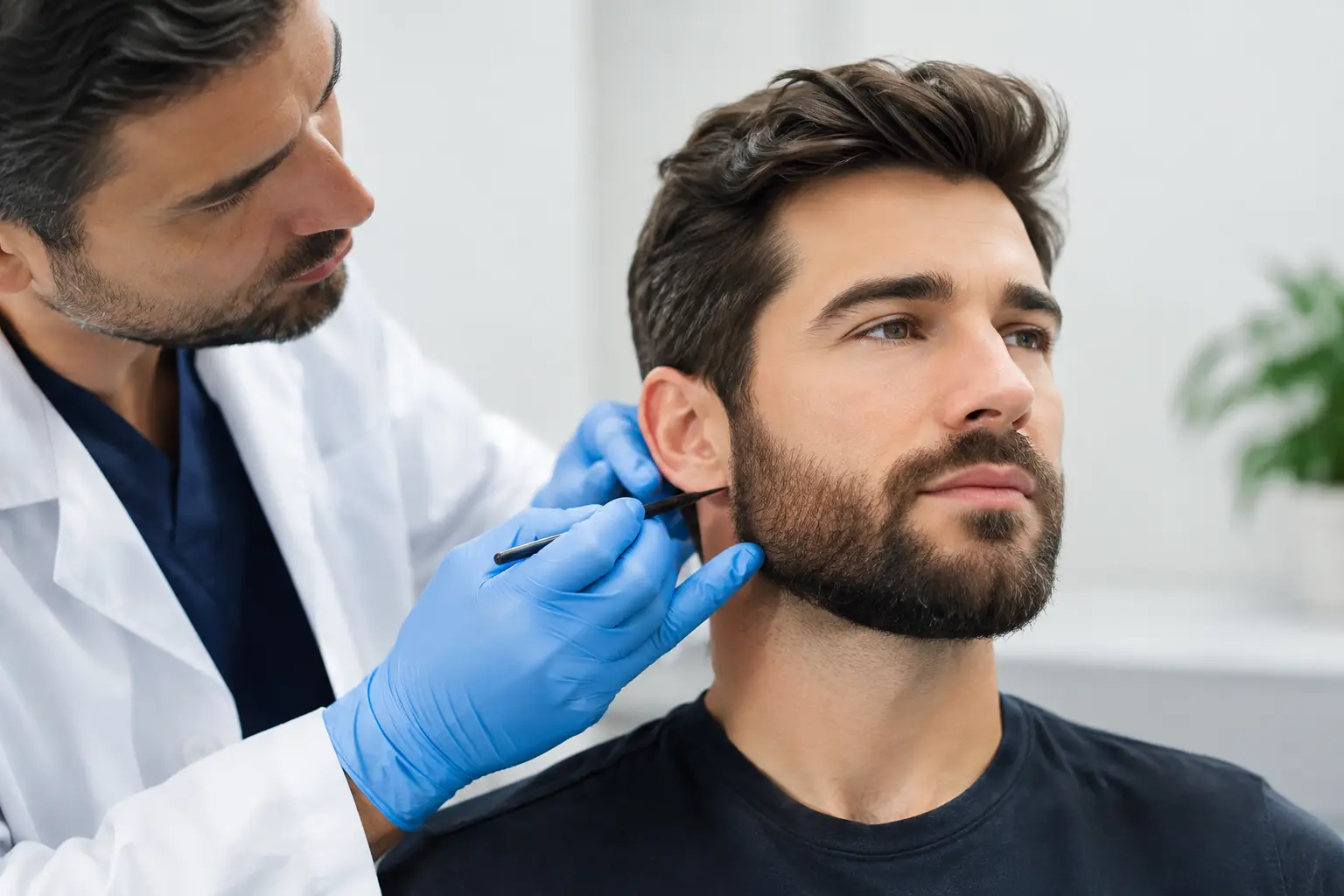
The procedure starts with a scalp evaluation, donor assessment, and design planning. Before any grafts are harvested, the treatment plan has to answer the most important aesthetic questions: where should density go first, how conservative or youthful should the hairline be, and how can donor grafts be used responsibly?
On procedure day, the donor area is trimmed and local anesthesia is used. During the ARTAS robotic FUE process, the system scans the donor area and helps select follicular units for harvesting. Those grafts are then removed, prepared, and implanted into the recipient sites according to the physician’s design.
Patients are usually surprised by how methodical the process is. Hair restoration is detail work. Tiny decisions about angle, direction, placement, and density are what create a result that looks like your hair rather than transplanted hair.
What are the benefits of ARTAS?
The appeal of ARTAS is easy to understand. It brings advanced imaging and robotic assistance to a procedure where precision matters at every step.
One benefit is consistency in graft harvesting. Another is the ability to selectively harvest follicular units across the donor area in a pattern designed to maintain a natural appearance. Because ARTAS is part of the FUE category, it also offers the general advantages of FUE, including no linear strip scar and a recovery process many patients find manageable.
For busy professionals, the idea of a minimally invasive procedure with refined technology is often reassuring. Patients want to know they are choosing something modern, but modern alone is not enough. The real value is modern technology paired with experienced medical judgment.
What are the limitations and trade-offs?
This is where honest guidance matters. An ARTAS robotic hair transplant can be excellent, but it is not the best solution for every case.
First, robotics do not replace artistry. The system helps with harvesting, but natural-looking results still depend on physician oversight, planning, and implantation design. Second, a transplant cannot create unlimited density. It redistributes existing donor hair, so expectations must match what your donor supply can support.
Third, transplantation does not stop future hair loss in untreated native hairs. If your loss is still progressing, you may also need medical therapy, regenerative treatments, or low-level laser therapy as part of a broader plan. This is especially important for younger patients who want a strong hairline now but may continue thinning behind it later.
Cost is another factor. ARTAS may carry different pricing than other FUE approaches depending on the case. That does not automatically make it a better value. The better value is the treatment plan that gives you the most natural and durable outcome for your specific pattern of loss.
Results and recovery: what to expect
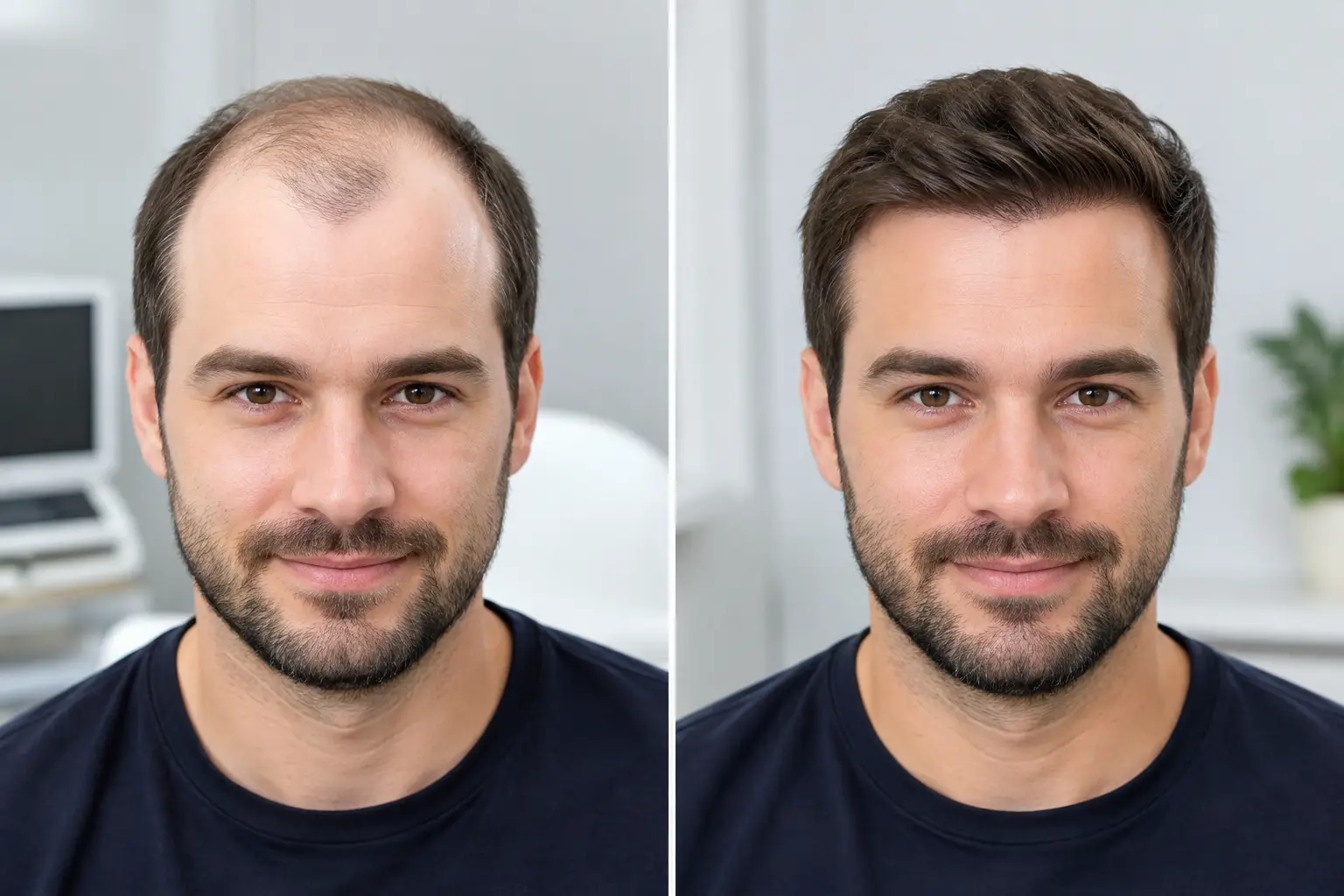
Recovery after FUE is generally straightforward, though it still requires patience. Most patients have some redness, tenderness, and short-term scabbing in the treated areas. The transplanted hairs often shed before new growth begins, which can be unsettling if you are not prepared for it.
Visible growth usually starts gradually over the following months, with more noticeable improvement later in the first year. Hair restoration is a slow reveal, not an overnight change. That can be frustrating, but it is also part of why natural results are possible. Real hair grows in stages.
Final maturation takes time, and the exact timeline varies by patient, graft location, and individual healing. Hairline work may show differently than crown work. A dense frontal restoration may need a different strategy than broad coverage over a large thinning area.
ARTAS robotic hair transplant and long-term planning
The most successful transplant patients tend to think beyond one procedure. That does not mean everyone needs multiple surgeries. It means the plan should account for where your hair loss is headed, not just where it is today.
A good evaluation looks at family history, current miniaturization, donor reserves, and non-surgical options that may help preserve existing hair. For some patients, medication or regenerative therapy improves the overall result by protecting surrounding native hairs. For others, the transplant itself is the main intervention, with supportive treatment recommended afterward.
This broader view is what separates a quick fix from a smart restoration strategy. If your goal is to look better for years, not just months, treatment decisions should be made with restraint and foresight.
Choosing the right provider for ARTAS robotic FUE
If you are comparing clinics, focus on more than whether they offer ARTAS. Ask who is directing the medical plan, how candidacy is determined, how hairlines are designed, and what happens if robotic FUE is not the best fit for your case.
Technology can be impressive, but hair restoration outcomes still come down to diagnosis, aesthetics, and execution. You want a provider who can explain the trade-offs clearly, show natural-looking results, and offer more than one pathway if your needs are better served by manual FUE or non-surgical support.
At Austin Hair Clinic, that patient-centered approach matters because hair loss is personal. The right treatment should restore more than hair density. It should restore confidence in a way that looks believable, feels tailored, and respects your long-term goals.
If an ARTAS robotic hair transplant is on your shortlist, the next smart step is not guessing from photos online. It is getting your scalp, donor area, and hair loss pattern evaluated by a specialist who can tell you whether ARTAS truly fits your case – and if it does, how to make the most of it.