Temple Hair Loss Treatment That Works

When the temples start to thin, the change is usually subtle at first. A little more scalp shows in photos. Your hairline looks less even in the mirror. Then one day, it is all you see. Temple hair loss treatment matters because this area frames the face, and even mild recession can make you look older, more tired, or less like yourself.
Temple thinning is one of the most common early signs of hair loss in both men and women. It can happen as part of a maturing hairline, androgenetic alopecia, traction, stress-related shedding, or hormonal change. The right treatment depends on the cause, how long the hair has been thinning, and whether the follicles are still active.
What causes temple hair loss?
The temples are especially vulnerable because the hair in this region is often more sensitive to hormones and mechanical stress. In men, recession at the corners of the hairline is often tied to pattern hair loss driven by DHT sensitivity. In women, temple thinning may be linked to traction from tight hairstyles, hormonal shifts, nutritional issues, or diffuse miniaturization that starts around the frontal scalp.
This is where self-diagnosing can lead people in the wrong direction. Not every receding temple needs a transplant, and not every thinning temple will respond to medication alone. If follicles are miniaturized but still alive, non-surgical treatment may help preserve and thicken existing hair. If the area has been smooth and bare for years, restoration often requires transplantation.
Temple hair loss treatment starts with the right diagnosis
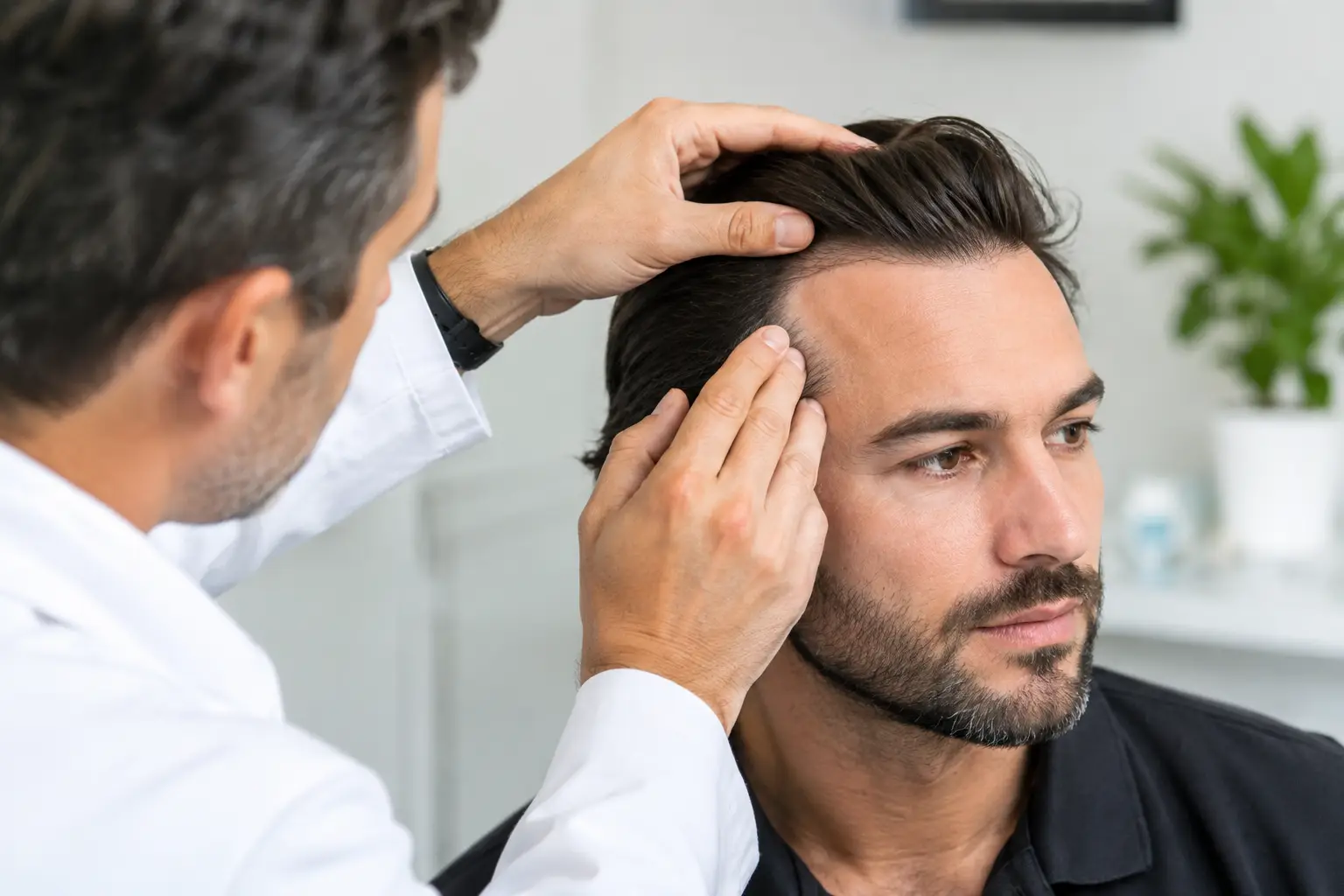
A good plan begins with a close look at the pattern, the scalp, and the history behind the shedding. The question is not just, “How do we fill this area in?” It is, “Why did it thin in the first place, and what can still be saved?”
That distinction matters because temple restoration is one of the most detail-sensitive areas in hair medicine. The angle, direction, and density of hair growth all affect whether the result looks natural. A treatment plan also has to account for future loss. Rebuilding the temples without stabilizing ongoing thinning can leave patients chasing a moving target.
Signs you may need treatment now
If your corners are creeping back, your temple density looks weaker than it did a year ago, or your styling options are becoming more limited, it is worth getting assessed. Early intervention often gives patients more choices and better long-term control.
Waiting is not always wrong, but it can reduce what non-surgical options are able to do. Once follicles are inactive, thickening treatments can only go so far.
Non-surgical temple hair loss treatment options
For many patients, the first step is preserving native hair. That is especially true when temple thinning is recent, mild to moderate, or still actively progressing.
Hair loss medications
Medications can help slow progression and support stronger growth in thinning areas. Depending on the patient, treatment may include prescription options aimed at reducing pattern hair loss or supporting regrowth. These can be effective, but they require consistency and realistic expectations. They do not create instant density, and they do not work equally well for everyone.
Temple response can also be less dramatic than response at the crown. Some patients see noticeable thickening along the frontal edges, while others mainly benefit from stabilization. That still matters. Keeping the hair you have is often the foundation for any successful long-term plan.
Regenerative hair loss injections
Regenerative therapies can be a useful option for patients who want to strengthen existing follicles and improve hair quality in areas that are thinning but not yet bare. These treatments are often used to stimulate the scalp environment and support healthier growth cycles.
They are not a substitute for surgery when there is significant loss, but they can be valuable in the early to moderate stages. In some cases, they are paired with medication to improve results.
Low-level laser therapy
Low-level laser therapy is another non-surgical option commonly used to support hair health. It is painless, low-maintenance, and best viewed as a supportive treatment rather than a standalone fix for advanced recession.
Patients who do well with laser therapy are typically those with miniaturized hairs that still have growth potential. If the temples are shiny and fully bald, laser therapy is unlikely to rebuild a hairline on its own.
When FUE is the best temple hair loss treatment
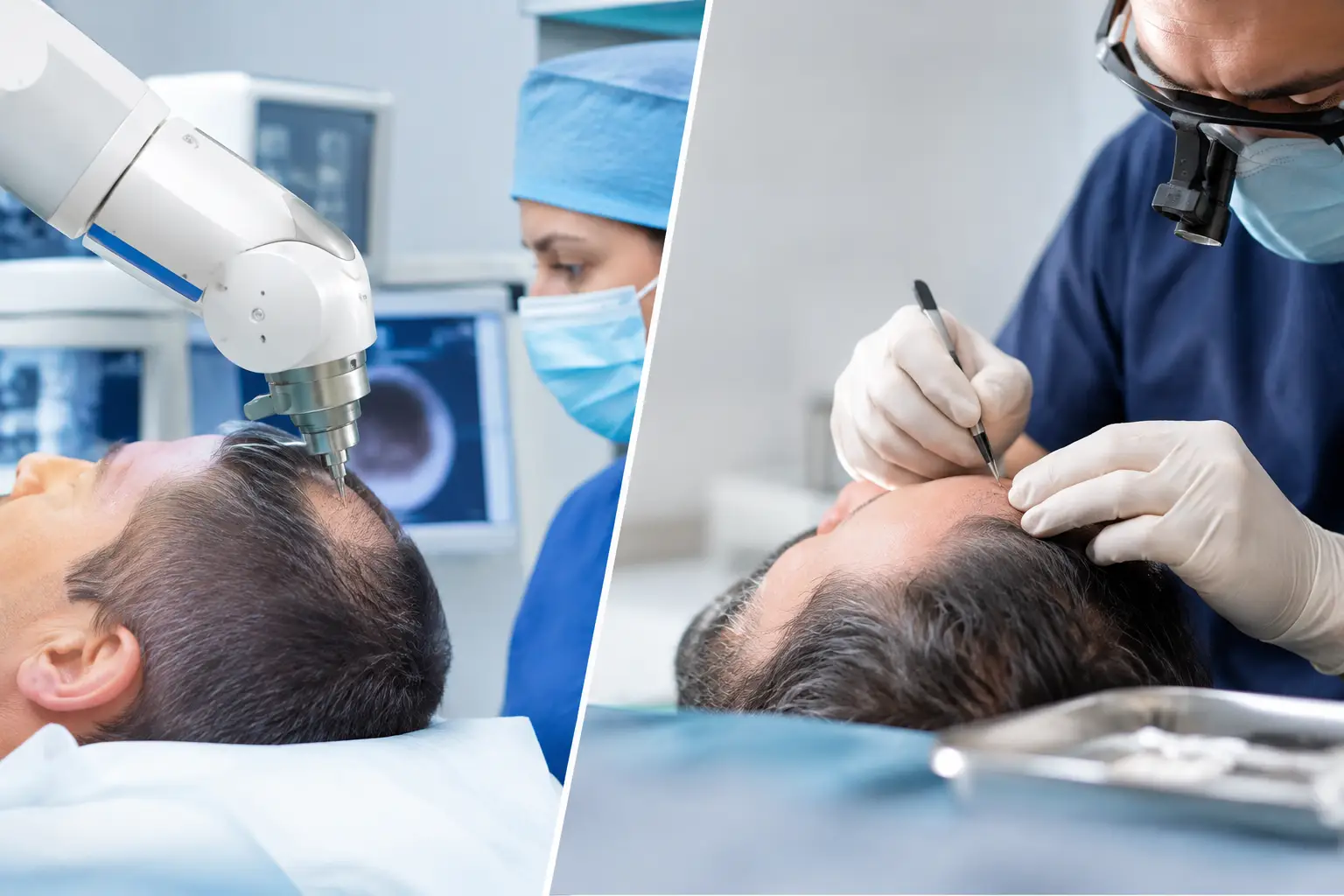
If temple recession is established and the follicles are no longer producing healthy hair, FUE hair transplantation is often the most effective way to restore shape and density. This is especially true for patients who want a visible, lasting correction rather than ongoing camouflage.
FUE works by harvesting individual follicular units from a donor area and placing them into the temples with careful attention to angle, spacing, and hairline design. That precision is critical. Temple hair does not grow straight out. It lies flat, changes direction, and needs a soft, irregular pattern to look believable.
This is why temple work is often harder than patients expect. A technically successful transplant is not enough. The artistry matters just as much as the graft survival. Done well, temple restoration can create a more balanced hairline and a younger, more confident appearance without looking overbuilt or artificial.
Why temple design requires precision
The goal is not to make the hairline aggressively low or unnaturally straight. The goal is to restore proportion. For some patients, that means subtly filling in the corners. For others, it means rebuilding a stronger frame around the face while keeping the result age-appropriate.
An overly dense or sharply placed temple restoration can look obvious. A conservative, well-planned design usually ages better and blends more naturally with future hair changes.
ARTAS and physician-guided planning
Advanced FUE technology can improve efficiency and consistency in graft harvesting, but planning still drives the result. Hair restoration is not just a technical procedure. It is a medical and aesthetic decision that should reflect your pattern of loss, donor supply, long-term goals, and natural hair characteristics.
That is one reason many patients prefer a clinic that offers more than one path forward. At Austin Hair Clinic, temple thinning can be evaluated through a broader lens, whether that points to medication, regenerative support, laser therapy, FUE, or a combination approach.
Temple hair loss treatment for women
Women often notice temple thinning differently than men do. Instead of obvious corner recession, they may see widening at the frontal edges, less fullness around the face, or breakage and sparse growth from years of tension styling. The emotional impact can be just as significant.
Treatment for women needs a careful workup because the causes can be more varied. Hormones, stress, traction, thyroid issues, and genetic thinning can all play a role. Some women are excellent candidates for medical therapy and regenerative treatment. Others may benefit from transplantation once the cause is identified and the pattern is stable.
The main point is that temple loss in women should not be dismissed as purely cosmetic or untreatable. In many cases, improvement is possible with the right diagnosis and a personalized plan.
What results can you realistically expect?
That depends on where you are starting. If the temples are thinning but still populated with miniaturized hairs, treatment may improve density, slow progression, and make styling easier. If there is more advanced recession, a transplant can restore shape and visible fullness, but it takes time. Transplanted hair grows gradually, and final cosmetic improvement typically unfolds over months, not weeks.
It also depends on your donor hair, your natural hair caliber, and how aggressive your long-term hair loss pattern is likely to be. Patients with thick donor hair and limited recession usually have more flexibility than patients with extensive frontal loss and weaker donor reserves.
The best treatment plans are honest. They aim for improvement that looks natural, sustainable, and consistent with your features.
How to know which option fits you
If your temple loss is recent and active, preserving hair should usually be part of the plan. If the area has stayed sparse for a long time, restoration may require grafts. If you are not sure whether what you are seeing is a maturing hairline, pattern loss, or breakage, that uncertainty is exactly why a professional evaluation helps.
A thoughtful consultation should answer a few key questions clearly. Is the hair loss temporary or progressive? Are the follicles still viable? Would non-surgical care be enough, or are you likely to get a better result with FUE? And just as important, how do you create a result that still looks right five or ten years from now?
Temple thinning tends to feel personal because it changes how your face is framed. The good news is that you do not have to guess your way through it. With an accurate diagnosis and a plan built around your pattern, temple hair loss treatment can do more than address a hairline. It can help you feel like yourself again.