How to Improve Donor Healing After an FUE Transplant
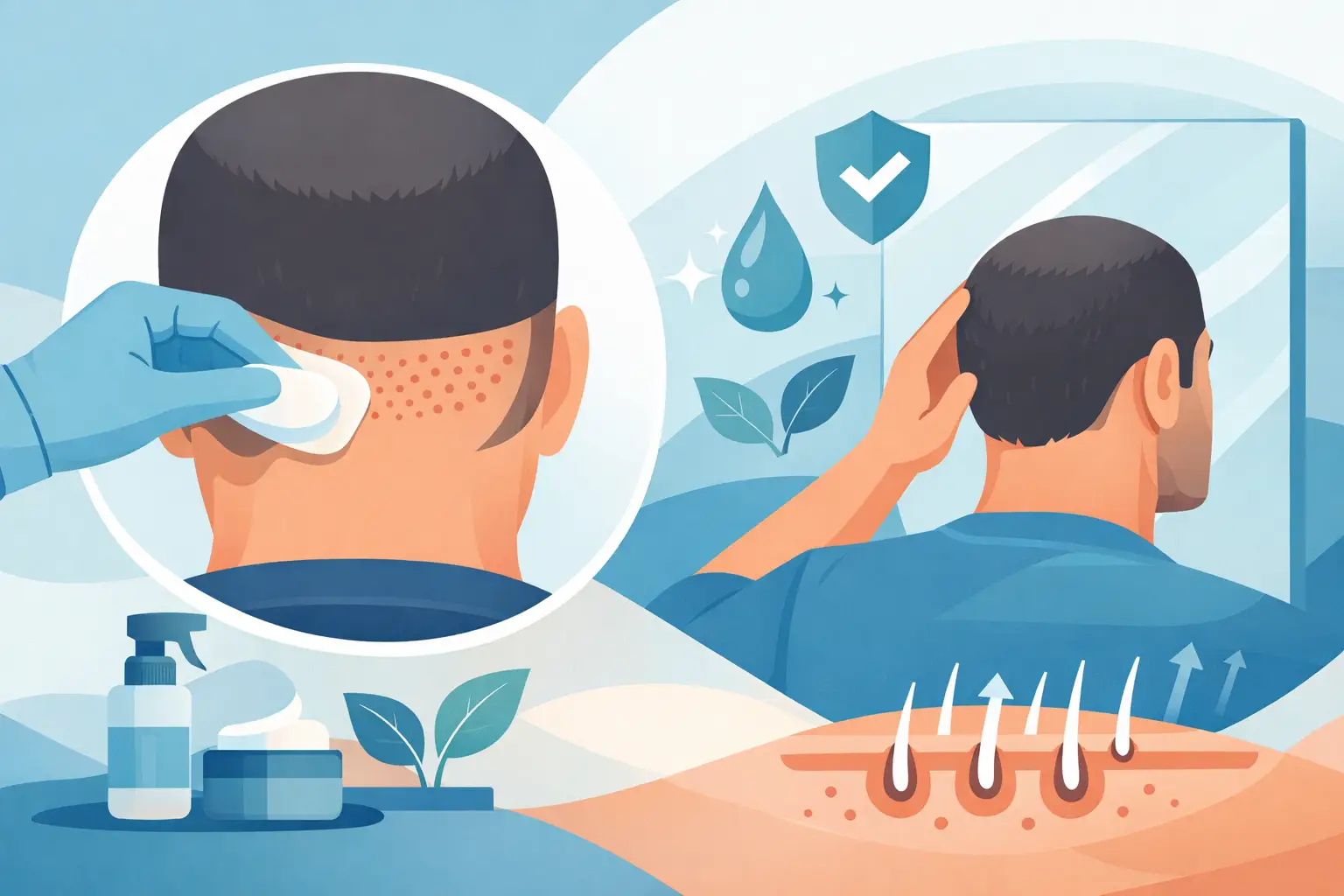
The donor area may be hidden beneath your existing hair, but it deserves just as much attention as the newly transplanted grafts. Knowing how to improve donor healing after an FUE hair transplant can help you protect your comfort, reduce avoidable irritation, and support a clean, natural-looking recovery.
During FUE, individual follicular units are carefully removed from the back and sides of the scalp, where hair is typically more resistant to thinning. Those tiny extraction sites heal quickly for most patients, but healing is still a process. Your aftercare choices during the first days and weeks can make a meaningful difference.
What Normal Donor Area Healing Looks Like
Immediately after FUE, the donor area can feel tender, tight, numb, or mildly itchy. You may see tiny red dots, pinpoint scabs, and slight swelling. These are expected effects of thousands of small extractions and are not, on their own, a sign that something is wrong.
Most patients notice that the small scabs begin to release over the first one to two weeks. Redness often improves steadily, although the timeline varies with skin tone, the number of grafts harvested, scalp sensitivity, and personal healing tendencies. Temporary numbness or altered sensation can last longer because small sensory nerves need time to recover.
The goal is not to make the donor area look perfect overnight. It is to create the best conditions for uneventful healing while allowing the extraction sites to close naturally.
Follow Your Post-Procedure Instructions Exactly
Every hair transplant plan is personal. The number of grafts, extraction pattern, scalp condition, medications, and whether you had standard manual FUE or robotic FUE can all affect your aftercare instructions. Your surgeon’s directions should always take priority over general guidance.
At Austin Hair Clinic, patients receive individualized recovery guidance because good results depend on more than the procedure itself. If you are unsure whether a product, workout, haircut, or medication is safe during recovery, ask before making assumptions.
The first 24 to 72 hours are especially important. Avoid touching the donor area except when directed to clean or apply prescribed products. Even clean hands can introduce bacteria, and repeated rubbing can irritate delicate healing skin.
Keep the Donor Area Clean Without Scrubbing
Patients sometimes worry that washing their scalp will disturb healing. In reality, gentle cleansing at the recommended time is usually helpful. It removes dried blood, oil, and debris that can contribute to itching and irritation.
Use the shampoo and washing technique provided by your medical team. Early on, this may involve a gentle rinse or careful application rather than vigorous lathering. Let water flow over the donor area with low pressure. Do not scrub with your fingernails, massage aggressively, or use a towel to rub the skin dry.
Pat dry gently if instructed, or allow the scalp to air dry. The trade-off is simple: you want to keep the area clean, but you do not want to mechanically pull at scabs before they are ready to shed on their own.
Do Not Pick at Scabs
Itching can be one of the most frustrating parts of donor healing. Still, picking, scratching, or peeling off scabs early can reopen tiny wounds, increase bleeding, and raise the risk of inflammation or infection. It can also lead to more noticeable temporary redness.
If itching becomes difficult to manage, contact your clinic. Your provider may recommend a safe approach based on where you are in recovery. Do not apply over-the-counter creams, oils, or medicated products to the donor area unless they have been approved for you.
Protect the Area From Pressure, Sweat, and Friction
For the first few nights, sleep exactly as instructed. Many patients are advised to keep their head elevated to help minimize swelling. Be mindful of pillows, headrests, and sleeping positions that place pressure on the back or sides of the scalp.
Avoid tight hats, helmets, and headwear until your provider clears them. A loose, clean hat may be appropriate after a certain point, but it depends on your procedure and the condition of both the donor and recipient areas. Friction from a snug cap can worsen tenderness and disturb healing scabs.
Sweat is another common concern. Light walking may be appropriate soon after surgery, but strenuous exercise, hot yoga, heavy lifting, saunas, and steam rooms should wait until your surgeon approves them. Excessive sweating can irritate the donor sites, while increased blood pressure and physical strain may contribute to swelling or bleeding early in recovery.
Give Your Body the Resources to Heal
A healthy recovery starts before surgery and continues long after the first wash. Prioritize sleep, hydration, and regular meals with adequate protein. Your body uses protein, vitamins, minerals, and fluids to repair skin and support normal healing.
Smoking and nicotine use can impair circulation and delay wound healing. This includes cigarettes, vaping products, cigars, nicotine pouches, and nicotine gum. Alcohol can also contribute to dehydration and may interact with prescribed medications. Follow your physician’s instructions about when to stop and resume these products.
It is also wise to discuss supplements honestly. Some vitamins and herbal products can affect bleeding, while others may not be appropriate around surgery. Do not assume that a product is safe just because it is labeled natural.
Use Medications as Directed
Your care plan may include antibiotics, anti-inflammatory medication, pain medication, saline spray, or other products. Take them exactly as prescribed and complete any antibiotic course unless your physician tells you otherwise.
Do not add aspirin, ibuprofen, blood-thinning supplements, or topical scalp treatments without checking first. Some patients use medical therapies such as minoxidil or prescription hair-loss medications as part of a broader hair restoration plan, but the timing of restarting them after surgery is individualized.
If you experience medication side effects, do not simply stop a prescribed medication without guidance. Call your provider so the issue can be addressed safely.
Watch for Signs That Need Medical Attention
Mild discomfort, scabbing, and short-term redness are common. Healing should generally trend in the right direction over time. Contact your surgical team promptly if you develop increasing pain rather than gradual improvement, spreading redness, worsening warmth, significant swelling, pus-like drainage, a fever, or persistent bleeding.
You should also call if you notice a rash, severe burning, hives, or any concern that feels different from the recovery instructions you were given. Early communication is always better than waiting and worrying at home.
Scarring is another concern for many FUE candidates. FUE leaves tiny dot-like scars rather than a linear scar, and these are often difficult to detect once the hair grows back. However, scar visibility can depend on skin type, healing response, graft count, extraction technique, and whether the donor area was overharvested. Choosing an experienced medical team and following aftercare instructions are both part of protecting the donor area.
Be Patient With the Cosmetic Timeline
The donor area often looks better before the transplanted hair begins growing. That can feel reassuring, but it does not mean the full recovery is complete. Existing hair around the extraction sites may temporarily look thinner because it was trimmed for surgery, and some patients experience temporary shedding in nearby hair.
Most people can return to work and many normal routines relatively soon, particularly if they can avoid strenuous activity and direct sun exposure. But timing varies. A patient with a larger session, sensitive skin, or a physically demanding job may need a more cautious return than someone with a smaller procedure and desk-based work.
Avoid direct sun on a healing donor area. If you need to be outdoors, follow your clinic’s direction on safe head coverage and sunscreen timing. Freshly healing skin is more vulnerable to irritation and prolonged discoloration from sun exposure.
A Better Recovery Starts With a Better Plan
Donor healing is not an afterthought. It is part of the precision behind a successful FUE hair transplant and part of preserving the healthy hair you may need for future restoration options. Gentle cleansing, hands-off care, temporary activity changes, good nutrition, and fast communication with your medical team can all support a smoother experience.
If you are preparing for FUE or have questions about your own recovery, a personalized conversation with a qualified hair restoration physician can replace uncertainty with a clear plan and help you move forward with confidence.