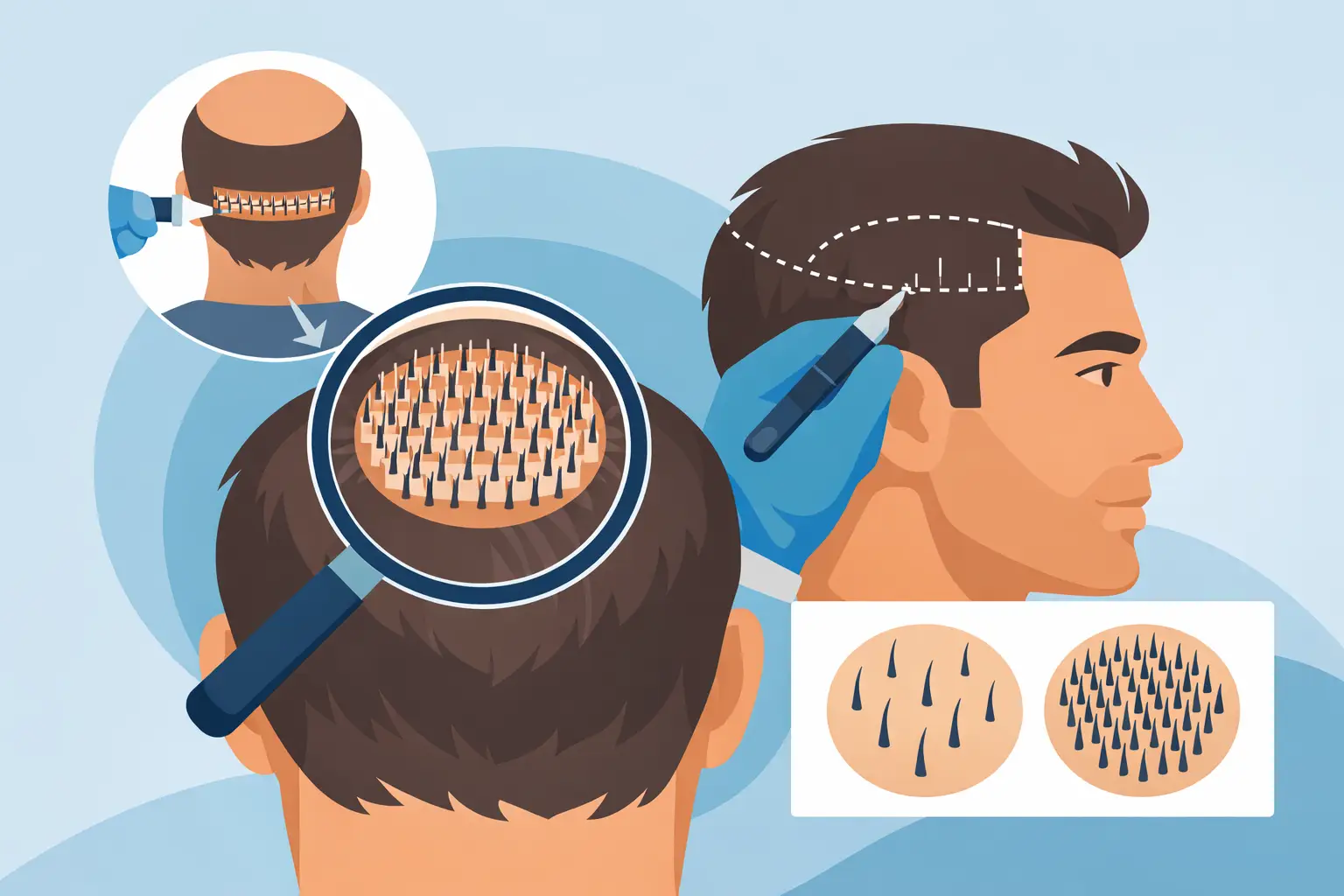
FUE Hair Transplant Recovery Timeline

The first week after treatment is usually the part patients worry about most. Not because FUE is highly invasive – it is not – but because every small change can feel significant when you are watching your hairline so closely. Understanding the fue hair transplant recovery timeline helps set realistic expectations, reduces unnecessary stress, and makes it easier to protect your result.
FUE, or Follicular Unit Extraction, is designed to move healthy hair follicles from a donor area to areas of thinning or loss with precision and minimal scarring. Recovery is generally straightforward, but it is not instant. The healing process happens in stages, and each stage has a purpose.
What the fue hair transplant recovery timeline really looks like
Most patients are surprised by two things. First, the scalp often looks more normal sooner than they expected. Second, visible growth takes longer than they hoped. Both can be true at the same time.
The early phase is about healing. The middle phase is about patience. The later phase is when the cosmetic payoff becomes much more noticeable. If you know that going in, the process feels far less uncertain.
Days 1 to 3
Right after an FUE procedure, it is normal to see small scabs around the grafts, mild redness, and some swelling. The donor area may feel tender, and the recipient area can look dotted or pink. This is expected. Those tiny openings are part of the placement process, and they begin closing quickly.
During this window, the main goal is protecting the grafts. That means following washing instructions carefully, avoiding friction, and resisting the urge to touch or inspect the area too aggressively. Sleeping with your head elevated is often recommended because it can help reduce swelling, especially around the forehead.
Most people are able to rest at home comfortably. Discomfort is usually manageable, but the exact experience depends on your pain tolerance, the size of the procedure, and whether additional treatments were performed at the same time.
Days 4 to 7
By the middle of the first week, swelling often starts to improve. Scabbing may still be present, but the scalp is usually settling down. Some itching can develop as the skin heals. That can be frustrating, but it is generally a normal part of recovery.
This is the point where some patients feel tempted to resume their usual routine too quickly. It is better to be cautious. Heavy exercise, intense sweating, direct sun exposure, and anything that risks rubbing the grafts can still interfere with early healing.
If you work in an office or from home, you may feel ready to return relatively soon. If your job is public-facing or physically demanding, timing may depend on how visible the redness is and how comfortable you feel socially.
Week 2
For many patients, week two is when the scalp begins to look much better cosmetically. Scabs are usually gone or nearly gone, redness often fades, and the donor area continues to improve. At this stage, you may look fairly normal to others, especially if you keep your hair slightly longer around the treated area.
This part of the timeline can feel encouraging because the visible signs of the procedure are less obvious. At the same time, it is still early. The grafts are settling in, and the final outcome is nowhere close yet.
The part that surprises people: shedding in weeks 2 to 8
One of the most misunderstood parts of the fue hair transplant recovery timeline is shedding. After the transplanted follicles are placed, the hairs attached to those follicles often fall out. Patients sometimes interpret this as a problem, but in most cases it is a standard phase called shock loss.
The important distinction is that the hair shaft may shed while the follicle remains in place. The follicle then enters a resting phase before starting a new growth cycle. That means your hair can look thinner before it starts looking better.
Not everyone sheds at the same pace. Some patients notice it quickly, while others experience a more gradual change. Existing surrounding hairs can sometimes shed temporarily as well, especially in areas that were already weakened. This can make the early months emotionally difficult if you were expecting immediate density.
Months 2 to 3
This is often the least rewarding stage visually. The transplanted area may still look sparse, and you may feel like not much is happening. In reality, the follicles are transitioning beneath the surface.
Patience matters here. Hair growth does not happen all at once, and it does not begin at full thickness. If you compare your scalp day by day, you may only notice frustration. If you compare month by month, the progress is easier to see.
This is also a good time for your physician to evaluate healing and discuss whether supportive treatments make sense. Depending on the pattern of loss and long-term goals, medications, regenerative therapies, or low-level laser therapy may be part of a broader plan to support native hair and improve overall density.
Months 3 to 4
Early new growth often starts to appear around this point. The hairs are usually fine, soft, and lighter at first. They may not look dramatic yet, but this stage is meaningful because it signals that the follicles are becoming active again.
Growth at this stage is uneven by nature. Some grafts begin producing visible hair sooner than others. One side may seem ahead of the other. A hairline can look patchy before it looks full. That does not automatically mean anything is wrong.
Patients who were treated in the hairline often begin to feel more optimistic here because they can finally see shape returning, even if density is still limited.
Months 5 to 6
This is when many people feel the procedure starts becoming worth it in the mirror. More grafts are actively growing, the hair gains length, and the overall pattern becomes easier to appreciate. If the transplant was done with strong planning and natural placement, the result begins blending more effectively with your existing hair.
That said, six months is not usually the finish line. It is a major milestone, but not the final result. Some patients at this point are thrilled. Others still feel they need more fullness. Both reactions can be normal, depending on the extent of the original hair loss, hair caliber, scalp contrast, and the number of grafts placed.
Months 7 to 9
By this stage, the hair typically becomes denser and more mature in texture. The strands often thicken, and styling gets easier. Areas that looked soft or wispy earlier can start to carry more visual weight.
This is also when friends, coworkers, or family may begin noticing a clear difference without always realizing why. A well-executed FUE result tends to look like you simply have better hair, not like you had a procedure.
For patients restoring facial hair, eyebrows, or refining a hairline, these months can be especially satisfying because the aesthetic detail becomes more visible.
Months 10 to 12 and beyond
Most patients see their most meaningful cosmetic result between 10 and 12 months, although some continue improving after that. Crown transplants, in particular, can take longer because the area often grows more slowly and may need extra time to show fullness.
By the one-year mark, your physician can usually assess the outcome with much better accuracy. If the plan involved restoring a large area, it may also be the right time to discuss whether a second procedure would add value or whether your current result already meets your goals.
What can affect your recovery timeline?
No two patients heal on exactly the same schedule. The size of the session matters, but so do factors such as your skin sensitivity, hair characteristics, general health, and how closely you follow aftercare instructions.
The treatment area matters too. Hairline work often becomes noticeable earlier because even modest growth changes the frame of the face. Crown work usually demands more patience. If you already have significant miniaturization in surrounding hair, long-term management may also involve non-surgical support so the final look stays balanced as you age.
Technique plays a role as well. Careful graft handling, thoughtful recipient site design, and experienced physician oversight all contribute to a smoother recovery and a more natural result. That is one reason many patients look for a clinic that treats hair restoration as a full process, not just a one-day procedure.
When should you be concerned?
Some redness, swelling, itching, and shedding are normal. Severe pain, spreading redness, drainage, or signs of infection are not. If something feels off, it is always better to check in with your medical team than to search for reassurance from strangers online.
The same is true for growth concerns. If you feel behind, a proper follow-up matters more than guessing. Progress can vary widely, and experienced evaluation is the best way to tell the difference between normal timing and a true issue.
At Austin Hair Clinic, patients are guided through that timeline with the understanding that confidence does not come from promises alone. It comes from clear expectations, careful planning, and support at every stage of healing.
The best way to handle recovery is to think of it as a process with milestones, not a countdown to one perfect day. When you know what your scalp is doing and why, patience gets a lot easier – and so does trusting what is taking shape.