How Much Does Hair Transplant Financing Cost?

For many patients, the real question is not just how much the procedure costs upfront. It is how much does hair transplant financing cost once monthly payments, interest, and loan terms are part of the equation. That distinction matters, because financing can make treatment much more accessible, but it can also change the total amount you end up paying.
Hair restoration is a highly personal decision. Most people considering FUE or robotic FUE are thinking about confidence, appearance, and long-term results, not spreadsheets. Still, understanding the financing side before you commit helps you make a decision that feels good both medically and financially.
How much does hair transplant financing cost in real numbers?
The short answer is that financing cost depends on four moving parts: your procedure price, your credit profile, the lender’s interest rate, and how long you take to repay the balance. Because of that, two patients financing the same treatment may end up with very different monthly payments and very different total costs.
A hair transplant procedure might cost several thousand dollars, and financing spreads that amount over time. If you qualify for a promotional plan with low or deferred interest, your financing cost may be minimal if the balance is paid within the required period. If you use a traditional medical loan with a higher annual percentage rate, the total cost can rise meaningfully over the life of the loan.
For example, if a patient finances $8,000 over 24 months, the payment and total repayment can vary quite a bit. At 0% interest during a valid promotional period, the patient would pay about $333 per month, totaling $8,000. At 10% APR over the same term, the monthly payment would be about $369, and the total repayment would be around $8,856. At a higher rate and longer term, the monthly payment may feel easier, but the total cost usually increases.
That is why the lowest monthly payment is not always the best deal. The better question is how much flexibility you need now versus how much extra you are comfortable paying over time.
What affects hair transplant financing cost?
The biggest factor is the amount financed. A smaller procedure or a patient who makes a larger down payment will typically borrow less, which reduces both monthly payments and total interest paid.
Credit history also plays a major role. Patients with stronger credit often qualify for lower rates or better promotional terms. Patients with fair or limited credit may still have financing options, but the cost of borrowing can be higher.
Loan term matters just as much. A shorter repayment period usually means a higher monthly payment but a lower total financing cost. A longer term lowers the monthly burden, which can make treatment more manageable, but it often increases the overall amount paid.
There are also plan-specific details that patients sometimes miss. Some financing programs charge interest only if the balance is not paid in full by the end of a promotional period. Others may include administrative fees, late fees, or penalties. These details can change the true cost more than the advertised monthly payment suggests.
Interest rates, promotional plans, and hidden costs
When patients ask how much does hair transplant financing cost, they are often really asking about interest. That makes sense. Interest is the part that turns an $8,000 treatment into a higher final figure.
Some medical financing plans offer promotional financing, which can be attractive if you are confident you can pay off the balance on schedule. These plans sometimes advertise no interest for a set period. The key is reading the terms carefully. In some cases, if the full amount is not paid by the deadline, interest may be applied retroactively from the original purchase date.
Traditional installment loans are often more straightforward. You borrow a fixed amount at a stated APR and repay it over a fixed term. That predictability can be helpful, especially for patients who prefer stable monthly budgeting.
The trade-off is simple. Promotional financing can be less expensive if used strategically. Fixed-rate financing can be easier to understand and plan around. Neither option is automatically better for every patient.
Why procedure type can influence financing needs
Not every hair restoration plan has the same price point. Standard FUE, ARTAS robotic FUE, and facial hair transplants such as beard or eyebrow restoration each involve different levels of time, planning, graft count, and technology. A patient addressing a small thinning area may need far less financing than someone restoring a more advanced hairline or crown.
That is one reason personalized consultation matters so much. Financing is not just about borrowing money. It is about financing the right treatment plan for your goals, hair characteristics, and long-term strategy.
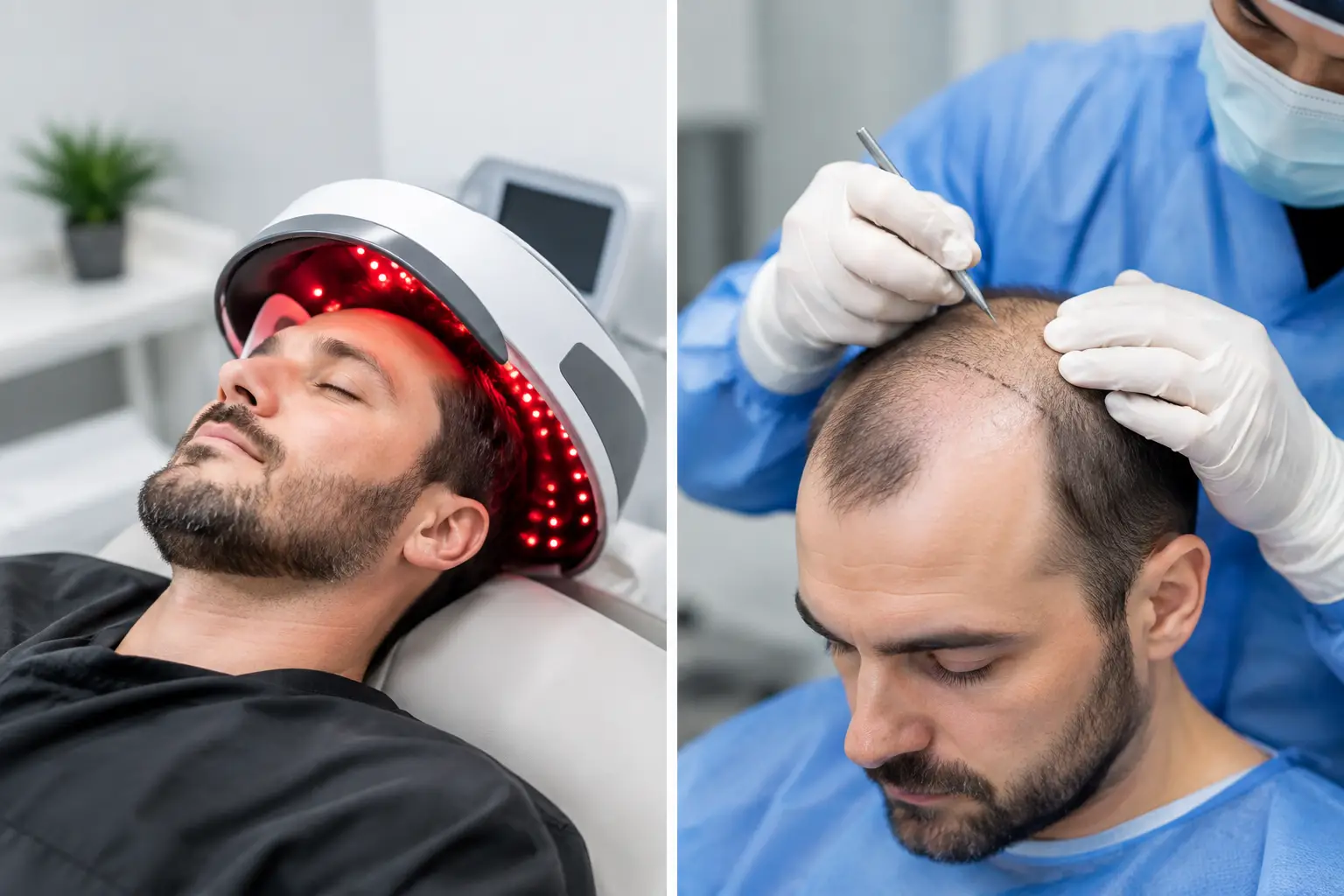
In many cases, a patient may also combine a procedure with non-surgical therapies like medication, regenerative hair loss injections, or laser therapy to support and preserve results. That can improve the overall treatment plan, but it may also affect the financial picture. Some patients prefer to finance only the surgical portion and pay for supportive care separately. Others want a more comprehensive plan built into one monthly budget.
Monthly payment vs. total cost
A low monthly payment can feel reassuring, especially for professionals balancing family expenses, mortgage payments, or business obligations. But extending repayment too far can make the final total much higher than expected.
Here is the practical way to look at it. If your priority is keeping monthly cash flow comfortable, a longer term may be worth it. If your priority is paying the least overall, a shorter term usually works better. Most patients are looking for a middle ground – a payment that fits the budget without creating unnecessary long-term cost.
This is also where down payment strategy can help. Even a modest upfront payment can reduce the amount financed enough to lower both monthly payments and interest expense. For patients who are financially ready to move forward but want to avoid draining savings, that balance can be useful.
What to ask before choosing a financing plan
Before agreeing to any financing, ask what the APR is, whether the rate is fixed, whether there is a promotional expiration date, and whether any fees apply. You should also ask what the monthly payment will be and what the total repayment amount will be if you follow the full schedule.
Those two numbers together tell the real story. A payment may sound manageable, but if the total repayment is far above the original treatment price, you should know that before signing.
It also helps to ask whether there is any penalty for early payoff. Some patients expect to take the full term, then decide to pay the balance down faster after a raise, bonus, or tax refund. If early payoff is allowed without penalty, you may be able to reduce the overall cost significantly.
Is financing worth it for a hair transplant?
For many patients, yes. Hair transplantation is elective, but that does not make it trivial. The emotional impact of hair loss is real, and delaying treatment solely because of upfront cost may keep people stuck in a cycle of frustration that has already lasted years.
Financing can make a high-quality procedure more realistic without requiring the full amount all at once. It can also allow patients to move forward at the right time rather than waiting while hair loss progresses.
The key is making sure the financing supports the decision instead of complicating it. A well-structured plan should feel clear, affordable, and aligned with your goals. If it feels confusing or stretched too thin, it may be better to revisit the treatment scope, the repayment term, or the timing.
At Austin Hair Clinic, many patients begin with a consultation because the right financing conversation starts with the right treatment plan. Once you know what procedure fits your needs, financing becomes much easier to evaluate in practical terms.
A smarter way to think about cost
Instead of asking only what the monthly payment is, ask what you are getting for that payment. Expertise, physician oversight, advanced FUE technology, natural-looking results, and a treatment plan built around your goals all matter. A cheaper monthly number does not mean much if the care experience or result falls short of expectations.
Hair restoration is about more than covering a bill. It is about investing in an outcome you will see in the mirror every day. When financing is transparent and thoughtfully chosen, it can be a helpful tool rather than a financial burden.
The best next step is simple: get clear on the treatment you actually need, then compare financing based on total cost, not just the smallest monthly number on the page.