Does Robotic FUE Leave Scars? What to Expect

A close haircut, bright bathroom lighting, and a hand mirror can make anyone considering hair restoration ask the same practical question: does robotic FUE leave scars? The honest answer is yes, any procedure that removes and places hair follicles creates some degree of healing mark. But with robotic FUE, those marks are typically tiny, dot-like, and difficult to notice once the scalp has healed – especially when grafts are harvested thoughtfully and aftercare is followed closely.
For many patients, the better question is not whether scarring exists at all. It is whether it will be visible in their preferred hairstyle, whether it can affect future treatment options, and what can be done to reduce the risk. Those answers depend on your hair characteristics, donor supply, treatment plan, and the skill of the medical team directing your procedure.
What scarring looks like after robotic FUE
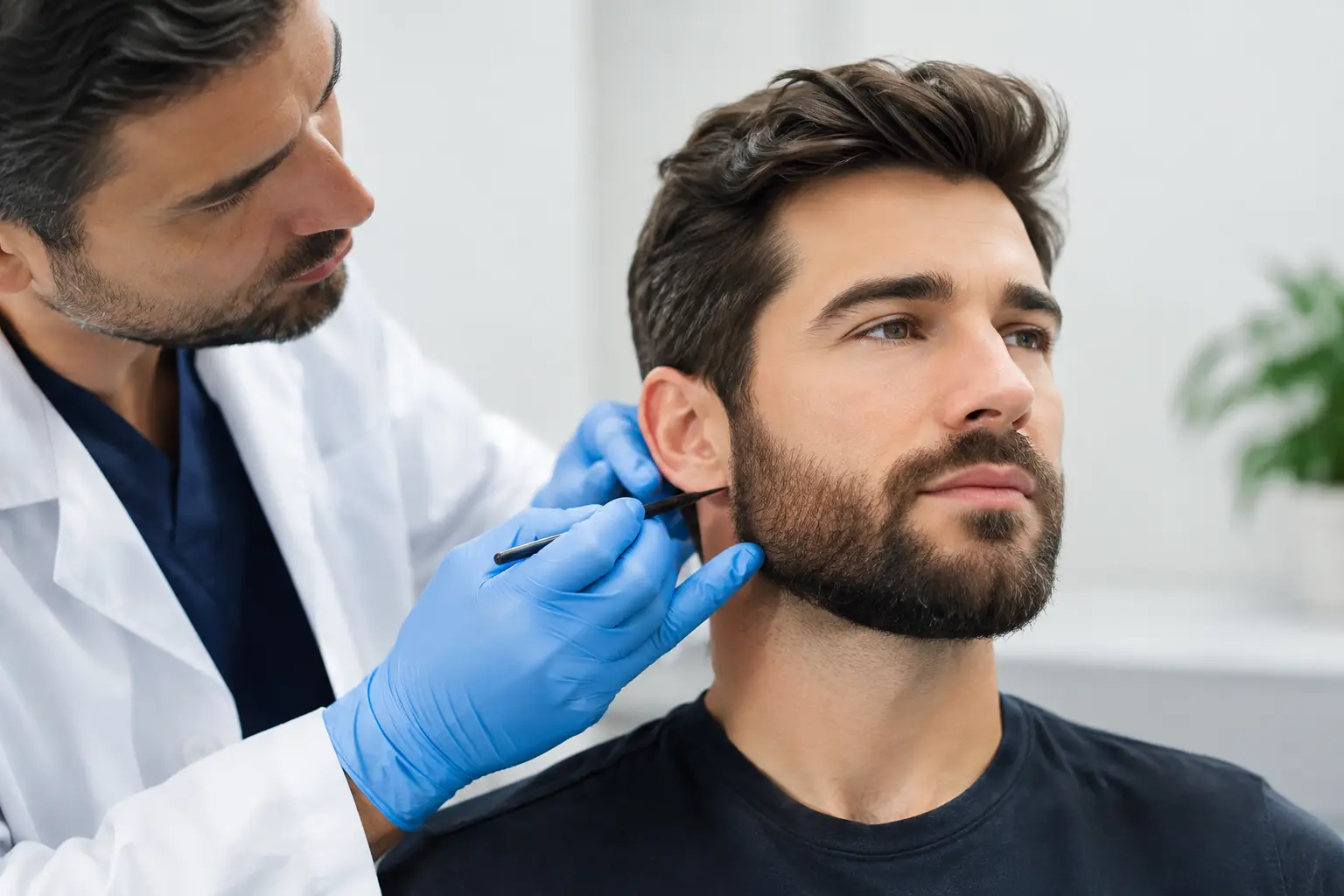
Robotic FUE, including ARTAS® robotic FUE, removes individual follicular units from the donor area, usually at the back and sides of the scalp. Each extraction requires a small circular incision. As those sites heal, they may leave tiny pale dots that are generally far less noticeable than the linear scar associated with FUT, or strip, hair transplantation.
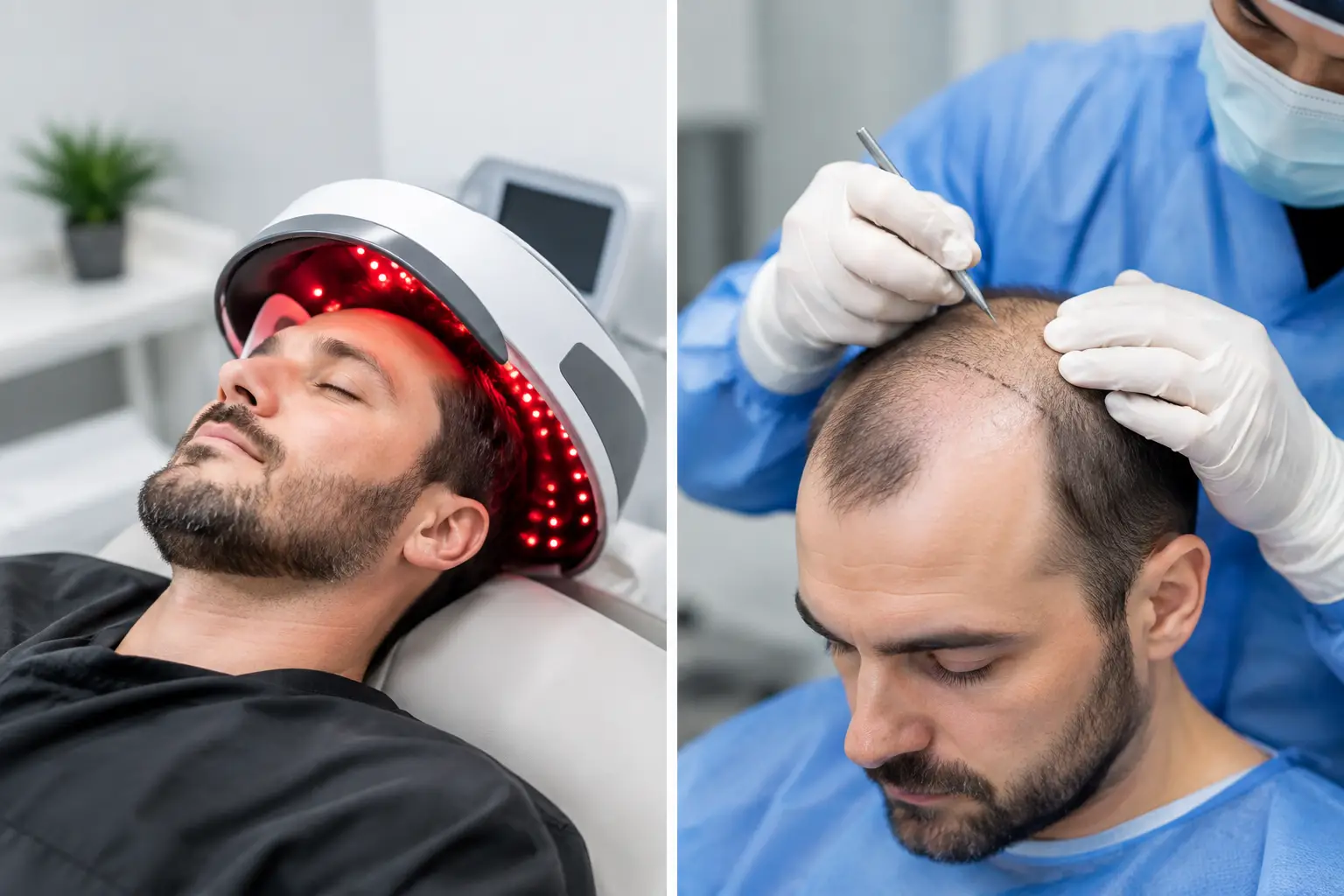
The recipient area also heals after tiny incisions are made to place grafts along a thinning hairline, part, or crown. Patients usually see temporary redness and small scabs in this area during the early recovery period. These are part of normal wound healing and do not typically become obvious permanent scars when graft placement and post-procedure care are appropriate.
Robotic assistance can improve consistency during graft harvesting by helping identify and select follicles in the donor region. It does not eliminate the body’s healing response, nor does it replace physician judgment. A natural-looking, discreet result still depends on careful donor planning, extraction pattern, graft handling, and artistic placement.
Why FUE scars are usually hard to see
FUE scarring is often considered minimal because the extraction sites are so small and are spread across a broad donor zone rather than concentrated in one line. Surrounding hair typically grows through and around the area, providing additional coverage.
How visible those dots become varies from person to person. Patients who keep their hair very short, shave their head, have a large number of grafts extracted, or have a strong tendency toward noticeable scarring may see donor marks more easily. Hair and skin contrast matters too. Small pale dots can stand out more against darker scalp pigmentation, while temporary redness may be more apparent in lighter skin tones during early healing.
The number of grafts is particularly important. A conservative, well-distributed extraction plan protects the appearance of the donor area. Taking too many grafts from a limited zone can create a thin or patchy look, even if each individual extraction mark is tiny. That is why a proper scalp analysis and donor assessment should come before any discussion of a specific graft count.
Robotic FUE versus FUT scarring
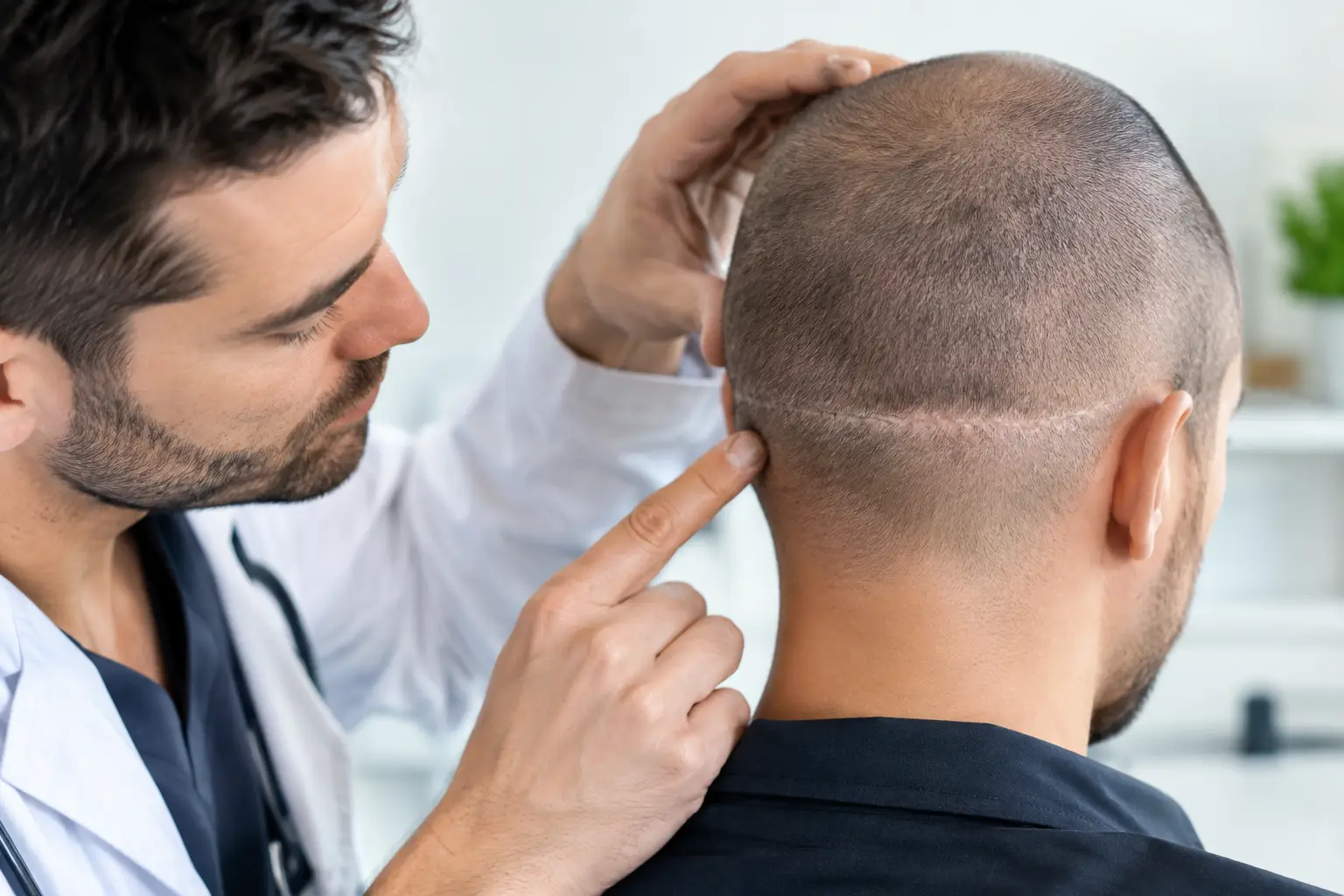
The main difference is the shape and distribution of the scar. FUT removes a strip of scalp from the donor area, leaving a linear scar that may be concealed by longer hair but can become visible with very short styles. FUE leaves many small extraction sites instead.
Neither approach is automatically right for every patient. FUT may be considered in select cases where a patient needs a high number of grafts and is comfortable wearing their hair longer. Robotic FUE may be especially appealing to patients who value a minimally invasive procedure, prefer a shorter recovery experience, or want to avoid a linear donor scar. Your hair loss pattern, scalp laxity, donor density, and styling goals all deserve consideration.
The healing timeline after robotic FUE
In the first several days, the donor and recipient areas may look red, feel tender, and develop small crusts. This can be alarming if you are not prepared for it, but it is expected. Avoid picking or scratching the area, as this can disrupt healing and increase the chance of irritation or visible marks.
Most scabs shed within about seven to 14 days when patients follow their washing instructions. Redness commonly improves over the following weeks, although people with sensitive skin or certain complexions may see it last longer. The tiny donor sites continue maturing beneath the surface for months.
Newly transplanted hairs often shed before growing again. This temporary shedding phase is normal and should not be confused with scar formation or failed grafts. Visible new growth commonly begins around three to four months, with continued improvement over the next year. As the transplanted hair grows and the donor area recovers, any remaining extraction marks are usually increasingly well concealed.
How to reduce the chance of visible FUE scarring
The most meaningful step happens before surgery: choose a practice that treats donor hair as a limited resource. A personalized plan should account for your current thinning, likely future hair loss, family history, and the amount of density needed to create a natural cosmetic improvement.
Your recovery choices matter as well. Follow the washing schedule provided by your care team, protect the scalp from direct sun exposure, avoid strenuous exercise until you are cleared, and do not use nicotine if your physician advises against it. Nicotine can interfere with circulation and wound healing. Be direct about any medications, supplements, history of keloids, or prior problems with surgical scarring during your consultation.
It is also wise to set realistic expectations about short haircuts. If you routinely wear a skin fade or shave your scalp, ask to see donor-area results from patients with similar hair texture, skin tone, and hairstyle preferences. A reputable provider will discuss what is achievable rather than promising a completely scar-free procedure.
Who may have a higher risk of noticeable scars?
Most healthy candidates heal well, but a few factors can change the conversation. A personal or family history of keloids or raised scars should be reviewed carefully. Active scalp inflammation, poorly controlled diabetes, certain autoimmune conditions, smoking, and inadequate nutrition can also affect healing.
Very limited donor density can create a separate concern. The issue may not be prominent scars, but rather an overharvested appearance if too many grafts are taken. In these situations, non-surgical treatments such as medication, low-level laser therapy, or regenerative hair loss injections may play an important role in preserving existing hair and improving the overall visual result.
An experienced physician can help determine whether robotic FUE is appropriate, whether standard manual FUE may better suit your anatomy, or whether a non-surgical plan should come first. Technology is valuable, but it should support individualized medical care rather than dictate it.
When should you contact your provider?
Some redness, swelling, itching, and crusting are expected after FUE. Contact your medical team promptly if you develop worsening pain, spreading redness, warmth, drainage, fever, or swelling that does not improve as expected. Early guidance can address irritation or infection before it becomes a larger recovery issue.
If you are concerned about how your donor area looks after the initial healing period, schedule a follow-up rather than relying on online comparisons. Healing varies widely, and your provider can assess whether what you see is normal maturation, temporary shock loss, scalp irritation, or something that needs treatment.
A scar-conscious plan starts with the right evaluation
Robotic FUE can offer a highly discreet approach to hair transplantation, but the best results come from more than the device used on procedure day. They come from thoughtful graft planning, careful protection of the donor area, precise placement, and a recovery plan tailored to your scalp and goals.
At Austin Hair Clinic, a consultation is an opportunity to discuss the hairstyle you want to wear, your concerns about scarring, and the treatment path that makes sense for your long-term hair health. Confidence-restoring results begin with clear expectations and a plan designed around you.