Body Hair to Scalp Transplant: Who Is It For?
For some people with advanced hair loss, the limiting factor is not motivation or even scalp coverage goals. It is the number of healthy donor grafts available on the back and sides of the scalp. A body hair to scalp transplant can expand the conversation when scalp donor supply is limited, but it is a specialized option with meaningful trade-offs. The right plan is not simply about moving more hair. It is about placing the right type of hair in the right area to create a natural-looking result.
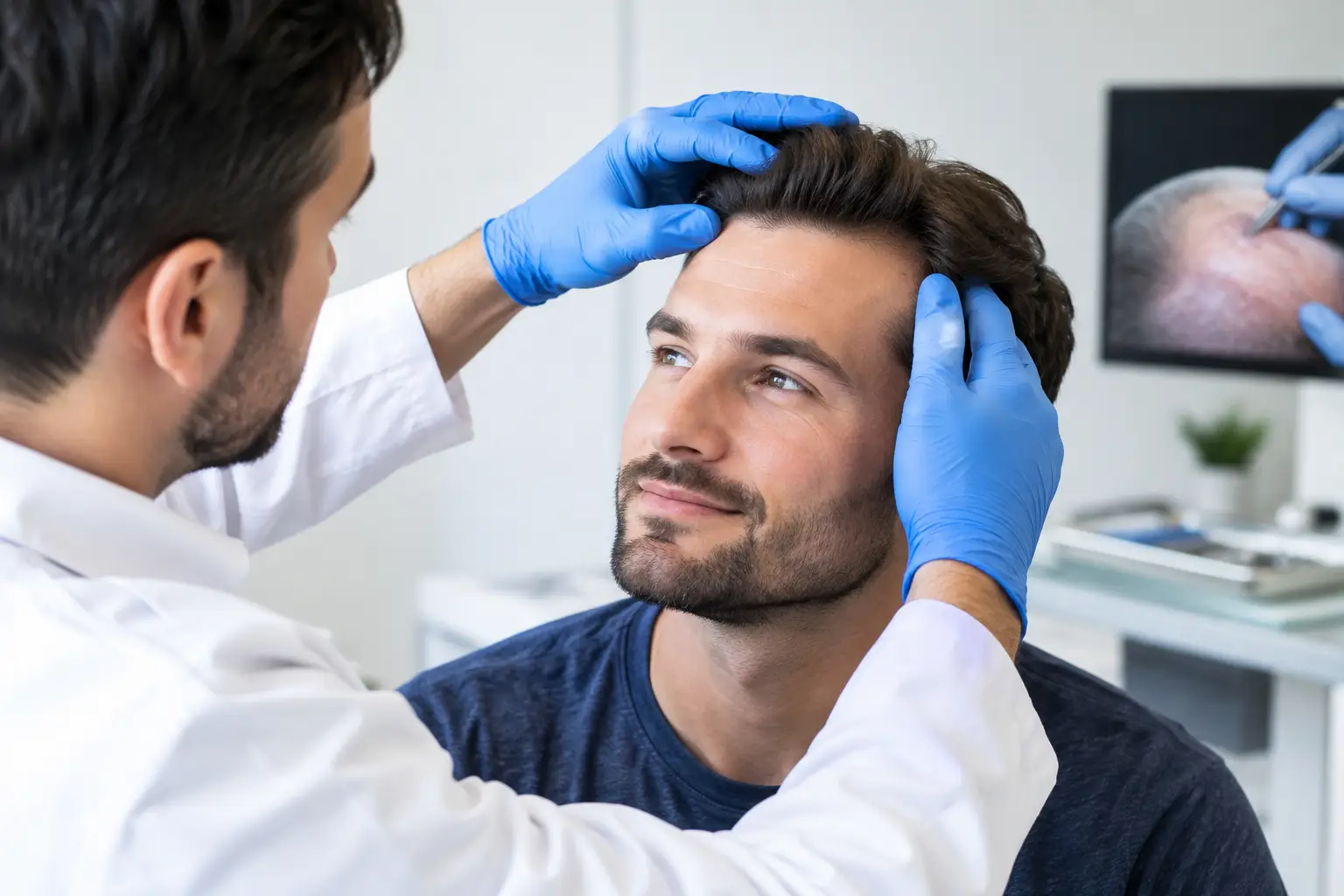
At Austin Hair Clinic, each recommendation begins with a careful evaluation of your hair loss pattern, scalp donor density, hair characteristics, medical history, and long-term goals. Body hair can be valuable in select cases, particularly as part of a broader FUE strategy. It is not a replacement for a strong scalp donor area, and honest expectations are essential.
What Is a Body Hair to Scalp Transplant?
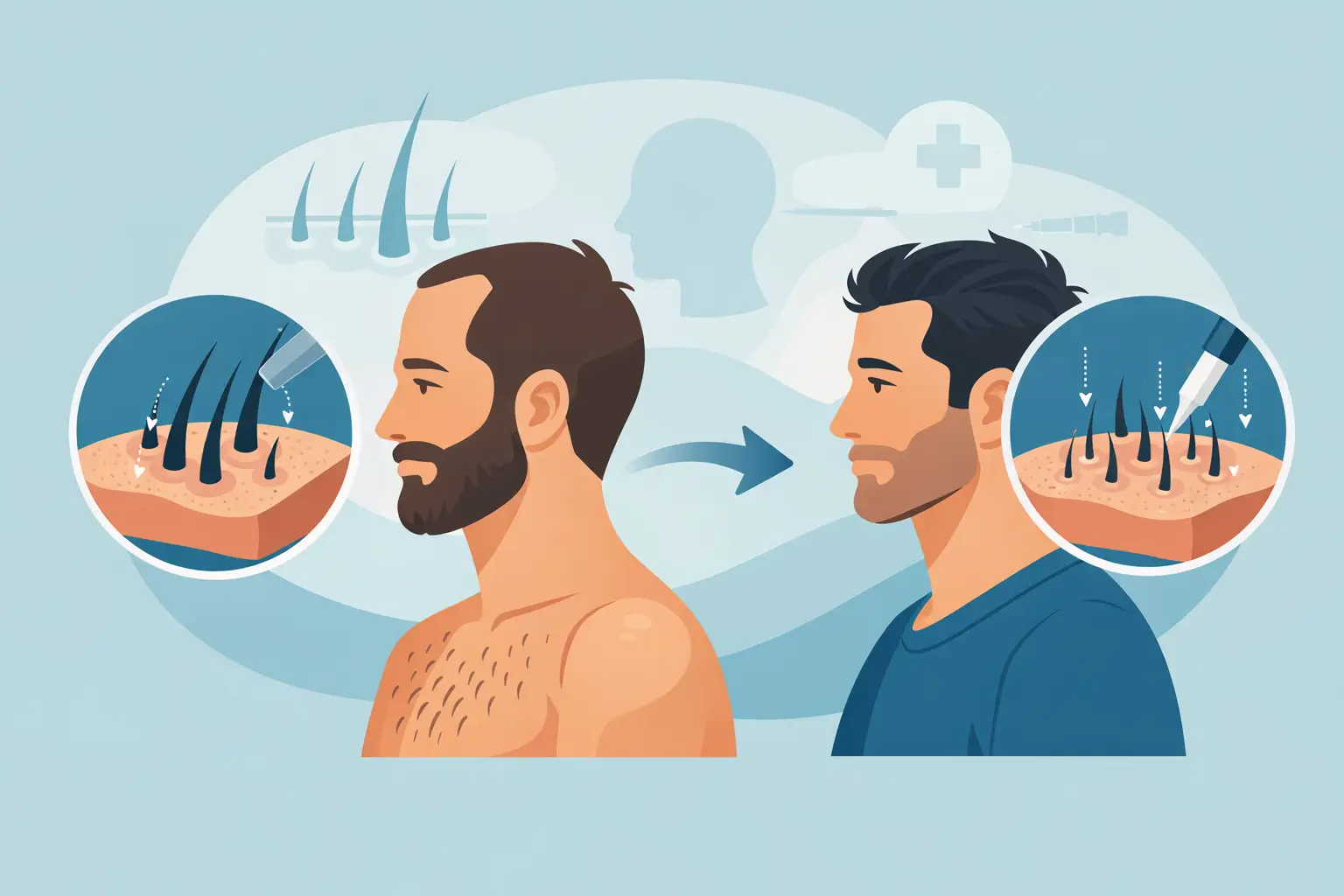
A body hair transplant, often called BHT, uses follicular units harvested from areas such as the beard, chest, abdomen, or other parts of the body and implants them into thinning or bald areas of the scalp. Like traditional FUE, the procedure removes individual follicular units rather than a strip of skin.
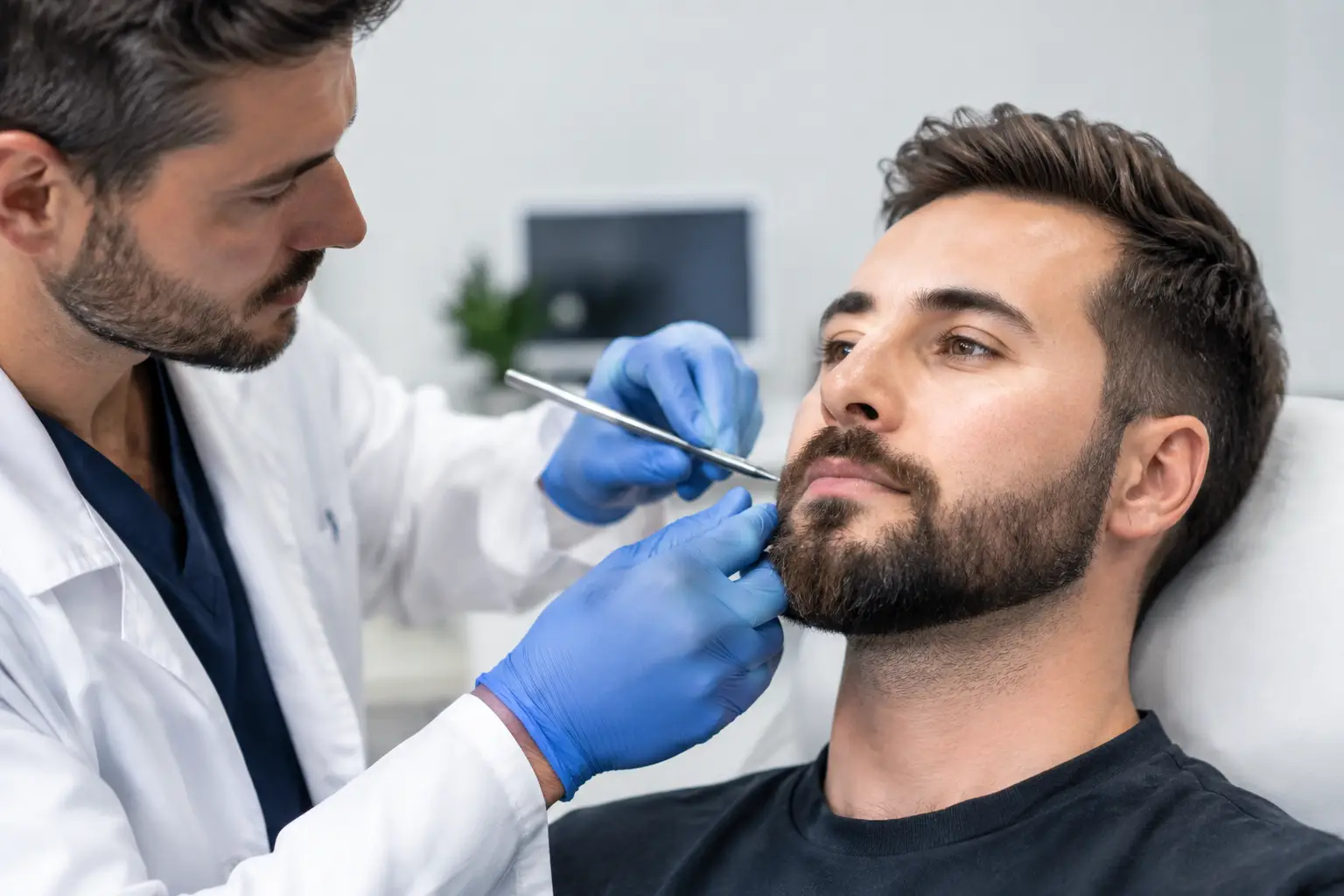
The beard is generally the most useful body donor source. Beard hair is often thicker, more resilient, and more likely to provide visible cosmetic impact than finer body hair from the chest or abdomen. It can be especially helpful for adding coverage behind a hairline, strengthening the mid-scalp, or supporting crown restoration when scalp donor grafts are scarce.
Still, body hair does not behave exactly like scalp hair. It may have a different texture, curl pattern, growth cycle, and maximum length. Those differences affect where it can be placed and what kind of visual density it can create.
When a Body Hair to Scalp Transplant Makes Sense
The best candidates are often men with extensive pattern hair loss who have already used a significant portion of their available scalp donor hair, or who naturally have limited scalp donor density. It may also be considered for patients with a large crown area, previous transplant procedures, or a need for additional grafts after scalp donor resources have been preserved for the hairline and frontal zone.
A body hair to scalp transplant may be appropriate when the goal is strategic reinforcement rather than an entirely body-hair-based restoration. Scalp hair remains the preferred source for building a soft, natural frontal hairline because its texture and growth characteristics most closely match the area being restored. Beard grafts may then be blended behind that zone to create fullness and reduce the contrast between thinning areas and surrounding hair.
This approach can be particularly valuable for patients who understand that coverage and density are not the same thing. A larger area of baldness requires more grafts, and even a successful procedure cannot always recreate the density someone had as a teenager. The goal is a balanced, age-appropriate appearance that looks natural in everyday life.
Why Hair Type Matters More Than Graft Count
A graft number alone does not tell the whole story. Fine, light-colored hair may require a different plan than coarse, dark hair. Curly or wavy hair can offer greater visual coverage than straight hair, while a high contrast between hair color and scalp color can make thinning more noticeable.
Body hair introduces another variable. Beard hair can be coarse and may create strong visual density, but it can look unnatural if used indiscriminately in the hairline. Chest and abdominal hair may be finer, yet their growth can be less predictable and their harvest yield may be lower. A skilled surgeon considers the caliber, curl, direction, and likely growth behavior of each donor source before making a recommendation.
This is why a personalized plan matters. A patient may have enough beard grafts to make a meaningful improvement in the crown, but not enough suitable grafts to rebuild a broad frontal hairline. Another patient may benefit more from protecting existing scalp donor supply while using medical therapy to slow continued miniaturization.
How the Procedure Is Performed
The process begins with donor assessment and surgical planning. The physician identifies donor areas that can be safely harvested without creating a noticeably depleted appearance. Beard hair is often harvested from beneath the jawline or neck, where small extraction sites are typically well concealed after healing.
During FUE, individual grafts are removed with specialized instruments and prepared for placement. Recipient sites are then created in the scalp at angles and directions designed to match the natural growth pattern. This placement work is central to the final appearance. It determines whether transplanted hair blends convincingly with native hair as it grows.
The procedure is performed with local anesthesia. Many patients are comfortable enough to listen to music or relax during treatment, though the experience and treatment length vary based on the number of grafts planned. Larger restorations may be staged over more than one session to protect donor areas and maintain a careful, aesthetic approach.
Recovery and the Growth Timeline
After a body hair transplant, small scabs and temporary redness are expected in both the donor and recipient areas. The scalp and beard donor area need gentle care during the first days after treatment. Your care team provides specific instructions for washing, activity, shaving, and protecting the grafts as they heal.
Transplanted hairs commonly shed within the first few weeks. This can be unsettling, but it is a normal part of the process. The follicles remain beneath the skin and typically begin producing new hair over the following months. Early growth may appear fine or uneven before it matures.
Most patients begin to see meaningful growth between four and six months, with continued improvement over 12 months or longer. Body hair can have a different growth cycle than scalp hair, so its timing and final character may be less predictable. Patience is part of any hair restoration journey, especially when treating a large area.
Important Limitations to Understand
Body donor hair is a limited resource, just like scalp donor hair. Harvesting too aggressively can create visible thinning, patchiness, or changes in the appearance of the beard or chest. A conservative approach protects both the donor area and the long-term result.
Growth rates can also vary. Not every body graft will grow with the same consistency as scalp-derived grafts, and body hair may retain its original texture after transplantation. For these reasons, promising a specific density or using body hair as the sole answer for advanced baldness would not be responsible.
Women may occasionally be candidates, but the evaluation is different. Many women with diffuse thinning do not have a stable donor area, and a thorough diagnosis is necessary before surgical planning. Hormonal factors, nutritional concerns, autoimmune conditions, and certain forms of scarring hair loss can all affect candidacy and outcomes.
Combining Surgery With Hair Loss Treatment
A transplant redistributes existing follicles. It does not stop progressive hair loss in untreated areas. For patients with active thinning, a comprehensive plan may include physician-guided medication, regenerative hair loss injections, low-level laser therapy, or other appropriate therapies to help preserve native hair.
This is especially relevant when body hair is part of the surgical plan. If native scalp hair continues to thin rapidly after surgery, the contrast around transplanted grafts can become more noticeable over time. Protecting existing hair can make the surgical result look fuller and last longer.
A consultation should address more than the immediate procedure. It should consider where your hair loss may be headed, how much donor hair can be safely used, whether a future session may be needed, and what outcome will genuinely feel worthwhile to you.
Is This the Right Option for You?
The most useful question is not whether body hair can be transplanted to the scalp. It can. The question is whether it offers enough benefit for your particular pattern of hair loss, donor supply, and aesthetic goals.
A detailed scalp analysis can clarify whether standard FUE using scalp donor hair, ARTAS robotic FUE, medical treatment, or a combined approach is the stronger path forward. For the right candidate, body hair can add valuable coverage and help extend donor resources. For others, the more confident choice is a plan that protects donor hair, treats ongoing loss, and focuses on natural results that will continue to look appropriate over time.
If you are weighing your options, a physician-led consultation can turn broad online information into a plan built around your hair, your donor supply, and the future you want to see in the mirror.