ARTAS Hair Review: Is It Worth It?

When people search for an artas hair review, they are usually asking a more personal question: Will this give me a natural result without the long scar, guesswork, or downtime I want to avoid? That is the right question to ask, because ARTAS is not simply a marketing label. It is a robotic-assisted version of FUE hair transplantation, and like any medical technology, its value depends on your hair loss pattern, donor supply, goals, and the skill of the physician directing the case.
If you are comparing options, the short answer is this: ARTAS can be an excellent tool for the right candidate, especially when precision, consistency, and minimal linear scarring matter. But it is not automatically better than manual FUE in every situation, and it is not a substitute for medical judgment or aesthetic planning.
ARTAS hair review: what the technology actually does
ARTAS is a robotic system designed to assist with follicular unit extraction. In a traditional FUE procedure, individual hair follicles are removed from the donor area one at a time and then implanted into thinning or bald areas. With ARTAS, the system helps identify and extract suitable follicular units based on imaging and algorithm-driven selection.
That sounds highly technical, but the patient-facing benefit is fairly straightforward. The robot is built to improve consistency in graft harvesting, reduce human fatigue during repetitive extraction, and support a more controlled approach to donor management. For many patients, that translates to a procedure that feels more advanced and more measured than older strip surgery methods.
What ARTAS does not do is make hair restoration automatic. A robot can assist with harvesting, but the overall result still depends on diagnosis, hairline design, graft placement strategy, density planning, and the physician’s ability to match the procedure to the patient. Technology can improve execution. It cannot replace experience.
Where ARTAS tends to shine
For patients who are good candidates, ARTAS offers some real advantages. The first is the FUE approach itself. Because follicles are extracted individually rather than removed in a strip, there is no long linear scar across the back of the scalp. That matters if you wear your hair short or want more flexibility with future hairstyles.
The second advantage is precision. Robotic assistance can help select grafts in a way that supports donor preservation, which is especially important because donor hair is finite. Good hair restoration is never just about today’s thinning area. It also has to respect what you may need five or ten years from now.
The third is patient comfort and recovery. While every procedure involves healing, FUE generally comes with less visible post-operative scarring than FUT. Many patients appreciate that the recovery feels manageable and the process feels less invasive than they expected.
There is also a confidence factor. For image-conscious professionals and anyone who has delayed treatment because surgery sounded too aggressive, robotic FUE can feel like a more modern entry point into hair restoration.
The trade-offs an honest ARTAS hair review should mention
This is where many reviews get too simplistic. ARTAS is promising, but it is not ideal for everyone.
One issue is candidacy. The system works best when there is a clear contrast between hair and scalp, although technology has improved over time. Hair characteristics, scalp condition, curl pattern, and donor quality can all affect whether robotic harvesting is appropriate. Some patients are better served with manual FUE, where an experienced surgeon can adapt in a more customized way.
Another consideration is cost. ARTAS procedures are often priced at a premium because the practice has invested in advanced technology and specialized workflow. That does not mean it is overpriced. It means patients should understand what they are paying for: robotic assistance, FUE benefits, physician oversight, and the overall level of clinical planning. The better question is not whether ARTAS is cheap. It is whether it offers value for your specific case.
There is also a misconception that robotics guarantee better results. They do not. Natural outcomes come from thoughtful design and graft placement, not just extraction. If the hairline is poorly planned or the distribution is too aggressive, the result can still look unnatural even if the harvesting was technically precise.
What results can you realistically expect?
This is usually the deciding factor in any artas hair review. Patients want to know if the result will actually look like their hair, not transplanted hair.
In a well-executed case, ARTAS can produce natural-looking growth with no obvious linear scar and a restored hairline or improved density that blends well with existing hair. That is the goal. But results are gradual, not immediate. Transplanted hairs typically shed before regrowth begins, and visible improvement takes months. Full maturation can continue for up to a year or longer depending on the area treated.
Density also has limits. A transplant redistributes existing donor hair. It does not create new follicles. If someone has extensive loss and limited donor reserves, even a strong procedure may deliver improvement rather than full youthful density. That is still worthwhile for many patients, but expectations need to be aligned from the start.
The most satisfied patients are usually the ones who understand that hair restoration is part cosmetic artistry, part long-term planning. If you are younger and actively losing hair, your treatment plan may need to include medication or regenerative support to help protect native hair around the transplant.
ARTAS vs manual FUE
This comparison matters more than ARTAS vs no ARTAS. Both methods use the FUE concept. The difference is how grafts are harvested.
ARTAS may be appealing if you value advanced imaging, consistency in extraction, and a technology-forward process. Manual FUE may be better if your case is more complex, your hair characteristics require a more customized touch, or your surgeon believes hand-controlled extraction will preserve graft quality more effectively in your situation.
Neither option is universally superior. The best choice depends on the surgeon’s experience, the quality of your donor area, your hair type, and your restoration goals. A clinic that offers more than one treatment path is often in a better position to recommend what actually fits you rather than steering every patient into the same procedure.
Who is a strong candidate for ARTAS?
Patients with pattern hair loss, stable donor hair, and realistic expectations are often good candidates. Men looking to rebuild a receding hairline or fill in the crown may do well. Some women with localized thinning can also be candidates, though evaluation is especially important because female hair loss patterns can be more diffuse.
A strong candidate is also someone willing to think beyond the procedure itself. Hair loss is progressive for many patients. If you restore one area but ignore ongoing thinning elsewhere, the result can age unevenly. That is why comprehensive planning matters so much.
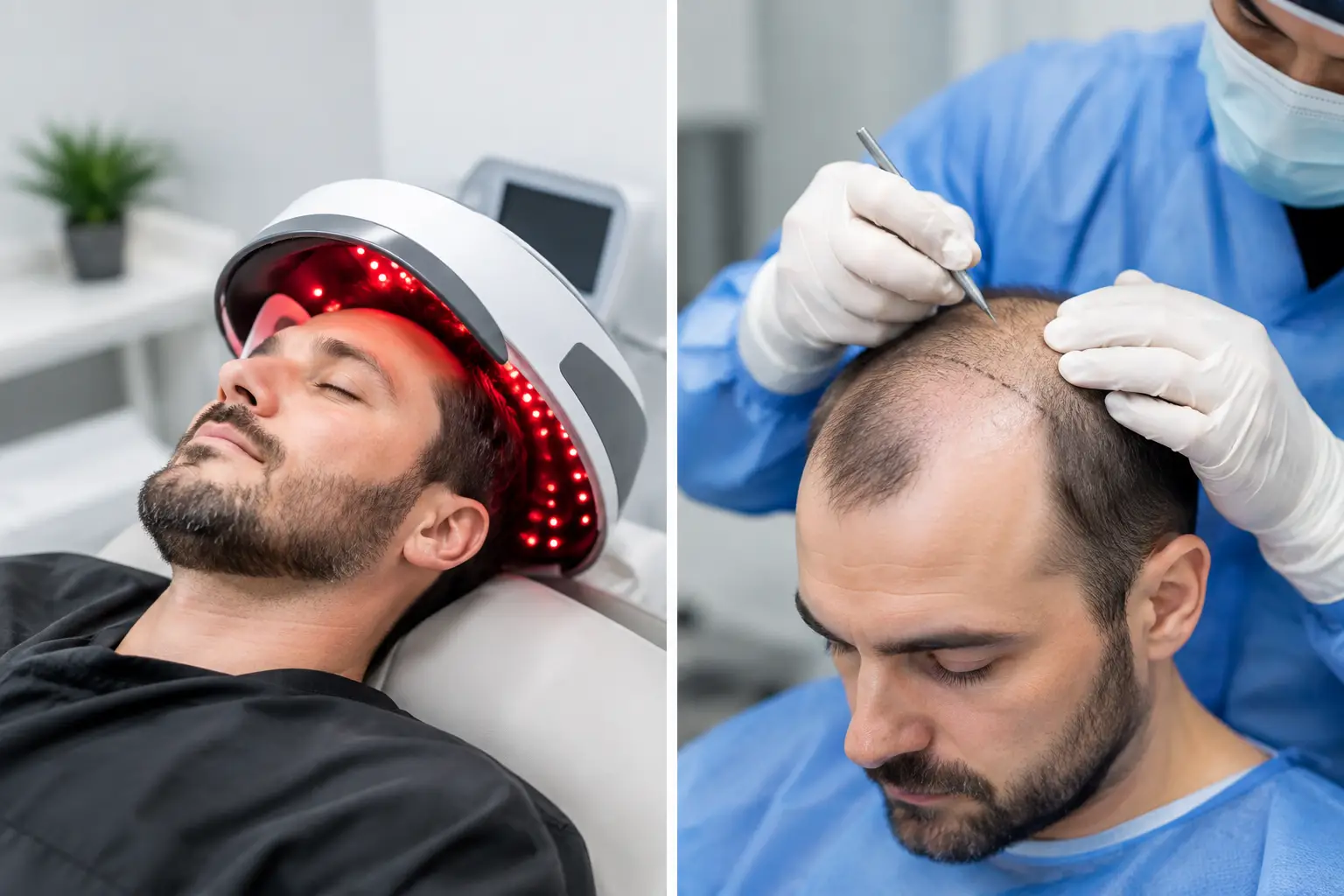
At a specialist practice such as Austin Hair Clinic, that conversation often includes whether ARTAS should stand alone or be combined with medical therapy, regenerative injections, or laser treatment to support the native hair you still have.
Questions to ask before choosing ARTAS
Before moving forward, ask who is designing your hairline, who is making the real-time clinical decisions, and whether ARTAS is being recommended because it fits your case or because it is the clinic’s featured device. You should also ask about donor management, expected graft counts, timeline for growth, and what happens if your hair loss progresses.
A good consultation should feel specific to you. You should come away with a plan, not just a sales pitch. If the conversation focuses only on the machine and not on your long-term result, that is a red flag.
Final take on this ARTAS hair review
ARTAS is a meaningful advancement in FUE hair transplantation, and for the right patient it can offer a precise, minimally invasive path to natural-looking restoration. Its strongest benefits are controlled harvesting, no linear scar, and a modern treatment experience that appeals to patients who want visible improvement without choosing an older surgical approach.
Still, the technology is only part of the story. The best result comes from proper candidacy, careful design, and physician-led planning that respects both your current goals and your future hair loss pattern. If you are considering ARTAS, focus less on whether the robot is impressive and more on whether the treatment plan is built around you. That is where confidence usually begins to come back.