Hair Transplant Washing Instructions After FUE
The first wash after an FUE hair transplant can feel more stressful than the procedure itself. You want to keep the area clean, but you also know newly placed grafts need protection. These transplant washing instructions explain the usual recovery process, what gentle washing should look like, and why your surgeon’s specific directions always come first.
Every transplant plan is personal. The number of grafts, the condition of your scalp, whether you had PRP or another therapy, and your individual healing response can affect the right schedule. If your post-procedure instructions differ from the guidance below, follow the instructions from your surgical team.
Why Careful Washing Matters After a Hair Transplant
FUE moves individual follicular units from a donor area, usually the back or sides of the scalp, to areas affected by thinning or hair loss. In the first days after placement, those grafts are settling into their new blood supply. Friction, direct water pressure, scratching, and aggressive shampooing can disturb the fragile healing sites.
At the same time, avoiding washing for too long can allow dried blood, oil, and crusting to build up. That buildup may make the scalp uncomfortable and can complicate normal healing. The goal is not to leave your scalp untouched. It is to clean it with the right amount of care at the right time.
Gentle washing also supports a cleaner recovery environment. Mild swelling, redness, tenderness, and small scabs are expected after FUE. Increasing pain, warmth, spreading redness, drainage, or a fever are not symptoms to ignore. Contact your physician promptly if they occur.
Transplant Washing Instructions: The Typical Timeline
The first 24 hours: Protect the grafts
During the first day, do not wash the recipient area unless your surgeon tells you otherwise. Keep the scalp dry and avoid touching the newly transplanted grafts. If a clinic has placed a protective dressing over the donor area, follow its instructions for removal or care.
You may be advised to use a sterile saline spray on the recipient area during this period. This helps keep the grafts hydrated without rubbing them. Spray as directed rather than improvising a schedule, since your care team knows how your procedure was performed.
Sleeping carefully matters just as much as washing on the first night. Many patients are asked to sleep with their head elevated to limit swelling and to avoid contact between the grafts and bedding.
Days 2 through 7: Clean without rubbing
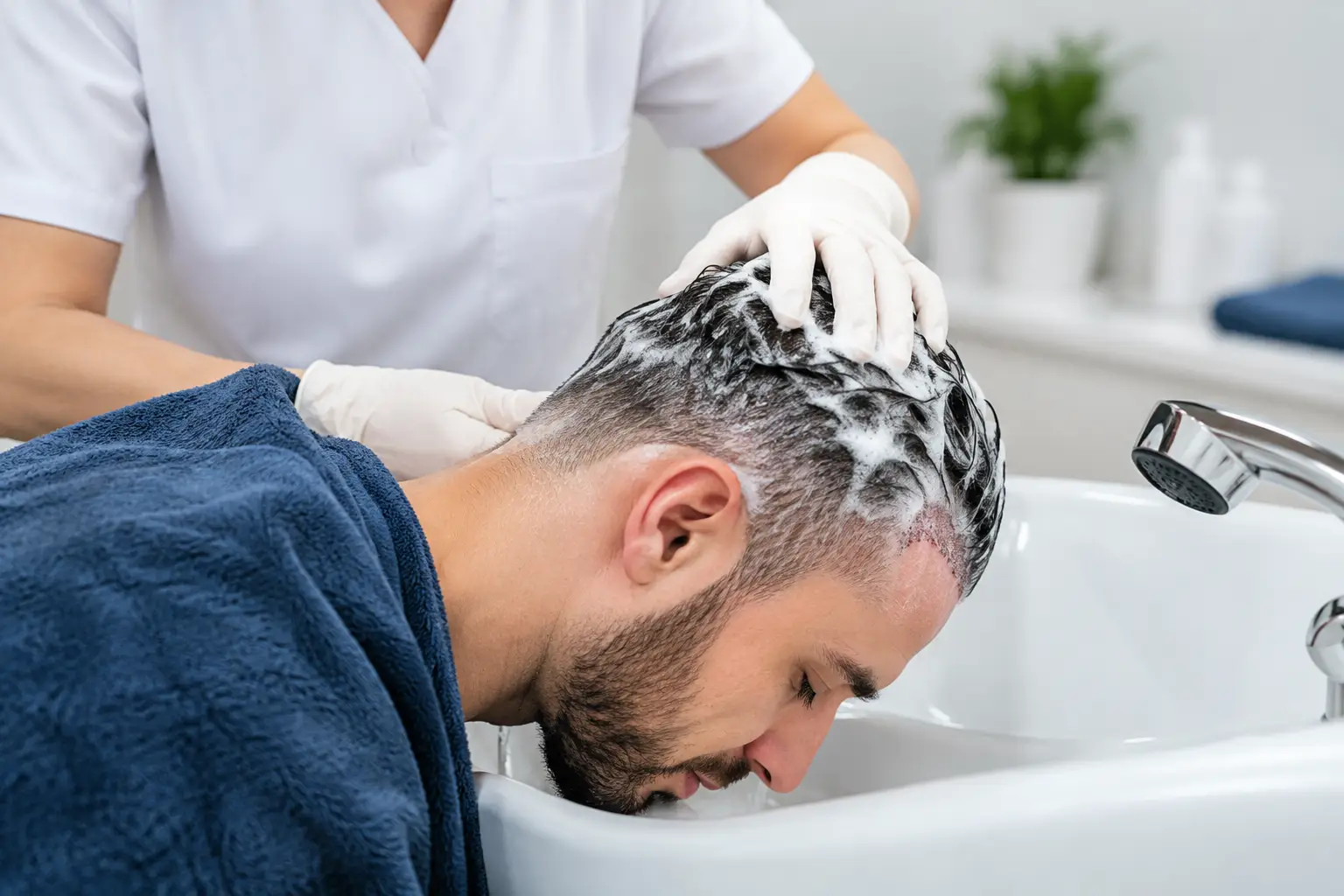
Many FUE patients begin a very gentle wash one to two days after surgery. Your provider may recommend a mild, fragrance-free shampoo or a specific cleanser. Use lukewarm water, not hot water, which can increase scalp irritation.
The critical detail is pressure. Do not stand directly under a strong shower stream and let water strike the grafts. Instead, use a clean cup to pour water gently over the area or use a very low-pressure setting as instructed. Diluting shampoo in water before application can make it easier to distribute without rubbing.
Apply the lather by lightly dabbing or patting it onto the recipient area. Do not massage, scrub, use your fingernails, or drag a washcloth across grafts. Let the shampoo sit briefly if your team recommends it, then rinse with the same low-pressure approach.
The donor area often tolerates washing sooner and a little more normally than the recipient area, but it can still be tender. Clean it gently with your fingertips, avoiding vigorous scratching. Pat both areas dry with a clean, soft towel. Do not rub.
Days 7 through 14: Let scabs release naturally
Small crusts around transplanted hairs are common. They should soften and release gradually with careful washing. Picking at them is one of the easiest ways to accidentally pull on a graft before the area has fully stabilized.
Your surgical team may have you begin slightly more deliberate washing around this stage to help loosen remaining crusts. That does not mean an aggressive scalp scrub. It generally means more time under gentle water and light fingertip contact according to your prescribed schedule.
By about 10 to 14 days, many patients can return to a more typical shower routine. However, this timing varies. If you have lingering scabbing, significant tenderness, or any healing concern, ask before resuming normal pressure or products.
A Simple Method for Your First Wash
When it is time for your first wash, prepare everything before you start. You do not want to search for supplies while water is running or risk bumping your scalp in a cramped shower.
Use a clean cup, lukewarm water, the shampoo approved by your provider, and a clean towel. Wet the scalp with a gentle pour. Place diluted shampoo onto the recipient area by dabbing, then clean the donor area softly. Rinse with low water pressure and pat dry.
Keep the process calm and brief. A careful five-minute wash is more useful than a long shower where steam, heat, and water pressure become hard to control. If you are unsure whether your showerhead is too strong, use the cup method for a few additional days.
Products and Habits to Avoid During Early Healing
For the first phase of recovery, avoid products that may sting, clog, dry, or irritate healing skin. This commonly includes styling gel, hairspray, dry shampoo, hair fibers, scalp concealers, medicated shampoos, and strongly scented products unless your physician has specifically approved them.
Avoid hot showers, saunas, swimming pools, hot tubs, and strenuous exercise during the restricted period given by your surgeon. Sweat, heat, bacteria exposure, and accidental rubbing can all create unnecessary problems while the grafts are new.
Do not use a brush or comb across the recipient area until you are cleared to do so. If surrounding hair needs attention, work around the transplanted region gently. Tight hats should also wait until your care team says they are safe. A loose, approved covering may be acceptable in some cases, but it depends on your procedure and the fit of the item.
What If You Accidentally Touch or Bump a Graft?
A brief, light touch does not automatically mean a graft has been lost. It is understandable to feel alarmed, especially when you have invested in a procedure designed to restore a natural-looking hairline or density. Still, avoid repeatedly checking, pressing, or trying to inspect each graft in a mirror.
If you bump the area, notice bleeding that does not stop with gentle pressure where permitted, or see tissue attached to a shed hair in the first days, contact your surgical team. A quick call is better than guessing. They can tell you whether the situation needs an in-person evaluation or simple observation.
Remember that transplanted hairs often shed a few weeks after surgery. This is a normal part of the growth cycle and is different from losing a newly placed graft immediately after the procedure. New growth takes patience, with meaningful changes appearing gradually over subsequent months.
When to Call Your Hair Restoration Team
Your recovery should come with clear access to professional guidance. Contact your provider if you experience worsening pain after it had improved, significant swelling that affects your eyes, pus-like drainage, fever, a rash, persistent bleeding, or redness that expands rather than settles.
You should also call if you are uncertain about a washing instruction. Post-transplant care is not the time to rely on a generic video, a friend’s experience, or an internet forum. Your scalp, graft count, and treatment plan are unique.
At Austin Hair Clinic, patients receive individualized post-procedure guidance designed to protect healing grafts while keeping recovery manageable. Knowing what to do each day can replace uncertainty with a clear path forward.
The most reassuring way to approach your first wash is to be gentle, follow your surgeon’s timeline, and ask for help whenever something does not feel right. Careful aftercare protects more than the grafts – it supports the confidence you are building for the months ahead.