When to Wash Scalp After FUE Procedure
The first shower after a hair transplant makes a lot of patients nervous, and for good reason. If you are wondering when to wash scalp after FUE procedure, the short answer is this: timing and technique matter just as much as the wash itself. A gentle wash supports healing, helps remove dried blood and oil, and protects newly placed grafts during the most delicate stage of recovery.
FUE is designed to be minimally invasive, but the scalp still needs careful handling in the first several days. Tiny recipient-site incisions and donor-area extractions need time to settle. Wash too aggressively, too early, or with the wrong products, and you can irritate the scalp or interfere with early graft anchoring. Wait too long, and you may deal with excess crusting, itchiness, and discomfort that make recovery harder than it needs to be.
When to wash scalp after FUE procedure
Most patients are advised to begin washing within the first few days after FUE, often around day 2 or day 3, but the exact timing depends on your surgeon’s instructions. That part is not a formality. Different surgeons may use slightly different post-op protocols based on graft count, skin sensitivity, bleeding, and whether the donor and recipient areas need a more cautious timeline.
The safest rule is simple: follow the aftercare plan you were given for your procedure, not a general internet timeline. If your team says start the next day, that may be appropriate for your case. If they want you to wait longer, there is usually a reason.
What matters most is understanding that the first wash is not a normal shampoo routine. It is a controlled rinse meant to keep the scalp clean without friction, pressure, or heat.
Why washing matters early on
Some patients assume avoiding all washing is safer because the grafts feel vulnerable. In reality, proper cleansing helps the healing environment. The scalp produces oil. Small scabs form around implanted follicles. Dried plasma and minor crusting can build up. If that sits too long, the area can feel tight, itchy, and harder to clean later.
A careful wash also lowers the chance of overhandling. Patients who become uncomfortable from buildup often scratch or pick at the scalp, which is exactly what you want to avoid. Gentle cleansing reduces that temptation.
There is a balance here. The goal is not to get the scalp perfectly clean on day one. The goal is to keep it clean enough for healthy healing while leaving grafts undisturbed.
How to wash your scalp after FUE
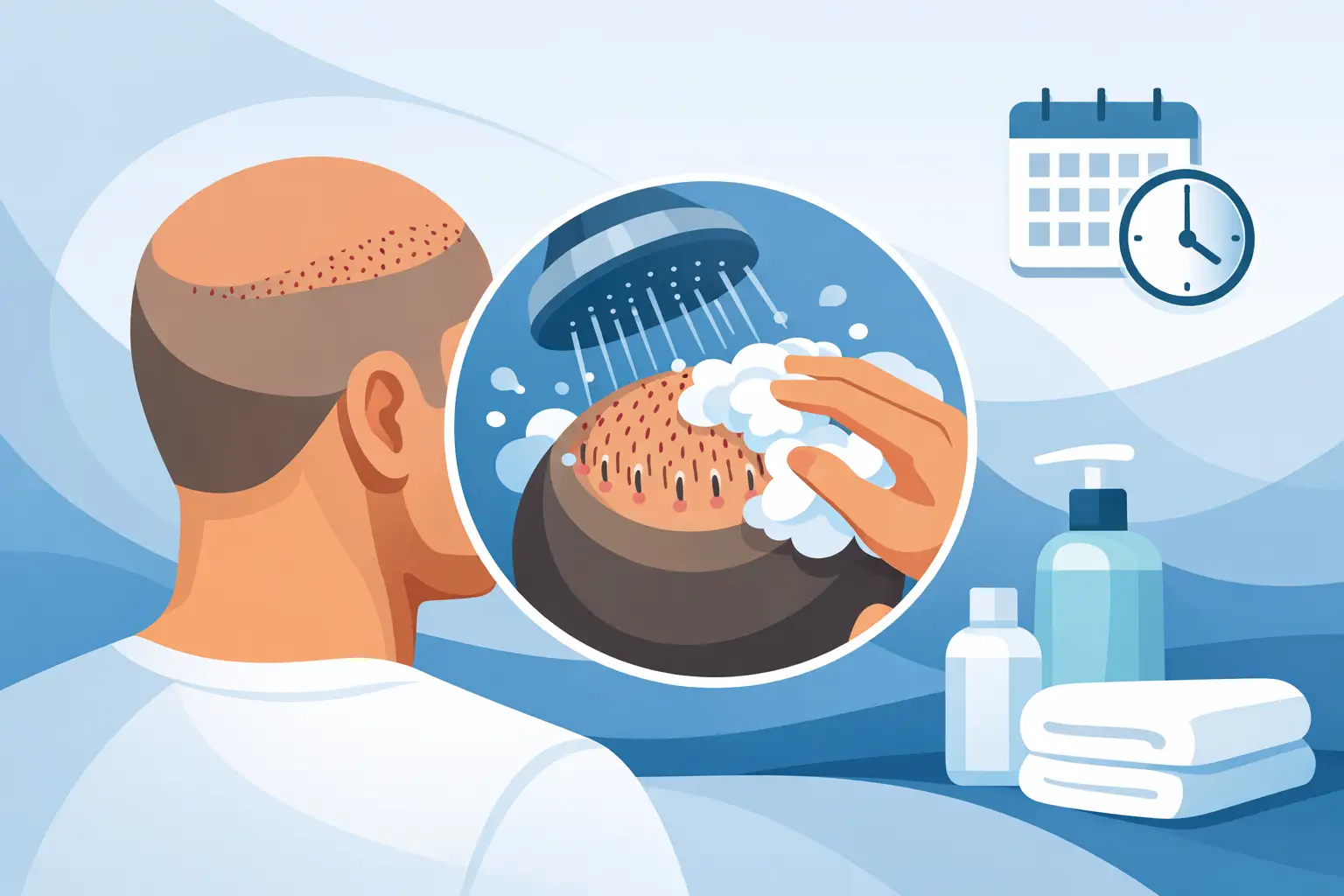
For the first several washes, think soft, slow, and hands-off. In most cases, your clinic will recommend lukewarm water and a gentle shampoo, often one with no harsh fragrance or active ingredients. Water temperature matters more than people expect. Hot water can increase irritation, while cold water can feel uncomfortable and make the process tense and rushed.
Start by letting water run gently over the scalp or by using a cup to pour water over the area. Avoid direct high-pressure spray from a showerhead on newly transplanted grafts. If your instructions include a foam or diluted shampoo, apply it lightly by dabbing rather than rubbing.
The key mistake is using your fingertips like you normally would. No scrubbing, massaging, circular motions, or nail contact. On the recipient area, the product is usually placed gently and then rinsed away with minimal touch. The donor area may sometimes tolerate a little more contact earlier, but even there, gentle handling is still the standard.
When drying, pat very lightly if your surgeon allows it, or let the area air dry. Rubbing with a towel is one of the easiest ways to irritate healing skin.
A simple first-wash mindset
If you are asking yourself whether you are being too gentle, that is usually a good sign. The first week is not the time to chase a deep clean. It is the time to protect the work that was just done.
What to avoid during the first week
Many post-op issues come from normal habits that are suddenly not normal anymore. A strong shower stream, favorite dandruff shampoo, long hot shower, gym sweat followed by rough towel drying, or trying to remove every visible scab too soon can all create problems.
Avoid shampoo formulas with strong medicated ingredients unless your surgeon specifically told you to use them. Products meant for dandruff, clarifying, oil control, or heavy exfoliation can be too harsh on healing skin. Styling products should also stay off the scalp until you are cleared to use them.
It is also smart to avoid long showers where steam and heat build up. Keep the wash brief and controlled. Recovery is one of those times when less really is more.
What if scabs and crusting start to build up?
Some crusting is expected after FUE. Patients often worry when they see flakes, dried blood spots, or small scabs around the grafts. Usually, this is part of normal healing. The problem is not the presence of scabs. The problem is forcing them off before the scalp is ready.
With regular gentle washing, crusting typically softens and loosens over several days. If scabs remain longer, your surgeon may advise a specific soaking or softening method before increasing contact. What you should not do is pick at them with your nails or scrub until they lift.
This is where patience protects results. A graft that is secure enough to stay in place still does not benefit from unnecessary trauma. Healing tissue is sensitive even after the most vulnerable period has passed.
Signs you may be washing too aggressively
A little pinkness and tenderness are common after a transplant, so not every symptom means something is wrong. But if washing leads to fresh bleeding, increased soreness, a burning sensation, or obvious irritation afterward, your technique may be too rough.
Another sign is anxiety-driven overchecking. Some patients touch the scalp repeatedly during washing to “make sure everything is okay.” That repeated contact can become the issue. The less you manipulate the grafted area, the better.
If you are ever unsure whether what you are seeing is normal, contact your surgical team rather than guessing. That reassurance can prevent a small concern from turning into a preventable setback.
When normal shampooing can resume
This varies, but most patients can gradually return to a more typical washing routine after the initial healing period, often around 7 to 14 days depending on progress and physician guidance. Even then, gradual matters. You may be cleared to use slightly more pressure on the donor area before the recipient area feels fully comfortable.
The scalp can also stay sensitive longer than expected. That does not necessarily mean something is wrong. It simply means healing is still underway beneath the surface. If you have a history of sensitive skin, eczema, seborrheic dermatitis, or product reactions, your timeline may need a bit more caution.
It depends on your scalp and your procedure
A smaller session with minimal crusting may feel easier to wash sooner. A larger case, denser placement, or naturally reactive skin may require a slower approach. This is one reason personalized aftercare matters. Good recovery advice is not one-size-fits-all.
Common questions patients ask
One of the most common concerns is whether a graft can fall out during washing. In the earliest phase, grafts are more vulnerable, which is why gentle technique matters so much. After they begin to anchor, the risk drops significantly, but that does not mean you should rush back to normal habits.
Patients also ask about itching. Mild itching is common as the scalp heals, but scratching can dislodge crusts and irritate the skin. Careful washing often helps reduce that itchy, tight feeling.
Another frequent question is whether baby shampoo is always required. Not always. Many surgeons recommend it because it is mild, but the right shampoo is the one your clinic tells you to use for your scalp and your recovery plan.
The bigger picture: washing supports your final result
After FUE, most people focus on graft survival, future growth, and when they will see density. Those are the right priorities, but recovery habits shape that path more than patients realize. Washing is not a minor detail. It is one of the first ways you actively protect your investment.
At Austin Hair Clinic, patients are guided through recovery with the same precision used during treatment, because natural-looking results do not depend on the procedure alone. They also depend on what happens in the days that follow.
If your scalp feels fragile right now, that is normal. Slow down, use the exact instructions you were given, and treat the first few washes like part of the procedure itself. A calm hand now gives your new grafts the best possible start.