Hair Transplant Before and After Results
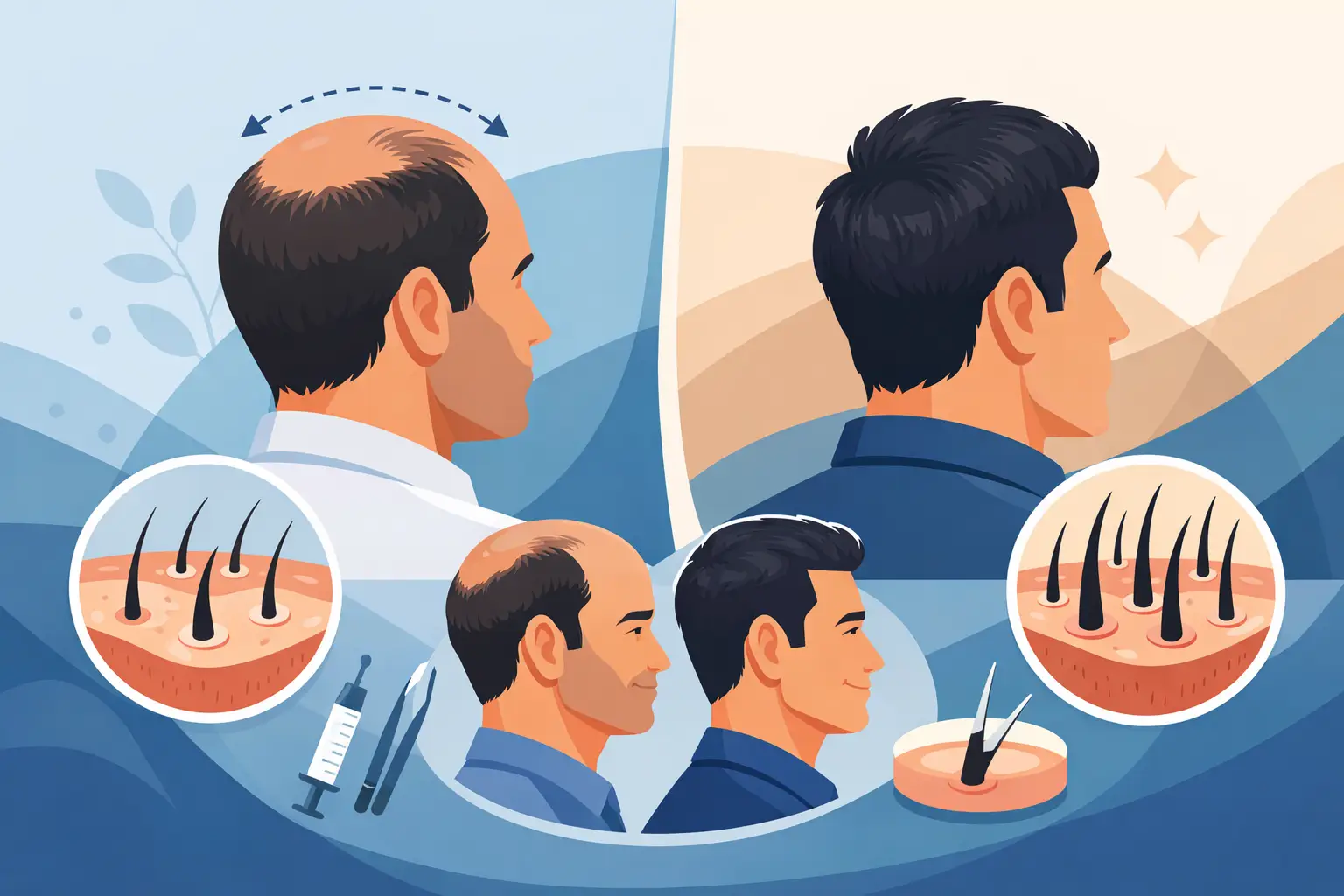
When people search for hair transplant before and after photos, they are usually asking a deeper question: Will this actually look natural on me? That question matters more than any single image. A strong result is not just about having more hair. It is about restoring a hairline that fits your face, improving density in the right areas, and doing it in a way that looks believable up close.
Photos can be helpful, but they only tell part of the story. Lighting, hairstyle, hair caliber, and even whether the patient is using medication can change how dramatic a transformation appears. The real value in reviewing hair transplant before and after results is understanding what changed, why it changed, and what kind of outcome is realistic for your specific pattern of loss.
What hair transplant before and after photos should show
The best before and after cases do more than show a fuller head of hair. They show planning. In the before image, you may see temple recession, thinning through the frontal scalp, or a crown that has widened over time. In the after image, the improvement should look balanced, not overbuilt.
A natural result usually comes down to graft placement, hairline design, and donor management. If the hairline is too low, too straight, or too dense in the wrong spots, the transplant can look artificial even if the patient technically has more hair. If the donor area is overharvested, the back and sides may look thin, which creates a different cosmetic concern.
This is why physician oversight and technique matter. Follicular Unit Extraction, or FUE, allows individual grafts to be harvested and placed with precision. When done well, it can restore thinning areas while keeping the donor region looking clean and natural.
The timeline behind before and after results
One of the biggest misunderstandings around hair restoration is timing. Patients often expect the after photo to happen quickly. In reality, hair growth follows a biological schedule.
Right after the procedure
Immediately after an FUE transplant, you will see tiny graft sites and short implanted hairs. The hairline may already be visible, but this is not the final cosmetic result. There can be redness, mild swelling, and small scabs during the early healing phase.
The first few weeks
Many transplanted hairs shed within the first several weeks. This can be unsettling if you are not expecting it, but it is normal. The follicles remain in place beneath the skin and enter a resting phase before new growth begins.
Three to four months
Early growth often starts here. It may look soft, fine, or uneven at first. That does not mean the outcome will stay that way. Early hair usually matures over time.
Six to nine months
This is when many patients begin to notice meaningful cosmetic improvement. The hairline becomes more apparent, density improves, and styling becomes easier.
Twelve months and beyond
For most scalp cases, the most representative after photo is taken around the one-year mark. Some patients continue to see maturation after that, especially in the crown, which can develop more slowly.
A trustworthy consultation should set expectations around this timeline. If someone promises instant fullness, that is a red flag.
What makes one patient’s after result look better than another
Not every transformation looks the same, even when the procedure is performed well. Hair restoration is highly individualized, and several factors influence the final outcome.
Hair caliber is a major one. Thicker hairs generally create more visual coverage than fine hairs. Curl can also help, since wavy or curly hair often gives the appearance of greater fullness. Color contrast matters too. A person with dark hair and light skin may notice scalp visibility more than someone whose hair color blends closely with their skin tone.
The extent of hair loss also shapes the result. Rebuilding a mildly receded hairline is different from restoring the entire front, mid-scalp, and crown. In more advanced cases, grafts must be distributed strategically. That can still produce a major improvement, but the goal may be coverage and framing rather than teenage density.
Donor supply is another practical limit. FUE uses your own permanent donor hair, usually from the back and sides of the scalp. That supply is valuable and finite. A responsible treatment plan protects it.
Hairline design is where natural results are won or lost
When patients look at hair transplant before and after examples, they often focus on density first. Specialists tend to look at the hairline. That is because the hairline is the most visible part of the result and the easiest place to spot poor design.
A natural hairline is rarely perfectly straight. It has subtle irregularity, softer transitions at the front, and an age-appropriate shape. Lower is not always better. An aggressive hairline may seem appealing in theory, but if it does not match your facial structure or future hair loss pattern, it can age badly.
This is especially important for younger patients. If hair loss is still progressing, the plan should account for what your hair may do in the coming years, not just how it looks today. Sometimes that means a more conservative design and a long-term strategy that includes medication or other supportive therapies.
Before and after is not only about the scalp
Scalp restoration gets the most attention, but before and after results can also be significant in facial hair procedures. Beard and eyebrow transplants can improve density, shape, and symmetry in ways that change the overall balance of the face.
These procedures require the same level of aesthetic precision, and in some cases even more. Eyebrow restoration, for example, depends on careful control of angle and direction so the result lies naturally. Beard work may be used to fill patchy areas, strengthen the jawline visually, or restore facial hair after scarring.
The best after photos in these categories look subtle. People notice that the face looks stronger or more defined, not that work was done.
Why some patients need more than a transplant alone
A transplant moves existing healthy follicles. It does not stop ongoing hair loss in untreated areas. That distinction matters when comparing before and after outcomes over time.
If a patient has active thinning, especially outside the transplanted zone, medical therapy or non-surgical support may be recommended to help stabilize native hair. Depending on the person, that could include prescription medication, regenerative hair loss injections, low-level laser therapy, or a more customized treatment plan based on scalp analysis and hair loss pattern.
This is often what separates a good short-term result from a result that still looks strong years later. The transplant creates the framework. Maintenance helps preserve the surrounding hair.
How to read before and after photos critically
A strong gallery should build confidence, but it should also invite careful attention. Look for consistent angles, similar lighting, and images taken at meaningful milestones, especially around 12 months. If every after photo is heavily styled, cropped, or shot under flattering studio conditions, you are not getting the full picture.
It also helps to look for patients with hair loss patterns similar to yours. A photo of a person with mild temple recession is not a useful comparison if you have diffuse thinning across the entire top of the scalp.
Most importantly, ask what treatment was actually performed. Was it standard FUE, robotic FUE, facial hair transplantation, or a combination approach? Was the patient also using medical therapy? Good results come from planning, not just the procedure name.
For patients in Texas who want a clearer picture of what is realistic, a personalized consultation matters more than scrolling endless galleries. At Austin Hair Clinic, that conversation starts with scalp analysis, a close look at donor strength, and a treatment plan designed around natural-looking, confidence-restoring results.
The result you should really be looking for
The most successful after result is not the one that looks the most dramatic on a screen. It is the one that fits your face, respects your donor hair, and still looks believable when the hair is wet, short, or seen in daylight. That kind of result comes from experience, restraint, and a plan built around you rather than a one-size-fits-all promise.
If you are weighing your options, focus less on finding the flashiest before-and-after photo and more on finding a team that can explain what your own after could reasonably look like. That is where real confidence starts.