Top Benefits of Robotic FUE Explained
If you have been comparing hair transplant options, the top benefits of robotic FUE usually come down to three things patients care about most: natural-looking results, a smoother recovery, and more confidence in the process. That matters when you are not just treating hair loss, but trying to restore your appearance in a way that feels believable, refined, and worth the investment.
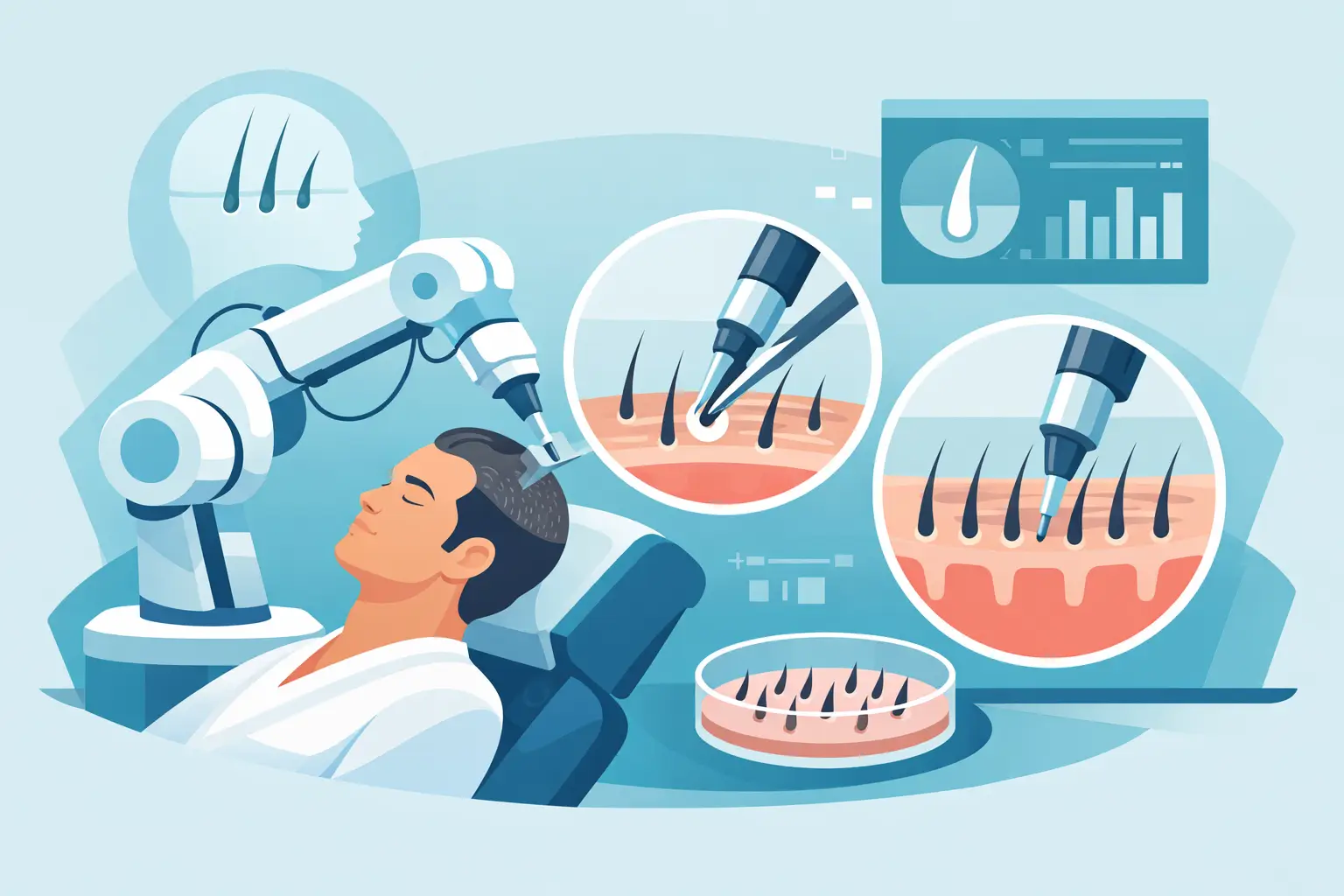
Robotic FUE is a more advanced version of follicular unit extraction, a method that removes individual hair follicles from the donor area and places them where hair is thinning. In robotic FUE, imaging, mapping, and automation help support the harvesting phase of the procedure. For many patients, that added precision is a major advantage. For others, the value depends on their hair characteristics, goals, and how extensive their hair loss has become.
What makes robotic FUE different?
Traditional FUE relies entirely on the skill and endurance of the surgical team to identify, isolate, and extract follicular units one by one. Robotic FUE adds a high-tech layer to that process. The system analyzes the angle, direction, and grouping of hairs in the donor area and assists with selecting grafts based on those patterns.
That does not mean the robot replaces the physician. It means technology supports the procedure where consistency and precision matter most. Physician oversight is still essential for hairline design, graft placement, treatment planning, and making judgment calls that no machine should make on its own.
For patients, this distinction is important. Robotic FUE is not better simply because it is newer. It is valuable because it can improve specific parts of the process when used appropriately and under experienced medical supervision.
Top benefits of robotic FUE for patients
The biggest benefit is precision in graft harvesting. Hair follicles are delicate. If they are damaged during extraction, they may not survive transplantation. Robotic assistance is designed to improve accuracy during harvesting by tracking follicle angle and depth more consistently. That can help preserve healthy grafts, which supports better growth after the procedure.
Another major benefit is donor area management. A successful hair transplant is not just about filling in thinning areas. It is also about protecting the look of the donor zone in the back and sides of the scalp. Robotic systems can help distribute extractions more evenly, reducing the chance of overharvesting in one spot. This matters for patients who wear their hair shorter and want the donor area to continue looking natural.
Many patients also appreciate the minimally invasive nature of robotic FUE. Because follicles are removed individually rather than through a linear strip, there is no long scar like the one associated with FUT. Instead, patients typically have tiny circular extraction sites that heal discreetly. For men who prefer short haircuts and women who want less visible evidence of surgery, this can be a deciding factor.
There is also the recovery factor. While every patient heals at a different pace, robotic FUE is generally associated with less post-procedure discomfort and a quicker return to normal routines compared with strip surgery. You should still expect some redness, tenderness, and short-term healing in both donor and recipient areas. But many patients feel the downtime is manageable, especially when they have been putting off treatment because they fear a long recovery.
Precision supports natural-looking outcomes
When patients say they want their hair back, they rarely mean they want it to look transplanted. They want it to look like they never lost it in the first place. One of the top benefits of robotic FUE is that better graft handling can support more natural density and growth patterns over time.
Natural results depend on more than harvesting alone, of course. Hairline design, recipient site creation, and artistic placement are just as important. Still, the quality of grafts sets the stage for everything that follows. Healthy follicles give the surgical team more to work with, especially in cosmetically important areas like the frontal hairline, temples, or crown.
This is where expectations matter. Robotic FUE can improve consistency, but it does not promise perfection or unlimited density. If a patient has advanced hair loss and a limited donor supply, the treatment plan may need to balance coverage, density, and long-term preservation. A good consultation should explain that clearly rather than oversell the technology.
Why many professionals prefer the smaller scar profile
For working adults, appearance during and after recovery can be just as important as the final result. Robotic FUE appeals to many image-conscious patients because it avoids the linear scar associated with FUT. That can be especially reassuring for people who keep their hair short, spend a lot of time on video calls, or simply do not want their procedure to be obvious.
The smaller extraction sites usually heal quickly, and once healed, they are often difficult to detect with the naked eye. That said, scar visibility still depends on skin tone, healing tendencies, hairstyle, and how the procedure is performed. Minimally invasive does not mean scar-free in an absolute sense. It means the visible signs of treatment are typically smaller and more discreet.
It can be a strong option for the right candidate
Robotic FUE is appealing, but it is not automatically the best fit for every patient. Hair texture, curl pattern, donor density, scalp laxity, and the extent of hair loss all influence whether this approach makes sense. Some patients are excellent candidates for robotic harvesting. Others may be better served with manual FUE, FUT, or a broader hair restoration plan that combines surgery with medical therapy.
This is where personalized evaluation matters. A patient in the early stages of thinning may benefit from medication, regenerative therapies, or laser treatment before considering surgery. Someone with a receding hairline and stable loss may be an ideal transplant candidate. Another patient with diffuse thinning may need a more cautious strategy to avoid exhausting the donor supply too soon.
The best clinics do not treat robotic FUE like a one-size-fits-all answer. They use it as one tool within a complete treatment strategy.
Efficiency can improve the patient experience
Another reason patients ask about robotic FUE is efficiency. Because the technology helps automate parts of graft selection and extraction, it can support a more streamlined procedure in appropriate cases. That can be helpful when a large number of grafts are needed or when consistency over many hours becomes a concern.
A more efficient procedure does not always mean a shorter day for every patient. Treatment length still depends on graft count, scalp characteristics, and the complexity of the design. But efficiency can reduce fatigue on the clinical side, and that may help maintain quality throughout the case.
For patients, the practical value is simple. You want a process that feels organized, thoughtful, and controlled from start to finish. Advanced technology can contribute to that, especially when paired with an experienced medical team and clear pre-op and post-op guidance.
Confidence matters just as much as coverage
Hair restoration is often discussed in technical terms, but the real benefit is personal. Patients usually are not seeking a transplant because they care about follicular math. They are trying to feel more like themselves again. They want to stop styling around thinning spots, worrying about overhead lighting, or seeing an older version of themselves in every photo.
That emotional side should not be minimized. A well-executed robotic FUE procedure can improve hairline definition, restore density in key areas, and make grooming easier. Those changes often affect how people show up at work, in relationships, and in everyday life.
At Austin Hair Clinic, that is why the conversation should never start and end with the machine. The technology matters. The result matters more. Patients deserve honest guidance about what robotic FUE can do, what it cannot do, and how it fits into a long-term plan for maintaining healthy, natural-looking hair.
If you are weighing your options, the right next step is not chasing the newest term you have seen online. It is getting a personalized evaluation from a team that can match the treatment to your hair loss pattern, goals, and future needs so your decision feels as confident as your result.