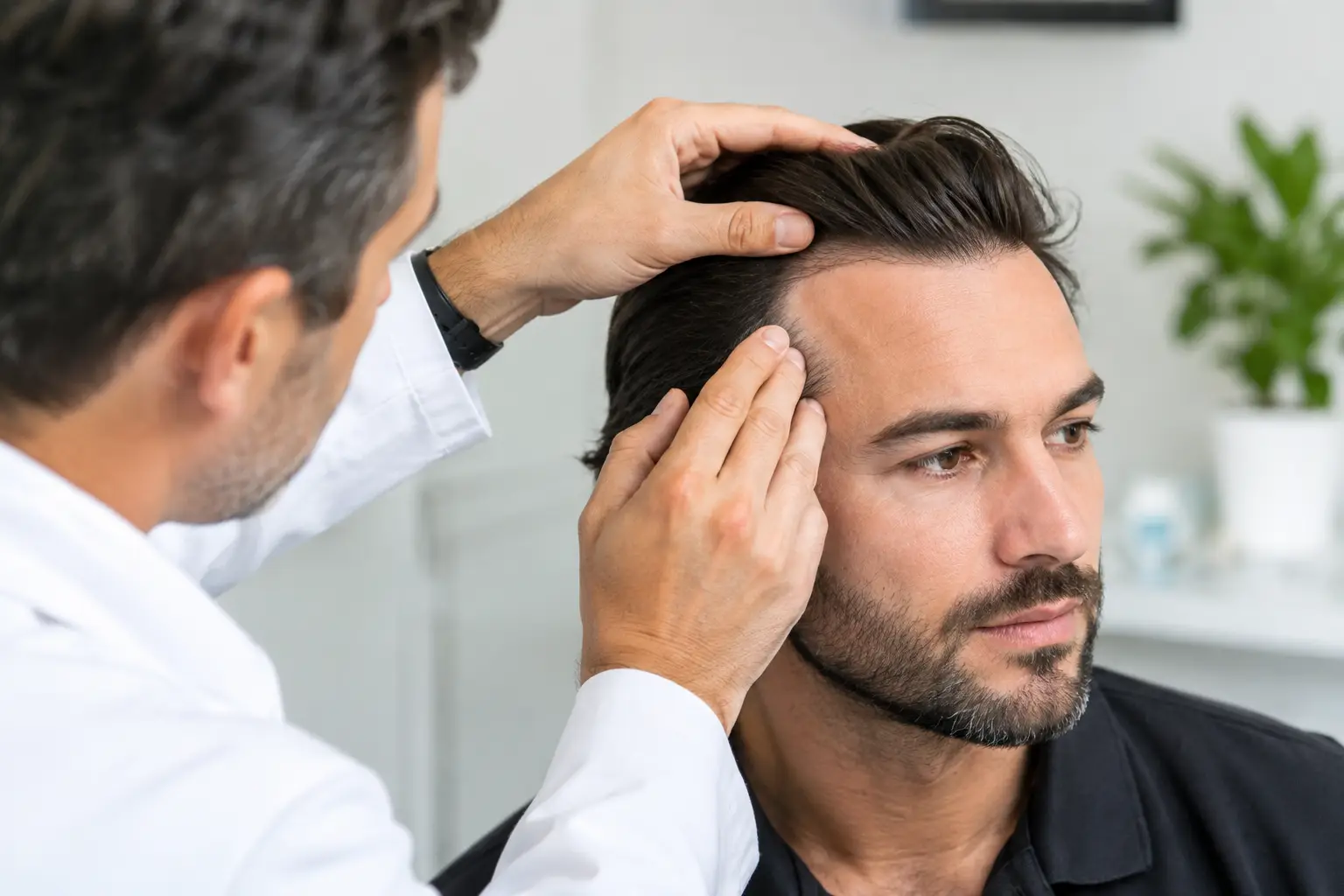
Mature Hairline or Balding? Know the Difference
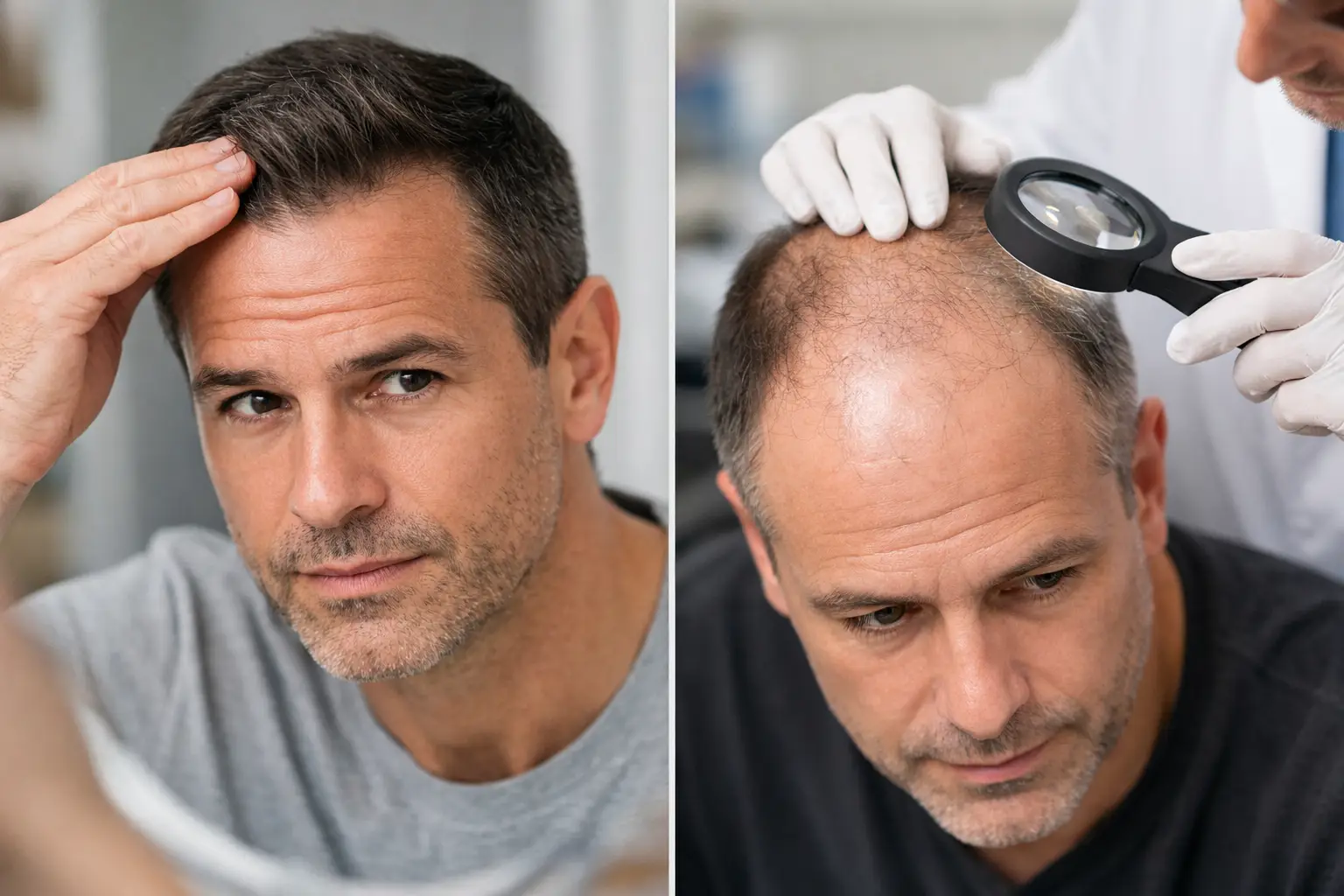
A higher forehead can be easy to notice under bright bathroom lighting, in photos, or when styling your hair a little differently. The question is whether you have a mature hairline or balding – and the answer can shape what you do next. A naturally maturing hairline may require nothing more than observation, while progressive hair loss can benefit from early medical attention before thinning becomes more visible.
The key is not to judge your hairline from one old photo or compare it to someone else’s. Hair loss is personal. The pattern, speed of change, family history, hair caliber, and overall scalp health all matter when determining whether a receding hairline is normal maturation or the beginning of androgenetic alopecia, commonly known as pattern baldness.
What Is a Mature Hairline?
A mature hairline is a common, normal change in which the juvenile hairline rises slightly and develops a more defined adult shape. For many men, this happens from the late teens through the 20s. Rather than sitting low and straight across the forehead, the hairline may move back about half an inch to an inch and take on a gentle M-shaped contour.
This change is usually gradual and then stabilizes. The hair behind the new hairline remains dense, with no obvious thinning at the temples, crown, or mid-scalp. You may see a slightly higher forehead, but your overall hair volume and styling options stay largely the same.
A mature hairline is not a diagnosis of baldness, and it is not automatically a problem to correct. Some men have naturally high hairlines or more pronounced temple recession without experiencing significant future loss. What matters is whether the pattern remains stable.
Mature Hairline or Balding: Signs That Help Tell Them Apart
The distinction often comes down to progression and density. A mature hairline settles into place. Male pattern hair loss continues to move backward or becomes thinner behind the hairline.
With early balding, the temples may recede more deeply over time, creating sharper corners and a more dramatic M or V shape. The frontal hairs can become finer, shorter, and less pigmented than the fuller hairs farther back on the scalp. This process is called miniaturization, and it is one of the clearest signs that follicles are being affected by genetic hair loss.
Crown thinning is another important clue. If your hairline has risen slightly but the hair at the vertex or crown is also becoming less dense, the concern is more likely progressive pattern loss than a stable mature hairline. Increased scalp visibility when your hair is wet, under overhead light, or styled in a certain direction can also indicate early thinning.
Pay attention to changes over 6 to 12 months. A small amount of daily shedding is normal, but a hairline that is visibly receding in photos from year to year deserves an evaluation. Family history can add context, although it does not predict your outcome with certainty. You may inherit hair loss patterns from either side of your family, and the age of onset can vary considerably.
A simple at-home comparison
Try taking clear photos of your hairline, temples, and crown every few months using the same lighting, angle, and hair length. This is more useful than examining your hairline every morning, when normal styling differences can create unnecessary worry.
If the hairline stays in the same position and maintains similar density, it may simply be mature. If the corners deepen, the central forelock loses density, or the crown becomes more visible, schedule a professional scalp assessment. Early changes are often easier to manage than advanced loss.
Why a Receding Hairline Happens
Genetics are the most common reason for progressive hairline recession in men. In androgenetic alopecia, genetically sensitive follicles react to dihydrotestosterone, or DHT. Over time, affected follicles produce progressively finer hairs and may eventually stop producing visible hair altogether.
That said, not every receding hairline is caused by male pattern baldness. Stress, significant illness, rapid weight change, nutritional deficiencies, thyroid issues, certain medications, and inflammatory scalp conditions can all affect shedding or density. Tight hairstyles and repeated traction can contribute to hairline loss as well, particularly around the temples.
Women can also experience hairline changes, though the pattern often looks different. Diffuse thinning along the part line, widening at the top of the scalp, and reduced density around the frontal hairline are common concerns. A suddenly receding hairline, patchy loss, scalp discomfort, redness, or scaling should be medically evaluated rather than assumed to be cosmetic hair loss.
When to Consider Hair Loss Treatment
A stable mature hairline does not necessarily need treatment. However, if you are seeing ongoing recession, miniaturization, or thinning elsewhere on the scalp, a personalized plan can help preserve existing hair and address areas that have already lost density.
Medication may be appropriate for some patients with genetic hair loss. Options can help slow further miniaturization and, in certain cases, improve density over time. Results depend on the individual, and medication requires an honest discussion of benefits, limitations, and potential side effects with a qualified medical provider.
Non-surgical therapies can also play a role. Low-level laser therapy and regenerative hair loss injections may be recommended as part of a broader plan for appropriate candidates. These options are not substitutes for every form of hair loss, and they typically require consistency and realistic expectations. Their greatest value is often supporting existing follicles rather than recreating a long-lost hairline on their own.
For patients with stable donor hair and established areas of recession, FUE hair transplantation can restore a more balanced, natural-looking hairline. During FUE, individual follicular units are harvested from the donor area and strategically placed along the hairline and temples. The artistry matters as much as the technique: graft angle, direction, density, and the irregular softness of a natural hairline all influence the final result.
Why Timing Matters Before a Hair Transplant
Hair transplantation can be highly effective, but it is not a one-size-fits-all answer for a young person whose hair loss pattern is still evolving. Lowering a hairline aggressively at age 22 may look appealing now, but it can create an unnatural appearance later if surrounding native hair continues to recede.
A thoughtful treatment plan considers your age, donor supply, current pattern of loss, likely progression, and long-term goals. Sometimes the best first step is to stabilize active loss and monitor your response. In other cases, a conservative hairline restoration combined with medical therapy can provide an excellent balance of immediate improvement and future flexibility.
This is why a professional assessment should go beyond simply counting grafts. A skilled provider examines the scalp, maps areas of miniaturization, reviews health history, and helps you understand what can realistically be achieved. At Austin Hair Clinic, this type of personalized planning helps patients choose between surgical and non-surgical options without being pushed toward a treatment they do not need.
Questions Worth Asking at Your Consultation
Bring photos showing how your hairline looked one, three, and five years ago if you have them. Ask whether there is visible miniaturization, whether your donor area is strong, and whether your pattern appears stable or active. You should also ask what results are realistic at your current stage of hair loss and how the proposed approach protects your long-term appearance.
A credible recommendation accounts for the fact that hair loss can progress. It should explain what treatment can improve, what it cannot promise, and what ongoing maintenance may be advisable. Natural results are built around a plan that still makes sense years from now.
Your hairline does not have to define your confidence, but it does deserve informed attention. Whether you have a mature hairline that is simply part of adulthood or early balding that calls for treatment, clear answers can replace guesswork with a path forward that feels right for you.