FUE or FUT for Hairline: Which Fits Best?
A hairline can make you look more rested, younger, and more like yourself – which is why this question comes up so often: fue or fut for hairline? The answer is not one-size-fits-all. Hairline restoration is one of the most detail-driven procedures in hair transplant surgery, and the best method depends on your hair loss pattern, donor supply, hairstyle preferences, and how much refinement your frontal hairline needs.
When patients compare FUE and FUT, they are usually trying to solve two problems at once. They want a natural-looking front hairline, and they want to know which procedure gives them the best balance of healing, scar visibility, graft yield, and long-term planning. That is the right way to think about it.
FUE or FUT for hairline restoration
Both FUE and FUT can be used to rebuild a receding or uneven hairline. Neither method is automatically better just because it is newer, more popular, or more familiar online. What matters most is how the grafts are selected, how the hairline is designed, and whether the treatment plan respects future hair loss.
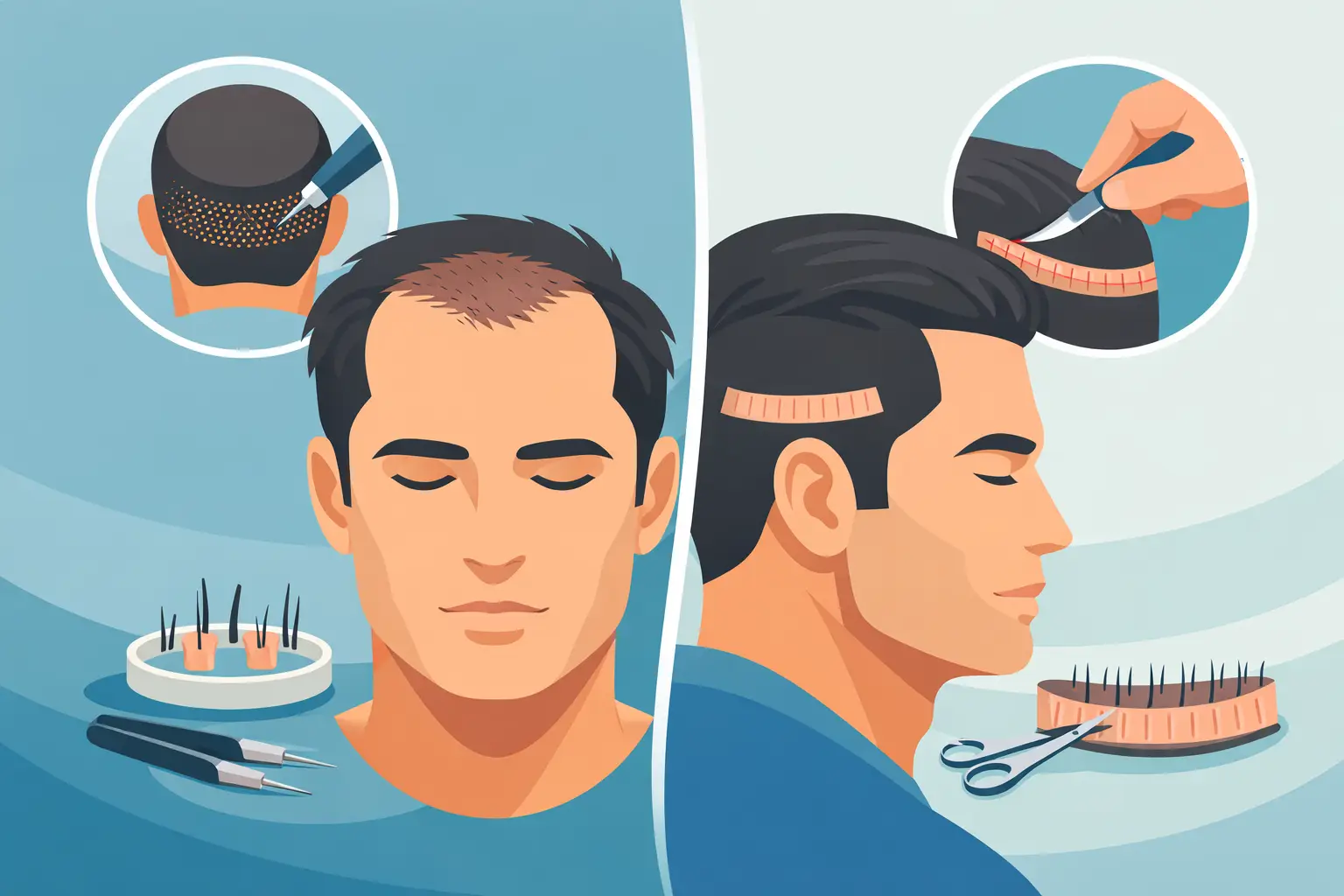
FUE, or Follicular Unit Extraction, removes individual follicular units directly from the donor area. FUT, or Follicular Unit Transplantation, removes a strip of donor tissue that is then dissected into grafts under magnification. In both cases, those grafts are placed one by one into the hairline.
For patients focused on the front edge of the scalp, the method of harvesting is only part of the decision. The artistry of placement often matters even more. A natural hairline usually requires single-hair grafts at the leading edge, soft irregularity rather than a sharp line, and attention to angle and direction so the transplanted hair blends with what is already there.
Why the hairline is different from other transplant areas
The crown can be forgiving. The hairline is not. It frames the face, sits in direct view, and immediately reveals whether a transplant was planned well. That is why good hairline work requires restraint as much as density.
Many patients come in asking for the hairline they had at 19. In reality, a mature, age-appropriate hairline often looks better and stays believable over time. Lowering a hairline too aggressively can use too many grafts early, which may create problems later if native hair continues to thin behind it.
This is also why the right procedure depends on the size of the case. If you need a modest number of grafts to refine the temples or rebuild the frontal corners, FUE is often a very attractive option. If you need a larger session and want to maximize donor yield, FUT may deserve serious consideration.
When FUE is often the better fit
FUE is commonly preferred by patients who want minimal linear scarring and a shorter haircut after recovery. Because grafts are extracted individually, there is no strip scar across the back of the scalp. Instead, there are many tiny extraction sites that usually heal as small dot scars, often hard to notice when performed well.
For hairline restoration, FUE can work especially well when the goal is precision in a smaller or medium-sized area. It is often a strong choice for patients who wear their hair short, want a less invasive feel, or are uneasy about the idea of sutures and a strip harvest.
Healing is another reason many people lean toward FUE. While every surgery has downtime, FUE often feels easier for patients who want to return to normal activities without tension in the donor area. That said, “easier” does not mean effortless. You still need careful aftercare, and the recipient area heals on a similar timeline regardless of whether the grafts came from FUE or FUT.
When FUT may be the smarter choice
FUT still has an important role in hair restoration, especially for patients who need a higher graft count or want to preserve donor hair efficiently for future procedures. Because the donor tissue is removed as a strip and dissected under microscopes, FUT can sometimes provide a strong yield of high-quality grafts in a single session.
For a patient with a significantly receded hairline, thinning behind the hairline, and limited donor density, FUT may offer strategic advantages. In some cases, it allows the surgeon to harvest a large number of grafts while leaving surrounding donor hair available for future FUE if needed.
The trade-off is the linear scar. Some patients are completely comfortable with that, especially if they keep their hair at a longer length. Others are not. That preference matters. A technically good FUT result is still not the right choice if the scar pattern conflicts with how you wear your hair or how you want to feel after surgery.
Scarring, cost, and recovery – what patients really compare
Most patients are not comparing surgical terms. They are comparing life after surgery.
If your priority is flexibility with shorter hairstyles, FUE usually has the edge. If your priority is obtaining more grafts in one session and you are comfortable with a linear scar, FUT may make more sense. Cost can vary by clinic, graft count, and technology used, but FUE is often priced higher per graft because it is more labor-intensive. FUT may be more cost-efficient in some larger cases.
Recovery also depends on your pain tolerance, job demands, and lifestyle. FUT can involve more tightness or discomfort in the donor area during early healing. FUE often avoids that strip-related tension, but it still requires care and patience. Neither option should be chosen on marketing language alone.
Which option gives a more natural hairline?
This is the key question, and the most honest answer is that either method can produce a natural-looking hairline in the right hands. A poor design will look poor whether the grafts came from FUE or FUT. A thoughtful design with proper graft selection and placement can look excellent with either approach.
Natural results depend on details such as using finer single-hair grafts at the front, avoiding pluggy density patterns, respecting facial proportions, and planning for how the hairline will look ten years from now, not just ten months from now. Technique matters. Experience matters. Conservative planning matters.
This is also where personalized consultation becomes essential. A patient in their 30s with stable recession, strong donor hair, and a preference for close-cropped cuts may be a strong FUE candidate. A patient in their 40s with more advanced loss and a need for a larger graft session may benefit more from FUT. Some patients even benefit from a staged or combined strategy over time.
FUE or FUT for hairline thinning versus full recession
There is a difference between rebuilding a hairline that has moved back and filling in a hairline that is thinning but still present. If you still have many native hairs in the frontal area, surgery requires extra caution. Transplanting into thinning zones can sometimes risk shock loss, especially if the native hair is fragile.
In those cases, the discussion may extend beyond surgery alone. Medical therapy, regenerative treatment options, or low-level laser therapy may be part of a smarter plan to stabilize ongoing loss before or alongside a transplant. The best hairline result is not just about where grafts go. It is about protecting the hair you still have.
That is one reason patients often do best with a clinic that looks at the full picture rather than pushing a single procedure. Hair restoration works best when the surgical design and the long-term maintenance plan match each other.
How to decide with confidence
If you are stuck on fue or fut for hairline correction, start by asking better questions. How many grafts do you actually need? Is your hair loss stable? Do you wear your hair short? How important is avoiding a linear scar? Are you trying to maximize donor reserves for the future? And just as important, is the proposed hairline appropriate for your age, facial structure, and likely progression of hair loss?
A strong consultation should not rush past these questions. It should include donor assessment, scalp analysis, a discussion of future hair loss, and honest trade-offs. If everything sounds easy, guaranteed, or identical between methods, you are probably not getting enough real guidance.
At Austin Hair Clinic, this kind of planning is central to the process because a hairline is not simply filled in – it is designed for natural visibility, long-term realism, and confidence you can carry into everyday life.
The best choice is the one that gives you a believable hairline today without creating regrets later, and that usually starts with a plan tailored to your scalp, your goals, and your future.