Diffuse Thinning Treatment for Women: What Works
When your part grows wider, your ponytail feels smaller, or more hair collects in the shower without a visible bald spot, the change can be easy to dismiss at first. A thoughtful diffuse thinning treatment women can rely on begins by identifying why density is changing, not by guessing at a one-size-fits-all solution.
Diffuse thinning can affect women at almost any age, and it often carries a quiet emotional weight. You may still have hair coverage, yet feel that your hair no longer frames your face or styles the way it once did. The good news is that many causes of thinning can be treated, stabilized, or cosmetically improved with an individualized medical plan.
What diffuse thinning looks like in women
Diffuse thinning means a broad reduction in hair density across the scalp rather than a single patch of hair loss or a sharply receding hairline. For many women, it first appears along the center part, at the crown, or through reduced volume from the roots to the ends. Others notice increased scalp visibility under overhead light or find that styling products no longer create the fullness they once did.
Female pattern hair loss is a common cause. This hereditary condition can make follicles gradually produce finer, shorter hairs over time. Unlike classic male pattern baldness, women often retain their frontal hairline while experiencing widening through the part and thinning across the top of the scalp.
Diffuse shedding can also occur after a physical or emotional stressor. Illness, surgery, childbirth, rapid weight loss, significant stress, medication changes, low iron stores, thyroid conditions, and restrictive diets may shift more follicles into a shedding phase. This type of shedding is often called telogen effluvium. It can be temporary, but it may reveal underlying female pattern hair loss that was previously less noticeable.
Why diagnosis comes before treatment
A treatment that is highly effective for female pattern hair loss may not be the right first step for shedding related to thyroid dysfunction, nutritional deficiency, inflammation, or a medication. That is why a scalp evaluation should look beyond the amount of hair in the brush.
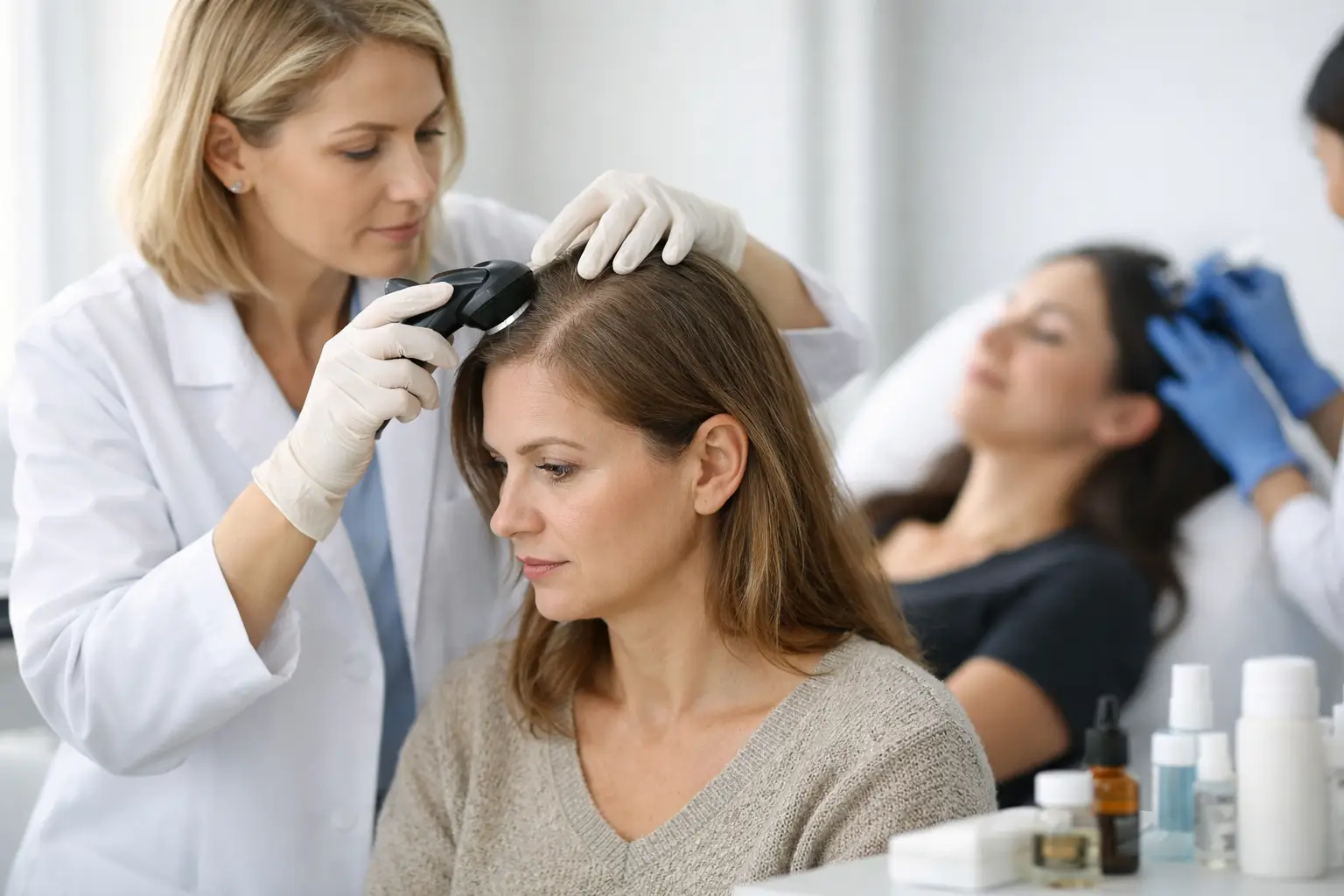
A medical hair restoration provider may assess the distribution of thinning, scalp health, hair shaft diameter, family history, recent health events, medications, and styling practices. Depending on your history, laboratory testing may also be appropriate to evaluate factors such as iron status, thyroid function, vitamin levels, or hormonal changes. Genetic testing can sometimes offer additional insight into which medication pathways may be most suitable.
This process is not about delaying care. It is about avoiding months spent on products that do not address the cause of your hair loss. It also establishes a baseline, so progress can be measured with photographs, scalp analysis, and consistent follow-up rather than memory alone.
Diffuse thinning treatment for women: the main options
The best treatment plan depends on the diagnosis, the severity and pace of loss, your medical history, and your goals. Some women want to reduce active shedding. Others want to preserve existing density for the long term, improve styling coverage, or restore a more defined hairline. Often, the strongest approach combines more than one therapy.
Medication to protect vulnerable follicles
Topical minoxidil is frequently used for female pattern hair loss. It helps extend the active growth phase of the hair cycle and can encourage miniaturized follicles to produce thicker-looking hairs. Early shedding can occur as follicles reset, which can feel discouraging, but it does not necessarily mean the treatment is failing. Meaningful changes generally require several months of consistent use.
For appropriate candidates, a physician may discuss oral medications that address hormonal influences on hair follicles or low-dose oral minoxidil. These medications are not right for every patient, particularly during pregnancy or when certain health conditions are present. A qualified physician should review potential benefits, side effects, interactions, and monitoring needs before treatment begins.
Medication works best when expectations are realistic. Its central role is usually to slow progression and improve the quality of existing hair. Some women see visible density gains, while others value the ability to maintain the hair they have.
Low-level laser therapy for ongoing support
Low-level laser therapy uses specific wavelengths of light to support follicular activity. It is noninvasive, painless, and can fit well into a maintenance plan for women who prefer an at-home option or want to complement medication.
Results vary, and laser therapy requires regular use to be worthwhile. It is not a quick fix for substantial thinning, but it may help support fuller-looking hair over time when the underlying cause is being addressed. The right device, schedule, and combination plan should be guided by a hair restoration professional rather than marketing promises.
Regenerative hair loss injections
Regenerative injection treatments use components from your own blood to support the scalp environment around thinning follicles. For some women with early to moderate pattern thinning, these treatments may be a useful addition to medication or laser therapy.
They are not a substitute for a complete diagnosis, and response can vary from patient to patient. A series of sessions is commonly recommended, followed by maintenance based on your progress. This option can appeal to women seeking a physician-directed treatment that does not require daily application at home.
Nutrition and supplements when they fit the cause
Hair growth depends on adequate protein, calories, and key nutrients. Correcting a documented deficiency can reduce shedding and support healthy growth, but supplements cannot override genetic thinning on their own. More is not always better. Excessive supplementation can cause side effects or interfere with other medications.
A clinically selected hair supplement may be considered for women with nutritional gaps, stress-related shedding, or a need for additional support alongside medical treatment. The most effective recommendation is one that reflects your lab work, diet, health history, and treatment plan.
When hair transplantation may be appropriate
Hair transplantation can be an excellent option for selected women, but diffuse thinning requires careful planning. FUE hair transplantation relocates permanent donor follicles from the back or sides of the scalp into areas with reduced density. The goal is natural-looking coverage that works with your existing hair and future styling preferences.
Not every woman with diffuse thinning is a candidate. If thinning is also significant in the donor area, harvesting grafts may not be advisable. In many cases, medical therapy is used first to stabilize hair loss and preserve the surrounding native hair. This creates a stronger foundation for surgery and can help a transplant blend more naturally over time.
For women with a stable donor area and localized concerns at the frontal hairline, temples, or part line, FUE may provide a meaningful improvement in visible density. Surgical planning should account for the possibility of continued thinning, which is why conservative design and long-term treatment planning matter.
At Austin Hair Clinic, treatment planning centers on physician evaluation, advanced diagnostic tools, and options that range from nonsurgical therapies to precision FUE restoration. The goal is not simply to add hair. It is to create a plan that protects your natural hair and supports results that look like they belong to you.
What results and timelines should you expect?
Hair grows slowly, so even the right treatment requires patience. Reduced shedding may be noticed within a few months when a temporary trigger is corrected. Medication, laser therapy, and regenerative treatments often require six to 12 months before changes in density are easier to see in photographs. A hair transplant follows its own timeline: transplanted hairs typically shed early, begin regrowing around three to four months, and continue maturing for up to a year or longer.
Consistency has a major effect on outcomes. Missing occasional applications is different from stopping treatment for several months, and many therapies need to continue to maintain their benefit. Your provider should help you choose a plan you can realistically follow, rather than recommending an ambitious routine that does not fit your life.
Questions women often ask about diffuse thinning
Can diffuse thinning grow back completely?
It depends on the cause. Hair loss caused by a temporary trigger, such as postpartum shedding or a correctable nutritional deficiency, may improve substantially once the trigger is addressed. Genetic female pattern hair loss is typically progressive, but early treatment can slow it and improve density.
Is washing my hair making it fall out?
Washing does not cause hair loss. It releases hairs that were already in the shedding phase, making the amount feel more alarming on wash day. Avoiding washing can also make scalp conditions and product buildup harder to manage.
Should I wait until thinning is severe to seek help?
No. Earlier assessment generally gives you more options because there are more active follicles to protect. If your part has changed, shedding is persistent, or your hair feels noticeably less dense, a professional evaluation can provide clarity before the concern becomes harder to conceal.
You do not need to settle for watching your hair become less familiar month after month. A personalized assessment can replace uncertainty with a practical next step and a treatment plan built around preserving your confidence, your options, and your natural-looking results.