Best Ways to Restore Eyebrows: What Works?
A sparse or uneven brow can change more than a close-up photo. It can make the face look less balanced, alter expression, and leave many people feeling like they look tired or older than they feel. The best ways to restore eyebrows depend on why density was lost, how much natural hair remains, and whether you want a temporary cosmetic improvement or a permanent medical solution.
For some people, brow thinning follows years of over-plucking. For others, it begins after hormonal changes, aging, skin conditions, thyroid disorders, alopecia, trauma, or a previous cosmetic procedure. A personalized assessment matters because the right treatment for a person with stable, localized eyebrow loss may not be the right choice for someone with active autoimmune hair loss.
Start by Identifying Why Your Eyebrows Are Thinning
Before choosing a treatment, look at the pattern and timing of eyebrow loss. Thinning across both brows can sometimes be connected to medical or hormonal factors. Patchy loss, irritation, scaling, or sudden shedding can point to a skin condition or inflammatory process that should be evaluated before any cosmetic treatment is considered.
A qualified physician can review your health history, current medications, family history, and brow-loss pattern. In some cases, managing the underlying cause may help protect the eyebrow hair you still have. This step also helps set realistic expectations. A treatment designed to stimulate existing follicles will not create new follicles in an area where they are no longer present.
The Best Ways to Restore Eyebrows
Improve existing eyebrow growth when follicles are still active
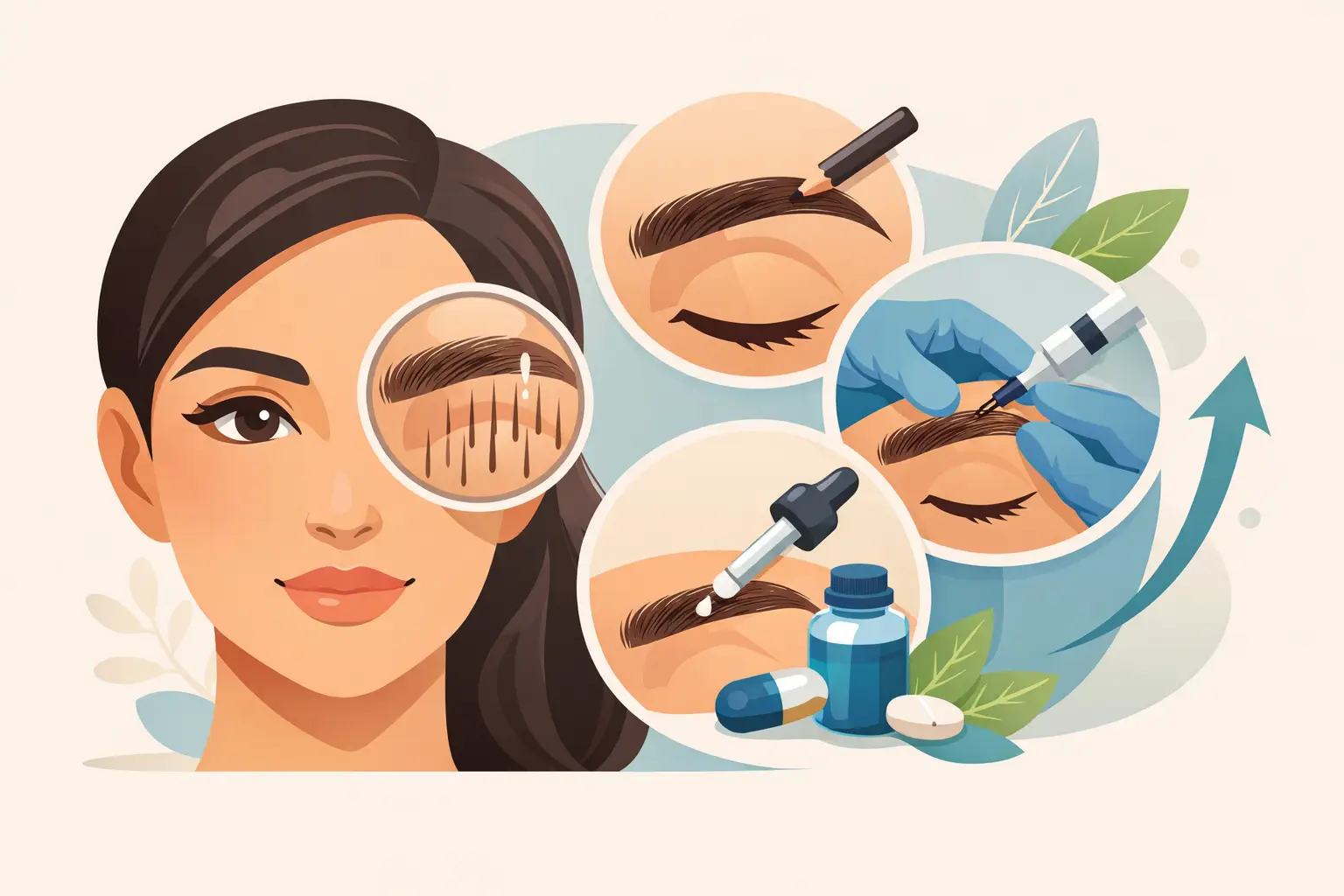
When brows are thinning but follicles remain viable, medical treatment may help preserve or improve the hairs already present. Depending on the cause of hair loss, a physician may recommend targeted topical or oral medications, nutritional support, or treatment for an underlying skin or hormonal concern.
Results vary, and patience is required. Eyebrow hair has a slower, shorter growth cycle than scalp hair, so visible changes can take several months. Medical options are generally best for early thinning, diffuse loss, or situations where the goal is to maintain existing hair rather than rebuild a largely bare area.
Be cautious with over-the-counter growth products marketed for brows. Some can irritate the delicate skin around the eyes, and many make promises that exceed the evidence. A medical evaluation offers a safer path, particularly if you have sensitive skin, a history of eye irritation, or unexplained eyebrow shedding.
Use cosmetic enhancement for immediate definition
Brow pencils, powders, tinted gels, and brow lamination can create a fuller appearance quickly. These options can be helpful while you are evaluating medical care, waiting for hair growth, or simply deciding whether a fuller brow shape feels right for your face.
Microblading and other forms of cosmetic tattooing can also add the appearance of individual hairs. The benefit is immediate visual density without surgery. The trade-off is that pigment fades, touch-ups are needed, and the result is not actual hair. Color can shift over time, and placement must be exceptionally precise to look natural as facial features change.
Cosmetic tattooing may be a reasonable choice for someone who wants a non-surgical improvement or who is not a candidate for transplantation. It is less ideal for patients seeking real, growing eyebrow hair or those who have active skin inflammation in the brow area.
Consider an FUE eyebrow transplant for permanent, growing hair
For stable eyebrow loss with limited natural regrowth potential, an FUE eyebrow transplant can offer the most durable and natural-looking restoration. The procedure moves individual hair follicles, usually from a discreet area of the scalp, into the eyebrow region. Each graft is placed one at a time to follow the brow’s natural angle, direction, arch, and density.
This artistic precision is what separates a convincing result from a brow that looks too straight, too dense, or poorly aligned. Eyebrow hairs do not grow straight outward like scalp hair. They grow at very shallow angles and change direction through the head, body, arch, and tail of the brow. A skilled physician plans the design around your facial proportions, existing brow hair, skin tone, and desired level of fullness.
FUE is minimally invasive and avoids a linear donor scar. Because eyebrow restoration often requires a relatively small number of grafts, it can be an appealing option for people who want a lasting solution without a major surgical recovery. At Austin Hair Clinic, eyebrow transplant planning is performed with careful attention to natural hair direction and facial aesthetics, not a one-size-fits-all template.
There are important trade-offs to understand. Transplanted scalp hairs continue to behave more like scalp hair, which means they will need routine trimming after they grow in. The transplanted hairs commonly shed shortly after the procedure before new growth begins. Early regrowth often starts around three to four months, with the appearance continuing to mature over the following months. Final density and texture take time.
Combine treatments when it supports your goals
Restoration does not always have to be an either-or decision. A person with a thin brow tail but healthy follicles through the front of the brow may benefit from a focused transplant only where hair is absent. Someone who has undergone transplantation may still use a brow pencil during the growth period. Others may choose medical treatment to support surrounding native hairs while using cosmetic enhancement for added definition.
The right combination depends on the cause of loss, the density of your donor hair, the stability of the condition, and your preferred maintenance level. The best plan is the one that protects what is still there while creating an appearance that fits your face naturally.
What to Expect From Eyebrow Transplant Recovery
Recovery is typically manageable, but following post-procedure instructions is essential. Small scabs may form around the newly placed grafts during the first week. Swelling and mild redness can occur, especially in the first few days. Patients should avoid rubbing, scratching, heavy sweating, and activities that could disturb the grafts while the area heals.
The initial transplanted hairs often fall out within a few weeks. This is an expected part of the process, not a sign that the transplant failed. The follicles remain beneath the skin and begin producing new hair later in the growth cycle. Because improvement is gradual, eyebrow transplantation rewards patients who value a permanent result and are comfortable allowing time for it to develop.
Choosing a Provider for Eyebrow Restoration
Eyebrow restoration is both a medical procedure and a facial design procedure. Experience with scalp transplantation alone is not enough. Ask who will create the brow design, who makes the recipient sites, how graft angles are managed, and whether the provider will assess possible medical causes of eyebrow loss before proceeding.
Review before-and-after results with a critical eye. Look for soft density, natural variation, appropriate symmetry, and brows that suit each patient’s face rather than identical shapes repeated from case to case. A consultation should also cover donor-hair availability, expected graft numbers, recovery, costs, and the possibility that more than one session may be needed for added density.
Your eyebrows frame the face every day, so the goal should not be an artificially perfect brow. It should be a result that looks like it has always belonged to you. A thoughtful medical consultation can help you choose a path that restores not only hair, but also the confidence that comes with recognizing yourself in the mirror.