Is an Eyebrow Transplant for Overplucking Right?
If your eyebrow pencil has become part of your daily routine because years of tweezing left sparse patches behind, you are not alone. An eyebrow transplant for overplucking can offer a lasting solution when brow hairs have stopped growing back on their own. The goal is not simply to add more hair. It is to recreate a natural brow shape, direction, and density that complements your facial features.
For the right candidate, modern FUE eyebrow restoration can replace the constant effort of filling, tinting, or camouflaging thin brows with a result that looks like it belongs there. But it is a precise medical procedure, and the best outcome begins with understanding what it can realistically accomplish.
Why Overplucked Eyebrows May Not Grow Back
Brows can recover after occasional over-tweezing, especially when the follicle has not been damaged. Repeated plucking over years is different. Consistent trauma may weaken or destroy individual follicles, leaving areas where growth becomes finer, slower, or absent.
Hormonal changes, thyroid conditions, autoimmune disorders, nutritional deficiencies, certain medications, and skin conditions can also contribute to eyebrow thinning. That is why a careful evaluation matters before choosing a transplant. If an underlying medical concern is causing active hair loss, that issue may need attention first.
When the hair loss is stable and the concern is primarily permanent thinning from overplucking, transplantation can be an effective option. It is especially appealing for people who want fuller brows without relying on daily makeup or semi-permanent cosmetic procedures.
How an Eyebrow Transplant for Overplucking Works
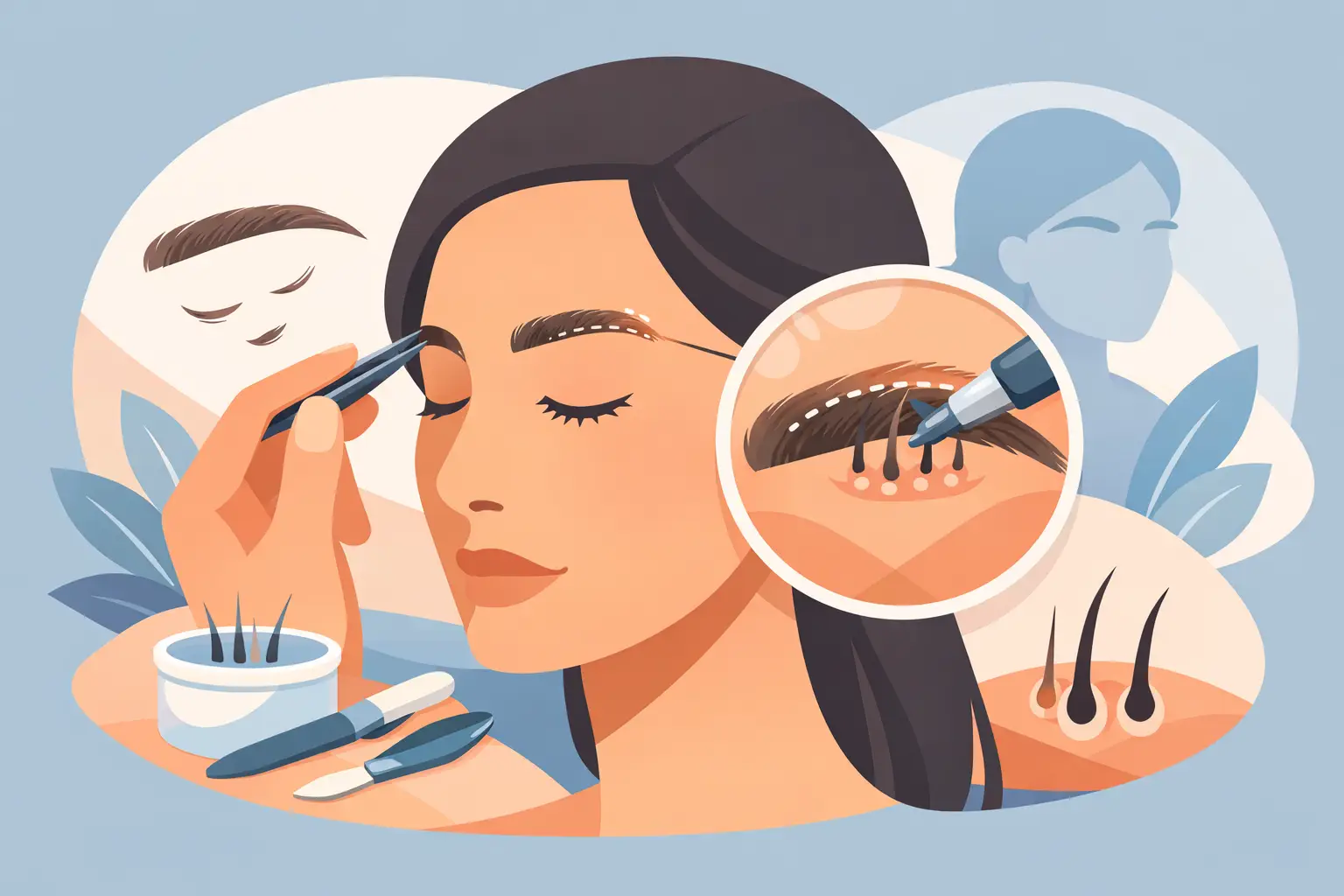
An eyebrow transplant uses healthy hair follicles, most often taken from the back or sides of the scalp, where hair is genetically more resistant to thinning. With FUE, follicles are individually extracted rather than removed in a strip of tissue. This leaves tiny donor-site marks that are typically difficult to notice once healed.
The artistry happens during placement. Eyebrow hair grows at a very shallow angle and changes direction across the brow. At the inner brow, hairs usually point upward and outward. Through the arch and tail, they gradually lie flatter and sweep laterally. A surgeon must place each graft to follow these patterns or the result can look too upright, irregular, or obviously transplanted.
Graft selection is equally important. Fine, single-hair follicular units are often chosen because they better match the naturally delicate texture of eyebrow hair. The exact number of grafts depends on the desired shape, the amount of existing brow hair, skin quality, and whether the goal is subtle density or a more complete reconstruction.
At Austin Hair Clinic, eyebrow restoration planning is treated as both a medical and aesthetic decision. Your facial proportions, existing brow pattern, and preferences should guide the design rather than a one-size-fits-all brow trend.
Who Is a Good Candidate?
The strongest candidates generally have stable eyebrow loss, sufficient donor hair, and realistic expectations about the growth process. Men and women who have overplucked their brows for years often fall into this category, particularly when sparse areas have remained unchanged despite stopping tweezing.
A transplant may be less appropriate if eyebrow loss is ongoing or caused by an unmanaged inflammatory or autoimmune condition. In those situations, placing new follicles before the condition is controlled could compromise the result. A consultation can help distinguish between permanent follicle loss and a treatable cause of temporary thinning.
Your preferred brow style also matters. A skilled provider can enhance fullness and improve symmetry, but the result should remain believable for your age, hair characteristics, and natural bone structure. Bringing reference photos can be helpful, although they should serve as a starting point rather than a rigid blueprint.
What the Procedure and Recovery Are Like
Eyebrow transplantation is commonly performed with local anesthesia. You remain awake, but the treatment area is numbed for comfort. The provider first removes the selected donor follicles, then creates extremely small recipient sites and places the grafts one by one.
Mild redness, swelling, and tiny crusts around the implanted hairs are expected during the first several days. Most patients can return to many normal activities quickly, but they should avoid rubbing the brows, intense exercise, swimming, and direct sun exposure for the period recommended by their provider. Careful aftercare protects the newly placed grafts while they settle into the skin.
The transplanted hairs usually shed within the first few weeks. This can be unsettling, but it is a normal part of the process. The follicles remain beneath the skin and typically begin producing new hair after several months. Early growth can be uneven, followed by progressive thickening and refinement. Final maturation commonly takes 9 to 12 months, though individual timelines vary.
The Trade-Off Most Patients Should Know
Transplanted eyebrow hairs retain many characteristics of scalp hair. That means they grow longer than natural eyebrow hairs and will need regular trimming, often every one to two weeks. Some hairs may also require occasional styling with a brow gel or small brush so they lie in the preferred direction.
This maintenance is a reasonable trade-off for many patients because the brows are made of living hair rather than pigment. Still, it is worth considering before treatment. If you want a low-maintenance cosmetic enhancement without hair growth or trimming, microblading or other cosmetic tattooing may be a better fit. Those options can create the appearance of hair, but they do not restore actual density and may fade or change color over time.
An eyebrow transplant is also more of a commitment than a temporary cosmetic service. It involves a procedure, healing period, and a gradual waiting process before final results appear. In exchange, it can provide a durable foundation of real hair that can be shaped and groomed over the long term.
How to Protect a Natural-Looking Result
Natural results come down to more than placing enough grafts. Conservative design is often the better choice. Brows that are too dark, too sharply defined, too symmetrical, or too dense at the inner edge can draw attention for the wrong reasons.
The most attractive outcome usually preserves slight natural variation between the two brows. Human faces are not perfectly symmetrical, and eyebrows should not look stamped on. A thoughtful surgeon will consider the brow’s thickness from front to tail, the softness of its border, and how it balances with your eyes, forehead, and hair color.
After healing, avoid returning to aggressive tweezing. You may still shape stray hairs, but over-removing transplanted or surrounding hairs can work against the fuller look you invested in. If you color your brows, introduce products carefully once your provider confirms the area has fully healed.
Questions to Ask During Your Consultation
A consultation should give you a clear sense of both the medical plan and the aesthetic approach. Ask who will design the brow shape and place the grafts, whether single-hair grafts will be used, and how the provider accounts for hair angle and direction. It is also reasonable to ask about expected graft range, recovery instructions, potential need for a touch-up session, and before-and-after results from patients with similar concerns.
Be candid about your brow routine and the outcome you want. Do you want to fill a few bald spots, soften an over-arched shape, restore a missing tail, or create fuller brows throughout? Those are different treatment goals, and they may call for different graft counts and design choices.
Will the transplanted hairs look exactly like natural eyebrow hair?
They can look very natural when fine grafts are selected and placed at the correct angle. However, because donor follicles usually come from the scalp, the hairs will continue growing and require trimming.
Is there scarring after FUE eyebrow transplantation?
FUE uses very small extraction sites in the donor area and tiny recipient sites in the eyebrows. Any marks typically become difficult to see after healing, but every surgical procedure carries some scarring risk.
Can an eyebrow transplant fix old microblading?
Often, yes, if the skin is healthy and prior pigment or scar tissue does not interfere with graft placement. An in-person examination is necessary to determine whether timing, pigment removal, or another approach should come first.
Choosing an eyebrow transplant is ultimately about more than replacing hair lost to a pair of tweezers. It is an opportunity to stop designing your brows around what is missing and start enjoying a shape that feels naturally your own.