How to Thicken Patchy Eyebrows Naturally
Sparse brows can make a face look less defined, even when the rest of your hair is full. If you are researching how to thicken patchy eyebrows, the right answer depends on why the gaps developed in the first place. Makeup and grooming can create an immediate improvement, while medical treatment or eyebrow restoration may offer a more durable solution when follicles are no longer producing hair.
The goal is not to create heavy, identical brows. Natural-looking eyebrows have variation in density, direction, and shape. A thoughtful approach should restore definition while preserving the expressions and facial proportions that make your face recognizable.
Why Eyebrows Become Patchy
Patchy eyebrows are common in both men and women, and they are not always the result of overplucking. Repeated waxing, threading, tweezing, or trauma can damage follicles over time. Some people simply have genetically fine or uneven brow growth, while others notice thinning with age or after changes in hormones, nutrition, stress, or health.
Certain conditions can also contribute, including thyroid disorders, autoimmune forms of hair loss, skin inflammation, and scarring from injury or prior cosmetic procedures. Medications and nutritional deficiencies may play a role as well. When eyebrow thinning is sudden, accompanied by irritation or scaling, or occurring alongside scalp hair loss, a medical evaluation is wise before investing in cosmetic fixes.
The distinction matters because a follicle that is temporarily inactive may respond differently than one that has been permanently damaged. A personalized plan starts with an honest assessment of what is still growing and what can realistically be restored.
How to Thicken Patchy Eyebrows With Daily Techniques
For many people, the fastest visible improvement comes from careful styling. The key is using products and techniques that mimic individual hairs rather than drawing one solid, dark line across the brow.
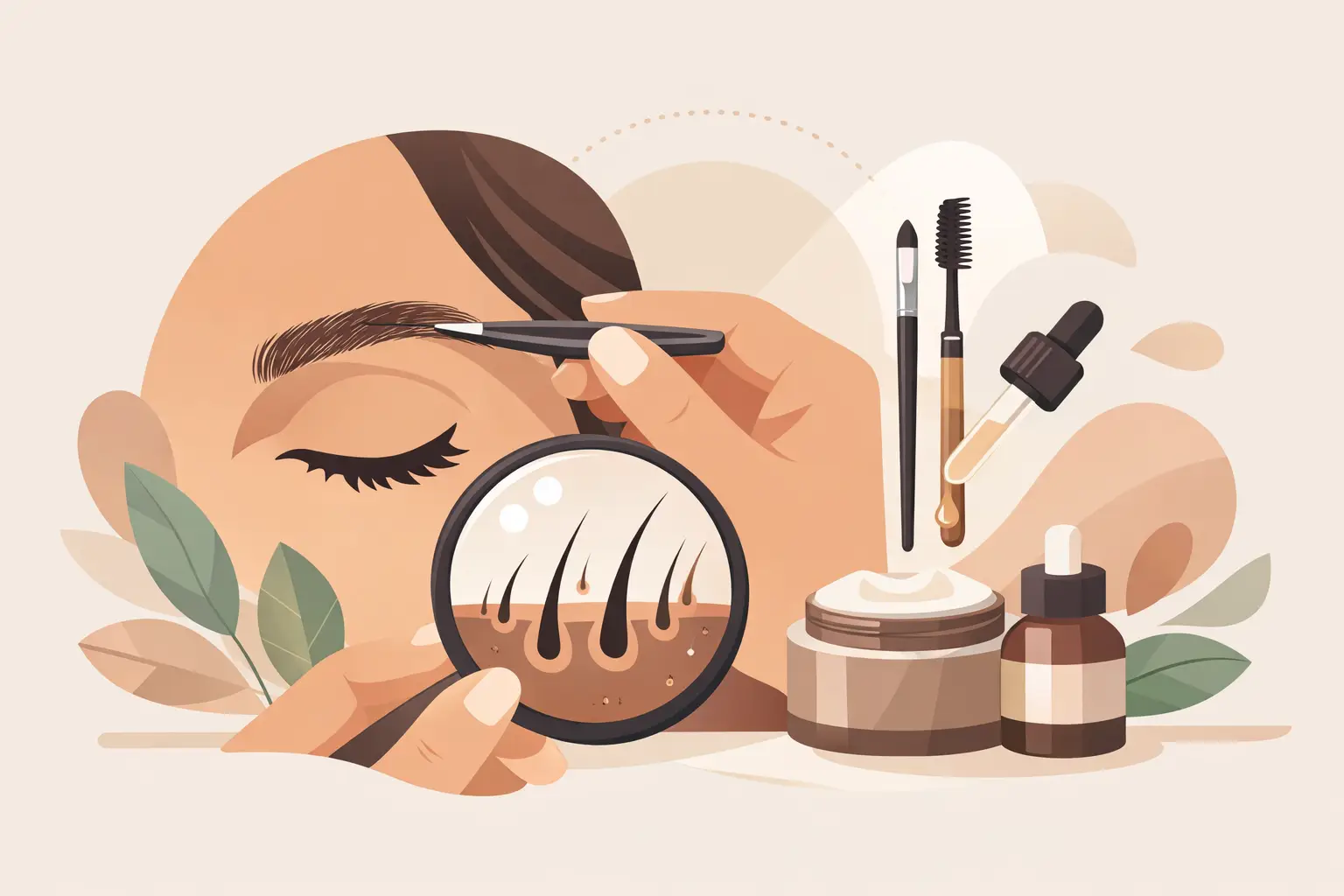
Start by allowing the existing hairs to grow for several weeks if possible. Put tweezing on pause except for obvious stray hairs far outside your natural shape. During the grow-out phase, brush brows upward and outward with a spoolie to see where hair is actually present. This makes it easier to avoid removing hairs that could contribute to fullness.
Use a fine-tip brow pencil or brow pen to add short, hairlike strokes in sparse areas. Choose a shade that matches the depth of your brow hair, not necessarily the color of your scalp hair. Then lightly layer a tinted brow gel or powder through the fuller sections to create a consistent appearance. A clear or tinted wax can help lift hairs and make the brow look denser without looking overdone.
For a longer-lasting cosmetic result, tinting, brow lamination, microblading, and nano brows may be options. These treatments have trade-offs. Lamination can create a fuller, brushed-up effect, but it does not grow new hair. Cosmetic tattooing can reduce the need for daily makeup, yet pigment can fade or shift over time and may not suit every skin type. If you may pursue an eyebrow transplant later, discuss the timing and design with a qualified medical provider first.
Support Healthy Brow Growth Without Overpromising
People often hope that a serum, oil, or supplement will fill every gap. Some products may condition the skin and existing hairs, but no over-the-counter option can reliably regenerate follicles that no longer function. Castor oil, for example, can make brows appear shinier and more groomed, but evidence that it creates significant new eyebrow growth is limited.
A balanced diet with adequate protein, iron, zinc, vitamin D, and other essential nutrients supports normal hair production. Supplements are most useful when they address a true deficiency or fit into a broader clinician-guided plan. Taking high doses of vitamins without a reason is not a shortcut to fuller brows and can sometimes create unwanted side effects.
Be gentle with the skin around the brows. Aggressive exfoliation, harsh retinoids placed directly on the brow area, and frequent hair removal can irritate follicles. If you use prescription skincare, ask your dermatologist how to apply it around the eyebrows safely.
Prescription therapies may be appropriate in select cases, particularly when there is an underlying inflammatory or autoimmune cause. These options require medical guidance because the diagnosis, treatment choice, and safety considerations vary. A professional assessment can also identify whether scalp hair thinning and eyebrow loss are connected.
When an Eyebrow Transplant May Be the Right Option
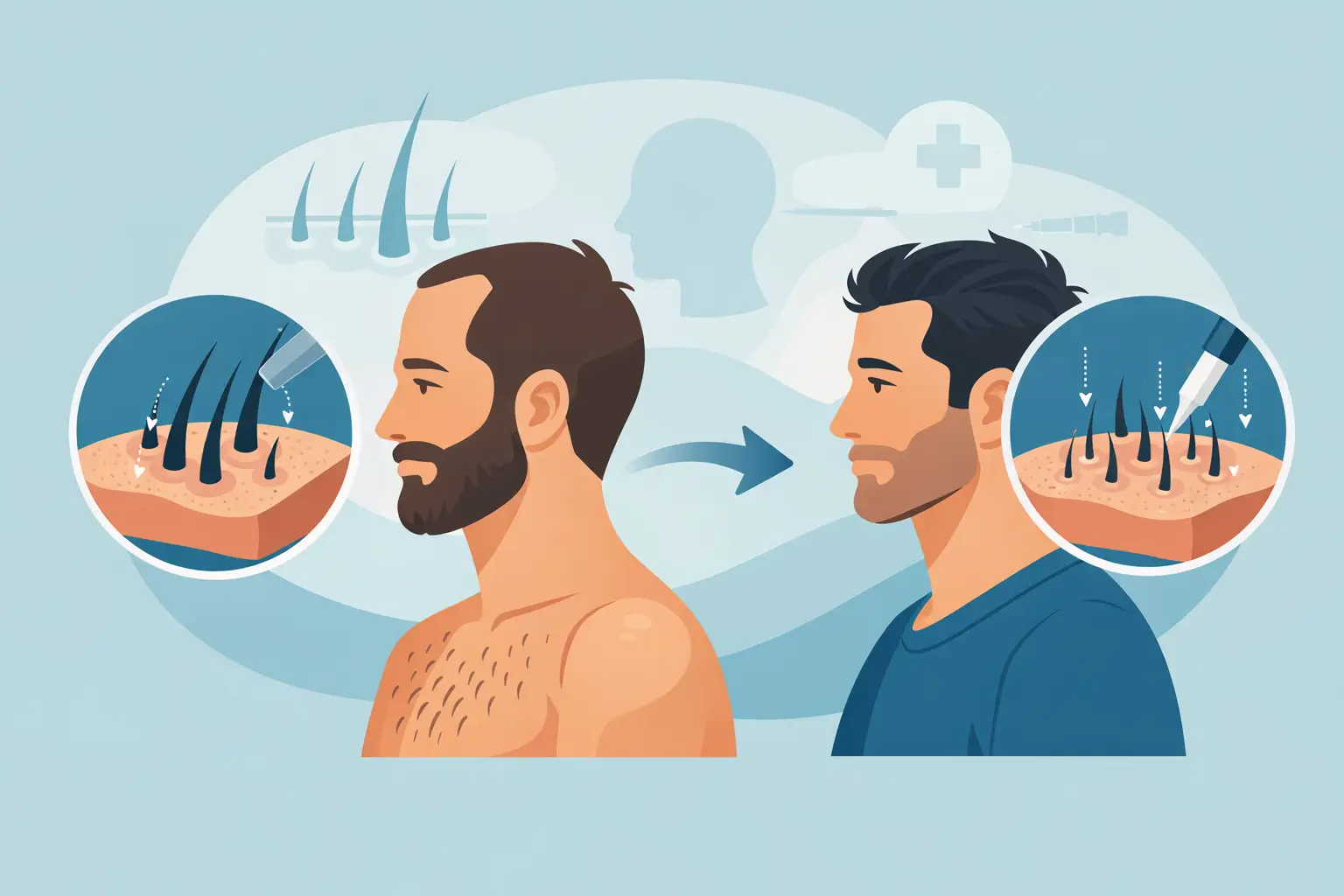
If your eyebrow gaps have remained stable for years, if overplucking caused permanent loss, or if scar tissue has interrupted growth, an eyebrow transplant can provide a lasting solution. The procedure uses carefully selected donor follicles, usually from the scalp, to rebuild areas of low density or reshape the entire brow.
Follicular Unit Extraction, or FUE, is commonly used for eyebrow restoration because it allows individual grafts to be harvested and placed with exceptional control. The artistic portion of the procedure is just as critical as the surgical portion. Each graft must be positioned at a very shallow angle and directed to follow the natural pattern of eyebrow growth. Small changes in placement can affect whether the result appears soft and natural or looks too upright and obvious.
A skilled provider will consider your facial structure, existing brow shape, hair texture, skin tone, and desired level of density. Men may want to restore stronger, straighter brows after scars or hair loss, while women may prefer to rebuild an arch softened by years of tweezing. Neither goal should rely on a one-size-fits-all template.
The trade-off is that transplanted eyebrow hair behaves more like scalp hair. It will continue to grow and typically requires regular trimming and grooming. There is also a healing period: small scabs generally form after placement, and the transplanted hairs commonly shed before new growth begins. Noticeable regrowth takes time, with final maturation often occurring over several months.
What to Expect From a Professional Consultation
A consultation should feel more like a design and medical planning appointment than a sales pitch. Your provider should ask when the thinning began, whether it is progressing, what treatments you have tried, and whether you have a history of skin conditions, autoimmune disease, or hair loss elsewhere.
They should also examine the brow area and donor hair, discuss what density is achievable in one session, and explain recovery in plain language. Before-and-after photos can be useful, but look closely for results on patients with a similar skin tone, hair caliber, brow shape, and degree of loss. The best outcomes do not announce themselves. They simply make the face look more balanced and complete.
At Austin Hair Clinic, eyebrow restoration planning focuses on natural direction, precise graft placement, and a result that fits the individual rather than a trend. For patients who are unsure whether surgery is necessary, a scalp and hair evaluation can help clarify whether nonsurgical support, cosmetic enhancement, or transplantation is the most appropriate next step.
Frequently Asked Questions
Can patchy eyebrows grow back on their own?
They can, particularly when thinning is related to temporary stress, irritation, nutritional deficiency, or a treatable medical condition. Regrowth is less likely when follicles have been repeatedly damaged by overplucking, scar tissue, or longstanding hair loss.
How long does it take to make eyebrows look fuller?
Makeup and brow gel work immediately. Natural regrowth, when possible, usually takes several months because hair grows in cycles. After an eyebrow transplant, new growth is gradual, and the final cosmetic result requires patience.
Is eyebrow transplantation permanent?
Transplanted follicles are intended to provide long-term growth. However, the hairs require regular trimming, and natural eyebrow hairs around them can still change with age or underlying medical conditions.
Should I use minoxidil on my eyebrows?
Do not apply minoxidil near the eyes without specific medical direction. The eyebrow area is sensitive, and improper use can cause irritation or unwanted hair growth in nearby areas. A clinician can help determine whether it is appropriate for your situation.
Fuller eyebrows are often less about chasing a perfect shape and more about restoring the definition that helps you feel like yourself. Start with a careful look at the cause, choose temporary solutions when you need an immediate confidence boost, and seek expert guidance when you want a more lasting, natural-looking change.