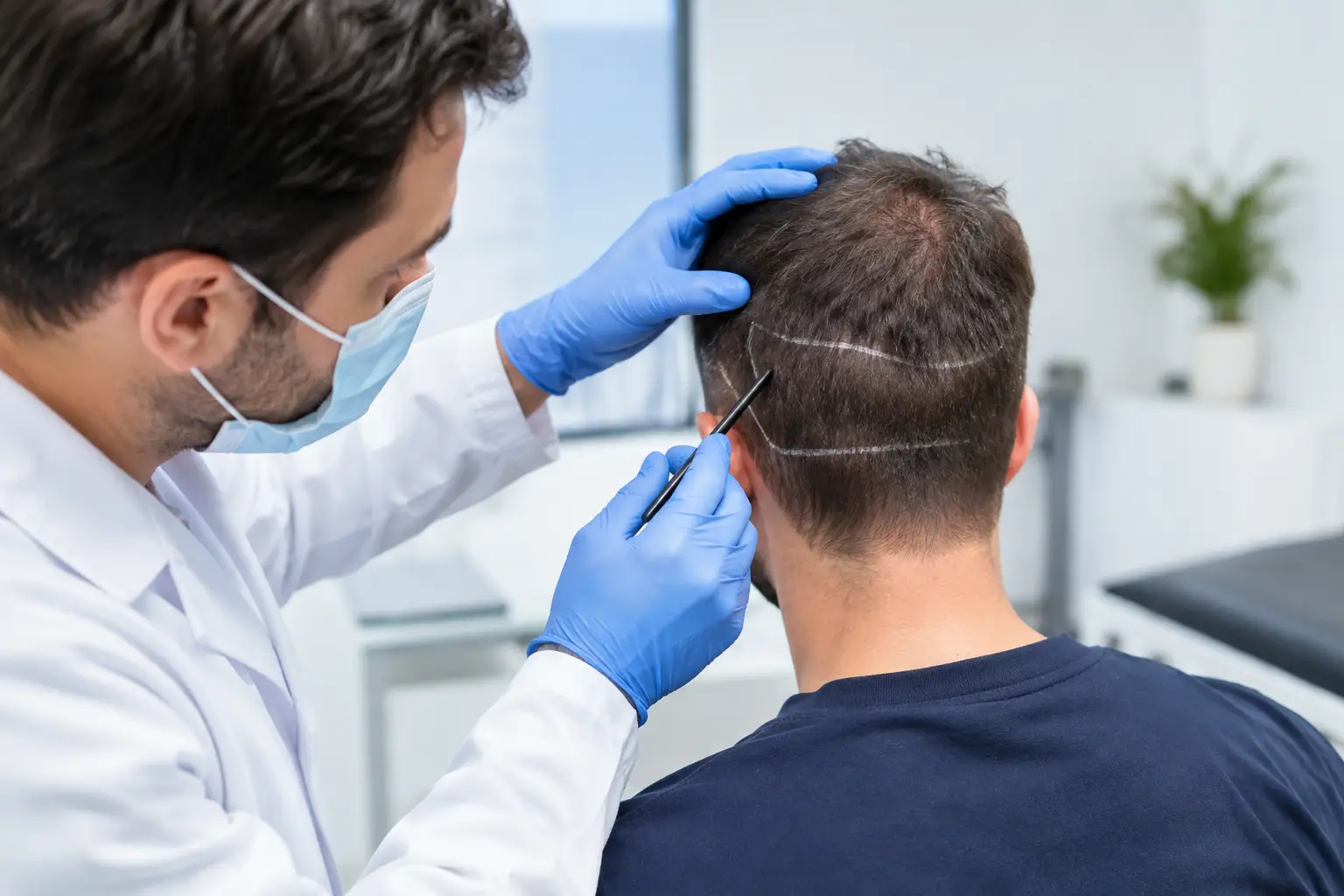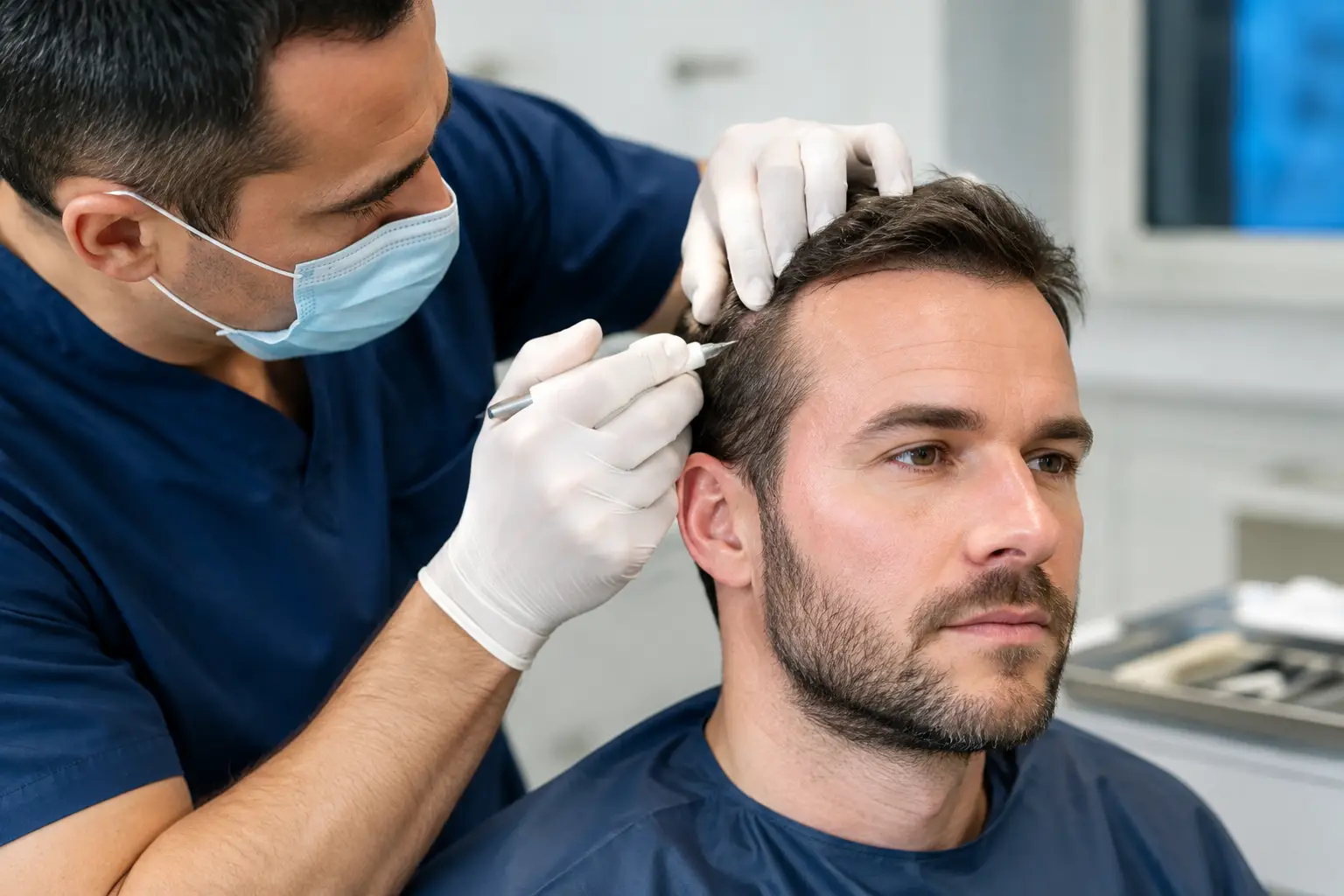
Why a Doctor Led Hair Transplant Matters
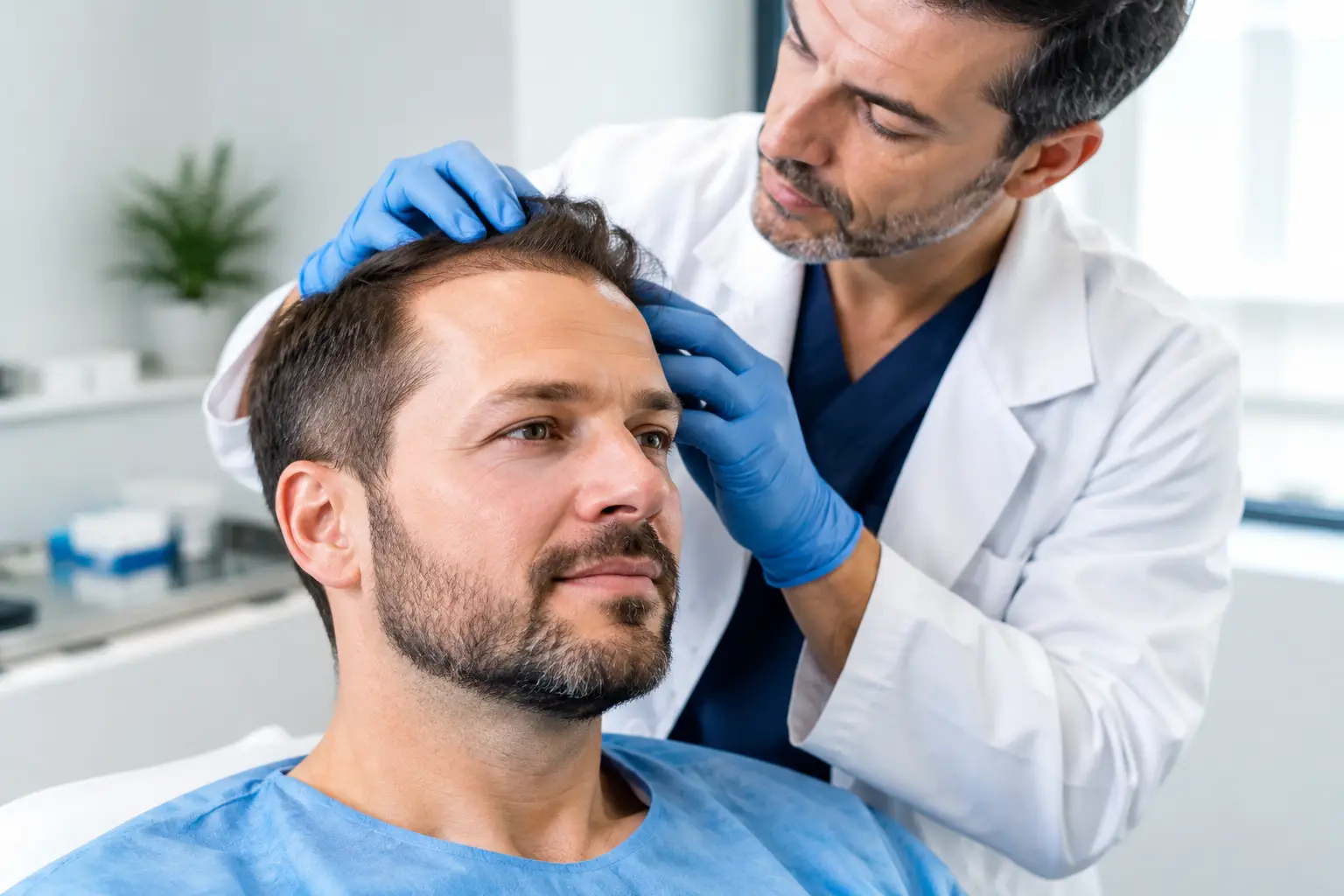
A doctor led hair transplant is about more than having a physician’s name attached to the procedure. It means your treatment plan, hairline design, donor-area strategy, and surgical decisions are guided by a qualified doctor who understands both the medical realities of hair loss and the aesthetic details that make results look believable.
For many people considering FUE, the question is not simply, “Can I grow hair again?” It is, “Will it look like me?” A natural result should respect your age, facial structure, future hair-loss pattern, and the limited supply of donor follicles available for transplantation. Those decisions deserve medical oversight from the beginning.
What Does Doctor Led Hair Transplant Care Mean?
Hair transplantation is a medical procedure, even when it is elective and minimally invasive. In follicular unit extraction, or FUE, individual follicular units are harvested from the back and sides of the scalp, then placed into carefully created recipient sites in thinning areas. Each graft may contain one to several hairs, and every graft has value.
In a doctor-led setting, the physician evaluates the cause and pattern of hair loss, determines whether you are an appropriate surgical candidate, and develops a plan designed for the long term. That plan should account for your current density, donor capacity, hair caliber, scalp characteristics, and family history of progressive hair loss.
The doctor’s involvement also matters during the artistic decisions. A transplanted hairline can be technically dense yet still look unnatural if it sits too low, is too symmetrical, or does not reflect how hair normally grows. Careful placement angle, direction, and graft selection help create a softer transition from the hairline into existing hair.
Qualified clinical teams can play an important role in a procedure, particularly with graft handling and support. What patients should understand is who performs each critical stage, how the physician supervises the process, and who is accountable for surgical planning and outcomes. A reputable practice will answer those questions directly.
Why Physician Judgment Changes the Result
Hair transplantation is not a one-size-fits-all cosmetic service. The same number of grafts can produce very different results depending on how they are allocated and where they are placed.
A board-certified physician can assess whether a person’s hair loss is stable enough for surgery or whether medical therapy should be part of the plan first. For a younger patient with a rapidly receding hairline, aggressively filling the frontal area may create problems later if additional thinning continues behind it. A more conservative design can protect the donor supply and leave options open for the future.
Physician guidance is equally valuable for women with diffuse thinning. Female hair loss can have several causes, including hormonal changes, nutritional deficiencies, medication effects, and genetic pattern thinning. A transplant may be appropriate for some women, but not every thinning pattern offers a reliable recipient area for graft survival. Proper evaluation helps prevent a procedure that does not match the underlying condition.
There are also situations where a nonsurgical approach may be the better first step. Prescription hair-loss medications, regenerative hair loss injections, low-level laser therapy, nutritional support, or diagnostic testing may help address active thinning or support existing hair before and after transplantation. Surgery can be a powerful option, but it is not automatically the right first option.
Natural Hairlines Require a Long-Term Plan
The most visible part of a transplant is often the hairline, which is why it deserves thoughtful design rather than a generic template. A youthful-looking hairline is not always the right hairline. In many cases, a mature, age-appropriate design creates a more convincing result and preserves grafts for areas that may need coverage later.
During a consultation, the physician should look at facial proportions, temple recession, forehead height, and the density of your native hair. Fine single-hair grafts are often reserved for the leading edge of the hairline, while multi-hair grafts can add density behind it. This variation is one reason natural results do not resemble a straight, uniform line.
The crown presents a different challenge. It can require a significant number of grafts because hair grows in a circular pattern there, and the area may continue to expand over time. Depending on donor supply and personal goals, a patient may prioritize the hairline and frontal third, choose broader coverage with less density, or plan treatment in stages. There is no universally correct answer. The right approach depends on what matters most to you and what your donor area can safely provide.
FUE Technology Is Valuable, but It Is Not the Whole Story
Modern FUE can offer less linear scarring than traditional strip surgery and can be an appealing option for people who prefer shorter hairstyles. Advanced tools, including ARTAS robotic FUE, may assist with identifying and harvesting suitable grafts in appropriate candidates. Technology can improve consistency and efficiency, but it does not replace medical judgment.
A robotic system cannot decide what hairline fits your face, whether your donor area should be conserved, or how your future hair loss may change the plan. Those decisions still require an experienced physician who can interpret the technology in the context of your individual needs.
The same principle applies to facial hair restoration. Beard and eyebrow transplantation demand especially precise graft angles and placement because the hair must blend with a very specific growth pattern. A few degrees in the wrong direction can affect how the hair lies after it grows. Artistic control and careful planning are central to a natural-looking outcome.
Questions to Ask Before Choosing a Hair Transplant Practice
Before committing to surgery, ask practical questions about the process, not just the quoted graft count. You should understand who will evaluate you, who designs your hairline, who creates recipient sites, and how the doctor remains involved throughout the procedure.
Ask to see results from patients with hair characteristics and hair-loss patterns similar to yours. Before-and-after photos should show clear angles, consistent lighting, and enough time for growth to mature. Transplanted hair typically sheds after the procedure before new growth begins, so visible results develop gradually. Many patients begin seeing early growth within several months, while fuller maturation can take 12 months or longer.
It is also reasonable to ask what happens if your native hair continues to thin. A responsible practice should discuss maintenance, medication options when appropriate, realistic density expectations, and the possibility that future treatment could be needed. Hair transplantation redistributes permanent donor hair. It does not stop genetic hair loss in untreated areas.
The Consultation Should Feel Personal, Not Rushed
A quality consultation should give you clarity, not pressure. You should leave knowing whether a transplant is appropriate, what type of result is realistic, how many grafts may be needed, and what your recovery may involve.
At Austin Hair Clinic, patients can begin with a scalp analysis and a conversation about surgical and nonsurgical options. The goal is not to push every patient toward a procedure. It is to create a personalized path that supports natural-looking restoration and greater confidence.
A doctor-led approach is especially reassuring when your concerns are complex, whether you have early thinning, a receding hairline, diffuse density loss, previous transplant work, or facial hair goals. The best treatment plan is one that respects both what you want to change now and what your hair may need years from now.
If you are considering a transplant, bring photos of your hair from earlier years, write down your questions, and be open about your goals. The right physician will help you turn that conversation into a plan that feels realistic, personal, and worth the investment.