Why Is My Crown Thinning?
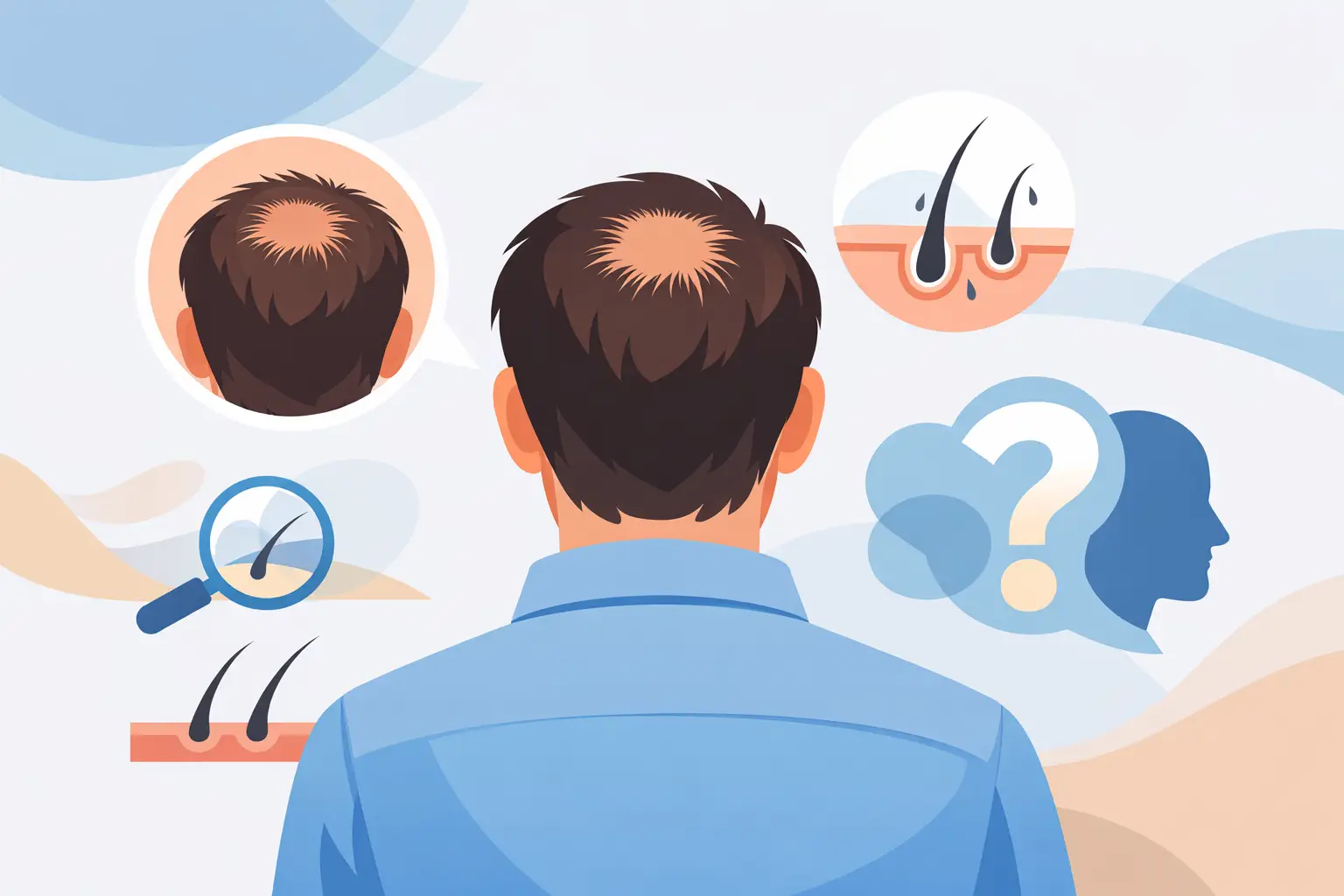
You usually do not notice crown thinning in the mirror first. It shows up in a photo, under bright overhead lighting, or during a haircut when the back of your scalp suddenly looks more visible than it used to. If you have been asking, why is my crown thinning, the answer is often more specific than people expect – and the sooner you identify the cause, the more options you typically have.
Why is my crown thinning in the first place?
For many adults, thinning at the crown is one of the earliest and most common signs of pattern hair loss. In men, this often appears as a widening thin spot at the vertex, sometimes alongside a receding hairline. In women, crown thinning may look more like diffuse loss through the part and top of the scalp, with increased scalp show-through rather than a clearly defined bald spot.
The reason the crown is so often affected comes down to genetics and hormone sensitivity. Hair follicles in certain areas of the scalp are more vulnerable to dihydrotestosterone, or DHT, a hormone linked to androgenetic alopecia. Over time, affected follicles shrink, produce finer hairs, and spend less time actively growing. That process is called miniaturization, and it usually happens gradually.
That said, not every thinning crown is caused by hereditary hair loss. Stress, nutritional deficiencies, hormonal shifts, scalp inflammation, rapid weight loss, illness, and certain medications can all contribute. The challenge is that different causes can look similar in the early stages, which is why a proper scalp evaluation matters.
The most common causes of crown thinning
Androgenetic alopecia is the leading cause, but it is not the only one. If your crown is thinning, several possibilities may be in play.
Pattern hair loss
This is the most likely explanation for many men and women. The pattern is predictable, but the pace is not. Some people notice slow thinning over a decade. Others feel like it changed in a single year, when in reality the process was building quietly in the background.
Family history can be a clue, but it is not always obvious. You may have relatives with thinning on either side of the family, or you may be the first one to notice it this early.
Stress-related shedding
Physical or emotional stress can push more hair into the shedding phase. This is called telogen effluvium. It often happens after surgery, illness, childbirth, major emotional strain, or sudden dietary changes. In these cases, the crown can look thinner because the overall density of the scalp has dropped.
Stress shedding is often temporary, but it can also expose underlying pattern hair loss that was already developing.
Hormonal changes
Hormones influence the hair cycle more than most people realize. Thyroid disorders, menopause, postpartum changes, and conditions such as PCOS can all affect density at the crown. Women often experience this as a broader thinning through the top rather than a sharply defined spot.
Scalp conditions and inflammation
If the scalp is inflamed, itchy, flaky, or tender, the issue may involve more than simple pattern loss. Seborrheic dermatitis, psoriasis, and certain inflammatory scalp disorders can disrupt normal growth and worsen shedding. In some cases, untreated inflammation can lead to more lasting damage.
Nutritional issues and medication effects
Low iron, low vitamin D, inadequate protein intake, and other deficiencies may contribute to thinning hair. Some medications can also trigger shedding. The exact pattern varies, which is why medical history matters when hair loss seems sudden or unusual.
What crown thinning usually looks like early on
Crown thinning rarely starts as a smooth bald patch. More often, the hair becomes finer, weaker, and less able to provide coverage. You may notice your scalp showing more under bathroom lighting, your hair lying flatter, or a swirl at the crown becoming harder to style around.
In men, the crown may widen while the frontal hairline still looks fairly strong. In women, the ponytail may feel smaller, and the part line may look broader, especially near the top of the scalp.
These early changes matter because thinning hair is often easier to preserve than completely inactive follicles are to restore. Timing can make a real difference in treatment outcomes.
Why is my crown thinning faster than I expected?
This is a common question, and the honest answer is that hair loss does not always move at a steady pace. Genetics may set the stage, but stress, aging, hormonal changes, illness, and lifestyle factors can speed up what was already underway.
Many patients assume their hair loss became sudden when they finally notice the crown under harsh lighting or in photos taken from above. The thinning may have been progressing slowly for months or years. On the other hand, a recent stressor can absolutely increase shedding and make the area look worse in a short period of time.
It depends on the cause. If the issue is mainly miniaturization from pattern loss, treatment often focuses on slowing progression and supporting thicker growth. If the issue is active shedding from a temporary trigger, the plan may look different.
When to get your scalp evaluated
If the thinning has lasted more than a few months, is getting more noticeable, or is affecting your confidence, it is worth having it assessed. The same is true if you are seeing increased shedding in the shower, scalp irritation, or a family history of hair loss.
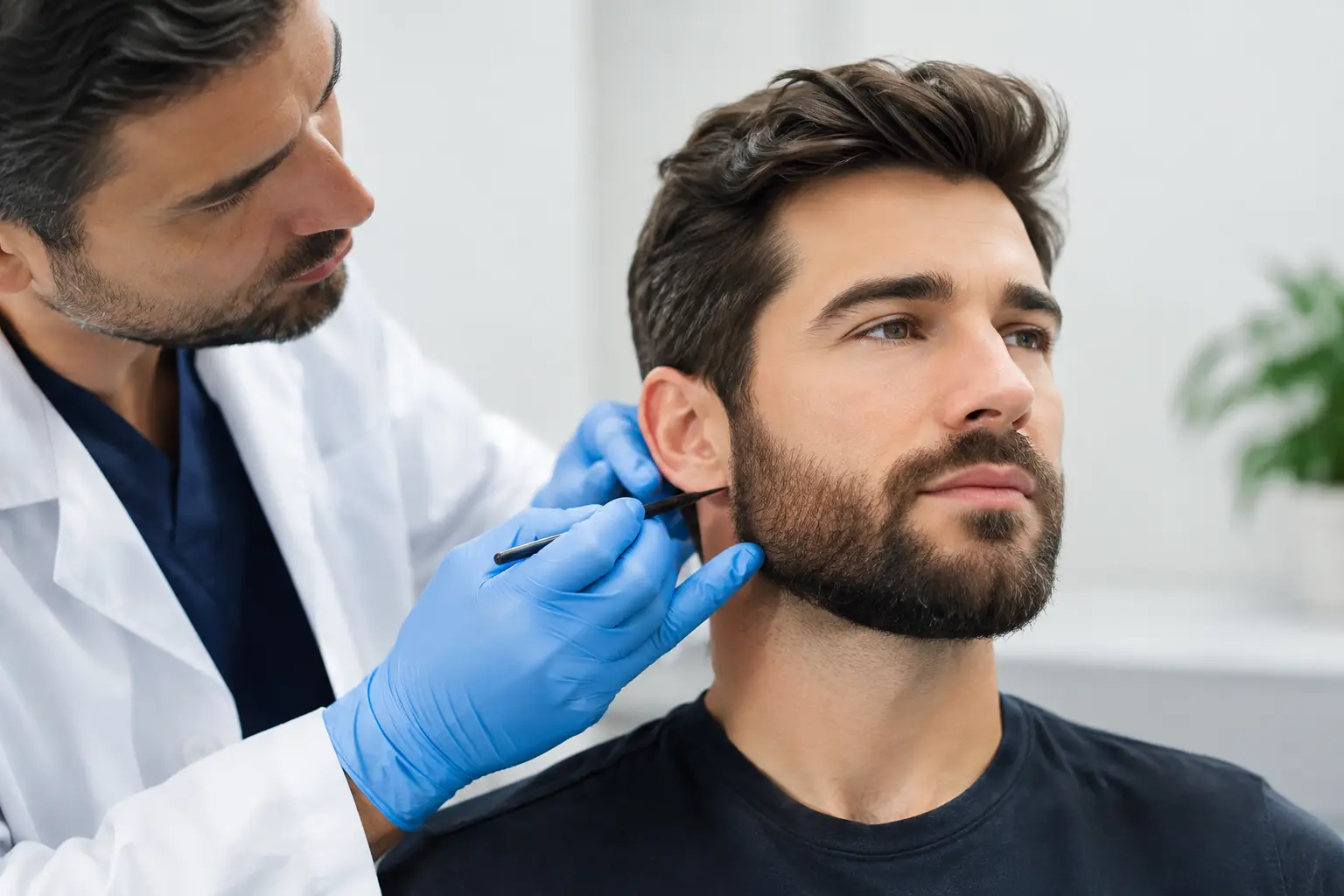
A medical evaluation can help answer a few key questions: Is this pattern hair loss, temporary shedding, or both? Are the follicles still active? Is inflammation involved? Are you a candidate for non-surgical treatment, hair restoration surgery, or a combination approach?
Those details matter because not every patient needs the same solution. Some people need to stabilize ongoing loss first. Others may already be good candidates for restoration if the crown has thinned beyond what medication alone is likely to improve.
Treatment options for a thinning crown
The right treatment depends on the diagnosis, your age, the degree of miniaturization, and how much change you want to see. Crown restoration often responds well to a combination approach.
Medical therapy
For pattern hair loss, medications may help slow progression and preserve existing follicles. This can be especially valuable in the crown, where ongoing miniaturization can continue even if the area still has some coverage. The goal is not just regrowth – it is protecting what you still have.
Regenerative and non-surgical therapies
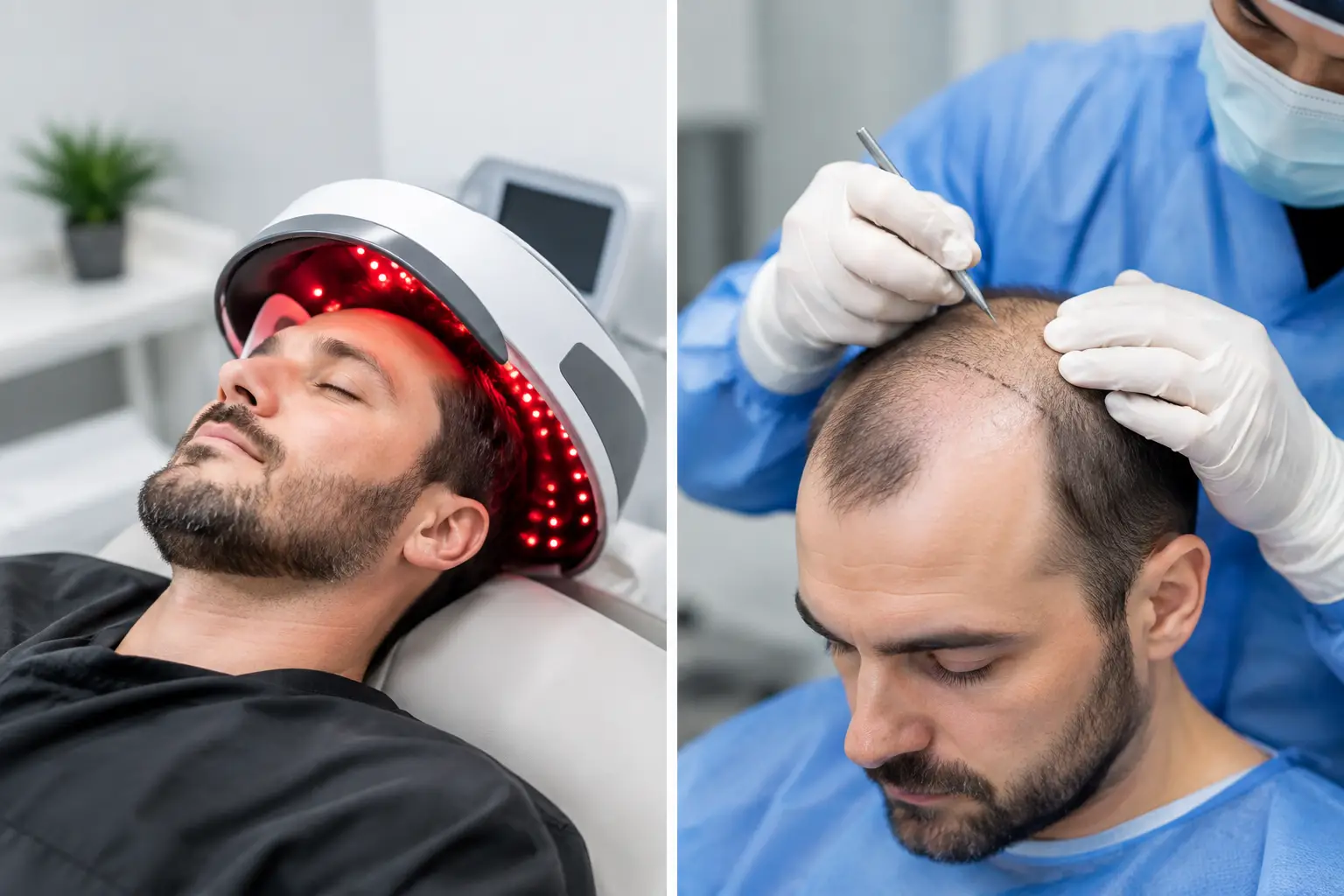
Some patients benefit from regenerative hair loss injections, low-level laser therapy, and physician-guided supplementation. These options are often used to support follicle function, improve density, and complement a broader treatment plan. Results vary, and they tend to work best when follicles are still viable.
Hair transplant for crown thinning
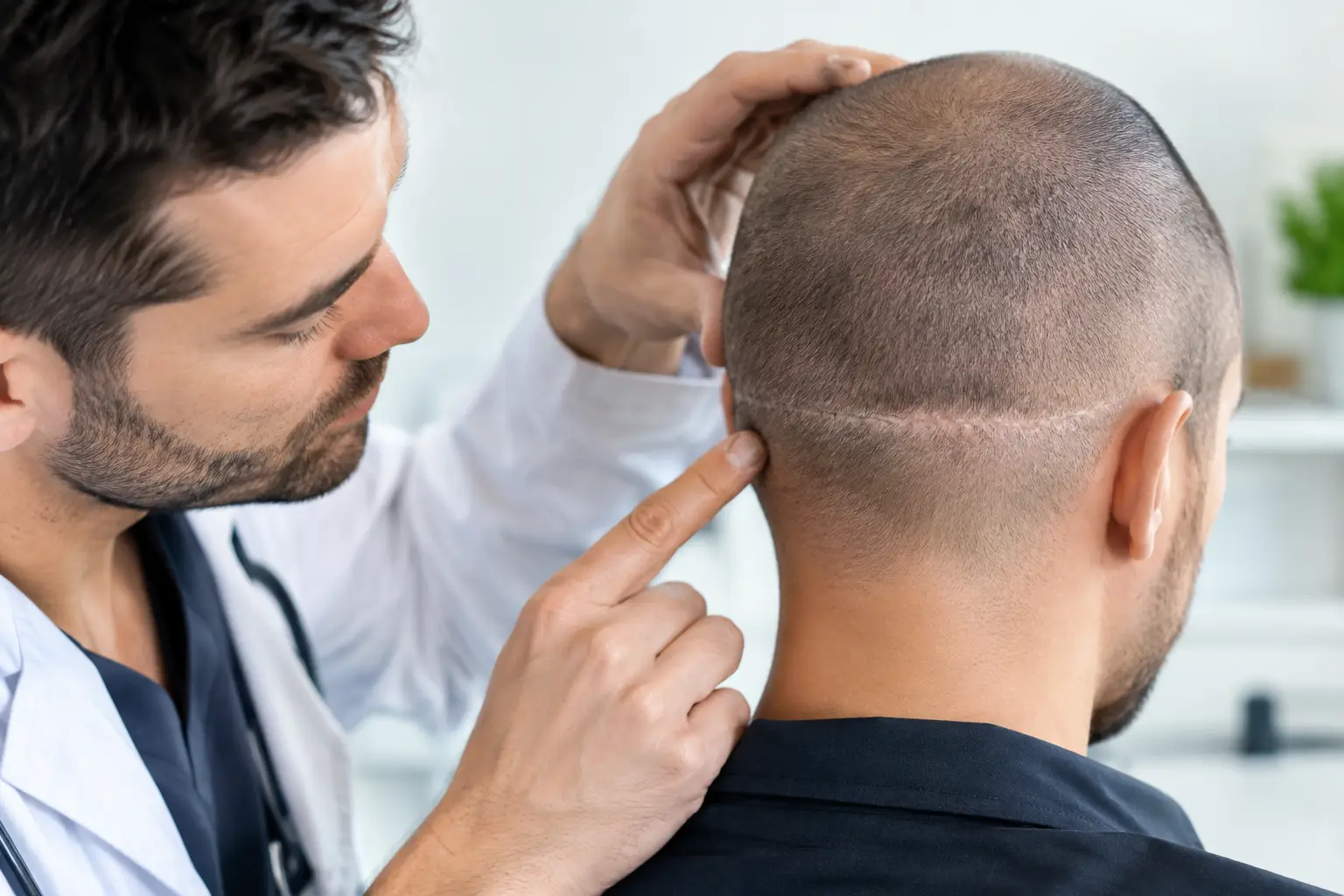
If the crown has a clear area of reduced density or visible scalp, FUE hair transplantation may be the most effective way to restore coverage. The crown requires careful planning because hair there grows in a spiral pattern, and natural-looking placement is everything. It is not just about adding grafts. It is about recreating the way hair naturally lays and blends.
This is where experience matters. A well-designed FUE or robotic FUE plan can improve density while protecting donor supply and accounting for future loss. In many cases, the best surgical outcomes happen when the long-term pattern has been thoughtfully considered, not just the current thin spot.
At Austin Hair Clinic, patients often come in asking for one treatment and leave with a more personalized plan after a scalp analysis. That is a good thing. Hair restoration works best when the strategy fits the biology.
What not to do when your crown starts thinning
Waiting too long is the biggest mistake. So is guessing. Many over-the-counter products are marketed aggressively, but not every formula addresses the real cause of thinning. Some patients spend years trying shampoos and supplements without ever finding out whether they are dealing with hereditary miniaturization, inflammation, or stress-related shedding.
It is also easy to overcorrect with harsh styling habits, heavy fibers, or frequent camouflage that makes the scalp more irritated. Cosmetic fixes can help confidence in the short term, but they should not replace a real diagnosis.
Can crown thinning be reversed?
Sometimes yes, sometimes partially, and sometimes the goal is control rather than reversal. That may not be the answer people want, but it is the honest one.
If the follicles are still active and the thinning is caught early, treatment may improve thickness and slow or stop further loss. If the area has been thin for a long time and the follicles are no longer producing meaningful growth, surgical restoration may offer the most visible improvement. In some cases, the best outcome comes from combining both approaches so transplanted hair adds density while medical therapy helps protect surrounding native hair.
The key point is this: crown thinning is not something you have to just watch get worse. The sooner you understand why it is happening, the more control you have over the next step.
If your crown looks different than it did a year ago, trust that observation. Hair loss is easier to address when you act while the follicles are still in the fight.