Male Pattern Baldness Stages Explained
If your hairline looks different in photos from two years ago, you are not imagining it. Male pattern baldness stages often develop gradually, which is exactly why many men wait too long to address them. By the time thinning feels obvious in the mirror, the pattern has usually been progressing for a while.
Understanding the stage you are in can make the next step much clearer. It helps you separate a maturing hairline from true recession, recognize when crown thinning is starting, and choose treatment at a point when you still have strong options.
What male pattern baldness stages actually measure
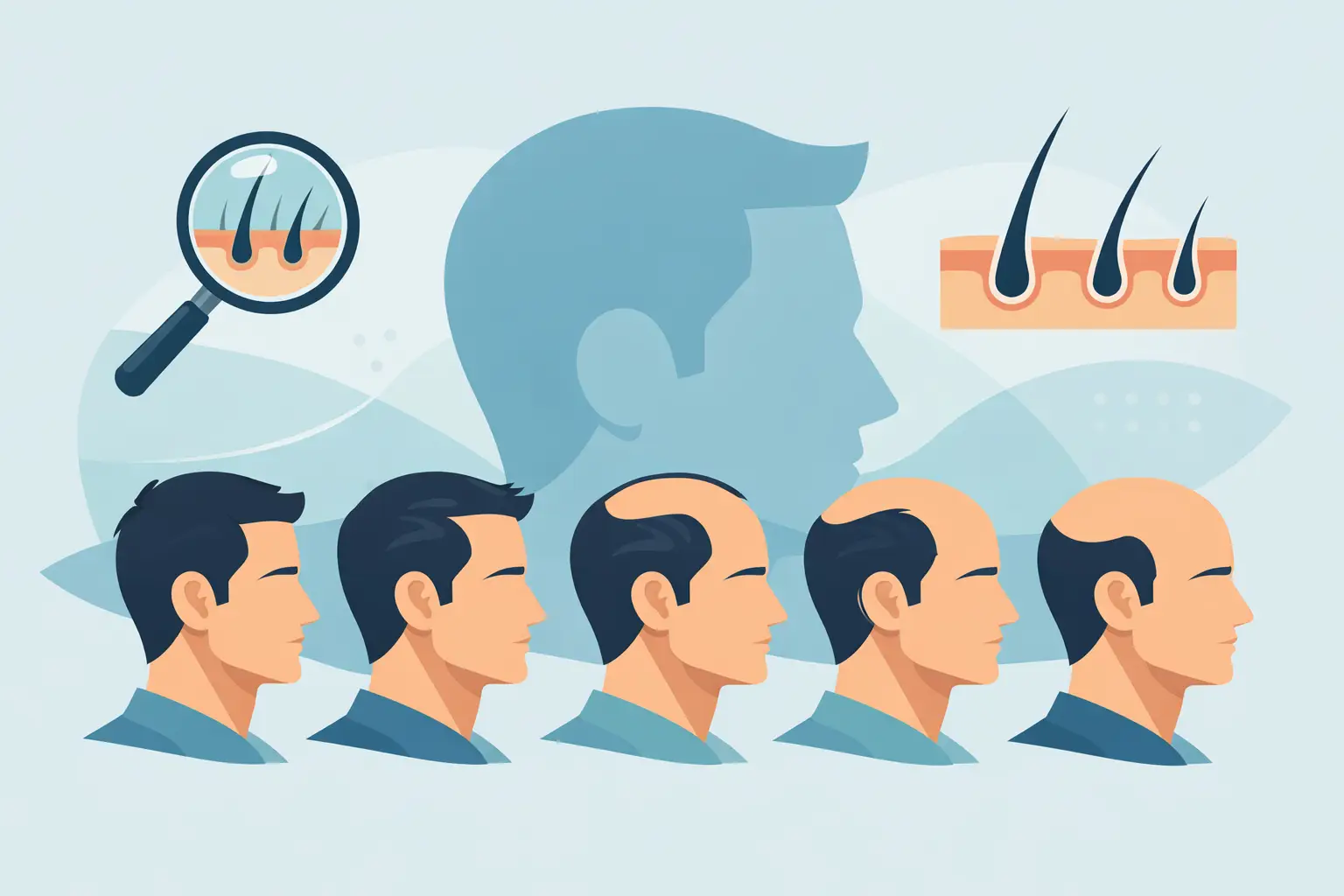
Male pattern baldness is usually classified using the Norwood scale, a system that maps how hair loss tends to progress in men. The pattern is driven largely by genetics and sensitivity to DHT, a hormone linked to follicle miniaturization. Over time, affected follicles produce thinner, shorter hairs until they stop producing visible hair at all.
The reason staging matters is practical, not academic. A man in an early stage may respond well to medication, regenerative therapies, or low-level laser treatment aimed at preserving existing hair. A man in a more advanced stage may still be an excellent candidate for treatment, but the strategy often shifts toward restoration and long-term planning.
The male pattern baldness stages from early to advanced
Stage 1
At Stage 1, there is little to no visible recession. The hairline looks full, and any shedding may be within a normal range. Most men at this stage are not seeking treatment unless they have a strong family history and want a baseline evaluation.
This stage matters because it gives you a reference point. If your hairline later starts changing, photos and scalp analysis can help show whether it is normal maturation or early pattern loss.
Stage 2
Stage 2 usually brings mild recession at the temples. This can look like a more mature hairline rather than obvious balding. The key difference is progression. A mature hairline tends to stabilize, while male pattern hair loss keeps moving backward or starts affecting density.
For many patients, this is the ideal time to act. Follicles are still active, and preserving them is often easier than trying to rebuild density after significant loss.
Stage 3
Stage 3 is often considered the first clearly noticeable stage of male pattern baldness. Recession at the temples becomes deeper and more defined, creating the classic M-shaped hairline. In some men, thinning may show more at the crown than the front.
This is the point when many men start styling around the changes or feeling less confident in bright light, during work meetings, or in photos. Treatment can still be very effective here, especially when the goal is to slow progression and strengthen miniaturizing hair.
Stage 3 Vertex
Stage 3 Vertex is a variation where hairline recession may be mild, but thinning at the crown becomes visible. Crown loss can be deceptive because it is easy to miss on your own. Often a barber, spouse, or overhead photo is what brings it to your attention.
Crown thinning deserves prompt attention because once the area opens up significantly, restoration becomes more complex. Early intervention often gives patients more non-surgical options.
Stage 4
At Stage 4, recession at the front is more pronounced, and thinning at the crown is usually clearer. A band of hair still separates the front and crown zones, but overall density is reduced. At this stage, the pattern is established rather than suspected.
Treatment planning becomes more individualized here. Some men still have enough native hair to focus on medical stabilization first. Others begin considering hair transplantation, especially if the hairline is a major cosmetic concern and donor hair is strong.
Stage 5
Stage 5 means the front and crown areas have enlarged, and the band of hair between them has become thinner and less dense. The balding areas are still technically separate, but they are getting closer.
This stage often requires a more comprehensive approach. Medications and supportive therapies may help retain existing hair, but if the goal is visible cosmetic improvement, surgical restoration may be part of the conversation. The design of the hairline, the amount of donor hair available, and the likelihood of future loss all matter.
Stage 6
At Stage 6, the bridge of hair between the front and crown is mostly gone, and the balding area becomes one larger zone. Hair remains on the sides and back, which are typically more resistant to DHT.
Men at this stage are not out of options, but expectations need to be realistic. The focus is usually on strategic coverage, natural framing of the face, and making the best use of available donor hair. A conservative, medically guided plan is important because overpromising at this stage leads to unnatural results.
Stage 7
Stage 7 is the most advanced point on the scale. Hair loss is extensive across the top of the scalp, with only a narrower horseshoe-shaped band of hair remaining on the sides and back. Donor supply may be limited compared with the size of the area needing coverage.
Even here, treatment is still possible in selected patients, but planning is everything. The best outcomes come from honest assessment, careful graft management, and a focus on age-appropriate, natural-looking restoration rather than trying to recreate a teenage hairline.
Why staging matters for treatment timing
The biggest advantage of understanding male pattern baldness stages is timing. Early stages give you the best chance to preserve hair you still have. Once follicles have been inactive for too long, non-surgical treatment cannot revive every area.
That does not mean later stages are hopeless. It means the goal changes. Earlier stages are usually about slowing progression and improving density. Later stages are more often about restoration, coverage, and creating a look that feels fuller and balanced.
This is also why self-diagnosis can be misleading. Two men may appear similar in the mirror but need very different plans based on donor density, age, family history, rate of loss, and hair characteristics like curl, caliber, and color contrast.
Treatment options by stage
In the early stages, treatment often centers on preservation. That may include FDA-approved medications, regenerative hair loss injections, low-level laser therapy, and supportive supplements when appropriate. The goal is to protect miniaturizing follicles before they become too weak.
In the middle stages, combination treatment is common. A patient may use medication to stabilize ongoing loss while also improving density with non-surgical therapies. If the hairline or crown has already changed enough to affect confidence, FUE hair transplantation may be considered.
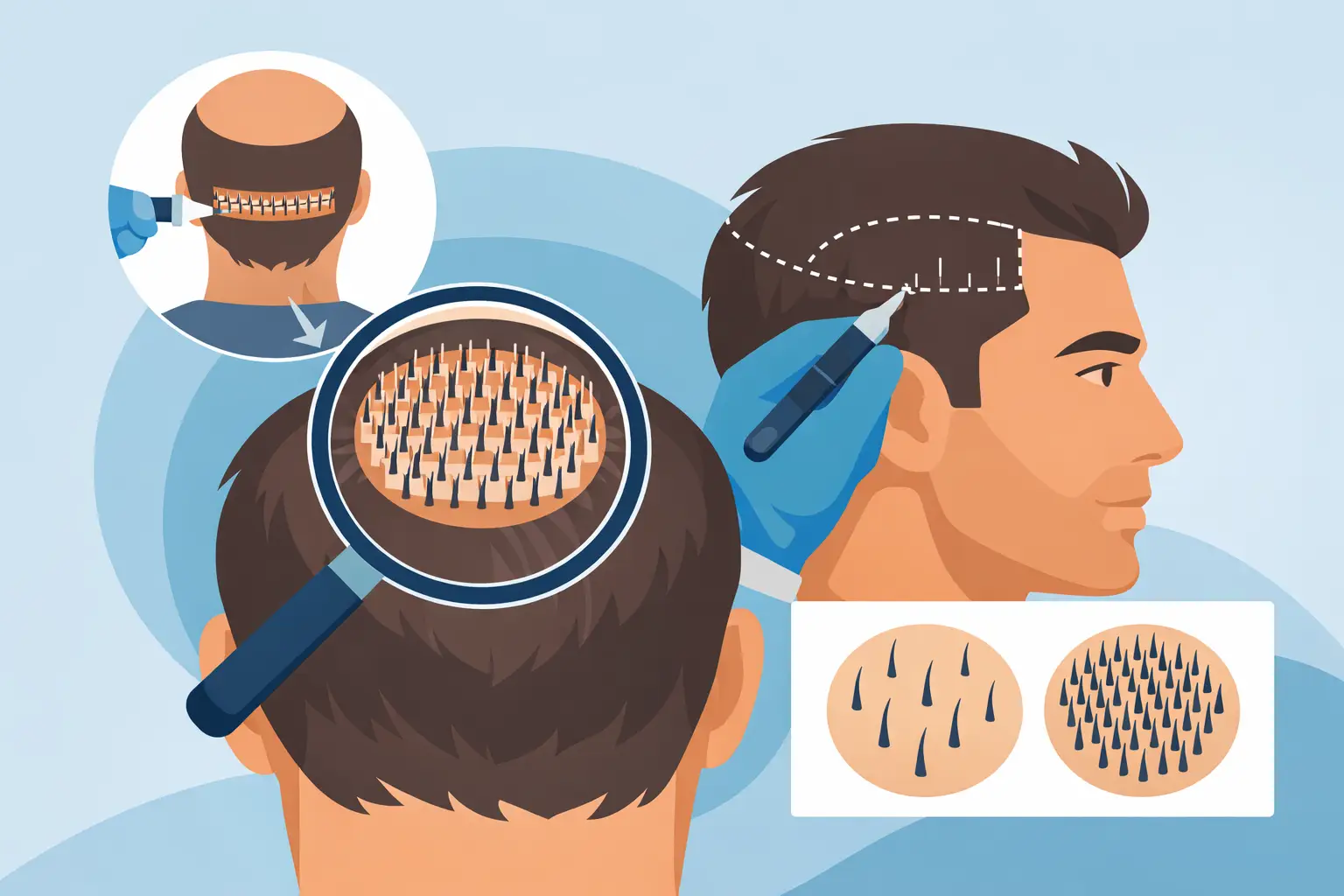
In later stages, hair transplantation often becomes the most direct path to visible improvement, but only when performed with a long-term plan. FUE can redistribute permanent follicles from the donor area to thinning or bald areas with natural-looking placement. Advanced techniques, including robotic-assisted FUE in selected cases, can improve precision and consistency. The right plan depends on how much donor hair is available and how aggressively the pattern is likely to continue.
What matters most is not choosing a trendy option. It is matching the treatment to the stage, the pattern, and the person.
When to schedule an evaluation
If you have noticed increasing recession, thinning at the crown, more scalp visibility under direct light, or a family history of hair loss, it is worth getting evaluated. You do not need to wait until the pattern feels severe. In fact, earlier is usually better.
A proper assessment looks at more than the front hairline. It should evaluate scalp health, donor strength, miniaturization, and whether your loss truly fits androgenetic alopecia or another cause. Stress, nutritional issues, inflammation, and certain medical conditions can also affect density, sometimes alongside pattern baldness.
At Austin Hair Clinic, this kind of evaluation is used to build a personalized plan rather than push a one-size-fits-all procedure. For some patients, the right answer is to preserve. For others, it is to restore. Often, it is both.
A better way to think about hair loss progression
The stage you are in is not a label. It is a decision point. Knowing where your hair loss falls on the pattern helps you move from guessing to planning, and that usually brings a sense of control back to the process.
If your hair has started changing, the most useful move is not waiting for it to get worse. It is getting a clear picture of what is happening now, while your best options are still on the table.