How to Restore Thinning Temples Effectively

Temple thinning has a way of changing your appearance before the rest of your hair catches up. You may still have decent density on top, but the corners start to soften, your hairline looks less defined, and styling gets harder to fake. If you are researching how to restore thinning temples, the good news is that this area can often be improved – but the right solution depends on why the thinning is happening, how far it has progressed, and what kind of result you want.
The temple area is one of the earliest places where hair loss becomes noticeable, especially in men with androgenetic alopecia. Women can also see reduced density at the temples from hormonal shifts, traction, stress, or age-related miniaturization. Because the temple points frame the face, even mild loss can make you look older, more tired, or less polished than you feel.
Why temple thinning happens
Temples are vulnerable because they sit at the front edge of the hairline, where follicles are often more sensitive to DHT, the hormone linked to pattern hair loss. In men, this usually shows up as recession at the corners. In women, it can appear as diffuse thinning or a gradual hollowing at the sides of the forehead.
Genetics are a major factor, but they are not the only one. Tight hairstyles, frequent heat styling, inflammatory scalp conditions, rapid weight loss, and certain medical changes can all contribute. That is why a real evaluation matters. Treating temple thinning effectively starts with identifying whether follicles are miniaturizing and still viable, or whether they have stopped producing healthy hair altogether.
How to restore thinning temples based on the stage of loss
There is no single answer for everyone. Early temple thinning may respond well to non-surgical treatment, while more advanced recession often requires hair transplantation for a meaningful cosmetic change. The best plan is usually based on follicle health, timeline, and your expectations.
If the hair is thinning but still present
When miniaturized hairs are still there, the goal is to preserve and strengthen them before the area becomes slick or bare. This is often the window where medical therapy makes the most sense.
Prescription medications can help slow progression and support regrowth in the right candidate. For many men, finasteride and minoxidil remain the foundation of treatment. Women may be candidates for topical or oral therapies depending on their medical history and the pattern of loss. The trade-off is that these treatments require consistency, and results usually build gradually over several months rather than appearing overnight.
Regenerative treatments can also play a role. Hair loss injections that use growth factors or platelet-rich plasma may help improve follicle activity in thinning temple areas, especially when used early. Low-level laser therapy can support scalp health and may be helpful as part of a broader plan, although it tends to be more supportive than transformative on its own.
If the temples have receded significantly
Once the temple area has become visibly recessed and the follicles are no longer producing meaningful growth, non-surgical care can help protect surrounding hair, but it usually will not rebuild the shape of the hairline in a dramatic way. This is where FUE hair transplantation often becomes the most effective option.
With FUE, individual follicular units are harvested from a stable donor area and placed into the thinning temples with careful attention to angle, direction, and density. That detail matters. Temple restoration is not just about filling space. It is about recreating a natural transition and facial frame so the result looks like your hairline, not a drawn-on approximation.
What makes temple restoration different from other hair transplant work
Temple restoration requires restraint as much as skill. The hairs in this area naturally grow at a very acute angle and often with finer caliber than hair placed farther back in the hairline. If grafts are placed too upright, too densely, or with the wrong design, the result can look unnatural even if the grafts grow well.
That is why artistry and medical experience both matter. A well-designed temple restoration takes into account your age, facial structure, current loss pattern, and likely future hair loss. A hairline that looks aggressive at 32 may not age well at 45 if the surrounding native hair continues to recede. Good planning protects the long-term result, not just the first-year photos.
Is ARTAS robotic FUE a good option?
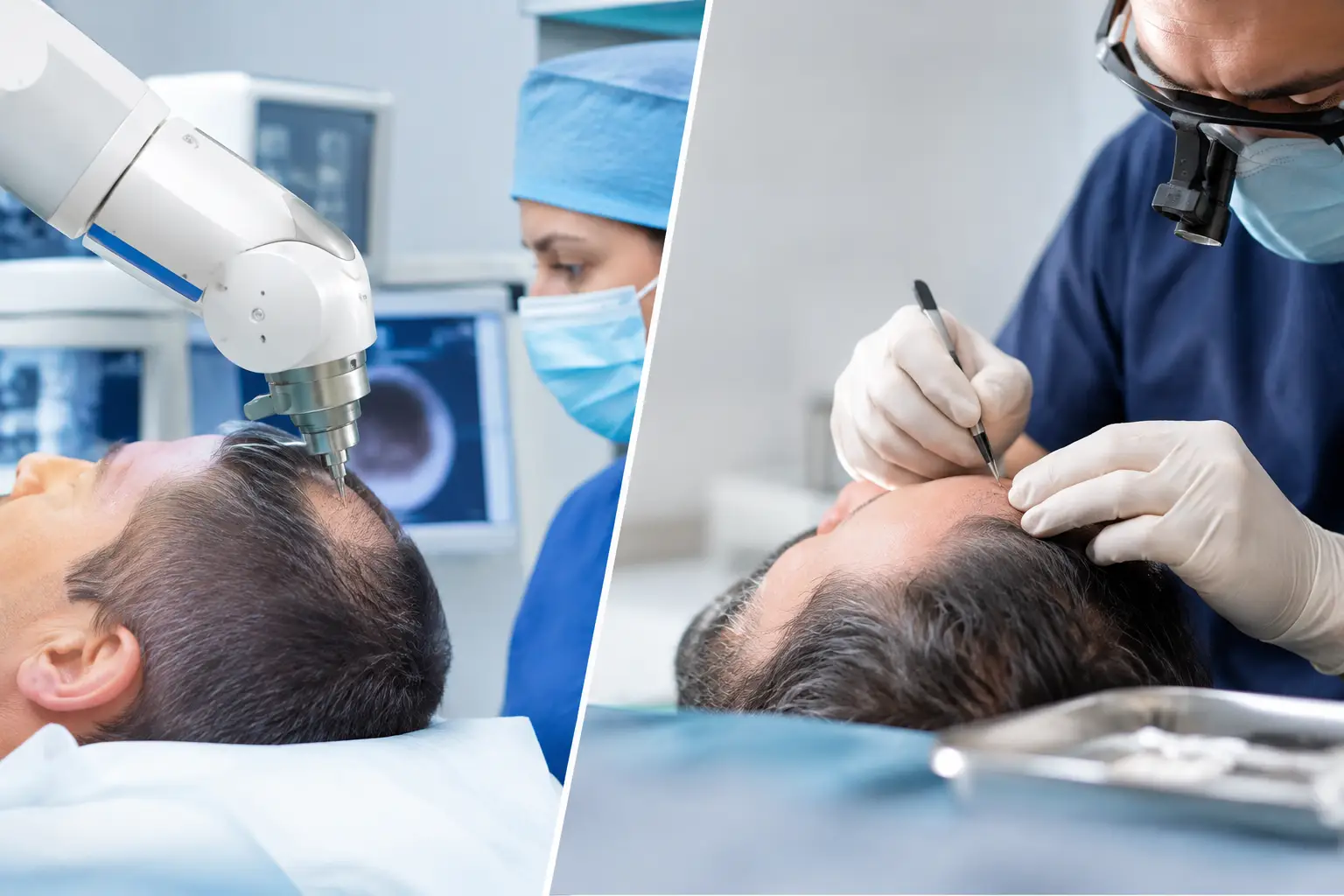
For some patients, robotic-assisted FUE can improve consistency and efficiency during graft harvesting. It is a valuable tool when used appropriately, especially in patients with suitable donor characteristics. That said, the design and placement of temple grafts still depend heavily on physician oversight and aesthetic judgment. Technology helps, but natural results come from planning and execution.
What results can you realistically expect?
If you are wondering how to restore thinning temples in a way that looks natural, realistic expectations are part of the process. Medications and regenerative treatments can slow loss and improve density, but they are best at preserving and thickening existing hair. They do not create the same level of reshaping that a transplant can.
A successful FUE temple restoration can rebuild the corners of the hairline, improve facial balance, and make styling easier. Most transplanted hairs shed before regrowing, so visible improvement takes time. Many patients start to see early growth at around three to four months, with stronger cosmetic change by six to nine months and continued maturation after that.
Density is another area where expectations matter. The temple region can look excellent without being packed at maximum density because the goal is soft, natural framing. More grafts are not always better. In this part of the scalp, precision usually matters more than volume.
Choosing the right treatment plan
The best treatment plan for temple thinning is usually not one-size-fits-all. A younger patient with early recession may benefit from a preventive approach that combines medication, regenerative support, and monitoring. Someone with established temple loss and stable donor hair may be a strong candidate for FUE. Some patients do best with both – transplantation to restore shape and medical therapy to protect existing hair.
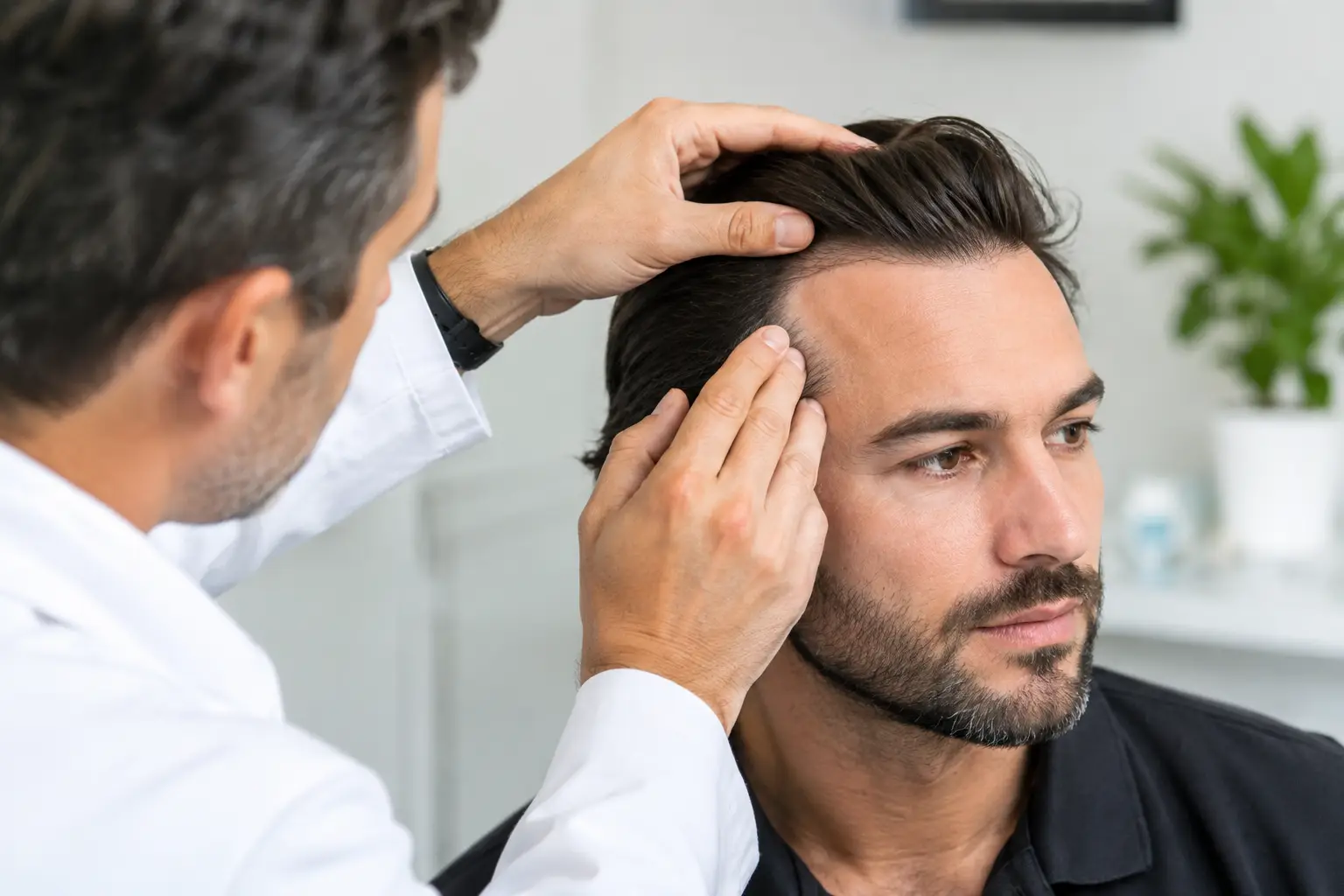
This is also where scalp analysis becomes valuable. Looking closely at follicle miniaturization, hair caliber, donor density, and pattern progression gives you a clearer sense of what is reversible and what is not. It also helps prevent overtreatment or the false hope that a shampoo, supplement, or trendy device will rebuild a receded temple point once follicles are gone.
Red flags when evaluating your options
Be cautious with any approach that promises instant regrowth or permanent reversal without a proper diagnosis. Temple thinning is common, but the cause is not always simple. If the issue is traction-related, inflammatory, hormonal, or genetic, the treatment path changes.
It is also worth being skeptical of clinics that treat temple work like basic fill-in surgery. Hairline and temple restoration are among the most visible and technically sensitive parts of hair transplantation. You want a plan that accounts for donor management, future loss, and facial aesthetics – not just graft numbers.
When to seek professional help
If your temples are getting thinner over time, styling tricks are becoming less effective, or you are starting to avoid certain angles in photos and video calls, it is worth getting evaluated sooner rather than later. Earlier treatment often creates more options. Waiting until the area is much more advanced can limit what non-surgical care can achieve.
For patients in Texas who want a personalized answer rather than guesswork, Austin Hair Clinic evaluates temple thinning with both medical and aesthetic planning in mind. That means looking at whether you need prevention, restoration, or a combination that fits your stage of loss and your long-term goals.
The right next step is not chasing the fastest fix. It is choosing a plan that restores confidence in a way that still looks like you a year from now, and five years from now.