How to Fix a Receding Hairline: Real Options

A receding hairline can change the way your face is framed long before the rest of your hair looks noticeably thin. For many men and women, that shift brings a frustrating question: how to fix receding hairline concerns without settling for an unnatural-looking result or wasting time on products that do not address the cause.
The right answer is rarely a single product or procedure. A receding hairline may respond well to medication, regenerative treatments, laser therapy, a hair transplant, or a combination of approaches. The best plan depends on why your hairline is changing, how quickly it is progressing, the quality of your donor hair, and the look you want to achieve.
First, Know What Is Causing the Recession
The familiar M-shaped pattern at the temples is often caused by androgenetic alopecia, also called male or female pattern hair loss. In genetically susceptible follicles, hormones gradually shorten the growth phase of the hair cycle. Hairs become finer, shorter, and less visible over time until some follicles stop producing cosmetically meaningful coverage.
Not every receding hairline is pattern hair loss, however. Tight hairstyles, inflammation, nutritional deficiencies, thyroid conditions, certain medications, stress-related shedding, and autoimmune conditions can all affect the frontal scalp. Women may notice a widening part, diffuse thinning, or recession around the temples rather than a classic M-shaped hairline.
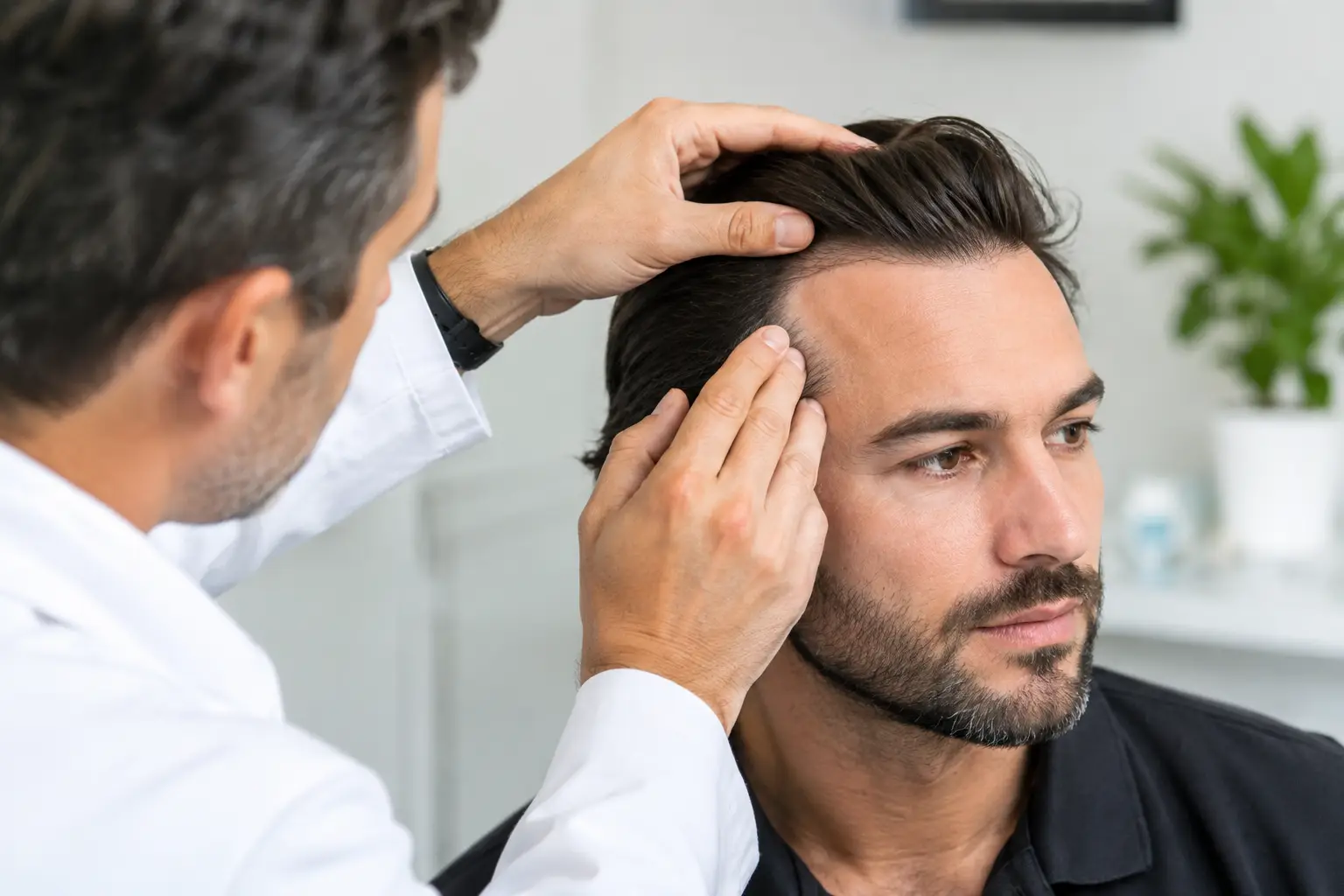
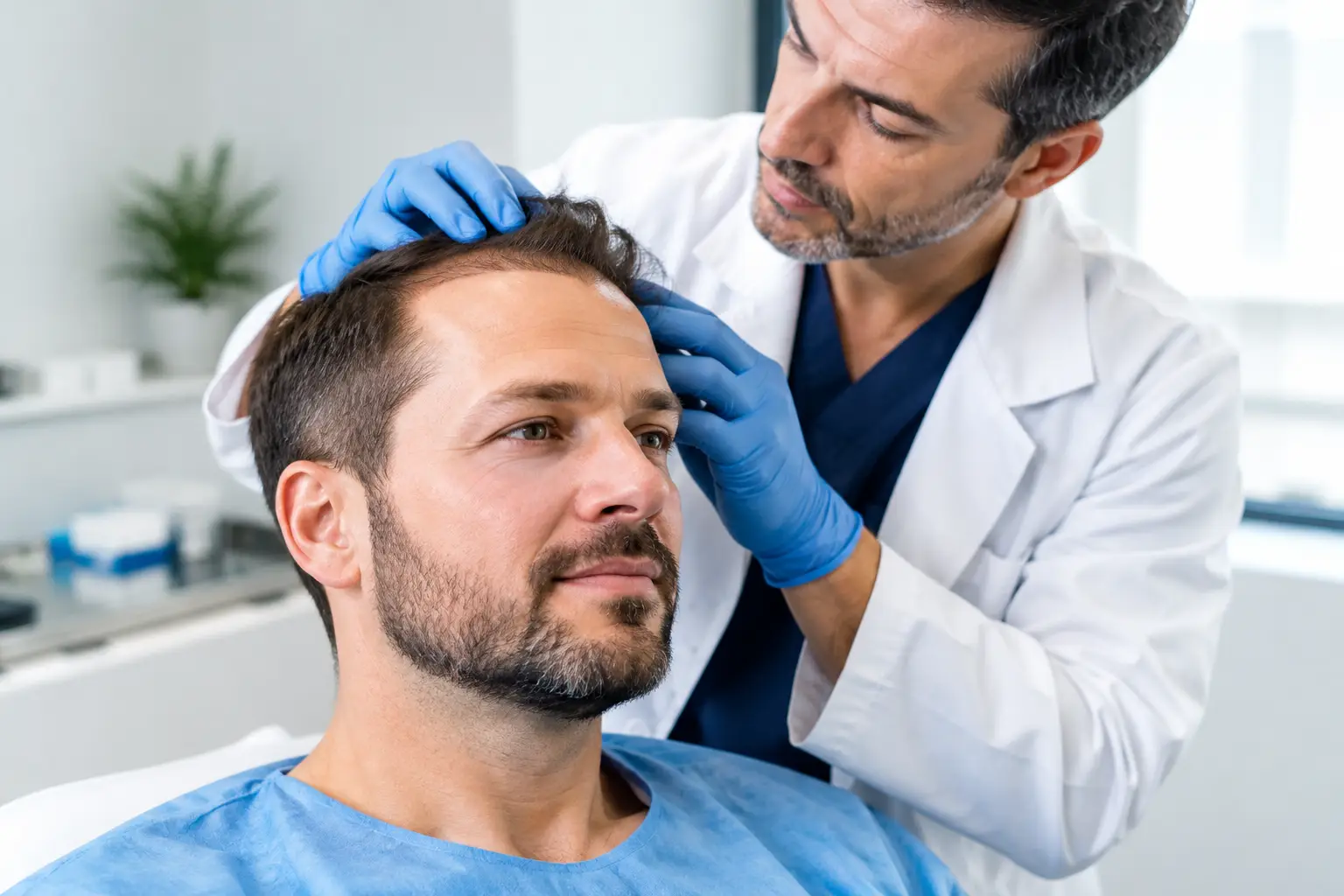
That is why an in-person scalp evaluation matters. Before choosing treatment, a qualified hair restoration physician should assess your pattern of loss, scalp health, family history, current medications, and donor area. If hair loss is sudden, patchy, painful, itchy, or accompanied by scalp scaling, seek medical evaluation promptly rather than assuming it is ordinary pattern loss.
How to Fix a Receding Hairline Before It Progresses
Early intervention gives you more options. Existing follicles that are thinning can often be supported, while areas that have been smooth and bare for years are less likely to regrow substantial hair without transplantation.
Medication can preserve vulnerable hair
For appropriate candidates, medical therapy can slow ongoing miniaturization and help maintain the hair you still have. Topical minoxidil is commonly used by both men and women to encourage follicles to remain in the growth phase longer. It requires consistency, and early shedding can occur as hairs cycle before improvement becomes visible. Results usually take several months, and stopping treatment can allow gains to fade.
For many men with pattern hair loss, finasteride or other prescription options may help reduce the hormonal process that drives follicle miniaturization. These medications are not right for everyone and can have potential side effects, so they should be discussed carefully with a physician. Women require a different evaluation, particularly if they are pregnant, trying to conceive, or have hormonal health concerns.
Medication is often most valuable as a preservation strategy. It may thicken miniaturized hairs near the hairline, but it cannot reliably recreate a fully depleted frontal hairline on its own.
Low-level laser therapy and regenerative treatments can be supportive
Low-level laser therapy uses specific wavelengths of light to support follicle activity. It is noninvasive, requires no downtime, and may be a practical addition for patients with early thinning who are willing to follow a regular treatment schedule. It works best as part of a broader plan, not as a shortcut for advanced recession.
Regenerative hair loss injections may also be recommended for select patients. These treatments use concentrated components from your own blood to support the scalp environment and existing follicles. They are not a replacement for surgery where follicles are gone, but they may complement medical therapy and help protect native hair around a transplanted area.
Lifestyle supports the plan, but does not replace treatment
A nutritious diet, adequate protein, good sleep, stress management, and gentle hair care all support healthy hair growth. Supplements can be useful when a nutritional gap or specific clinical need is identified. Still, no vitamin can overcome genetic hair loss by itself. Be cautious of products that promise to permanently regrow a hairline in a few weeks. Meaningful hair restoration is a medical process that takes time.
When an FUE Hair Transplant Makes Sense
If your temples or frontal hairline have receded beyond what existing follicles can recover, an FUE hair transplant can provide the most visible and lasting change. FUE, or Follicular Unit Extraction, involves removing individual follicular units from a stable donor area, usually the back and sides of the scalp, and placing them precisely into thinning or bare areas.
A successful hairline transplant is not simply about adding more grafts. It is about design. The hairline must suit your facial proportions, age, ethnicity, future hair loss pattern, and desired level of density. A hairline that is too low, too straight, or too dense can look artificial and may leave too little donor hair for future needs.
During a modern FUE procedure, grafts are selected and placed to mimic the irregularity of natural growth. Single-hair grafts are typically used at the leading edge for softness, with carefully positioned multi-hair grafts behind them for density. The result should look like your own hairline, not a noticeable procedure.
ARTAS robotic FUE may be an option for patients who qualify. The technology can assist with donor harvesting, while physician-guided planning and artistic placement remain central to creating a natural-looking outcome. Whether standard FUE or robotic assistance is the better choice depends on your hair characteristics, donor supply, and treatment goals.
Set Expectations for Recovery and Growth
FUE is minimally invasive, but it is still a surgical procedure. Most patients can return to non-strenuous daily activities relatively quickly, though they should follow postoperative instructions closely and avoid vigorous exercise for the recommended period.
Transplanted hairs commonly shed within the first several weeks. This is expected and does not mean the procedure failed. New growth generally begins to emerge after several months, then gradually gains length, texture, and density. Many patients see a meaningful transformation around six to nine months, with final maturation often continuing for 12 months or longer.
Your native hair can continue to thin after a transplant if the underlying pattern loss is not managed. This is one reason physicians often recommend a combination approach: restore the hairline surgically when needed, then use medical or non-surgical therapies to protect the surrounding hair.
Choosing the Right Treatment Plan
The most effective treatment plan is personal. A younger patient with early temple recession may be best served by medical therapy and monitoring before considering surgery. Someone with stable loss, strong donor density, and a visibly receded frontal hairline may be an excellent FUE candidate. A patient with diffuse thinning may need to stabilize hair loss first so that any transplant plan is both safe and aesthetically balanced.
At Austin Hair Clinic, the consultation process is designed to replace guesswork with a clear path forward. A scalp analysis and physician-led assessment can help determine whether your goal is preservation, regrowth support, surgical restoration, or a strategic combination of all three. Financing discussions can also make it easier to plan treatment around your timeline.
Can a receding hairline grow back naturally?
It depends on the cause and how long the follicles have been miniaturizing. Early thinning may improve with appropriate medical treatment, while long-standing bare areas usually require transplantation for substantial visible restoration.
Is a hair transplant permanent?
Transplanted follicles are typically taken from areas that are more resistant to pattern hair loss, so they are intended to provide long-term growth. However, no procedure stops future thinning in untreated native hair. Ongoing management is often the key to preserving a balanced result.
What is the best age for a hairline transplant?
There is no universal age. What matters more is the stability of your hair loss pattern, the availability of donor hair, and a conservative design that accounts for the future. A thorough evaluation is especially important for younger patients.
A receding hairline does not have to dictate how you feel when you look in the mirror. Start with an accurate diagnosis, choose treatments that match the stage of your hair loss, and give the process enough time to deliver a result that looks natural, feels like you, and supports lasting confidence.