9 Hair Transplant Myths That Deserve a Closer Look
A receding hairline can change the way you approach a camera, a meeting, or even a mirror. Yet many people wait years to seek help because of hair transplant myths that no longer reflect modern hair restoration. The truth is more encouraging, but also more personal: a well-planned procedure can create natural-looking improvement, while the wrong expectations can lead to disappointment.
Modern FUE hair transplantation is not a one-size-fits-all cosmetic service. It is a medical procedure that requires careful diagnosis, artistic planning, healthy donor hair, and a strategy for protecting the hair you still have. Here is what patients in Austin and San Antonio should know before ruling out treatment or assuming it is the answer to every type of hair loss.
Hair Transplant Myths vs. Modern FUE Reality
Myth 1: Hair transplants always look obvious
The outdated image of harsh, plug-like hairlines came from older techniques that used large grafts and less refined placement. Today, FUE involves extracting naturally occurring follicular units, usually containing one to four hairs, and placing them strategically to follow the direction, angle, and density of surrounding hair.
Natural results depend on more than the extraction method. The hairline must be designed for your facial proportions, age, future hair-loss pattern, and hair characteristics. A low, dense hairline may sound appealing at first, but it can look unnatural as a patient ages or loses additional native hair. Conservative, individualized planning is often what makes a result believable.
Myth 2: A transplant gives you unlimited hair
A transplant redistributes permanent donor hair. It does not create new follicles or increase the total amount of hair available. For most patients, donor follicles are taken from the back and sides of the scalp, where hair is generally more resistant to pattern hair loss.
That donor supply is valuable and finite. Someone with mild recession may need fewer grafts than someone with extensive thinning, while a patient with fine hair may need more grafts to create the visual effect of density. A responsible treatment plan considers what can be achieved now while preserving options for the future.
Myth 3: Anyone with thinning hair is ready for surgery
Not every person with hair loss is an ideal transplant candidate, at least not immediately. Diffuse thinning, active shedding, inflammatory scalp conditions, limited donor density, and certain medical concerns may change the recommended approach. In some cases, treating the underlying cause or stabilizing hair loss first produces a better long-term result.
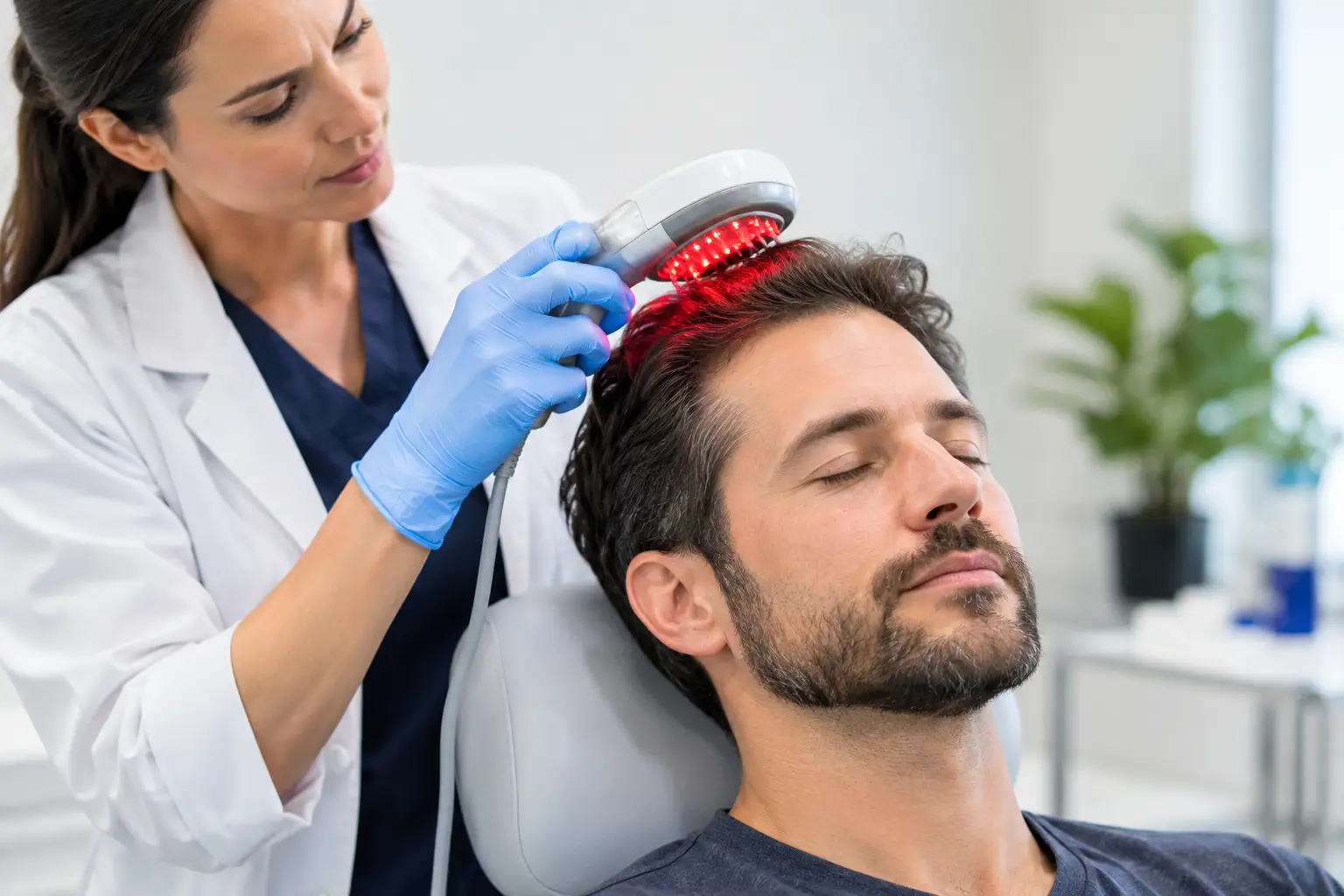
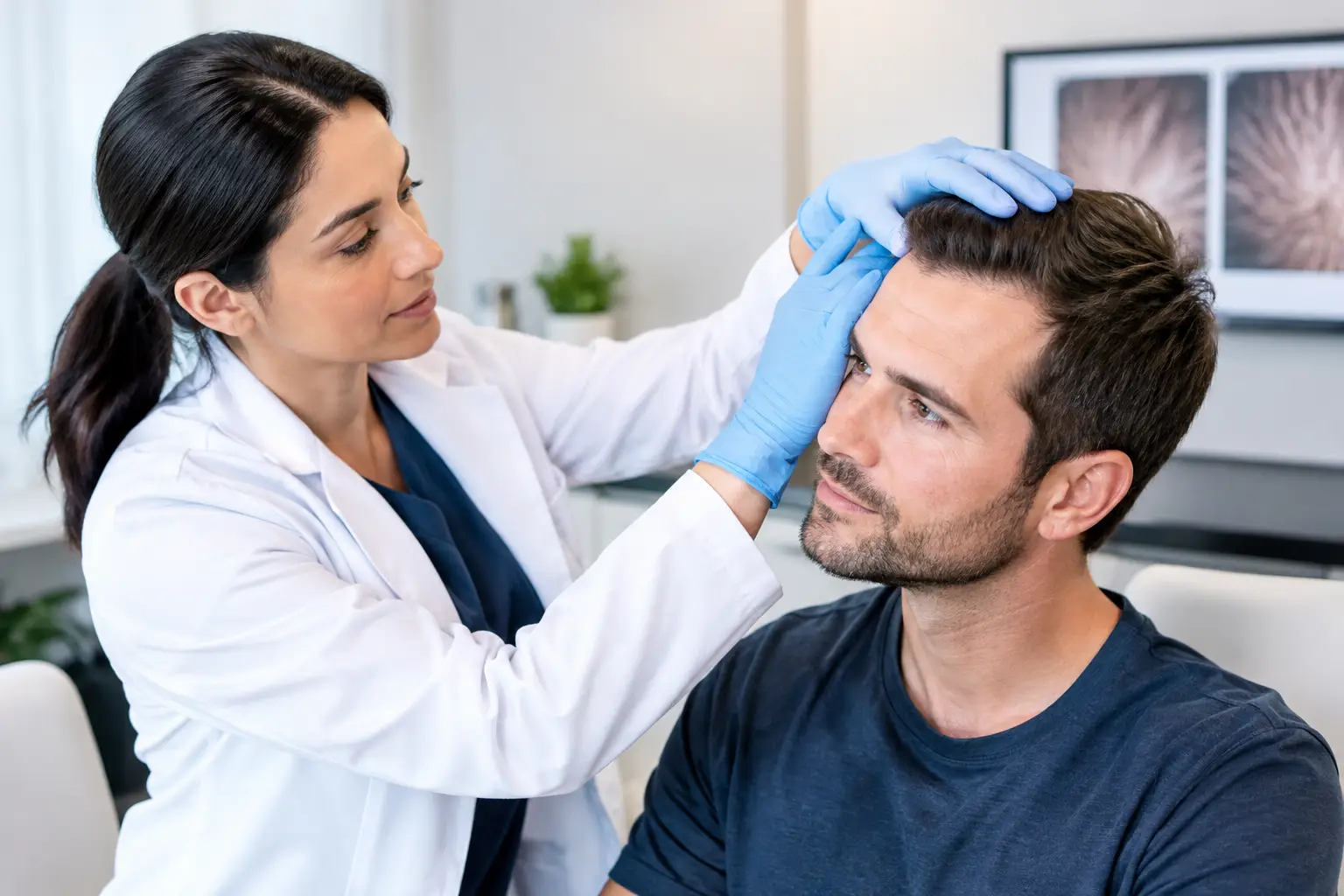
A professional evaluation should look beyond the visible hairline. Scalp health, family history, medication use, rate of loss, hair caliber, and donor-area quality all matter. Non-surgical options such as physician-guided medications, low-level laser therapy, regenerative injections, or diagnostic testing may be part of the plan before or alongside a procedure.
Myth 4: FUE means there are no scars
FUE does not involve the linear scar associated with strip harvesting, but it still creates tiny extraction sites in the donor area. These sites generally heal as small, scattered marks that can be difficult to notice when extraction is performed thoughtfully and hair is kept at a typical short length.
The word “scarless” is not medically accurate. How visible donor-site marks are can depend on skin type, healing, haircut length, the number of grafts needed, and how carefully the donor area is managed. This is one reason patients who prefer very closely shaved styles should discuss expectations openly during consultation.
Myth 5: Robotic FUE replaces the physician
ARTAS® robotic FUE can be a valuable tool for appropriate candidates. It can assist with identifying and harvesting follicular units with speed and consistency, particularly across larger treatment areas. But technology does not replace medical judgment or aesthetic skill.
A successful transplant still requires a personalized design, safe donor management, graft handling, recipient-site planning, and a clear view of your long-term hair restoration goals. The technology used should support the treatment plan, not become the reason for choosing one.
Myth 6: The procedure is extremely painful and requires a long absence from work
Most FUE procedures are performed with local anesthesia. Patients are awake, and many listen to music, watch entertainment, or rest during treatment. You may feel brief discomfort during numbing and some tenderness or tightness afterward, but severe pain is not the typical experience.
Recovery also varies. Many patients return to desk-based work within a few days, although visible redness, scabbing, or swelling may influence the timing of social events and in-person meetings. Exercise, sun exposure, headwear, washing, and grooming need temporary adjustments. Your aftercare instructions should be specific to your procedure and healing progress.
Myth 7: Transplanted hair grows in immediately
This is one of the most common misunderstandings. During the first weeks after surgery, transplanted hairs often shed. That shedding is expected and does not mean the follicles have failed. The follicles remain beneath the skin and enter a resting phase before producing new growth.
Early growth commonly begins around three to four months, with noticeable improvement developing over subsequent months. Because hair grows gradually, patients often see a meaningful change around six to nine months, while final maturation can take 12 months or longer. Patience is part of the process, especially for crown restoration, which may appear slower than a frontal hairline.
Myth 8: A hair transplant stops future hair loss
Transplanted follicles are usually chosen because they are more resistant to the hormone-related process behind common pattern hair loss. However, the native hair around them can continue to thin. Without a long-term strategy, a patient may eventually see a disconnect between transplanted density and progressive loss behind it.
This does not mean surgery is a poor choice. It means the best plans address both restoration and preservation. Depending on the patient, that may include medication, laser therapy, regenerative treatments, or periodic follow-up. It also means designing a hairline that remains appropriate if hair loss advances.
Myth 9: Hair transplants are only for men
Women can be excellent candidates for hair restoration, particularly when they have stable thinning patterns, adequate donor density, or traction-related hair loss. The evaluation is often more nuanced because women may experience diffuse shedding, hormonal changes, nutritional factors, or medical conditions that require investigation before surgery.
Facial hair restoration is another area where FUE can help both men and women. Beard transplantation may improve patchiness, camouflage scars, or create fuller facial hair. Eyebrow restoration can address sparse brows caused by overplucking, trauma, genetics, or certain medical conditions. Each area has its own placement angles and aesthetic demands, so experience matters.
Questions Worth Asking Before You Commit
The most useful consultation is not a sales conversation. It should give you a realistic picture of candidacy, donor limitations, expected density, recovery, and maintenance. Ask who will be involved in your procedure, how the hairline will be designed, what non-surgical treatments may protect existing hair, and what happens if future loss continues.
Before-and-after photos can be helpful, but look for patients with hair characteristics and levels of loss similar to yours. Pay attention to hairline softness, density in natural lighting, donor-area appearance, and whether the result fits the patient’s age and face. A good result should look like your own hair, not like a procedure.
Cost should be discussed clearly as well. The appropriate number of grafts, technique, extent of thinning, and complexity of the design can all affect investment. Choosing solely on price can be risky when donor hair cannot simply be replaced. Financing may make treatment more accessible, but it should never push you toward a procedure before you understand the plan.
A More Confident Way to Explore Hair Restoration
There is no benefit in waiting until hair loss feels overwhelming, but there is also no reason to rush into surgery based on marketing promises. A free scalp analysis and physician-guided consultation at Austin Hair Clinic can help clarify whether FUE, ARTAS® robotic FUE, medical therapy, or a combined approach best matches your goals.
The right next step is simply an honest assessment of where your hair is today and where it may be headed. With a plan built around natural proportions, available donor hair, and your confidence, hair restoration can feel less like a leap of faith and more like a carefully considered decision.