Hair Transplant: Is FUE the Right Choice?
A thinning hairline can change the way you approach photographs, meetings, social events, and even your reflection in the mirror. A hair transplant is not simply about moving hair from one area to another. When planned carefully, it is a medical and aesthetic procedure designed to restore a natural-looking frame for your face and help you feel more like yourself again.
For many men and women in Austin and San Antonio, Follicular Unit Extraction, or FUE, offers an appealing balance of precision, minimal visible scarring, and long-term results. Still, the right treatment depends on the cause of your hair loss, the quality of your donor hair, your goals, and how your hair loss may progress over time.
What Is an FUE Hair Transplant?
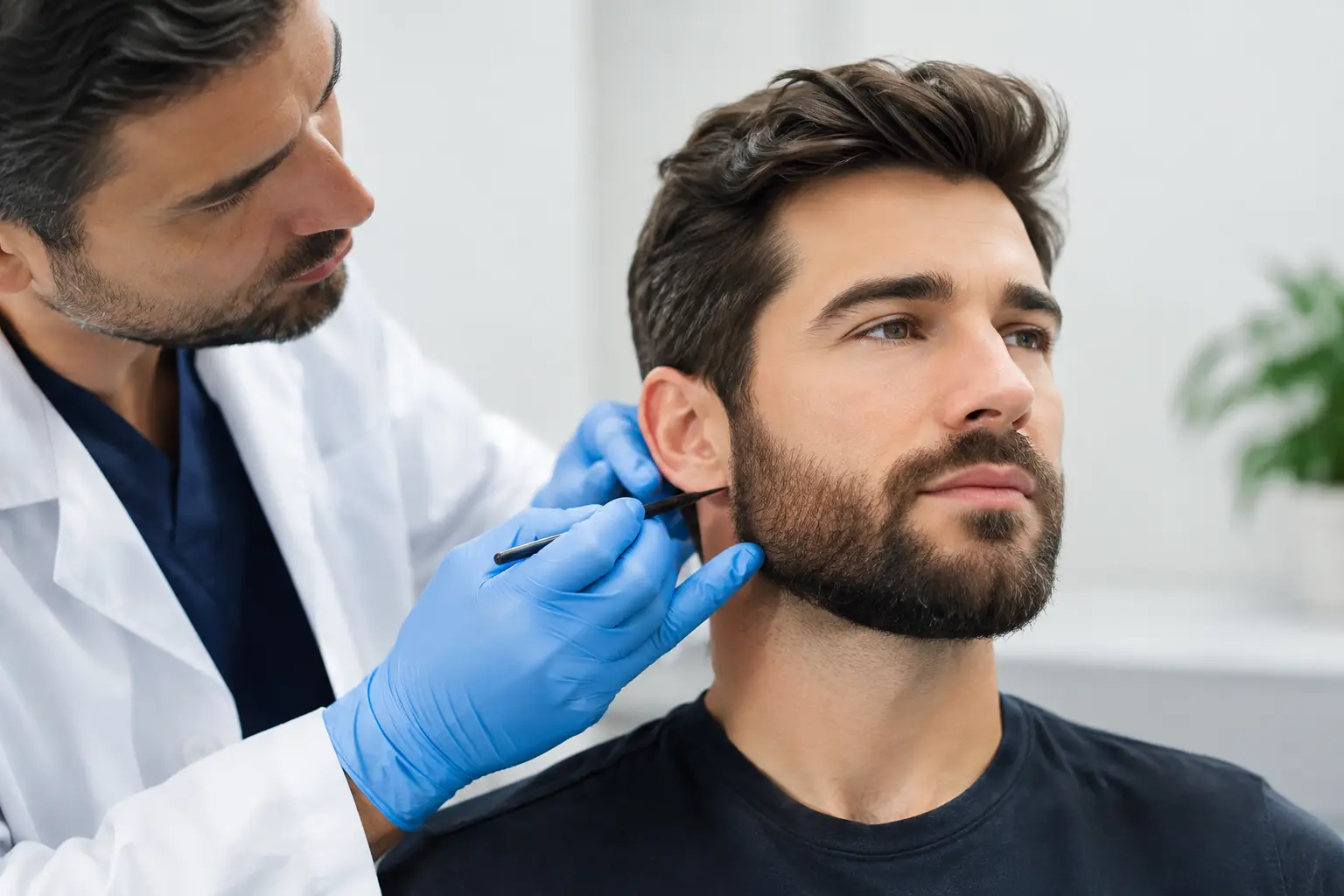
FUE is a surgical technique that removes individual follicular units from a donor area, usually the back and sides of the scalp. A follicular unit may contain one to four hairs. These units are then carefully placed into thinning or bald areas, such as a receding hairline, the temples, mid-scalp, or crown.
Unlike older strip-harvesting techniques, FUE does not require removing a linear strip of scalp. Instead, it leaves tiny dot-like extraction sites that typically become difficult to notice once healed, especially when surrounding hair is kept at a reasonable length. This makes FUE a strong option for people who prefer shorter hairstyles or want to avoid a linear scar.
The surgical technique matters, but artistic planning matters just as much. A natural hairline should complement your age, facial proportions, existing hair density, and likely pattern of future hair loss. Placing grafts too low, too densely, or at the wrong angle can create a result that looks unnatural over time. Thoughtful design protects both your appearance now and your options later.
Who Is a Good Candidate for a Hair Transplant?
A hair transplant can be effective for men and women with pattern hair loss, but it is not the right first step for every type of thinning. Candidates generally need a stable and adequate donor supply, realistic expectations, and a healthy scalp.
Men with a receding hairline, thinning at the crown, or gradual loss through the mid-scalp are often good candidates if they have sufficient density in the permanent donor zone. Women may also be candidates, particularly when their thinning is concentrated rather than diffuse throughout the entire scalp. Facial hair restoration, including beard and eyebrow transplant procedures, can be appropriate for people with patchy growth, scars, or naturally limited density.
The timing of treatment is important. Someone in their early twenties with rapidly progressing hair loss may need a more conservative plan than someone whose pattern has remained stable for years. A transplant does not stop future hair loss in non-transplanted hair. Without a long-term strategy, ongoing thinning can make a transplanted area look isolated or less dense later.
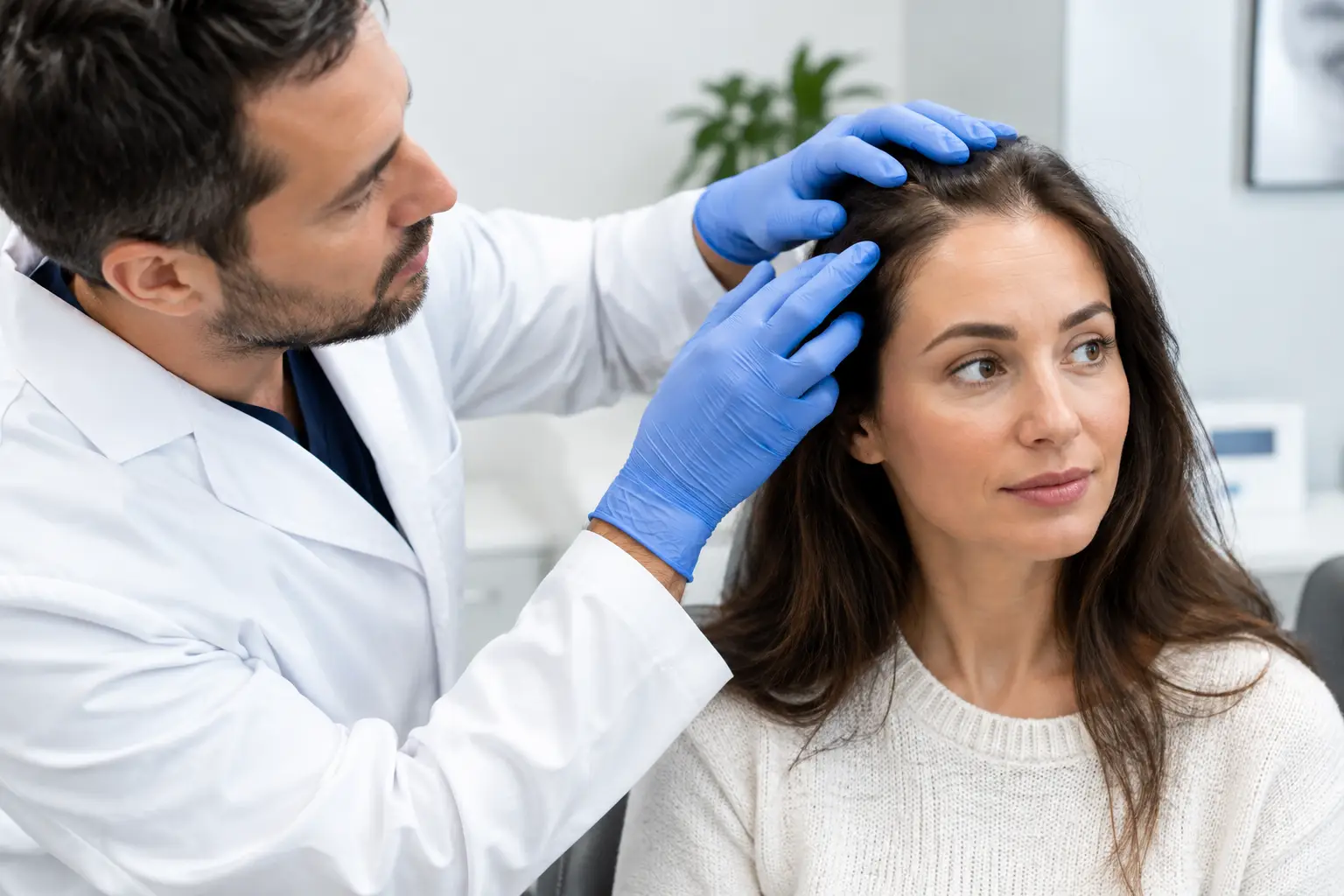
That is why an honest consultation should include a close evaluation of the scalp, donor area, family history, medical history, medications, and treatment goals. At Austin Hair Clinic, this planning begins with a personalized assessment rather than a one-size-fits-all graft estimate.
When surgery may not be the first recommendation
Hair shedding can be caused by more than genetic pattern loss. Hormonal changes, stress, nutritional deficiencies, certain medications, autoimmune conditions, and scalp inflammation may all contribute. If shedding is sudden, patchy, or accompanied by irritation, addressing the underlying cause comes first.
Some patients also have early thinning but plenty of existing hair worth protecting. In those cases, hair loss medications, regenerative injections, low-level laser therapy, supplements, or diagnostic testing may be used before surgery or alongside it. The best plan is often a combination approach, not an automatic procedure.
How the FUE Procedure Works
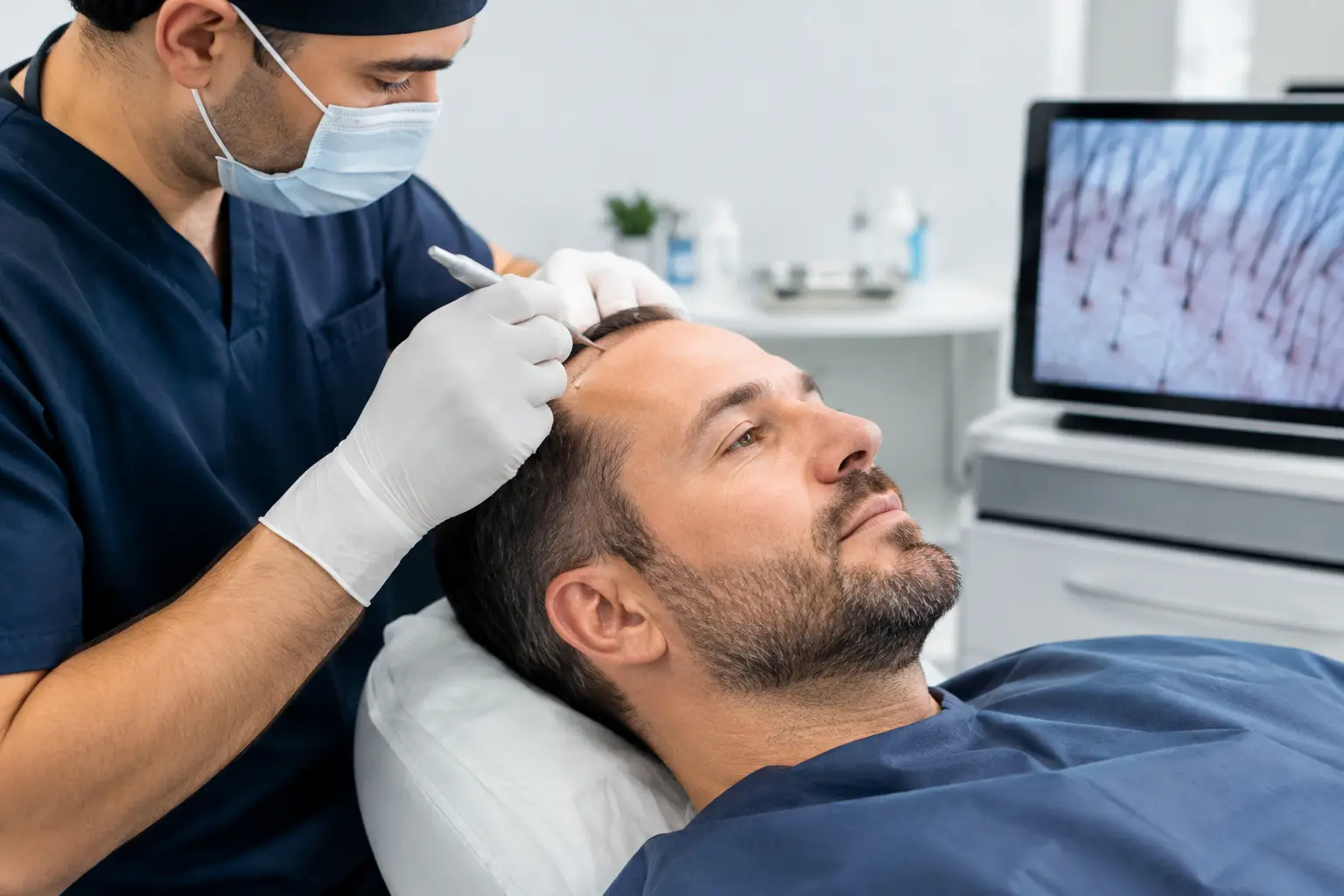
An FUE hair transplant is typically performed using local anesthesia, so patients remain awake but comfortable. The donor area is prepared, and individual follicular units are extracted with specialized instrumentation. Depending on the treatment plan, a procedure may involve several hundred grafts for minor hairline refinement or several thousand grafts for more extensive restoration.
Each extracted graft is protected and organized before placement. Tiny recipient sites are then created in the thinning area. Their angle, direction, and spacing determine how the hair will grow and blend with your existing hair. Single-hair grafts are commonly used along the frontal hairline for softness, while multi-hair grafts can add density behind it.
Some patients may be candidates for ARTAS robotic FUE. This technology can assist with identifying and harvesting suitable follicular units, while physician-guided planning remains essential for donor management, hairline design, and placement strategy. Technology can improve consistency and efficiency, but natural-looking results still depend on experienced medical judgment.
Recovery: What to Expect After FUE
Most patients return home the same day. Mild swelling, tenderness, tightness, or scabbing can occur during the first week. The donor area and transplanted sites require gentle care, and you will receive specific instructions for washing, sleeping, physical activity, and sun exposure.
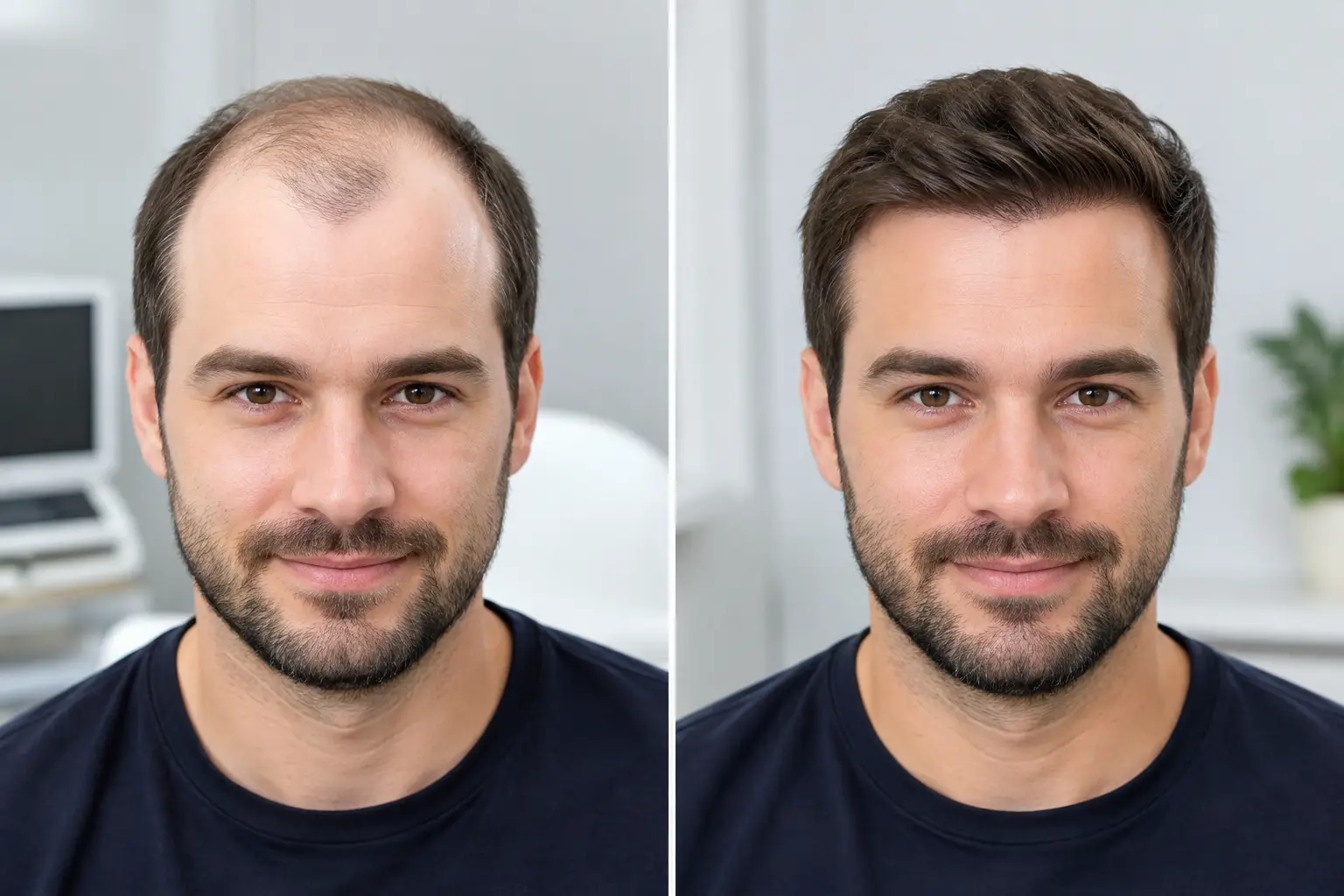
The transplanted hairs commonly shed within the first several weeks. This can feel discouraging, but it is a normal part of the process. The follicles remain beneath the skin and enter a resting phase before new growth begins. Early growth may appear around three to four months, with more visible change developing between six and nine months. Final maturation often takes 12 months or longer, particularly in the crown.
Results are gradual because real hair grows gradually. That timeline is one reason the most convincing restorations rarely look abrupt. Friends and colleagues may simply notice that you look healthier, younger, or more confident without immediately identifying why.
Protecting your investment
A transplant redistributes permanent donor follicles, but it does not make surrounding native hair immune to future thinning. Your physician may recommend medical therapy, laser treatment, or other supportive options to preserve the hair you already have. This is especially valuable for patients with active pattern hair loss or a strong family history of progression.
Following post-procedure instructions is equally important. Avoiding strenuous activity for the recommended period, protecting the scalp from direct sun, and attending follow-up appointments all support proper healing and growth.
Natural Results Depend on Planning, Not Just Graft Count
It is easy to focus on the number of grafts, but graft count alone does not define a successful result. A larger number is not automatically better if it depletes the donor area, creates an overly aggressive hairline, or fails to account for future loss.
A well-designed plan considers donor supply as a limited resource. It prioritizes the areas that will make the greatest cosmetic difference, often the hairline and frontal scalp, while preserving enough donor hair for potential future needs. For some patients, the crown can be treated at the same time. For others, staging treatment is the wiser choice.
Density also has limits. The scalp has a finite blood supply, and grafts need appropriate spacing to heal and grow well. Skilled placement creates the appearance of fullness through direction, distribution, hair caliber, curl pattern, and contrast between hair and scalp. The goal is not to create the hair density you had as a teenager. The goal is to create a believable, balanced result that fits you.
Questions to Ask Before Choosing a Hair Transplant Provider
Your consultation should leave you with clarity, not pressure. Ask who will perform the key parts of the procedure, how your donor area will be evaluated, and how the provider plans for future hair loss. You should also ask to see results from patients with a hair type and degree of thinning similar to yours.
Discuss the expected graft range, recovery schedule, risks, and whether non-surgical treatments would improve your outcome. Every surgical procedure has potential risks, including temporary shock loss, uneven growth, infection, scarring, or an unnatural appearance when planning is poor. A qualified medical team should discuss these candidly and explain how they work to minimize them.
Cost should be considered in context. The least expensive option may not provide physician involvement, careful donor preservation, or the aesthetic precision needed for an enduring result. A personalized treatment plan and financing options can make a quality procedure more manageable without sacrificing the details that matter.
A hair transplant is a decision about more than hair. It is a chance to take a measured, medically guided step toward a look that feels natural and confidence that feels familiar. Start with a professional scalp evaluation, ask direct questions, and choose a plan built around your future as carefully as it is built around your hairline today.