Hairline Transplant Before After Example Explained
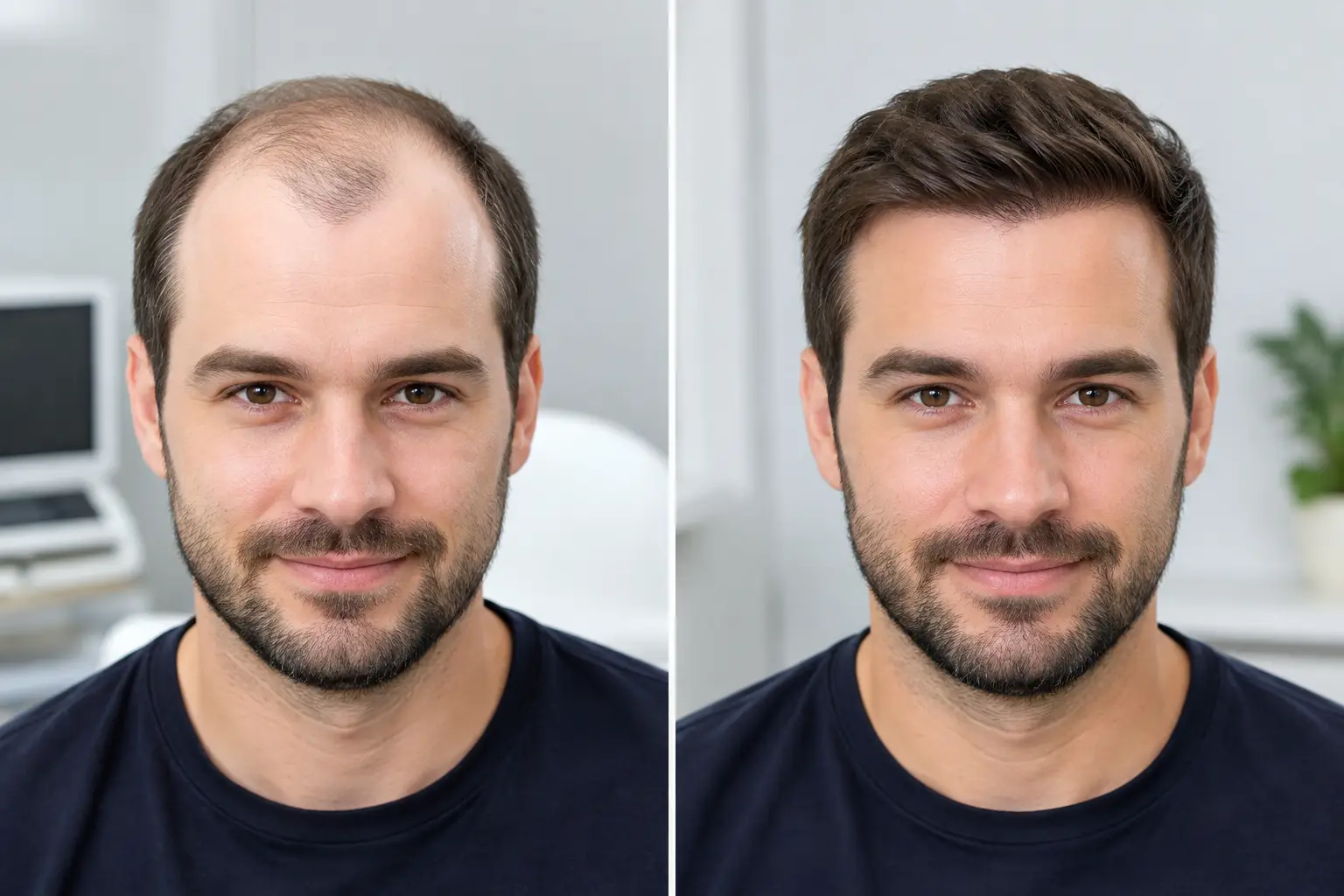
A convincing hairline transplant before after example should not look like a dramatic new hairstyle created overnight. It should show a carefully rebuilt frame for the face: a hairline that fits the patient’s age, facial proportions, existing hair pattern, and future risk of thinning. The most successful results often look so natural that people notice the patient looks younger or more refreshed without immediately identifying why.
For men and women considering FUE hair restoration, before-and-after photos can be valuable evidence. They can also be misleading when lighting, hairstyle, timing, and graft planning are not considered. Knowing what to look for helps you move beyond the question, “Does this look good?” and ask the more useful question: “Would this result still look natural on me years from now?”
What a Hairline Transplant Before After Example Should Show
A meaningful example starts with a true pre-treatment image. In the before photo, look at the degree and pattern of recession, the thickness of the surrounding native hair, and whether the patient has continued thinning behind the hairline. A person with mild temple recession needs a different plan than someone whose frontal hair has receded significantly.
The after photo should be taken at a stated point in recovery, ideally with similar lighting, angle, hair length, and styling. A close-up of the frontal hairline is useful, but so is a wider view that shows how the new hairline works with the entire face. Results that are photographed only from one flattering angle do not tell the full story.
Most importantly, the example should reflect a hairline design that looks individualized. A natural hairline is rarely a straight, dense wall of hair. It has subtle irregularity, softer single-hair grafts at the leading edge, and a gradual transition into fuller density behind it.
A Typical Example: From Recession to a Softer, Balanced Frame
Consider a patient in his late 30s with recession at both temples and a frontal hairline that has moved back about an inch. He still has reasonably strong hair through the mid-scalp and crown, but styling has become more difficult. He is not seeking the hairline he had at 18. He wants to stop looking more receded each time he sees a photo of himself.
Before surgery, a physician evaluates the donor area at the back and sides of the scalp, reviews family history and current hair-loss progression, and discusses medical treatment when appropriate. The planning conversation matters because transplanted follicles are typically resistant to pattern hair loss, while non-transplanted hair around them may continue to thin.
In this example, an FUE procedure may focus on rebuilding the frontal zone and softening the temple angles rather than lowering the entire hairline aggressively. Individual follicular units containing one hair are placed at the very front to create a finer, feathered edge. Grafts with two or more hairs are generally placed farther behind to build visual fullness.
The immediate after image may show short recipient-site hairs and mild redness. At two weeks, the transplanted hairs commonly shed, which can surprise patients who expect instant density. At three to four months, early new growth begins. By six to nine months, the change is usually much more visible. A final result often continues to mature for 12 months or longer, especially as the hairs gain caliber and blend with surrounding hair.
That timeline is why a day-of-procedure photo is not a true after result. When reviewing any hairline transplant before-and-after example, ask when the after image was taken.
Signs of Natural Graft Placement
Hairline restoration is an aesthetic procedure as much as a surgical one. The difference is visible in details that may be hard to name at first glance.
A well-designed hairline follows the natural direction of hair growth. Frontal hairs usually emerge forward and slightly down, while temple-point hairs follow a distinct angle that blends into the side hair. If grafts are placed at an incorrect angle, the hair can stand up or grow in a way that makes styling difficult.
Density should also make sense for the patient’s donor supply. The goal is not always maximum graft density. A skilled plan uses available donor hair strategically, prioritizing the areas that will create the strongest cosmetic improvement while preserving options if additional treatment is needed later.
Look for age-appropriate placement. A very low, perfectly symmetrical hairline can appear unnatural as a patient gets older, especially if future loss develops behind it. A thoughtful hairline often restores a more youthful appearance without attempting to recreate an adolescent hairline.
Why Two Patients Can Have Very Different Results
No before-and-after gallery can predict your exact result. Hair texture, color contrast, curl pattern, scalp color, donor density, and the amount of existing hair all affect how much fullness a given number of grafts can create.
For example, thick or wavy hair may create more visual coverage than fine, straight hair with the same graft count. Dark hair against a light scalp can make thinning more noticeable, while lighter hair and lower color contrast may appear denser. Patients with extensive hair loss may need to prioritize the frontal hairline over the crown because donor hair is finite.
Women may also require a different approach. Some women experience diffuse thinning rather than a classic receding pattern, while others have traction-related loss along the frontal hairline. A careful diagnosis is essential before recommending transplantation, because active shedding or an untreated underlying condition can affect planning and long-term satisfaction.
The Role of Non-Surgical Treatment in Before-and-After Success
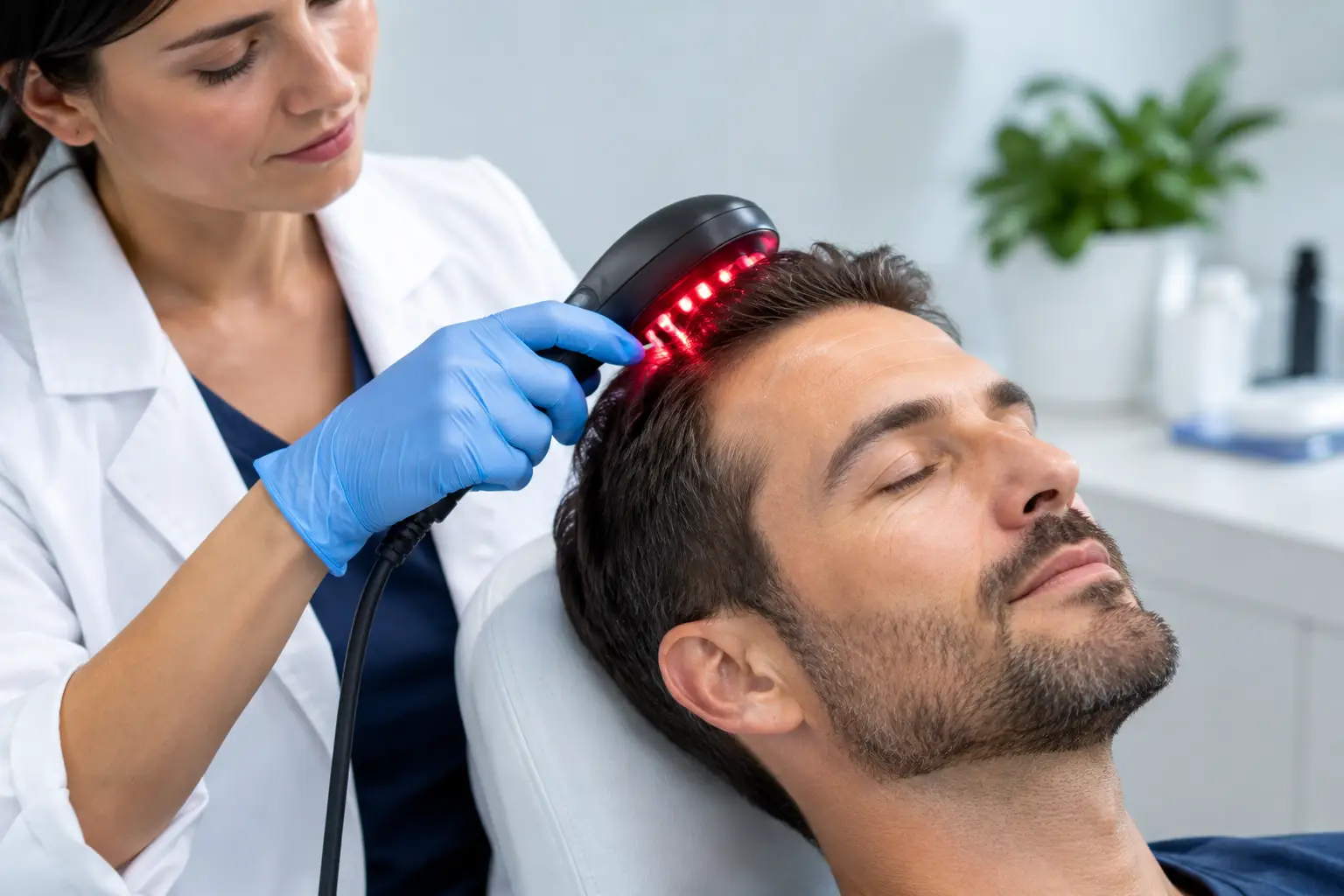
A strong after result is not always created by surgery alone. When hair loss is progressive, preserving existing native hair can be just as important as adding transplanted grafts. Depending on the diagnosis, a physician may discuss medications, regenerative hair loss injections, low-level laser therapy, nutritional support, or a combination approach.
These treatments do not replace donor follicles, and they are not right for every patient. However, they may help stabilize thinning around a newly restored hairline. This can make the overall result appear more consistent over time and may reduce the need for additional procedures.
The trade-off is commitment. Some non-surgical treatments require ongoing use to maintain benefits, while a transplant involves a recovery period and careful post-procedure instructions. The best plan depends on your goals, medical history, hair-loss pattern, and willingness to maintain treatment.
Questions to Ask When Viewing Before-and-After Photos
Photos should start a consultation, not replace one. Ask whether the images show the same lighting and angle, how many months have passed since the procedure, and whether the patient used medical therapy along with transplantation. It is also reasonable to ask how the hairline was designed and whether future hair loss was considered.
Ask to see patients with a hair type and level of loss similar to yours. A gallery full of ideal candidates with dense donor hair may be encouraging, but it does not provide the same guidance as seeing realistic cases that resemble your starting point.
Finally, focus on consistency rather than one extraordinary transformation. Reliable work tends to show natural direction, thoughtful density, and hairlines that suit many different faces. The goal is not to chase a single photo. It is to find a plan that is medically responsible and aesthetically right for you.
At Austin Hair Clinic, a personalized consultation can clarify whether FUE hairline restoration, medical therapy, or a combined approach best supports your confidence and long-term goals. The most reassuring before-and-after example is the one built on honest expectations, precise planning, and a result that still feels like you.