Hair Transplant for Afro Hair: What to Know

A patient with tightly curled hair usually brings a different set of questions to a consult – and they should. A hair transplant for afro hair is not simply the same procedure performed on a different hair type. The curl pattern above the scalp often continues below the scalp, which changes how follicles are extracted, handled, and placed if the goal is a natural result.
That difference matters because afro-textured hair can produce excellent cosmetic density, but it also requires a higher level of planning and technical control. For patients who have been told they are “good candidates” without much discussion of curl pattern, donor hair characteristics, or scarring risk, it is worth slowing down and asking better questions.
Why afro-textured hair needs a different surgical approach
Afro-textured hair tends to curve in a C-shape or spiral pattern. That curl is visible in the hair shaft, but it can also be present in the follicle beneath the skin. During extraction, this makes the path of the follicle less predictable than straight hair, which raises the risk of transection if the surgeon is not adapting technique to the graft.
This is one of the main reasons experience matters so much. In FUE, the surgeon is removing individual follicular units one by one. If the punch depth, angle, or scoring approach is off, the follicle can be damaged before it is ever transplanted. A damaged graft does not produce the kind of growth patients expect, no matter how carefully the hairline is designed.
The good news is that afro-textured hair also offers an advantage. Because the hair curls and expands visually, it can create the appearance of fuller coverage with fewer grafts than some straighter hair types. When the procedure is planned well, that natural curl can help frame the hairline and improve density in a very convincing way.
Is a hair transplant for afro hair a good option?
For many patients, yes – but candidacy depends on more than hair texture. The real question is whether you have stable donor hair, realistic expectations, and a pattern of loss that can be improved surgically. Age, family history, scalp health, and the cause of hair loss all matter.
If hair loss is still rapidly progressing, a transplant may need to be paired with a long-term medical plan to protect native hair. If the scalp shows signs of inflammation, scarring, or an underlying condition such as traction alopecia or central centrifugal cicatricial alopecia, those issues should be evaluated before moving forward. Not every form of hair loss is best treated with surgery first.
This is where a comprehensive consultation becomes more than a formality. The best plan is often personalized, with surgery considered alongside medication, regenerative treatments, or low-level laser therapy depending on the patient’s goals and degree of loss.
FUE and afro hair
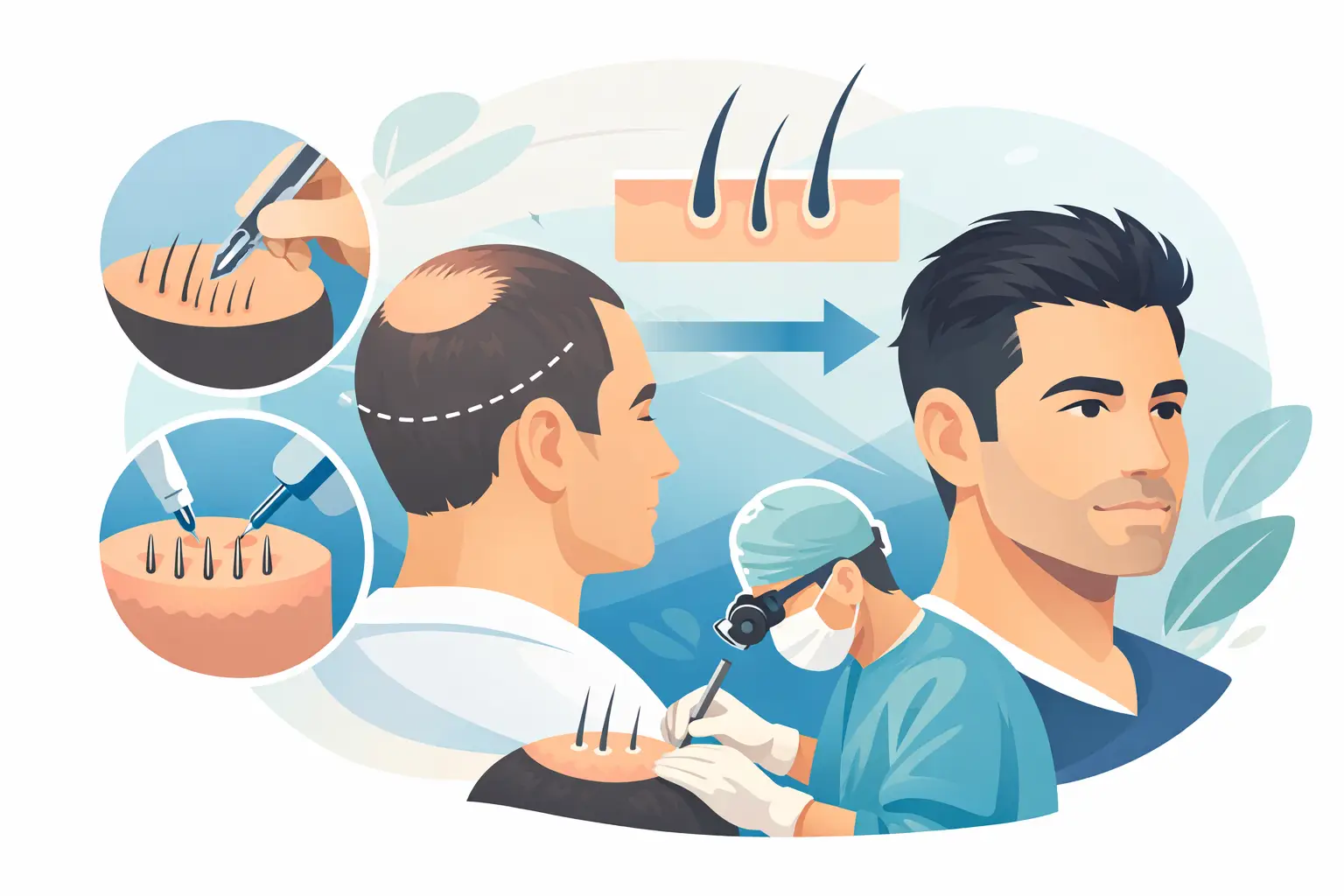
FUE is often attractive because it avoids a long linear scar and allows for a minimally invasive approach. For many patients with afro-textured hair, that is a major advantage, especially if they prefer shorter hairstyles or want flexibility in how they wear their hair.
But FUE in afro hair is technique-sensitive. The surgeon must account for the internal curl of the follicle, not just the angle of the hair as it exits the scalp. This can influence punch selection, extraction speed, and the spacing of harvested grafts within the donor area. Taking too many grafts too close together can create a thinned or uneven donor appearance, which is especially frustrating when the back and sides are meant to remain a reliable source of density.
That does not mean FUE is a bad choice. It means the procedure should be performed by a team that understands the anatomy and has a clear plan for harvesting grafts safely while preserving the donor area for both appearance and future options.
Hairline design matters as much as graft survival
Many patients focus on the number of grafts. That is understandable, but graft count alone does not determine whether the result looks natural. Hairline shape, density distribution, and curl direction are just as important.
With afro-textured hair, a natural-looking result usually depends on respecting the patient’s existing pattern rather than forcing a generic, overly sharp hairline. A lower hairline may sound appealing in theory, but if it does not suit facial proportions, age, or future hair loss, it can look artificial and create more demand on the donor supply.
Good hairline design is restrained in the right way. It should restore confidence without announcing that surgery was done. That often means creating softness at the frontal edge, preserving appropriate temple contours, and placing grafts so the curl pattern works with the style the patient actually wants to wear.
Density can look different in afro-textured hair
This is one of the most encouraging parts of treatment. Because coarser, curlier hair takes up more visual space, strategic placement can produce impressive cosmetic improvement. A patient may not need the same graft count that another hair type would require to achieve a fuller look.
Still, there are trade-offs. If the area of loss is large, the surgeon may recommend prioritizing the hairline and frontal forelock first, then considering crown work later. That is not a compromise in quality. It is often the smartest use of a limited donor supply.
Common concerns patients should bring up
Scarring is an important one. Some patients with darker skin tones are more concerned about visible scarring or pigment changes after surgery, and that concern is valid. Proper technique, careful healing guidance, and realistic discussion before treatment all matter.
Another concern is shock loss, which is temporary shedding that can happen after a procedure. It does not affect every patient in the same way, but it should be discussed honestly, especially when there is still native hair in the treatment zone.
Patients should also ask about the cause of their hair loss. A transplant can rebuild areas that have thinned, but it does not stop the underlying process of androgenetic alopecia or other progressive conditions. In many cases, maintaining surrounding hair is just as important as transplanting new grafts.
Questions to ask before choosing a clinic for hair transplant for afro hair
A strong consultation should feel specific, not scripted. You should know who is performing the extractions, who is creating recipient sites, and how your donor area will be managed. If the discussion stays vague, that is useful information.
Ask how the team approaches tightly curled follicles during FUE and what steps they take to reduce transection. Ask whether your scalp and type of hair loss make you a surgical candidate right now, or whether treatment should begin with stabilization first. Ask to see results in patients with hair characteristics similar to yours, not just general before-and-after photos.
It is also reasonable to ask about the long-term plan. Hair restoration is rarely about one day in the procedure room. It is about how you will look one year from now, how your native hair may change over time, and whether the treatment strategy preserves options for the future.
Recovery and results timeline
Most patients return to normal routines fairly quickly after FUE, but healing still requires patience. Small crusts in the recipient and donor areas are expected early on. The transplanted hairs usually shed before new growth begins, which can be unsettling if you are not prepared for it.
Visible growth often starts gradually over the following months, with continued improvement as the hair matures. Curl pattern, length, and styling all affect when the result starts to feel meaningful in the mirror. The final cosmetic impact is not judged in the first few weeks.
A good team will set realistic expectations from the start. The goal is not overnight change. It is steady, natural improvement that fits your features and restores confidence without looking overdone.
At Austin Hair Clinic, that planning process starts with understanding your hair, your pattern of loss, and your goals as an individual patient – because the best result is not just more hair, but a result that looks like it belongs to you.
If you are considering surgery, the most valuable next step is not chasing the biggest graft number or the fastest promise. It is choosing a surgeon who respects the complexity of afro-textured hair and plans your result with the same care you would want for your own reflection.