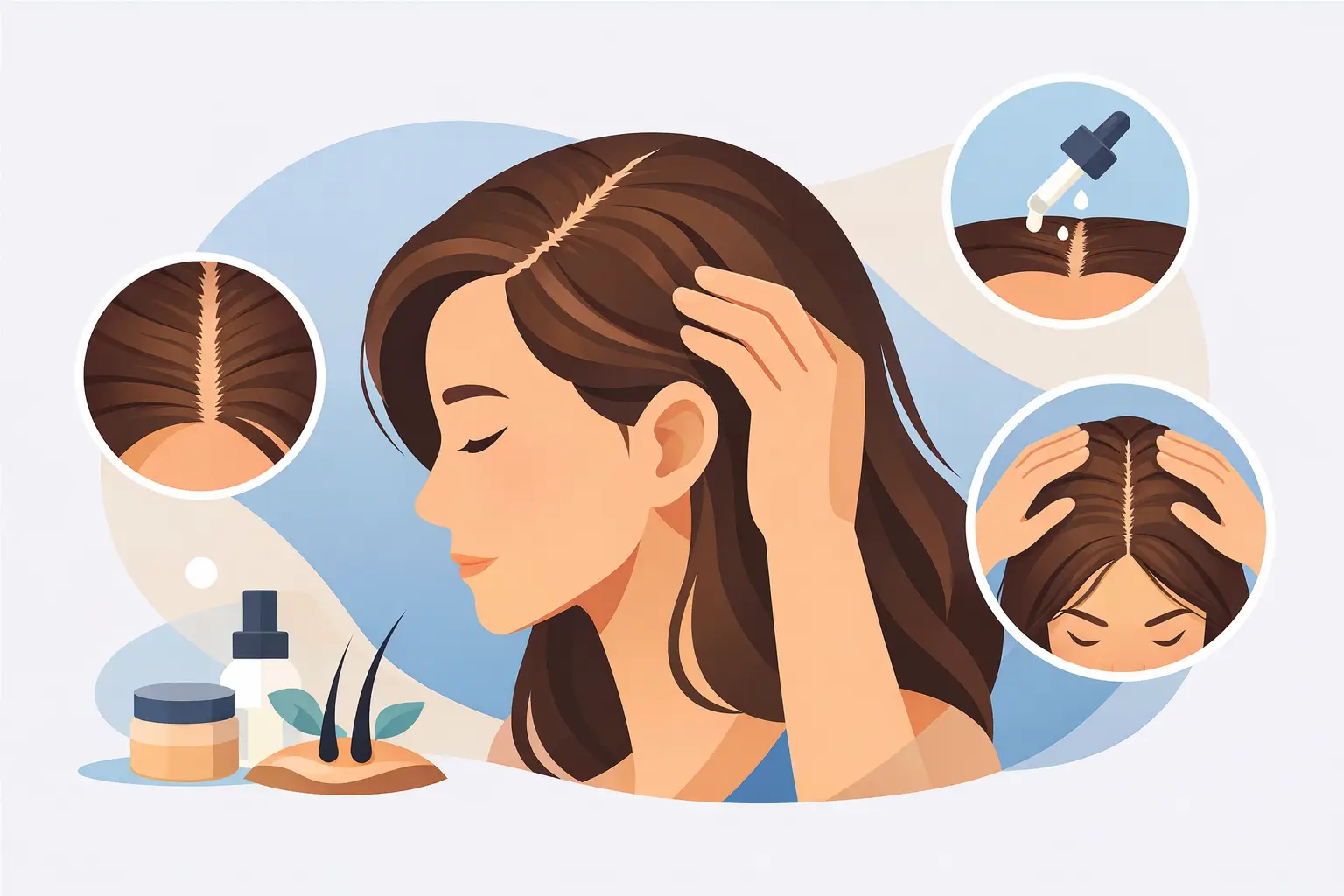
Is Female Hairline Lowering Surgery Right for You?
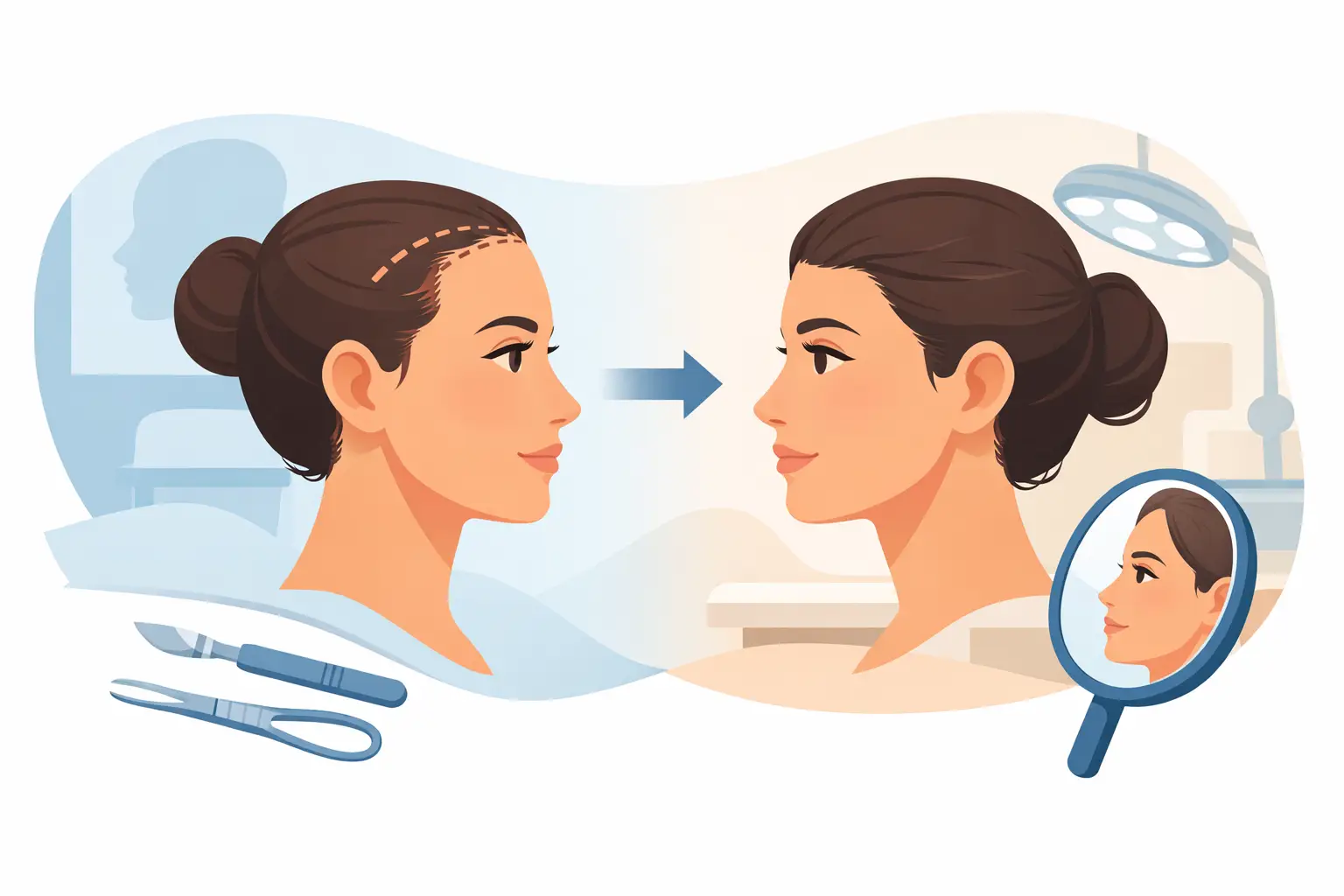
A high hairline can make the forehead feel disproportionately prominent, even when the rest of the hair is full and healthy. For women who have felt self-conscious about that balance for years, female hairline lowering surgery can offer a direct, lasting way to bring the hairline forward and create a more harmonious facial frame.
Also called forehead reduction surgery or scalp advancement, this procedure is not the same as a hair transplant. It is designed for a specific concern: a naturally high hairline or a hairline that has remained elevated without significant active thinning. The right approach depends on your anatomy, hair-loss pattern, goals, and the amount of scalp mobility available.
What Is Female Hairline Lowering Surgery?
Female hairline lowering surgery moves the existing hair-bearing scalp forward, reducing the height of the forehead. During the procedure, a surgeon makes a carefully placed incision along the natural hairline, advances the scalp, removes a small amount of forehead skin when appropriate, and secures the scalp in its new position.
The amount of lowering varies from patient to patient. Some women may be candidates for a more noticeable change, while others are better served by a conservative adjustment that preserves facial proportion. A natural result is not simply about making the forehead smaller. It is about designing a hairline that suits your face, hair density, age, and personal aesthetic.
Because the procedure uses your existing hair-bearing scalp, it can create an immediate change in hairline position. That is one of the key distinctions between forehead reduction and an FUE hair transplant, where individual follicles are moved gradually to build or refine the hairline.
Who Is a Good Candidate for Hairline Lowering?
The best candidates typically have a high but relatively stable hairline, good hair density near the front of the scalp, and enough scalp laxity to allow safe advancement. Many patients have had a high forehead since childhood or noticed that their hairline shape has always made styling difficult.
Scalp laxity is particularly important. It describes how much the scalp can move forward without excessive tension. During a consultation, a qualified physician evaluates this manually and considers the quality of the skin, hair density, previous procedures, and overall medical history.
A history of progressive female pattern hair loss requires extra care. If hair thinning continues behind the surgically lowered hairline, the contrast between the front and the surrounding hair can become more noticeable over time. In those situations, a personalized plan may include medical hair-loss treatment, regenerative therapies, low-level laser therapy, or hair transplantation to protect and support the broader result.
Women with very limited scalp mobility may not be ideal candidates for a one-stage reduction. Some may benefit from tissue expansion before surgery, while others may achieve a better aesthetic outcome with FUE hairline restoration. There is no single “best” option. The most suitable treatment is the one that respects both your long-term hair stability and your facial proportions.
How the Procedure Is Planned
The most successful results begin before surgery. Hairlines are not straight lines, and they should not look drawn on. A feminine hairline often includes soft irregularity, subtle transitions, and an appropriate relationship to the temples and facial shape.
Your surgeon should discuss how much lowering is realistic, where the incision will sit, and whether your current hairline has any early signs of recession or thinning. Photographs, measurements, and a close scalp examination help create a plan that is medically sound as well as aesthetically precise.
For some patients, combining procedures can make sense. Hairline lowering may bring the entire hair-bearing scalp forward, while a later FUE procedure can soften the scar area, refine the temples, or add density where needed. This is especially valuable when a patient wants a less uniform, more natural-looking transition at the front of the hairline.
What to Expect During Recovery
Hairline lowering surgery is generally performed as an outpatient procedure. Patients return home the same day with detailed instructions for incision care, activity restrictions, and follow-up visits.
Swelling, tightness, bruising, and mild discomfort are common in the first several days. Swelling can move down toward the forehead and around the eyes before it improves. Most patients can expect the early visible swelling to settle over the first one to two weeks, although individual healing varies.
Stitches or staples are usually removed at a follow-up appointment, depending on the technique used. Patients often return to desk work and light social activities after about a week or two, but strenuous exercise, heavy lifting, and activities that raise blood pressure should wait until the surgeon clears them.
The incision scar needs time to mature. It may initially appear pink or more visible, then gradually soften over the following months. Hair growth through and around the incision can help camouflage it, but scar quality is influenced by skin type, healing patterns, surgical technique, and how closely postoperative instructions are followed.
Risks and Trade-Offs to Understand
Every elective procedure deserves a candid discussion of risks. With female hairline lowering surgery, potential concerns include bleeding, infection, delayed healing, an unfavorable or widened scar, temporary or persistent numbness, asymmetry, and dissatisfaction with the final hairline position.
Temporary numbness in the forehead or scalp can occur because small sensory nerves are affected during surgery. For many patients, sensation improves as healing progresses, but the timeline is variable. There can also be temporary shedding near the incision, particularly if there is tension on the scalp. In some cases, later hair restoration can help improve density or camouflage an area of concern.
The most meaningful trade-off is that the surgery changes the position of existing hair, but it does not stop future hair loss. A patient with ongoing thinning may need a treatment plan that addresses the condition beneath the cosmetic concern. That is why a thorough scalp and hair-loss assessment matters as much as the surgical technique itself.
Hairline Lowering Surgery vs. FUE Hair Transplant
Both treatments can improve a high hairline, but they do so differently. Hairline lowering surgery changes the position of the scalp immediately and is often preferred when a patient has good scalp laxity and wants a substantial reduction in forehead height.
FUE moves individual follicular units from a donor area to the front of the scalp. It is more gradual because transplanted hairs need time to shed, regrow, and mature. However, FUE can be an excellent choice for women who need subtle hairline refinement, have limited scalp laxity, want to fill temple recession, or need to camouflage a scar after forehead reduction.
A physician-guided consultation should compare these options honestly. The goal is not to recommend the biggest procedure. It is to select a plan that will still look natural years from now.
Questions to Ask at Your Consultation
Before moving forward, ask how your scalp laxity will be assessed, how the proposed hairline shape was chosen, and what level of lowering is realistic for you. Ask about scar placement, expected healing, anesthesia, recovery limitations, and whether you have signs of active hair loss that could affect the long-term outcome.
It is also reasonable to ask whether an FUE procedure could be useful now or later. At Austin Hair Clinic, hair restoration planning focuses on the whole picture: current density, family history, hair-loss progression, facial balance, and the result you want to see when you look in the mirror.
A higher hairline does not have to remain a feature you work around with bangs, styling tricks, or avoidance of certain photographs. The next helpful step is a detailed medical consultation that gives you clear answers about what your scalp can support and what a natural, confidence-restoring result could look like for you.