Facial Hair Transplant Guide for Natural Results
A patchy beard can change how you see your whole face. For some men, it is a minor annoyance. For others, it affects daily confidence, grooming choices, and even how polished they feel at work or in photos. This facial hair transplant guide explains what the procedure can realistically improve, how it works, and what to expect if you are considering a fuller beard, mustache, goatee, or eyebrow restoration.
What a facial hair transplant can improve
Facial hair transplantation is designed to add density where growth is thin, uneven, scarred, or absent. The most common goals are filling in patchy cheeks, strengthening a weak mustache, creating a more defined goatee, or restoring eyebrow hair after overplucking, aging, injury, or genetics.
The key benefit is control. Instead of waiting on oils, supplements, or social media beard hacks to somehow change your genetics, a transplant places living follicles exactly where more growth is needed. When done well, the result should look like facial hair you were always meant to have, not something artificially drawn on your face.
That said, the procedure is not one-size-fits-all. Beard density, skin characteristics, donor hair quality, curl pattern, and your styling goals all matter. A sharp jawline beard requires a different plan than soft cheek fill or subtle eyebrow enhancement.
Facial hair transplant guide: how the procedure works
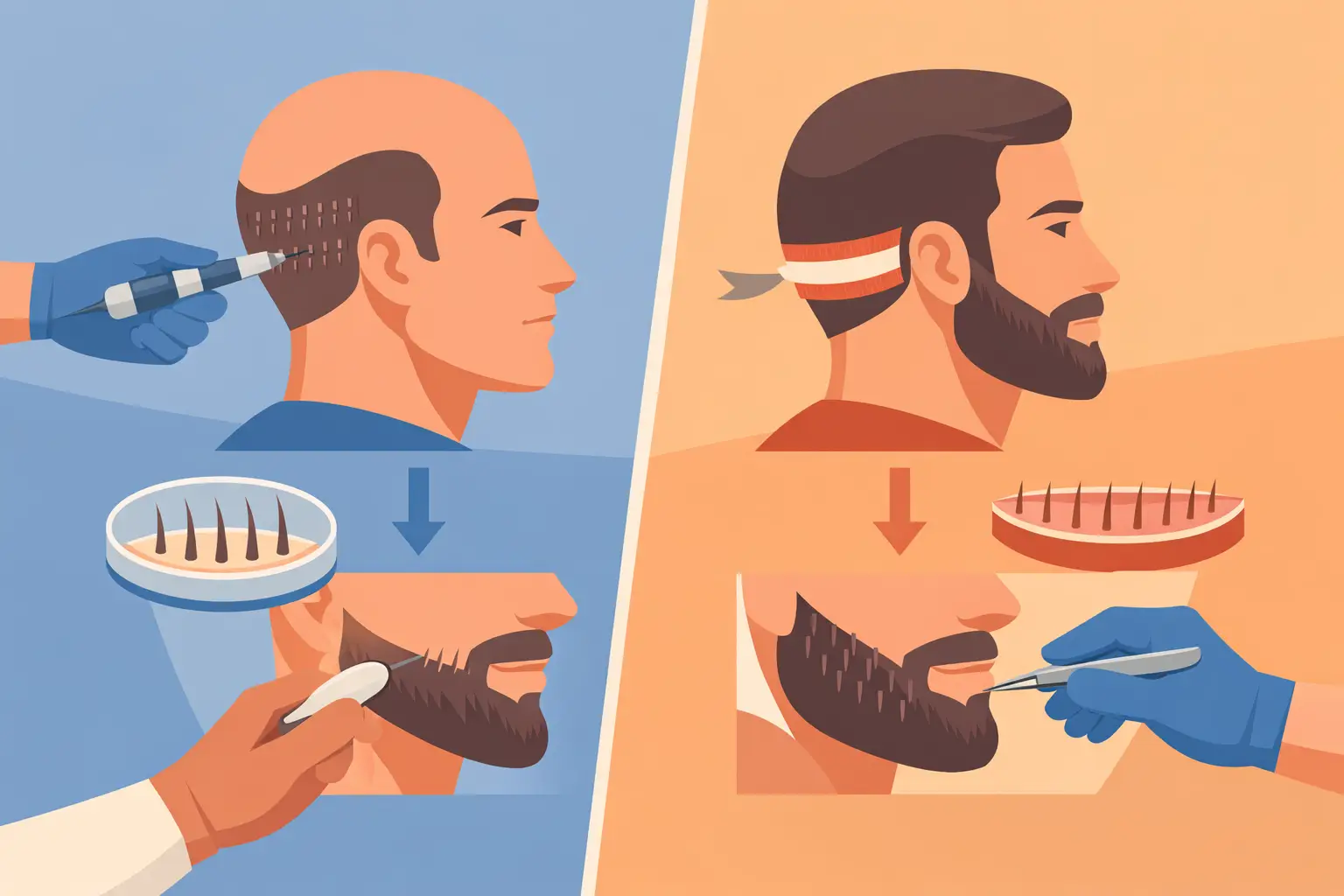
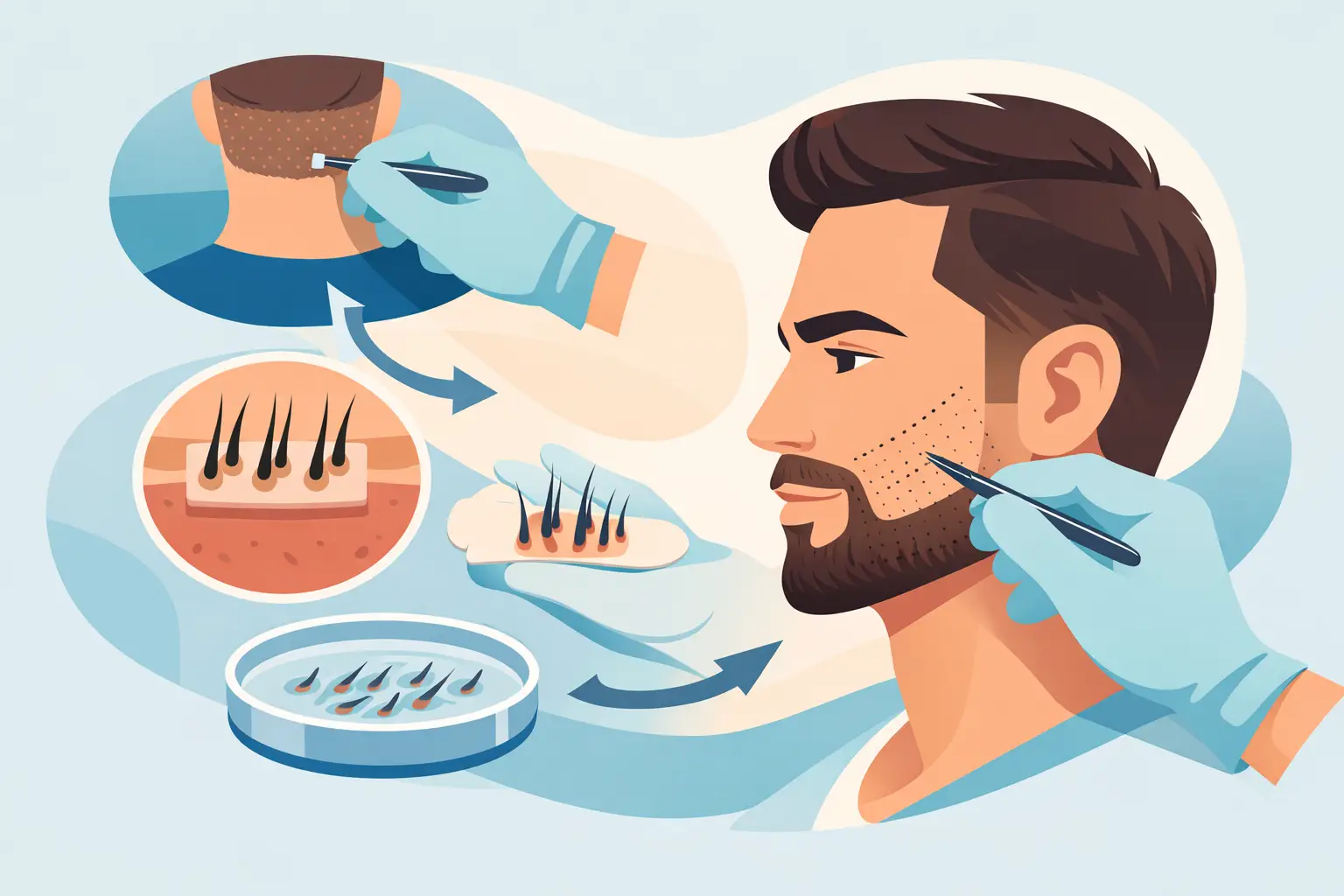
Most modern facial hair restoration uses FUE, or Follicular Unit Extraction. In FUE, individual hair follicles are removed from a donor area, usually the back or sides of the scalp, and then implanted into the beard, mustache, sideburn, or eyebrow area.
Because facial hair angles are very specific, placement is everything. The surgeon must account for direction, curl, spacing, and density so the final growth blends naturally with existing hair. This is especially important in visible zones like the mustache border, cheek line, and brows, where even small angle errors can make hair harder to groom.
The process is typically performed under local anesthesia. Patients are awake, but the treatment area is numbed for comfort. Depending on the size of the case, the procedure may take several hours.
After implantation, the transplanted follicles enter a healing and growth cycle. The hairs often shed first, which can be alarming if you are not expecting it. The follicles remain in place beneath the skin and gradually begin producing new growth over the following months.
Why FUE is often preferred for facial hair
FUE is popular for facial hair restoration because it avoids a linear donor scar and allows careful harvesting of individual follicular units. That matters when the goal is refined, visible detail rather than broad scalp coverage.
It also tends to fit the priorities of patients who want a minimally invasive approach with a more discreet recovery. For professionals in Austin, San Antonio, and throughout Texas, that can make a practical difference when planning time away from meetings, travel, or public-facing work.
Who is a good candidate
A good candidate usually has healthy donor hair, realistic expectations, and a clear cosmetic goal. Many patients are men with naturally thin or uneven beard growth. Others want to improve areas affected by acne scars, trauma, prior surgery, or overgrooming. Eyebrow patients may include both men and women.
Age can matter, but not in a rigid way. Younger patients may still be developing their natural beard pattern, while older patients often have a more stable sense of the look they want. If facial hair loss is related to an underlying skin condition or active medical issue, that should be evaluated before moving forward.
The best candidates are also prepared for the fact that scalp hair and facial hair are not identical. Transplanted scalp follicles can create excellent cosmetic improvement, but they may need regular trimming because scalp hair tends to keep growing longer than native beard or brow hair.
Designing a natural-looking beard or brow
Natural results come from restraint and planning, not simply placing as many grafts as possible. A beard that is too dense in the wrong place can look harsher than intended. An eyebrow that sits too low, too high, or too square can throw off the whole expression of the face.
During planning, the surgeon should look at your facial proportions, existing hair pattern, skin tone, and how you actually intend to wear your facial hair. Some patients want a dramatic transformation. Others want enough density to stop using filler pencils, beard fibers, or careful shaving tricks.
This is where physician oversight matters. Hairline artistry gets a lot of attention in scalp restoration, but facial artistry is just as important. Tiny decisions about angle and spacing can determine whether the result feels effortless or obviously altered.
Recovery and timeline
Recovery is usually manageable, but it helps to know what normal looks like. Small crusts typically form around implanted grafts for several days. Mild redness and swelling can occur, especially in the face. Most patients can return to lighter daily activities fairly quickly, though they will need to follow post-procedure instructions closely.
The newly placed hairs often shed within the first few weeks. This is expected. Meaningful regrowth usually begins after a few months, with continued improvement over time. Final maturation can take close to a year, depending on the area treated and your individual growth cycle.
The recovery timeline matters for event planning. If you have a wedding, major presentation, or photo-heavy trip coming up, you should discuss timing early. Facial procedures are visible while healing, even if the downtime is relatively short.
Common recovery questions
Patients often ask when they can shave, when redness will fade, and whether the transplanted hair will feel different. The answers depend on the area treated and your healing progress. In general, careful washing starts early, shaving is delayed until the grafts are secure, and texture may seem different at first before the hair softens and matures.
Good aftercare is not a small detail. It protects graft survival and helps the result settle in more naturally.
Cost factors and what affects pricing
There is no universal price for facial hair restoration because each case is customized. Cost usually depends on the number of grafts needed, the complexity of the design, the size of the treatment area, and the expertise of the medical team.
A small scar camouflage case is very different from full beard construction. Eyebrows require meticulous placement and may involve fewer grafts overall, but they still demand technical precision.
It is smart to view cost in context. Choosing a provider based on the lowest quote alone can be risky in a procedure where every angle, curl, and directional choice is on display every day. Revision work is harder than getting it right the first time.
Questions to ask at a consultation
A strong consultation should feel educational, not rushed. You should leave with a realistic understanding of your donor supply, the likely graft range, the expected healing timeline, and what result is achievable on your face.
Ask who designs the transplant, who harvests and places the grafts, and how naturalness is protected in high-visibility areas. It is also fair to ask about before-and-after photos of actual facial hair cases, not just scalp transplants.
If you are comparing clinics, pay attention to whether the conversation is personalized. A quality plan should reflect your facial structure and goals, not a generic package.
Why expectations matter as much as technique
The best facial hair transplant guide should tell you this clearly: success is not about chasing someone else’s beard. It is about creating balance, density, and definition that fit your features.
Some patients have enough donor hair for major change. Others may be better served by a more conservative design that looks believable and ages well. In some cases, combining a transplant with medical guidance on overall hair health may make the most sense, especially for patients already dealing with scalp thinning.
At Austin Hair Clinic, that personalized planning is part of the value. Patients are not just choosing a procedure. They are choosing medical judgment, aesthetic precision, and a treatment plan built around long-term confidence.
If facial hair has been a frustration for years, you do not have to keep guessing with temporary fixes. The right consultation can tell you, with clarity, whether a transplant is the right move and what natural improvement should honestly look like for you.