Eyebrow Hair Transplant Results: What to Expect
Thin, patchy, or overplucked brows can change your whole expression. When patients ask about eyebrow hair transplant results, they usually want to know one thing – will the new brows actually look natural on my face, not just fuller on paper?
That is the right question to ask. Eyebrow restoration is a highly detail-driven procedure. A successful outcome is not just about adding more hair. It is about matching shape, direction, density, and softness so your eyebrows look balanced and believable in everyday life.
What eyebrow hair transplant results usually look like
Good eyebrow transplant results are subtle in the best way. Most people should not notice that you had a procedure. They should notice that your brows look fuller, better framed, and more flattering to your facial features.
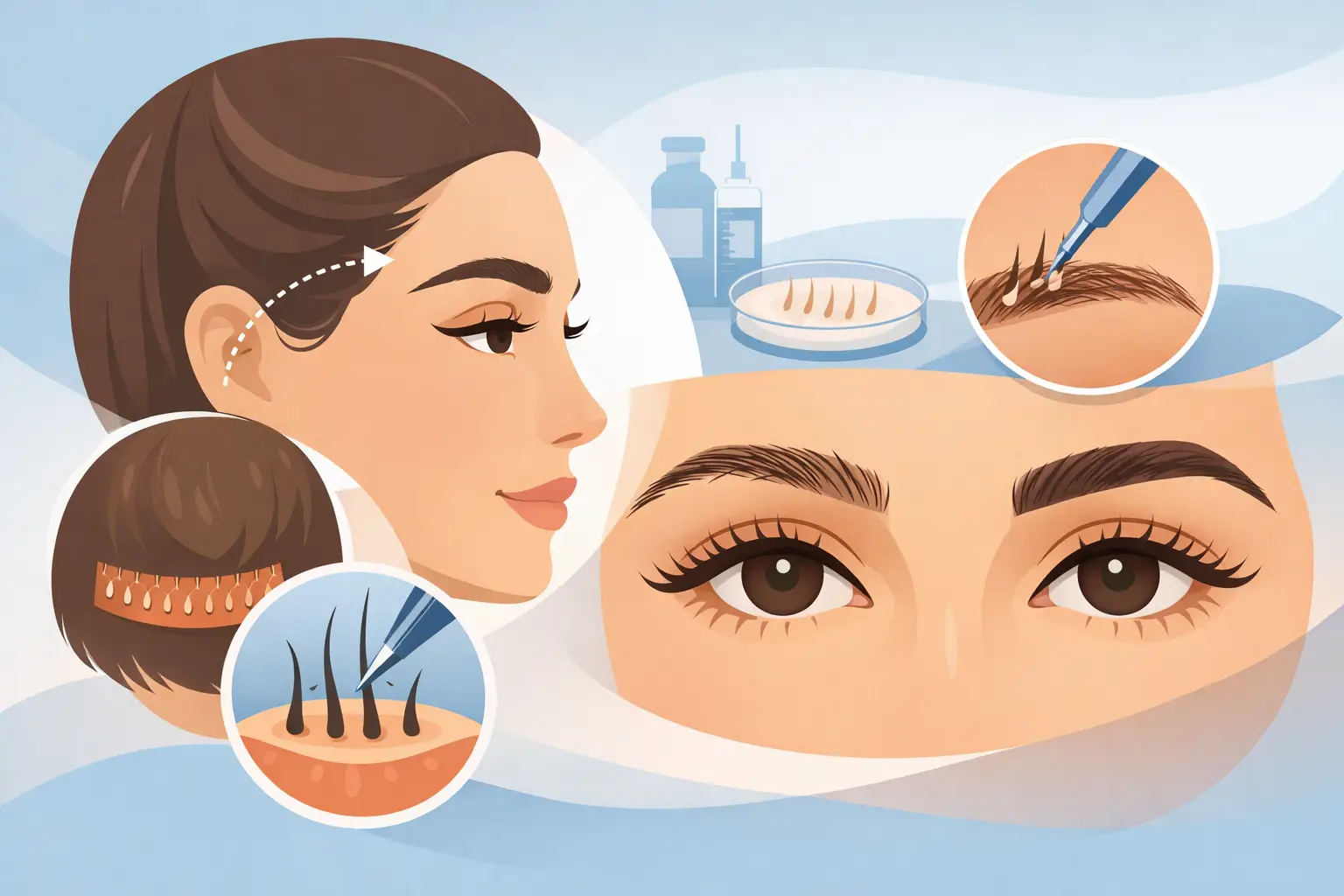
In most cases, transplanted hairs are taken from the scalp, often from an area with finer hair. Those grafts are then placed one by one into the brow area at very precise angles. Because eyebrow hairs naturally grow in a flat, feathered pattern, technique matters tremendously. If the angle, curl, or direction is off, the result can look unnatural even if the grafts survive.
When done well, the restored brow can improve density in sparse zones, rebuild tails that have thinned over time, and create a more defined shape. Patients who have lost eyebrow hair from over-tweezing, genetics, aging, scarring, or certain medical conditions often see a real cosmetic and emotional benefit.
Eyebrow hair transplant results timeline
One of the biggest surprises for patients is that eyebrow restoration is not an instant-result procedure. You leave with implanted hairs in place, but the visible result changes in stages.
The first 2 weeks
Right after the procedure, the brow area may look darker or denser than the final result. Small scabs can form around the grafts, and mild redness or swelling is common. This is temporary. As healing progresses, the transplanted area starts to settle.
Weeks 2 to 8
At this stage, many of the transplanted hairs shed. That can be unsettling if you are not expecting it, but it is a normal part of the process. The follicles remain in place under the skin and enter a resting phase before new growth begins.
Months 3 to 6
This is when patients usually start seeing early regrowth. The hairs may come in unevenly at first, and some areas may appear ahead of others. That does not necessarily mean anything is wrong. Hair growth cycles are gradual and not perfectly synchronized.
Months 6 to 12
The brow shape becomes more visible, and density continues to improve. For many patients, this is when eyebrow hair transplant results start to feel more rewarding and more polished.
Around 12 months
Final results are typically assessed at about one year. By then, most grafts that are going to grow have emerged, and the brow can be shaped more confidently based on the established pattern.
What affects your final result
There is no single eyebrow transplant outcome that fits everyone. Results depend on your starting point, your goals, and the quality of the procedure itself.
The first major factor is surgical design. Eyebrows are not identical from person to person, and they should not be treated like a standard template. Face shape, brow bone structure, existing hair, and preferred style all matter. A brow that looks natural on one patient can look too arched, too flat, or too dense on another.
The second factor is graft placement. Eyebrow hairs sit very close to the skin and change direction across different parts of the brow. The head, body, and tail all require careful angulation. Even tiny mistakes can affect how the brow lays and how easily it can be groomed.
Hair characteristics also play a role. Scalp hair is usually longer and may grow faster than natural eyebrow hair. That means some trimming is often part of long-term maintenance. Patients with very coarse or curly donor hair may still get strong improvement, but the final texture may require more styling attention than someone with finer donor hair.
Healing and aftercare matter too. Following post-procedure instructions helps protect the grafts during the early phase when they are most vulnerable. Rubbing, picking, or returning too quickly to activities that increase irritation can interfere with growth.
Natural-looking results depend on precision
This is one of the most technically demanding forms of hair restoration. A full scalp transplant can tolerate more variation in angle and still look good. Eyebrows cannot.
Each graft is typically made up of a single hair. That is because natural eyebrows are soft and refined, not built from thick multi-hair groupings. The artistry comes from placing those individual hairs in a pattern that creates definition without harshness.
Patients often bring in photos of brows they like, which can be helpful as a starting point. Still, the best result is not a copy of someone else’s eyebrow. It is a version that fits your own anatomy and looks natural when you smile, talk, and move your face.
Common concerns about eyebrow hair transplant results
A common question is whether the brows will look too obvious. They should not, if the design and placement are done correctly. Another concern is whether all transplanted hairs survive. Not every graft grows with the same strength, which is true in any hair transplant procedure. Some patients may want a second session for added density, especially if they started with significant hair loss or scarring.
Patients also ask whether the result is permanent. In general, transplanted follicles are meant to be long-lasting. However, the surrounding native eyebrow hair can continue to thin over time depending on age, health, hormones, and underlying conditions. That is why a personalized treatment plan sometimes matters beyond the procedure itself.
There is also the maintenance question. Since donor hairs usually come from the scalp, they continue to behave more like scalp hair. You may need to trim them regularly and brush them into place. Most patients consider that a small trade-off for fuller brows, but it is worth knowing upfront.
Who tends to be happiest with their outcome
Patients usually do best when they have realistic expectations and a clear reason for treatment. The most satisfied candidates often want improvement, not perfection. They are looking to restore shape, fill gaps, or rebuild brows that have faded over time.
Good candidates may include people with thinning from overplucking, scars, genetics, or age-related loss. Some patients also pursue brow restoration after trauma or cosmetic procedures that left the brows uneven.
What matters is understanding both the upside and the limitations. An eyebrow transplant can create meaningful improvement and a very natural appearance, but it does not bypass healing time, growth cycles, or maintenance.
Why consultation matters before the procedure
Before moving forward, patients should have a thorough evaluation of brow loss, donor hair quality, medical history, and aesthetic goals. That conversation helps determine whether a transplant is the right option or whether another treatment should be part of the plan.
At Austin Hair Clinic, this kind of planning is a key part of achieving results that look refined rather than overdone. Brow restoration is not about chasing a trend. It is about restoring facial balance in a way that fits you now and will still make sense years from now.
If you are researching eyebrow hair transplant results, focus on more than fullness alone. Ask how the brows are designed, how the hairs are angled, what the growth timeline looks like, and what maintenance will be required. The right procedure should leave you looking more like yourself – just with the definition you have been missing.