Donor Area Management After Transplant Explained
A successful hair transplant is not only about rebuilding the hairline or adding density where thinning is most visible. Donor area management after transplant plays an equally meaningful role in whether your result looks natural now, heals comfortably, and leaves options open for the future. The back and sides of the scalp are a limited resource, so every graft must be selected and placed with long-term planning in mind.
For patients considering FUE, this can be reassuring: modern extraction methods are designed to avoid the linear scar associated with traditional strip surgery. But FUE is not a license to remove unlimited grafts. The quality of your donor area, the pattern of your hair loss, and the skill of the surgical team all influence what can be safely harvested.
Why the Donor Area Deserves Careful Planning
The donor area is typically located along the back and sides of the scalp, where follicles tend to be more resistant to genetic hair loss. Those follicles are moved to thinning areas because they generally retain their growth characteristics after transplantation.
That does not mean every follicle in the donor zone should be removed. Each patient has a different donor density, hair caliber, scalp contrast, and potential for future loss. A person with thick, coarse hair and high density may have more usable grafts than someone with finer hair or a naturally lower density. A thoughtful plan accounts for these differences rather than relying on a standard graft number.
This is particularly relevant for men and women whose hair loss may continue over time. If too many grafts are harvested early, the donor region can appear patchy or thin when hair is cut short. It can also limit what is available if you later need added coverage in the crown, mid-scalp, hairline, beard, or eyebrows.
Donor Area Management After Transplant Starts Before Surgery
Good donor preservation begins with a detailed consultation and scalp evaluation. Your physician should examine the density and stability of the donor zone, assess the caliber and curl of the hair, review family history, and consider how your hair loss may progress.
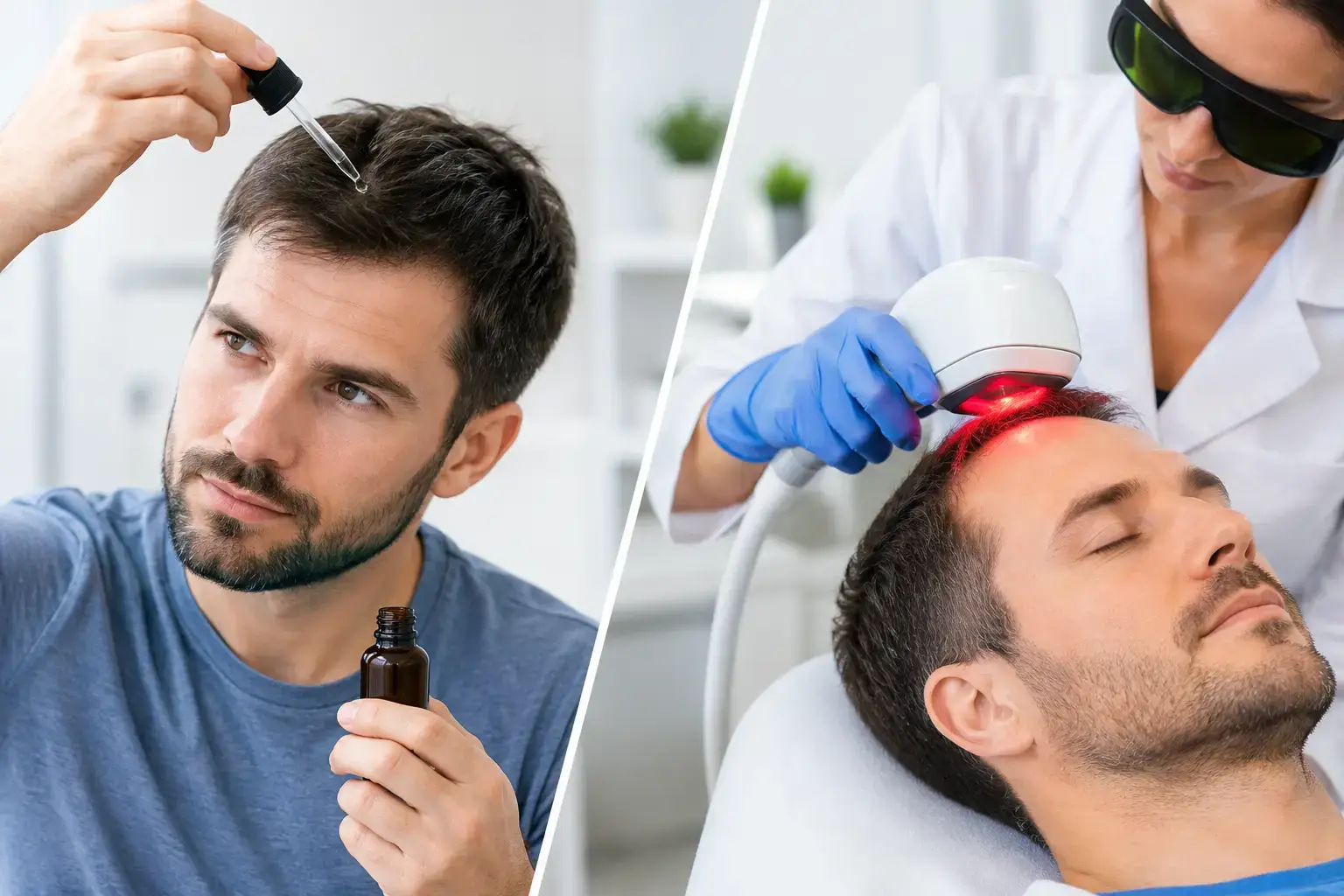
For some patients, a transplant is only one part of the plan. Hair loss medications, low-level laser therapy, regenerative hair loss injections, and targeted supplements may help support existing hair. Protecting native hair can reduce the need to use additional donor grafts later. Genetic testing and other diagnostic tools may also help guide a more personalized approach when the cause or pattern of hair thinning is unclear.
The best treatment plan is not always the one that uses the highest possible graft count. It is the one that delivers visible improvement while respecting the limits of the donor supply.
Strategic Extraction Makes a Visible Difference
During FUE, individual follicular units are removed one at a time from across the donor region. The extraction pattern matters. When grafts are spaced thoughtfully throughout a broad, stable donor zone, the remaining hair can provide natural coverage as the tiny extraction sites heal.
Overharvesting occurs when too many grafts are taken from a concentrated area or when grafts are removed too aggressively for the patient’s density. This can create a moth-eaten appearance, especially under bright light or with a close haircut. Correcting an overharvested donor area may be difficult, which is why conservative, precise planning is so valuable from the start.
Advanced FUE technology, including ARTAS robotic FUE when appropriate, can assist with identifying and harvesting follicular units. Technology can improve consistency and efficiency, but it does not replace medical judgment. A board-certified physician’s oversight remains essential for determining safe extraction limits, creating the design, and adapting the procedure to your individual scalp and goals.
What Healing in the Donor Area Usually Looks Like
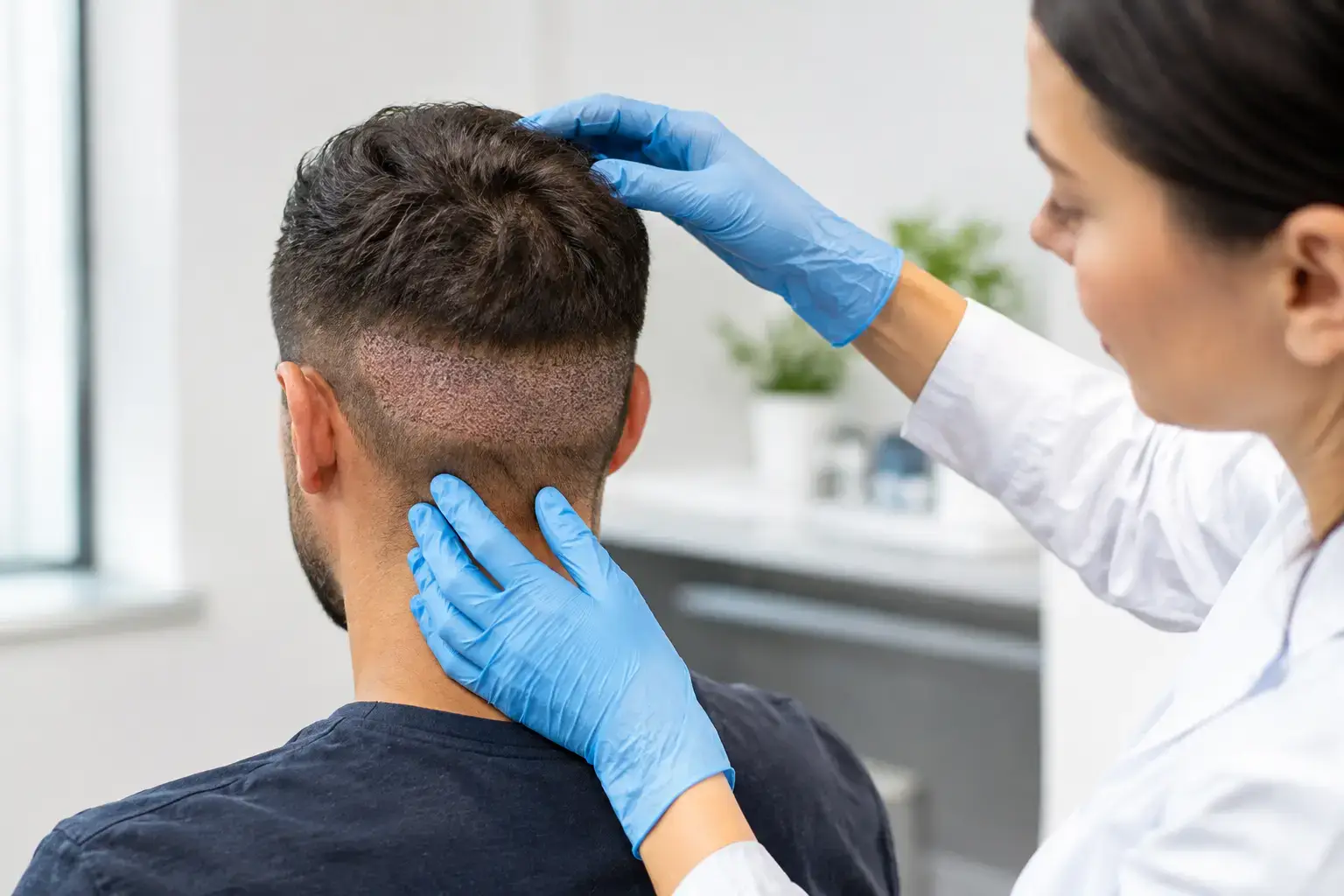
After FUE, the donor area will have small circular extraction sites. Mild tenderness, tightness, redness, swelling, and pinpoint scabbing are common in the first several days. Most patients find these symptoms manageable with their prescribed post-procedure instructions and can return to many normal activities relatively quickly.
The first two weeks are when careful aftercare matters most. You will be instructed on how to wash your scalp, when to begin gentle cleansing, and which activities to avoid. Scratching, picking at scabs, or exposing the scalp to direct trauma can interfere with normal healing. Strenuous exercise, heavy sweating, swimming, and prolonged sun exposure may need to be postponed for a period recommended by your care team.
As the sites heal, the small scabs shed naturally. With properly performed FUE, the donor area usually becomes difficult to detect once surrounding hair grows out. Healing timelines vary, however. Patients with very short hairstyles, lighter skin-to-hair contrast, darker skin prone to pigment changes, or a history of slow healing may need more individualized guidance.
Protect the Area Without Overreacting to Normal Changes
Temporary shedding around the donor area can occur after surgery. This is often part of the normal recovery process and does not automatically mean permanent damage. Hair growth is cyclical, and nearby follicles may briefly react to the procedure before returning to their usual pattern.
Contact your clinic if you develop worsening pain, spreading redness, drainage, fever, or swelling that does not improve as expected. These symptoms are uncommon, but timely medical evaluation is always the right choice when something feels off.
Patients should also remember that transplanted hair growth takes time. The donor area may look settled before the recipient area shows meaningful new growth. Early growth commonly begins several months after surgery, while the cosmetic result continues to mature over the following months.
Managing the Donor Area for Future Hair Goals
A transplant should be designed with the future in mind, not just the mirror you see today. If you are young, have a strong family history of advanced hair loss, or are already experiencing diffuse thinning, your physician may recommend a more conservative hairline or a staged treatment plan.
This does not mean settling for an unnatural or underwhelming outcome. It means prioritizing placement where it creates the greatest aesthetic value. A well-designed hairline can frame the face and restore confidence with fewer grafts than an attempt to fully recreate the density of adolescence. Similarly, strategic density through the frontal third may offer a stronger visual improvement than spreading limited grafts too thinly across a large crown.
For some patients, combining FUE with medical or non-surgical therapies is the most responsible way to preserve both existing hair and donor reserves. Others may be candidates for a future second procedure after the scalp has healed and hair loss patterns are clearer. There is no universal plan, which is precisely why individualized recommendations matter.
Questions Patients Often Ask
Will my donor hair grow back after FUE?
The extracted follicular units are relocated to the recipient area, so those specific hairs do not grow back in the donor site. However, because FUE removes only a carefully calculated percentage of follicles across a wider area, the remaining hair typically provides natural-looking coverage.
Can I wear my hair short after an FUE transplant?
Many FUE patients can wear their hair relatively short once fully healed. The exact look depends on your baseline donor density, the number of grafts harvested, your healing response, and how short you prefer to cut your hair. Discuss your hairstyle goals before surgery so they can be part of the extraction plan.
Is a larger graft count always better?
No. A larger graft count can be appropriate for some patients, but only when the donor area can safely support it. Using more grafts than your donor supply can comfortably provide may compromise the appearance of the donor region and reduce future treatment options.
At Austin Hair Clinic, donor preservation is treated as part of the artistry and medical planning behind natural-looking restoration. The goal is not simply to move hair. It is to use your available grafts wisely, protect the areas that still look full, and create a result that supports your confidence for years to come.
If you are weighing FUE or planning a future procedure, ask to see how your donor area will be assessed, how graft limits are determined, and how the plan accounts for future hair loss. Clear answers today can help protect both your result and your options tomorrow.