Best Treatments for Crown Thinning
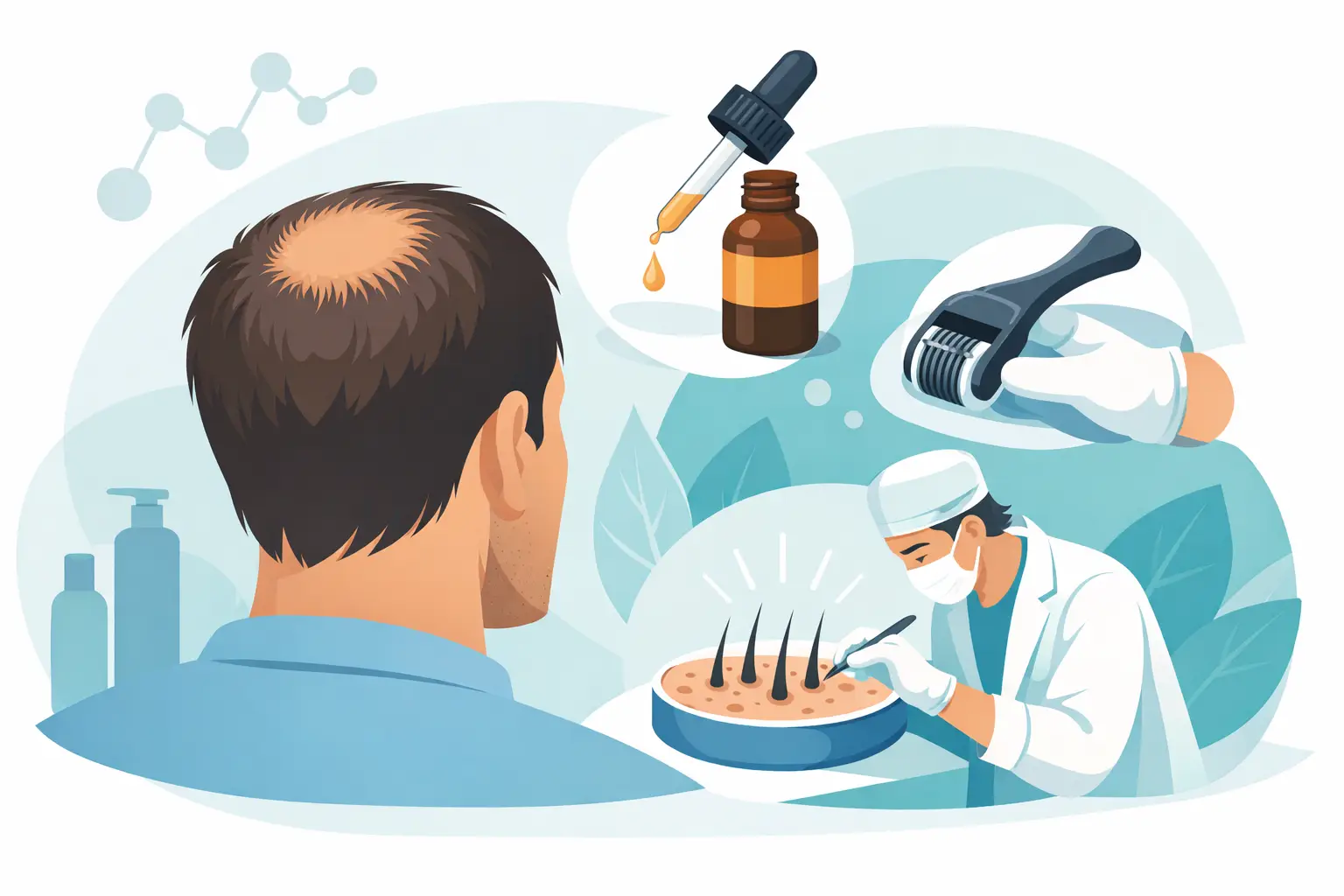
You usually notice crown thinning in bad lighting first. A photo from above, a security camera angle, or a mirror at the gym suddenly shows more scalp than you expected. For many men and women, that moment starts the search for the best treatments for crown thinning – and the right answer depends on how much loss has happened, how fast it is progressing, and whether the follicles are still active.
The crown is one of the most common areas for gradual hair loss, but it is also one of the trickiest to treat without a real plan. Hair in this area grows in a natural spiral pattern, so even mild thinning can look more obvious. At the same time, the crown often responds well to medical treatment early on, while more advanced loss may need a restorative approach to create meaningful density again.
What makes crown thinning different
Crown thinning is not the same as a receding hairline. The hairline frames the face, so small changes are noticeable quickly. The crown is easier to ignore until the thinning has spread. By the time many patients seek treatment, they are dealing with diffuse loss across a wider circular area rather than one small patch.
This matters because treatment choice should match the stage of loss. If the follicles are miniaturizing but still alive, non-surgical treatment may help preserve and thicken existing hair. If the area is already slick or very sparse, medications alone are less likely to rebuild enough coverage. That is where many people waste time and money trying products that cannot realistically deliver the result they want.
Best treatments for crown thinning at each stage
The best treatments for crown thinning are rarely one-size-fits-all. In most cases, the strongest outcomes come from combining therapies rather than relying on a single option.
Hair loss medications
For early to moderate crown thinning, medication is often the foundation. In men, finasteride is commonly used to reduce DHT, the hormone tied to pattern hair loss. Minoxidil can also help by extending the growth phase and supporting thicker strands.
These treatments can be very effective at slowing progression, and the crown is often one of the areas that responds best. The trade-off is patience. Results usually take several months, and the treatment only works while you keep using it. If you stop, the benefits usually fade.
For women, treatment planning requires more nuance. Some women may benefit from topical minoxidil, while others need a broader evaluation of hormonal shifts, stress, nutritional issues, or genetics. That is why proper diagnosis matters before choosing a plan.
Regenerative hair loss injections
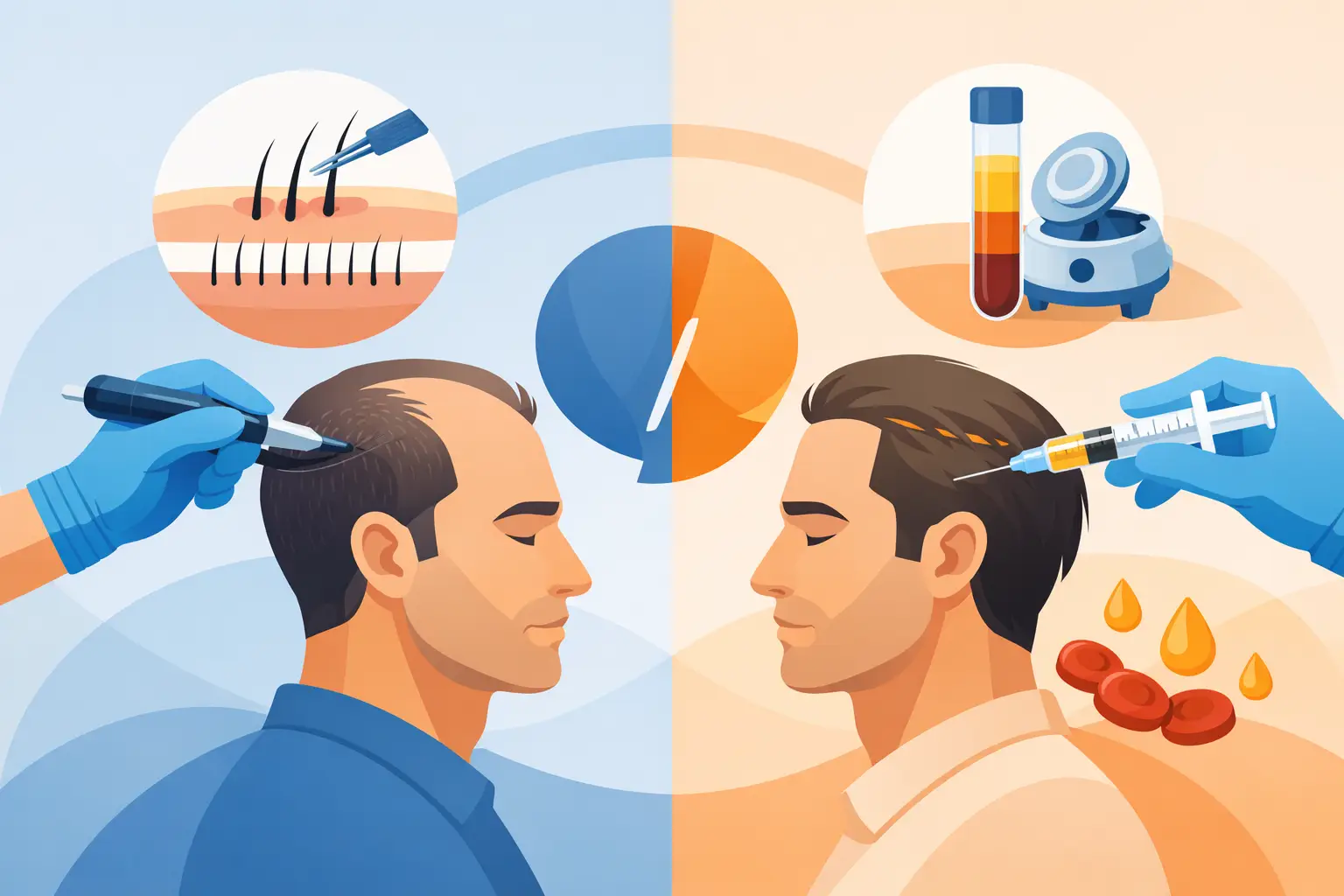
Regenerative injections can be a strong next step when the goal is to improve the quality of thinning hair rather than simply maintain what is there. These treatments are designed to support weakened follicles and encourage healthier growth.
They tend to work best when follicles are still present and producing finer hairs. They are less useful in areas where follicles are no longer active. Patients often like this option because it is non-surgical and fits well into a broader treatment plan, but it is not an overnight fix. Improvement is gradual, and multiple sessions may be recommended depending on the level of thinning.
Low-level laser therapy
Low-level laser therapy is another non-surgical option that can support the scalp environment and help improve hair quality in some patients. It is usually not the hero treatment for significant crown loss, but it can be a useful part of maintenance.
This is a good example of where expectations matter. Laser therapy may help support existing follicles, but it generally will not recreate density in a noticeably balding crown by itself. Patients who do best with it usually combine it with medication or regenerative therapies.
FUE hair transplant
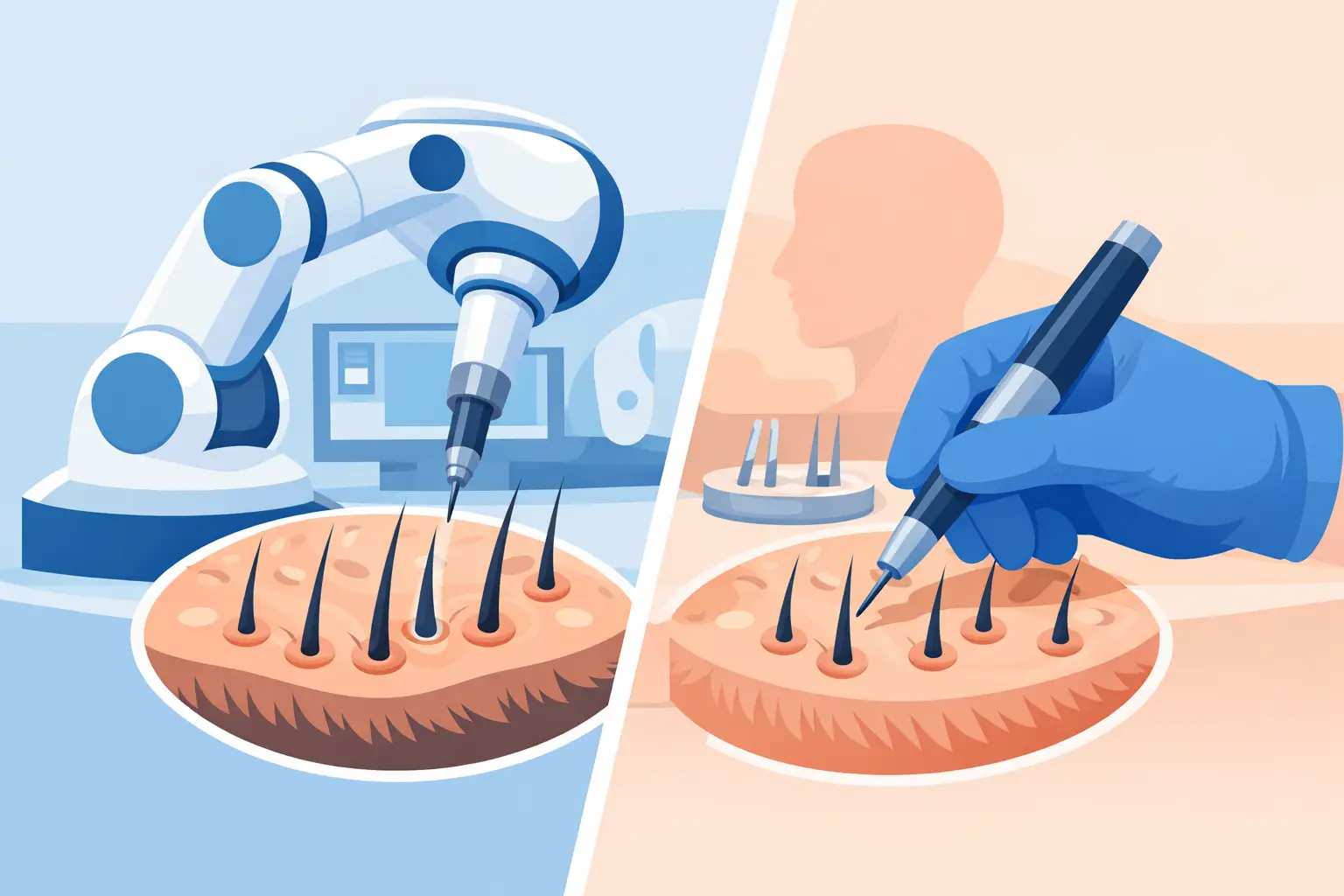
When crown thinning has advanced to the point that scalp show-through is obvious and the existing hairs are too sparse to create coverage, FUE hair transplantation is often the most effective solution. This approach moves healthy follicles from donor areas to the thinning crown, placing them with attention to angle, direction, and the natural swirl pattern of the area.
The crown requires technical precision. If grafts are placed without respecting the natural hair pattern, the result can look unnatural even if the grafts grow well. Done properly, FUE can restore density in a way that looks soft, natural, and age-appropriate.
The trade-off is that not every crown should be transplanted right away. Because crown loss can continue to expand over time, the surgical plan has to account for future hair loss and donor supply. A conservative, medically guided strategy is usually smarter than chasing short-term density without protecting the surrounding hair.
How to choose the right treatment path
The right plan starts with one question: are you trying to save thinning hair, regrow weakened hair, or replace hair that is already gone?
If you are in the early stage and noticing widening at the crown but still have decent coverage, medical therapy may be the best first move. If the area looks thin in most lighting and the hair caliber has clearly changed, combining medication with regenerative treatment may give you a better chance of improving density.
If the crown is significantly bare or has been thinning for years, a transplant consultation makes sense. That does not mean surgery is the only recommendation. In many cases, a physician may advise stabilizing the loss first, then using FUE strategically for the most natural and lasting result.
Why combination treatment often works best
Hair loss is progressive, and crown thinning usually does not stay frozen in place. That is why single-treatment thinking can fall short. A transplant can place new follicles where density is missing, but it does not protect native hair around those grafts. Medication can help preserve existing hair, but it may not rebuild a large thin area once loss is advanced.
Combining treatments addresses both problems. One part of the plan protects and strengthens the hair you still have. Another restores density where it can no longer recover on its own. This is often the difference between a result that looks temporarily better and one that continues to look good over time.
For many patients, the strongest plan may include prescription medication, supportive in-office treatments, and eventually FUE if needed. That kind of personalized sequencing is where specialist evaluation becomes especially valuable.
What to avoid when treating crown thinning
The biggest mistake is waiting until the crown is nearly bare and then expecting non-surgical treatment to fully reverse it. Early action gives you more options and usually better outcomes.
The second mistake is choosing treatment based on marketing instead of diagnosis. Crown thinning can stem from classic pattern hair loss, but it can also be affected by shedding disorders, inflammation, hormonal shifts, or nutritional deficiencies. If the cause is misunderstood, even a promising treatment can underperform.
Another common issue is chasing too many products at once. Patients often try shampoos, supplements, serums, and devices without knowing which ones are doing anything. A focused medical plan is usually more efficient and more cost-effective.
When to consider a professional evaluation
If you can see more scalp at the crown than you could six months ago, that is enough reason to get evaluated. You do not need to wait until the thinning becomes severe. In fact, some of the best treatment opportunities happen before the loss is dramatic.
A proper assessment should look at the pattern of thinning, the stability of your donor area, your family history, and whether you are a better fit for maintenance, regrowth, transplantation, or a combination. It should also factor in how much change you want to see. Some patients want to slow progression and keep what they have. Others want a more visible cosmetic improvement. Those are different goals and they require different plans.
At Austin Hair Clinic, that personalized approach is central to building natural-looking results. The goal is not to push one procedure. It is to match the treatment to the pattern of loss, the health of your existing hair, and the outcome you actually want.
FAQs about the best treatments for crown thinning
Can crown thinning grow back without treatment?
Sometimes temporary shedding improves on its own, but pattern-related crown thinning usually continues unless it is treated. The earlier you act, the better the chance of preserving and improving existing hair.
Is a crown hair transplant permanent?
Transplanted follicles are generally permanent because they come from more resistant donor areas. But the native hair around them can still thin over time, which is why long-term maintenance matters.
Does minoxidil work better on the crown?
For many patients, yes. The crown often responds better than the front hairline, especially when treatment starts early. That said, response varies from person to person.
Are non-surgical treatments enough for advanced crown thinning?
Usually not by themselves. They may help preserve surrounding hair or improve overall quality, but advanced thinning often needs surgical restoration for meaningful density.
The crown can be frustrating because it hides until it does not. But it is also an area where the right treatment plan can make a real cosmetic difference. If you have started noticing more scalp, the smartest move is not guessing what might work. It is getting clear on what stage of loss you are in, so the next step actually moves you closer to fuller, natural-looking hair.