Shock Loss After Hair Transplant Explained
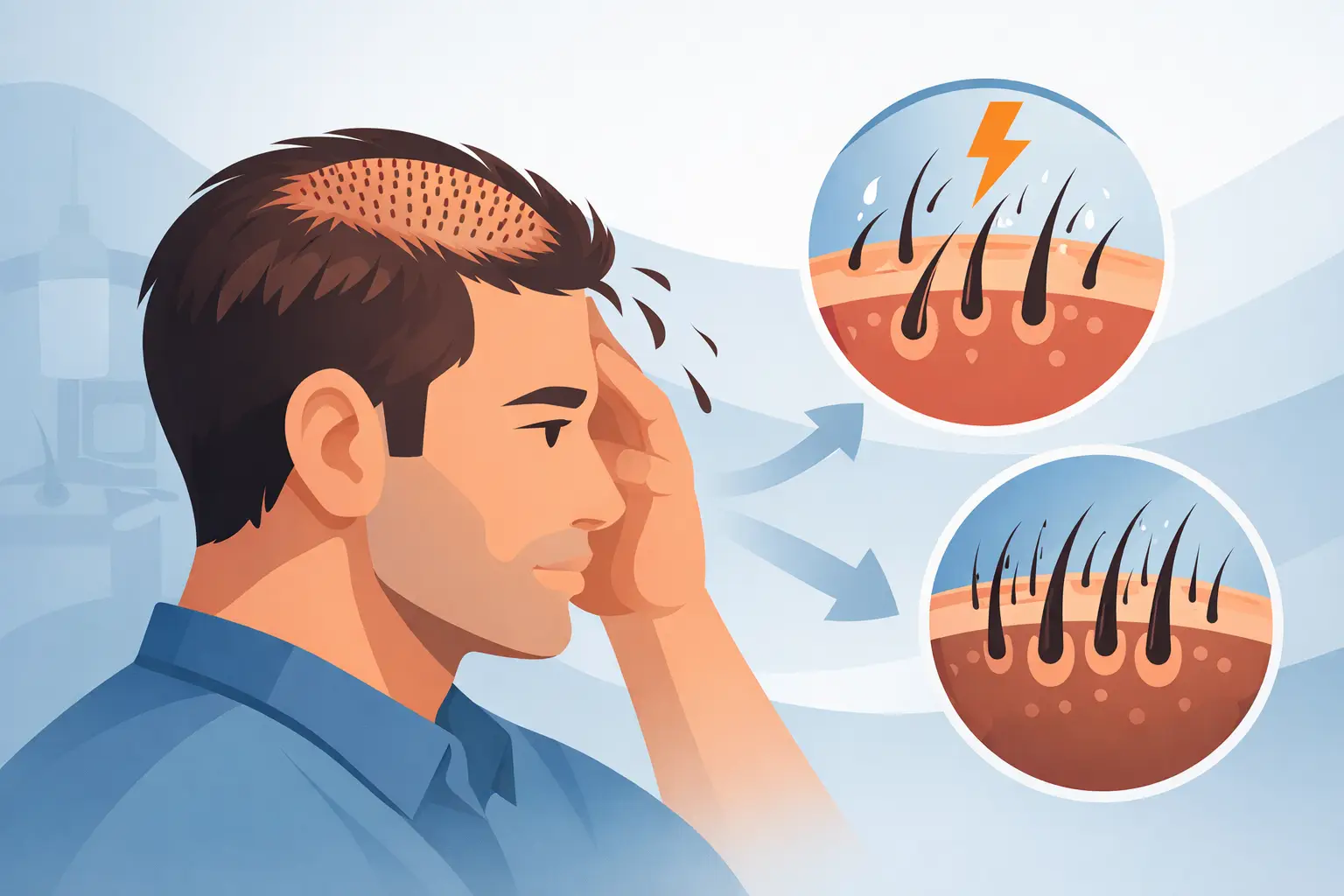
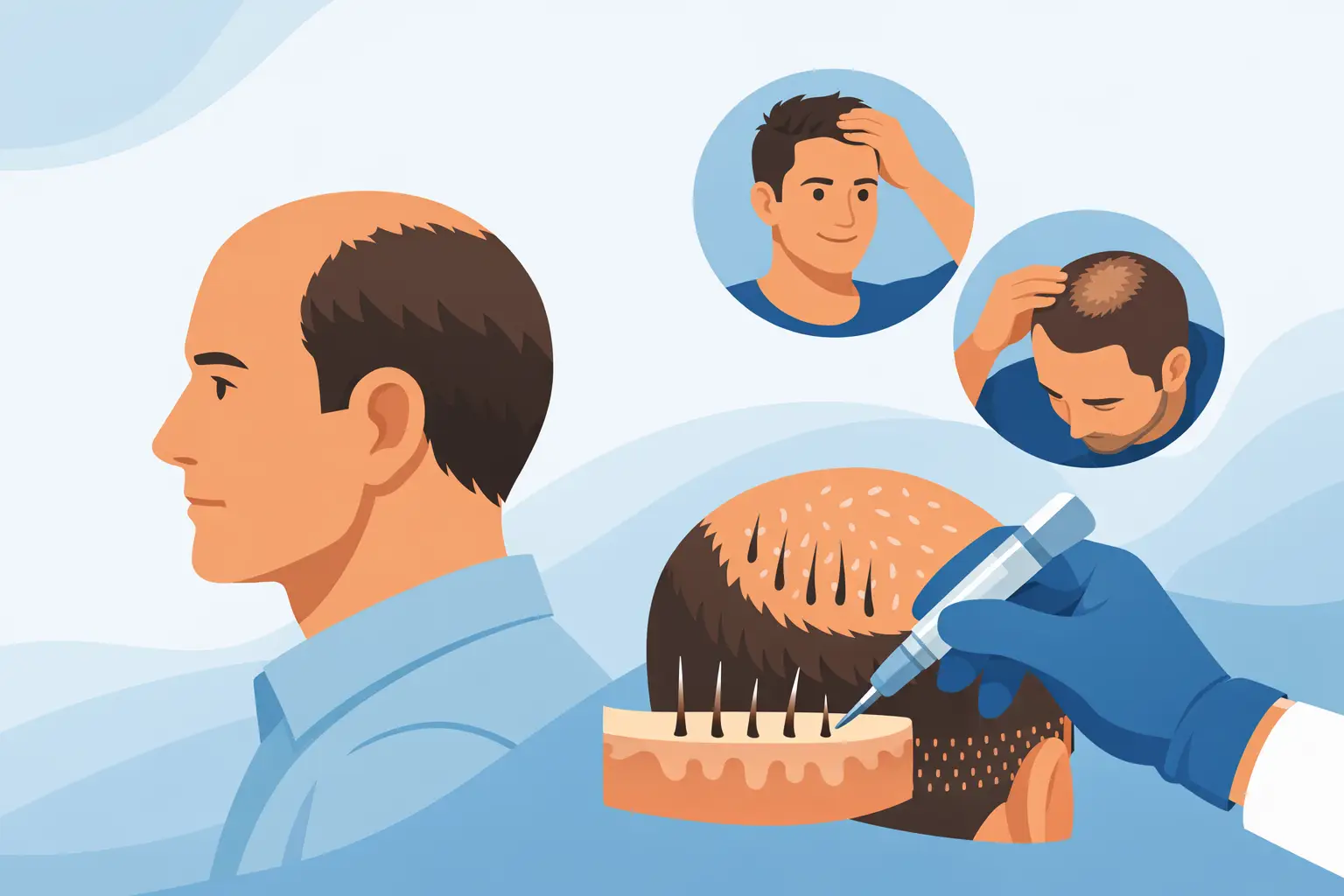
A week or two after surgery, many hair transplant patients look in the mirror and think the procedure failed. Hair seems thinner, not fuller. Newly transplanted hairs may start falling out, and nearby native hairs can shed too. That reaction has a name: shock loss after hair transplant, and while it can be unsettling, it is usually a normal part of the recovery process.
What matters most is understanding what is expected, what is temporary, and what deserves a closer look. When patients know the timeline and the reasons behind shedding, they are much less likely to panic during the early months.
What is shock loss after hair transplant?
Shock loss after hair transplant refers to temporary shedding that happens after the scalp experiences the stress of surgery. It can affect the transplanted hairs, the surrounding native hairs, or both. In most cases, this shedding does not mean the follicles are gone for good. It means the hairs have shifted into a resting phase before new growth begins.
This is one of the most misunderstood parts of hair restoration. Patients often expect the grafts to stay visible right away, but the visible hair shaft is not the same thing as the follicle under the skin. The follicle is what matters long term. The shaft can fall out while the follicle remains healthy and capable of producing new hair.
Why shock loss happens
Hair follicles are sensitive to change. A transplant, even when performed carefully and precisely, creates controlled trauma in both the donor and recipient areas. The scalp responds the way living tissue usually does after a procedure – with inflammation, healing, and sometimes a temporary interruption in the hair growth cycle.
That interruption can push hairs into telogen, or the resting phase. Once that happens, the hair shaft sheds. This can occur with newly transplanted grafts and with existing hairs that were already somewhat weakened by androgenetic alopecia or chronic thinning.
This is why shock loss can look more dramatic in patients who still have a fair amount of miniaturized native hair in the treatment zone. Those hairs are already vulnerable. The stress of surgery may be enough to make them let go sooner.
Where it shows up most often
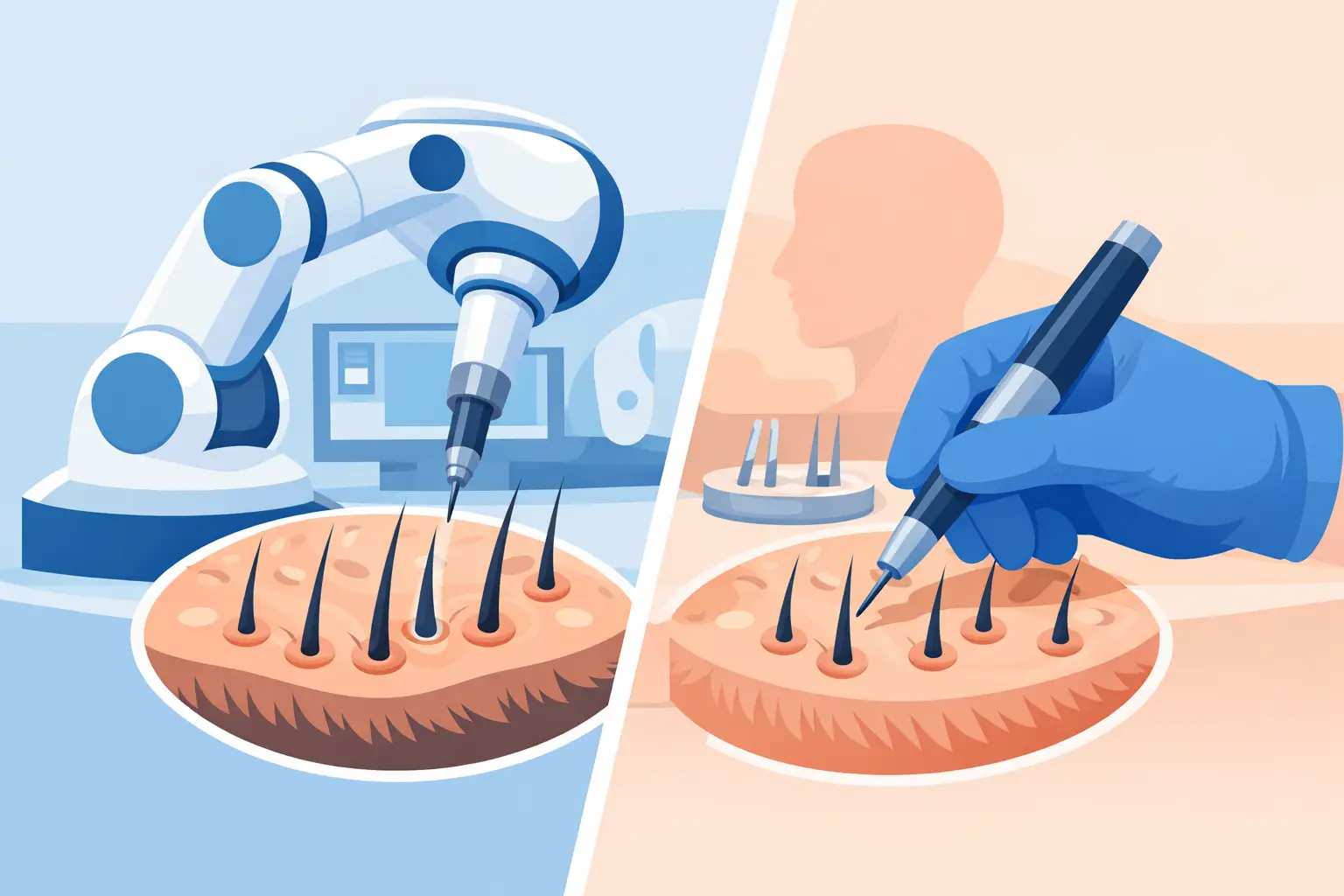
Shock loss is most common in the recipient area, especially around the hairline, crown, or zones where grafts were placed between existing hairs. It can also happen in the donor area, although that tends to be less noticeable with modern FUE techniques when the extraction pattern is conservative and well planned.
The degree of shedding varies. Some patients notice only mild thinning. Others feel like the area looks significantly more sparse than it did before surgery. That range is normal. The appearance depends on graft count, native hair density, underlying hair loss, scalp sensitivity, and how aggressively the area had to be worked during the procedure.
When shedding starts and how long it lasts
Most patients who experience shock loss notice it within the first two to eight weeks after the procedure. Transplanted hairs commonly begin shedding during this window. Native hairs affected by surgical stress may also shed around the same time.
The hard part is that recovery does not move at the pace most people want. After the shedding phase, the follicles usually remain quiet for a period before new growth starts. Early regrowth often begins around month three or four, but meaningful cosmetic change usually takes longer. Many patients see clear improvement between months six and nine, with continued maturation up to 12 months and sometimes longer in certain areas like the crown.
So yes, there is a gap between losing hair and seeing it return. That gap is often the most emotionally difficult part of the process.
Is shock loss permanent?
Usually, no. In the majority of cases, shock loss is temporary. The follicles are still present and will begin producing hair again once they cycle back into active growth.
There is one important nuance. If the shed hair was native hair that was already heavily miniaturized and genetically destined to thin, some of it may not return as strongly. That is not because the transplant ruined healthy hair. It is because weak hair has less resilience to begin with. This is one reason skilled planning matters. A thoughtful surgeon considers not just where to place grafts today, but how to protect and account for future hair loss over time.
Patients with advanced thinning, unstable loss, or a strong family history of progressive balding may benefit from a broader treatment plan that includes medical therapy or regenerative support, not just surgery alone.
Who is more likely to experience it?
Shock loss can happen to any patient, but some factors raise the odds. Women with diffuse thinning may be more prone to visible shock loss because there is often less distinction between strong permanent hair and vulnerable miniaturized hair. Men having dense packing into areas with existing thinning can also notice it more.
Patients with active hair loss, poor scalp health, significant inflammation, smoking history, or inconsistent aftercare may have a tougher recovery. The technique used matters too. Gentle handling of grafts, precise site creation, smart spacing, and careful donor management can reduce avoidable stress on the scalp.
This is where experience makes a difference. The goal is not simply to move follicles. It is to do it in a way that supports healing, preserves native hair where possible, and creates a result that still looks natural as the years pass.
How to reduce the risk of shock loss after hair transplant
You cannot eliminate the possibility entirely, but you can lower the risk. Good candidacy matters. If someone is rushing into surgery while their hair loss is still rapidly changing, or without addressing scalp and medical factors first, the chance of a rougher recovery goes up.
Pre-operative planning helps. So does choosing an experienced medical hair restoration practice that evaluates donor strength, native hair stability, graft distribution, and long-term pattern progression. During recovery, following washing instructions, avoiding unnecessary friction, protecting the scalp from sun exposure, and using any prescribed medications as directed can all support healthier healing.
For some patients, doctors may recommend complementary therapies such as hair loss medication, regenerative treatments, or laser therapy to help support native hair and improve overall density over time. It depends on the pattern of loss, age, goals, and whether the concern is transplanted growth, native hair preservation, or both.
When should you be concerned?
Temporary shedding is expected. Severe pain, spreading redness, drainage, fever, or signs of infection are not. Neither is aggressive, ongoing shedding many months later without signs of recovery. If the donor area looks patchy for an extended period, or the recipient area remains unusually inflamed, it is worth checking in with your surgeon.
Patients should also speak up if they feel their shedding is causing significant stress. That is not vanity. Hair restoration is personal, and emotional reassurance is part of good medical care. A strong clinic does not dismiss those concerns. It explains the timeline, monitors progress, and adjusts the plan if needed.
What patients can realistically expect
The early phase after a transplant often looks worse before it looks better. That is frustrating, but it is not unusual. Hair restoration is a long game. The first month is about healing. The next few months test patience. Then the growth phase begins to reward it.
Patients who do best mentally tend to have realistic expectations before surgery. They understand that the first visible hairs are not the final result, density builds gradually, and native hair may still need ongoing support. A transplant can create a major improvement, but it works best as part of a personalized strategy, not a one-day fix.
At Austin Hair Clinic, that bigger-picture approach is central to treatment planning. The right procedure matters, but so does preserving existing hair, timing the surgery well, and making sure the result still fits your appearance years from now.
A common question: does shock loss mean the grafts failed?
No. In most cases, shedding does not mean the grafts failed. The follicle can remain healthy under the scalp even after the hair shaft falls out. What patients are usually seeing is the normal reset before regrowth.
That said, not every case of post-transplant thinning is identical. If someone had very weak surrounding hair before surgery, some of that native hair may continue to decline independently of the grafts. This is why follow-up care matters. Good outcomes come from watching the hair over time, not just performing the procedure and hoping for the best.
If you are in the shedding phase right now, the most useful next step is not guessing. It is getting clear guidance based on your scalp, your hair loss pattern, and your timeline. Sometimes reassurance is all you need. Sometimes a broader plan makes the result stronger. Either way, patience is easier when it is paired with expert direction.