Does Low Level Laser Work for Hair Loss?
For someone noticing more scalp in the mirror, a widening part, or a hairline that seems to be steadily moving back, a laser cap can sound almost too simple. Does low level laser work for hair loss, or is it another product with bigger promises than results? The honest answer is that low-level laser therapy can help many appropriate candidates, but it is not a cure, a one-time fix, or a substitute for a proper medical hair loss evaluation.
Low-level laser therapy, often called LLLT or red-light therapy, is best viewed as a supportive treatment for thinning hair. With the right device, consistent use, and a diagnosis that matches the treatment, it may help preserve existing hair, improve density, and make hair appear fuller over time. Results tend to be gradual, which is why an individualized plan matters.
How Does Low Level Laser Work for Hair Loss?
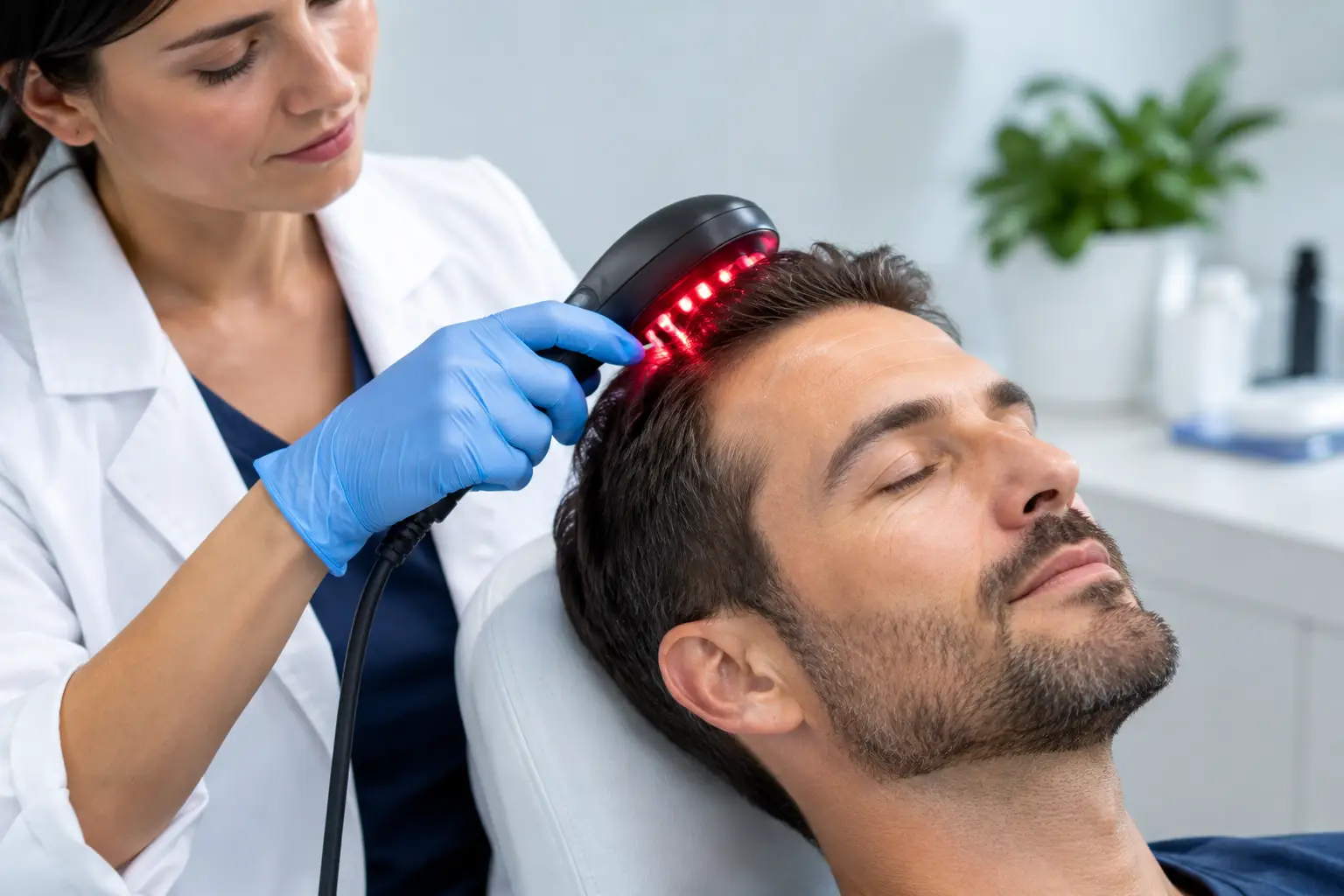
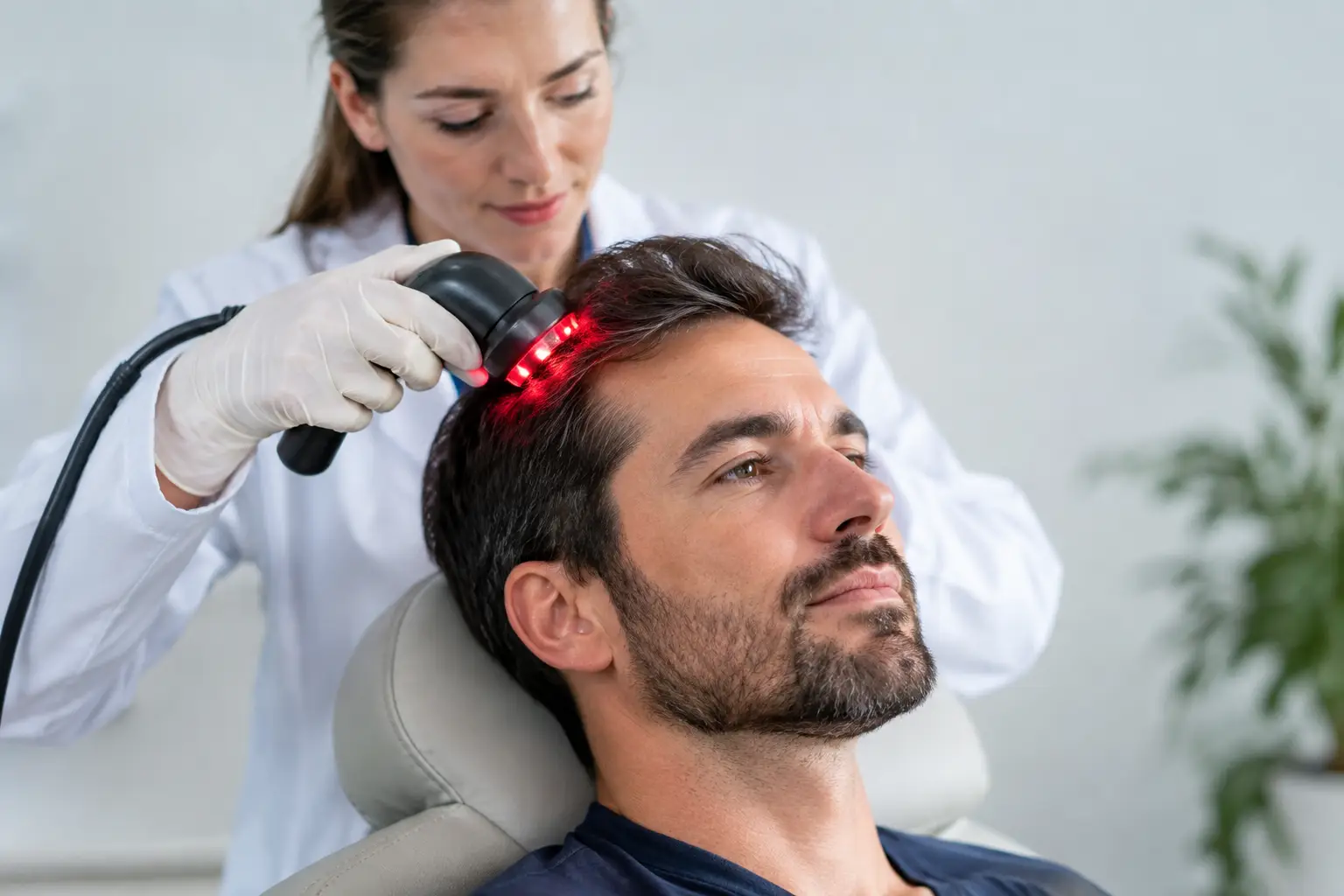
Low-level laser therapy uses specific wavelengths of red light delivered at a low intensity to the scalp. Unlike surgical lasers, this light does not cut, burn, or remove tissue. It is intended to stimulate activity within hair follicles through a process called photobiomodulation.
Hair follicles require energy and blood supply to remain productive. Research suggests that low-level light may support cellular energy production, circulation around the follicle, and the growth phase of the hair cycle. In practical terms, it may encourage weakened but still-living follicles to produce stronger, thicker hair shafts.
That distinction is important. LLLT does not create new follicles in an area where follicles have been permanently lost. If a scalp area is smooth, shiny, and bare after years of hair loss, laser therapy alone is unlikely to restore meaningful coverage there. In those situations, a hair transplant may be the more effective path to rebuilding a natural-looking hairline or adding density.
What the Research and Real-World Results Suggest
Clinical studies of FDA-cleared low-level laser devices have shown improvements in hair count and hair thickness for some men and women with pattern hair loss. The strongest evidence is generally for androgenetic alopecia, also known as male-pattern or female-pattern hair loss.
Still, the word “some” matters. Hair loss has many causes, including genetics, hormonal shifts, thyroid concerns, iron deficiency, nutritional issues, stress-related shedding, inflammatory scalp conditions, and certain medications. A laser device cannot address every one of these causes. Treating the wrong condition can cost valuable time while thinning progresses.
Patients who respond well often have early to moderate thinning and active follicles that can still be supported. They may notice less shedding first, followed by hair that feels stronger or looks denser. Those with advanced loss may still use laser therapy to support native hair around a transplant or to help protect areas that have not yet become fully depleted, but expectations should be realistic.
Who Is a Good Candidate for LLLT?
Low-level laser therapy may be a good fit for adults with gradual thinning at the crown, temples, frontal scalp, or part line. It can be particularly appealing to people who want a non-surgical, drug-free component in their treatment plan or who are looking for an additional way to support results from medication, regenerative injections, or hair restoration surgery.
It is often most valuable as part of a broader strategy. For example, a patient with early genetic hair loss may benefit from a physician-guided plan that combines laser therapy with medical treatment and scalp monitoring. A patient preparing for FUE may use non-surgical therapies to preserve surrounding native hair so the overall result continues to look balanced as they age.
LLLT may be less appropriate as a stand-alone answer for sudden, patchy, painful, or inflamed hair loss. These patterns deserve prompt medical attention because they may signal a condition that requires a different approach. Women experiencing rapid shedding after pregnancy, illness, major stress, or weight changes also need a clear diagnosis before assuming a laser cap is the answer.
What Results Can You Expect and When?
Consistency is the trade-off. Most home-use devices require regular sessions several times each week, depending on the system and its instructions. Missing treatments occasionally is unlikely to erase progress, but using the device only when convenient will make it difficult to judge whether it is helping.
Most patients should plan to use LLLT for at least three to six months before evaluating early changes. Hair grows slowly, and the follicle cycle does not respond overnight. More visible improvements may take six to 12 months. Progress is usually subtle rather than dramatic: reduced shedding, improved texture, a slightly fuller crown, or less scalp visibility in bright light.
Before-and-after photographs are helpful because daily mirror checks can be misleading. Hair length, lighting, styling products, and even humidity can change how full hair appears. Standardized photos taken over time offer a more reliable view of whether a treatment plan is working.
If a patient sees no improvement after a consistent trial, the next step is not simply to use the device more often. It is time to reassess the diagnosis, device quality, other medical factors, and whether a different treatment should be added.
Not Every Laser Device Is the Same
The market includes laser caps, helmets, combs, bands, and devices marketed broadly as red-light therapy. Their design, coverage, wavelength, power, and ease of use can vary significantly. A device that is uncomfortable, difficult to fit into a schedule, or unable to provide adequate scalp coverage is less likely to deliver a meaningful benefit.
FDA clearance is also worth understanding. Clearance generally means a device has met regulatory requirements for its intended use and has demonstrated a reasonable expectation of safety and effectiveness compared with a similar device. It does not mean every user will regrow a full head of hair, and it does not replace physician guidance.
The best device is not always the one with the most aggressive marketing. It is one that is appropriate for your pattern of hair loss, fits your routine, and can be used consistently as part of a medically informed plan.
Are There Side Effects or Downsides?
Low-level laser therapy is generally well tolerated. Some users experience mild scalp warmth, temporary irritation, dryness, itching, or headache. These concerns are usually manageable, but they should not be ignored if they persist. Anyone with a scalp condition, unusual skin sensitivity, or a history of photosensitivity should discuss laser therapy with a qualified medical provider first.
The larger downside is often financial and emotional rather than physical. LLLT requires an upfront investment and sustained commitment, yet its results can be modest. For a person with advanced hair loss who expects a dense new hairline from a laser cap, disappointment is likely. For someone with early thinning who wants to protect and improve existing hair, it may be a practical option.
It is also a maintenance treatment. If laser therapy is helping because it is supporting vulnerable follicles, stopping it may allow the underlying genetic hair loss process to continue. That is true of many non-surgical hair loss therapies.
Where Laser Therapy Fits in a Personalized Plan
The right question is not only whether low-level laser therapy works. It is whether it is likely to work for your specific hair loss, goals, timeline, and tolerance for ongoing treatment.
At Austin Hair Clinic, a scalp analysis and physician-guided consultation can help identify whether thinning is primarily genetic, whether follicles remain viable, and which options offer the best chance of protecting your hair. For some patients, LLLT is a useful foundation. For others, medication, regenerative therapies, or FUE hair transplantation may provide a more meaningful change.
Hair loss can feel personal because it is personal. A well-chosen plan should give you more than another device to try. It should give you clarity, realistic expectations, and a path toward hair that looks fuller and feels more like you.