Crown Hair Restoration Guide for Thinning
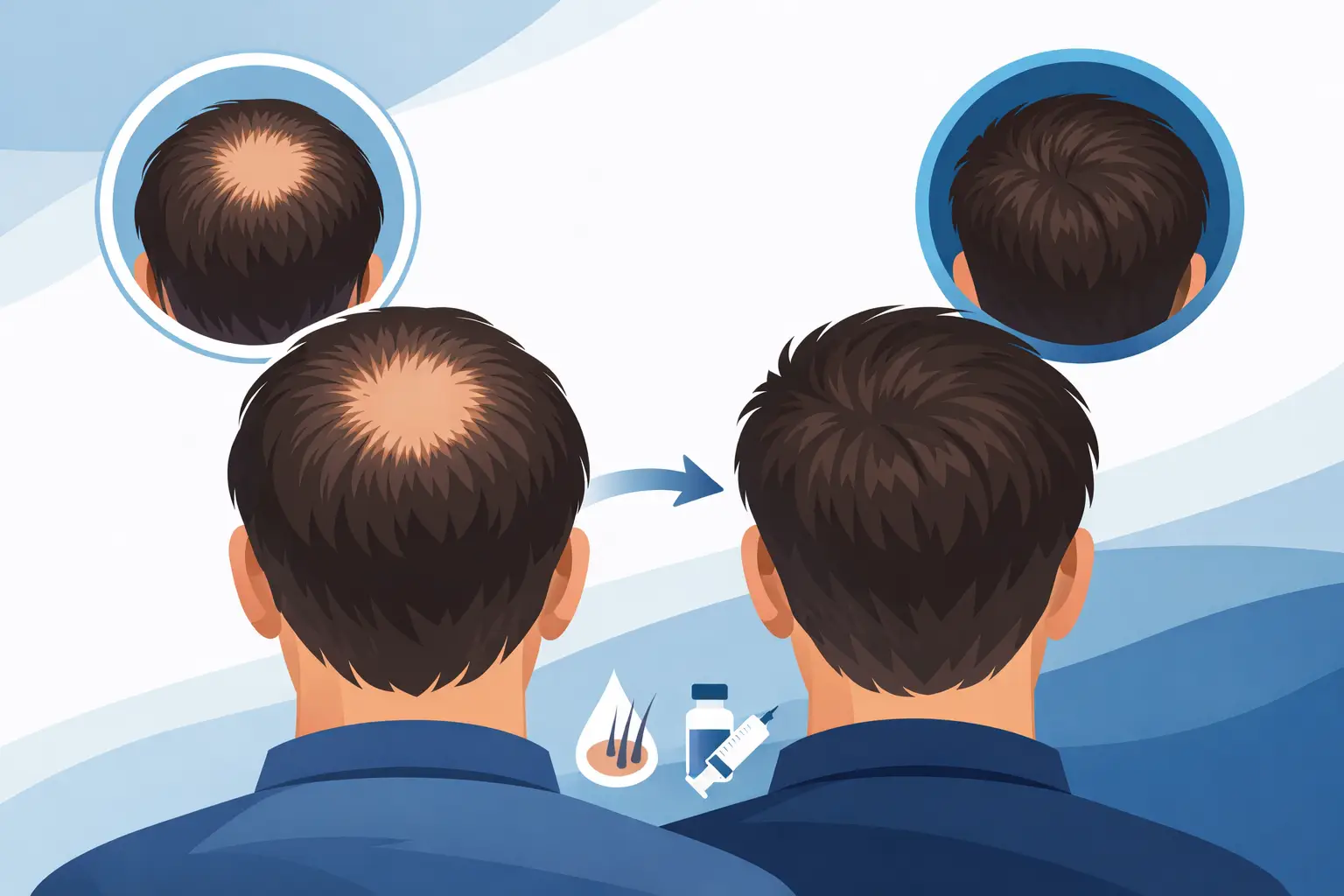
The crown is where many people first notice that hair loss has become harder to hide. A little extra scalp showing under bright bathroom lights can turn into a widening thin spot that changes how you style your hair, how often you check mirrors, and how confident you feel in photos. This crown hair restoration guide is designed to help you understand what is happening, what actually works, and how to choose a treatment plan that fits your stage of hair loss.
Why crown thinning is different
Hair loss at the crown behaves differently than a receding hairline. The swirl pattern in this area means hairs naturally grow in multiple directions, so even mild thinning can look more noticeable than it is. The crown also tends to require careful planning because restoring density there is not just about filling a circle. It is about matching direction, angle, and natural distribution so the result blends with the surrounding hair.
This area can also progress slowly for years or speed up unexpectedly, especially with genetic pattern hair loss. That is why a crown that looks manageable today may look very different a year from now. Good treatment planning takes that future loss into account rather than focusing only on what you see today.
What causes crown hair loss
For most men, crown thinning is tied to androgenetic alopecia, also called male pattern hair loss. In women, genetic thinning can also affect the crown, though the pattern often appears more diffuse across the top of the scalp. Hormonal shifts, stress, nutritional issues, inflammation, and certain medical conditions can make the problem worse or mimic pattern hair loss.
That matters because not every crown problem should go straight to surgery. If active shedding is still happening, if the scalp shows signs of inflammation, or if the donor area is limited, the right first step may be medical treatment, regenerative therapy, or a combination approach. A proper scalp evaluation helps separate temporary shedding from progressive miniaturization.
Crown hair restoration guide: when to treat and when to wait
The best timing depends on your age, the speed of loss, donor hair availability, and your long-term goals. If the crown is just starting to thin, early intervention often gives you more options. Non-surgical treatment may slow progression and improve thickness before the area becomes significantly bare.
If the crown has already lost substantial density, a transplant may be appropriate, but timing still matters. Younger patients with rapidly changing loss patterns may need a more conservative plan so they do not use too much donor hair too early. Patients with stable loss and strong donor supply are often better candidates for a denser, more definitive restoration strategy.
This is one of the biggest trade-offs in crown restoration. Aggressive density can look great, but donor hair is finite. A thoughtful plan protects your long-term appearance, not just the next six months.
Non-surgical options for crown thinning
Many patients are surprised to learn that crown hair often responds better to non-surgical treatment than they expected, especially in the early and moderate stages. If follicles are still alive but miniaturized, they may be strengthened before transplanting becomes necessary.
Medications can help reduce ongoing pattern hair loss and preserve surrounding native hair. Low-level laser therapy may support hair quality in some patients. Regenerative hair loss injections can be used to encourage healthier growth in thinning areas. Targeted supplements may also play a role when nutritional support is appropriate, though they work best as part of a broader medical plan rather than as a stand-alone fix.
The key is setting realistic expectations. Non-surgical treatments can slow loss, improve caliber, and sometimes increase visible density. They usually do not recreate the kind of fullness possible with transplantation when the crown is already significantly bald.
When FUE makes sense for the crown
FUE hair transplantation is often a strong option for crown restoration because it allows precise placement of individual follicular units into a complex growth pattern. This matters in the crown more than many patients realize. If grafts are placed at the wrong angle or in the wrong direction, the result can look unnatural even if the grafts grow well.
With FUE, follicles are harvested one by one from the donor area, usually the back and sides of the scalp where hair is genetically more resistant to pattern loss. Those grafts are then strategically placed into the crown to create natural-looking coverage. In experienced hands, this approach can restore a softer transition, improve scalp concealment, and rebuild a more balanced appearance.
Not every crown transplant should aim for maximum density in one session. Because the crown can be a large surface area, surgeons often prioritize natural coverage and visual impact rather than packing every available graft into the center. Hair direction, hair caliber, contrast between hair and scalp, and styling habits all affect how much density you may actually need.
The importance of donor management
One of the most overlooked parts of any crown hair restoration guide is donor planning. The donor area is your reserve. Once grafts are moved, they cannot be used again from the same spot. That makes allocation critical.
If you also have frontal thinning or a receding hairline, the decision becomes even more important. Many patients care most about the hairline because it frames the face, while the crown matters more in overhead views and from behind. In some cases, the smartest plan is to stabilize the crown medically and reserve grafts for the front. In others, a combined approach is reasonable.
This is where personalized treatment planning matters more than generic advice online. The best result is not always the biggest procedure. It is the one that balances present concerns with future hair loss patterns.
What to expect from a crown transplant timeline
Crown restoration requires patience. Transplanted grafts usually shed before new growth begins, and the crown often matures a bit more slowly than the hairline. Early growth may appear around three to four months, with continued improvement over the following months. Full cosmetic results can take 12 to 18 months, depending on the patient and the extent of the procedure.
That slower timeline does not mean the procedure failed. It means the growth cycle in the crown area tends to reward patience. Patients who understand this upfront usually feel more comfortable during the process.
How to know if you are a good candidate
The strongest candidates for crown restoration generally have stable or manageable hair loss, healthy donor density, realistic expectations, and a willingness to protect existing hair after treatment. Good candidates also understand that a transplant redistributes hair rather than creating new donor supply.
You may need a different plan if your hair loss is diffuse, your donor area is weak, or your scalp condition suggests an active medical issue. Women with crown thinning, in particular, benefit from careful diagnosis because diffuse loss patterns can affect both the recipient and donor zones.
A consultation should evaluate more than the thin spot itself. It should look at scalp health, family history, age, progression, donor strength, hair characteristics, and whether non-surgical treatment should be part of the plan.
Choosing the right provider for crown restoration
Crown work is technique-sensitive. This is not an area where graft numbers alone tell the story. You want a provider who understands how to design for natural swirl patterns, manage graft distribution, and think long term about donor reserves.
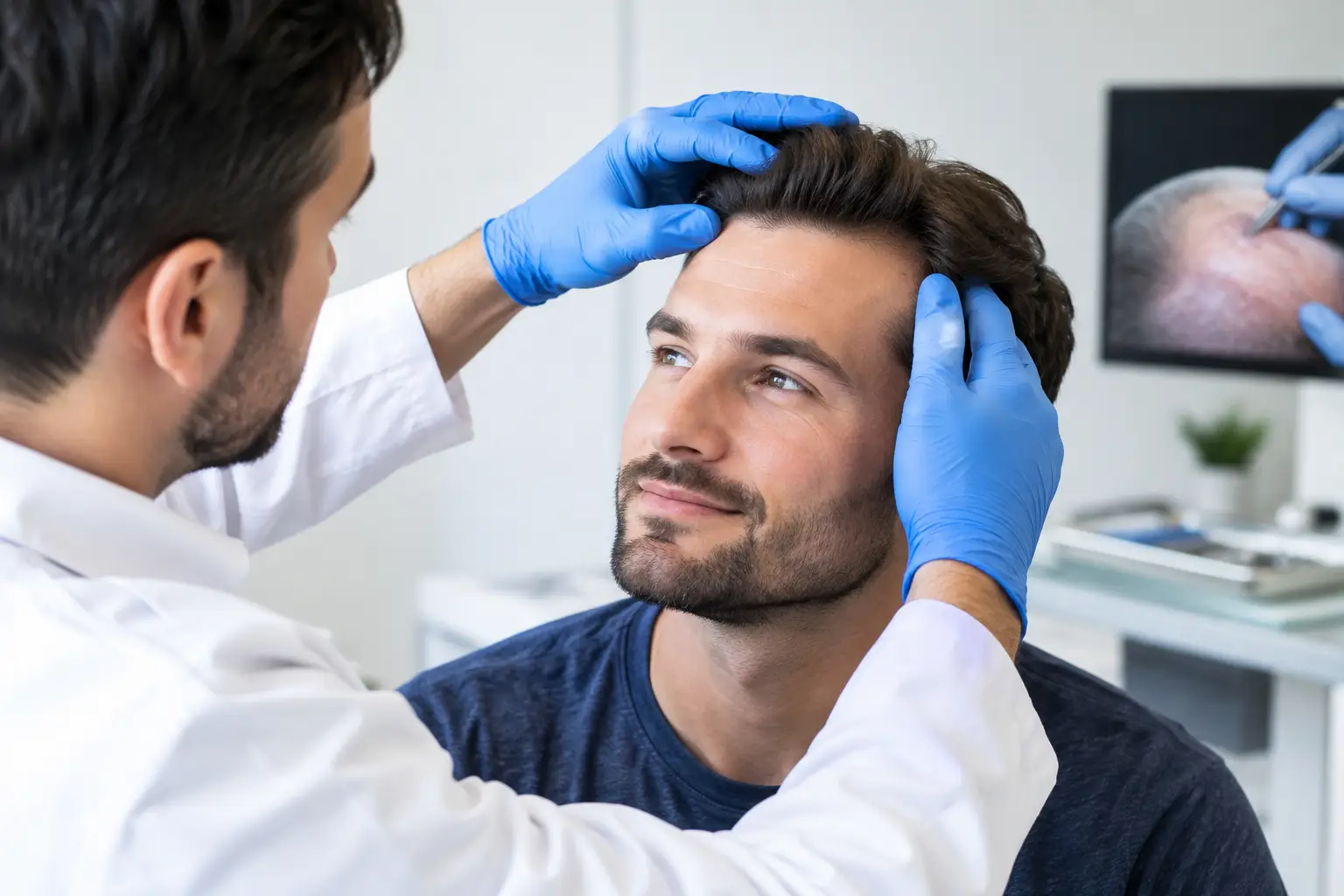
Ask how the practice approaches crown-specific planning. Ask whether physician oversight is directly involved in diagnosis and strategy. Ask how they decide between treatment combinations instead of pushing every patient toward the same solution. A comprehensive hair restoration center should be able to discuss FUE, medical therapy, regenerative options, and maintenance as part of one coordinated plan.
For patients in Texas comparing options, Austin Hair Clinic is one example of a practice that combines advanced FUE technology with physician-led planning and non-surgical therapies, which can be especially valuable when crown loss is still evolving.
Crown hair restoration guide: common questions patients ask
One of the first questions is whether crown transplants look natural. They can, but only when the angle and pattern are carefully designed. The crown is less forgiving than many people think.
Another common question is whether medications are still needed after a transplant. Often, yes. A transplant can restore lost hair, but it does not stop future thinning in your existing native hair. Maintenance helps protect the overall result.
Patients also ask whether one procedure is enough. Sometimes it is. Sometimes the crown needs staged treatment, especially when the area is large or long-term donor planning is a concern. That answer depends on your goals and your available donor supply.
If you are looking at your crown and wondering whether it is too early or too late to do something, that usually means it is the right time to get a professional assessment. The best plans start before frustration turns into regret, and the right next step is often clearer than you expect once you see the full picture.