
Am I Losing Hair Permanently? Signs to Know
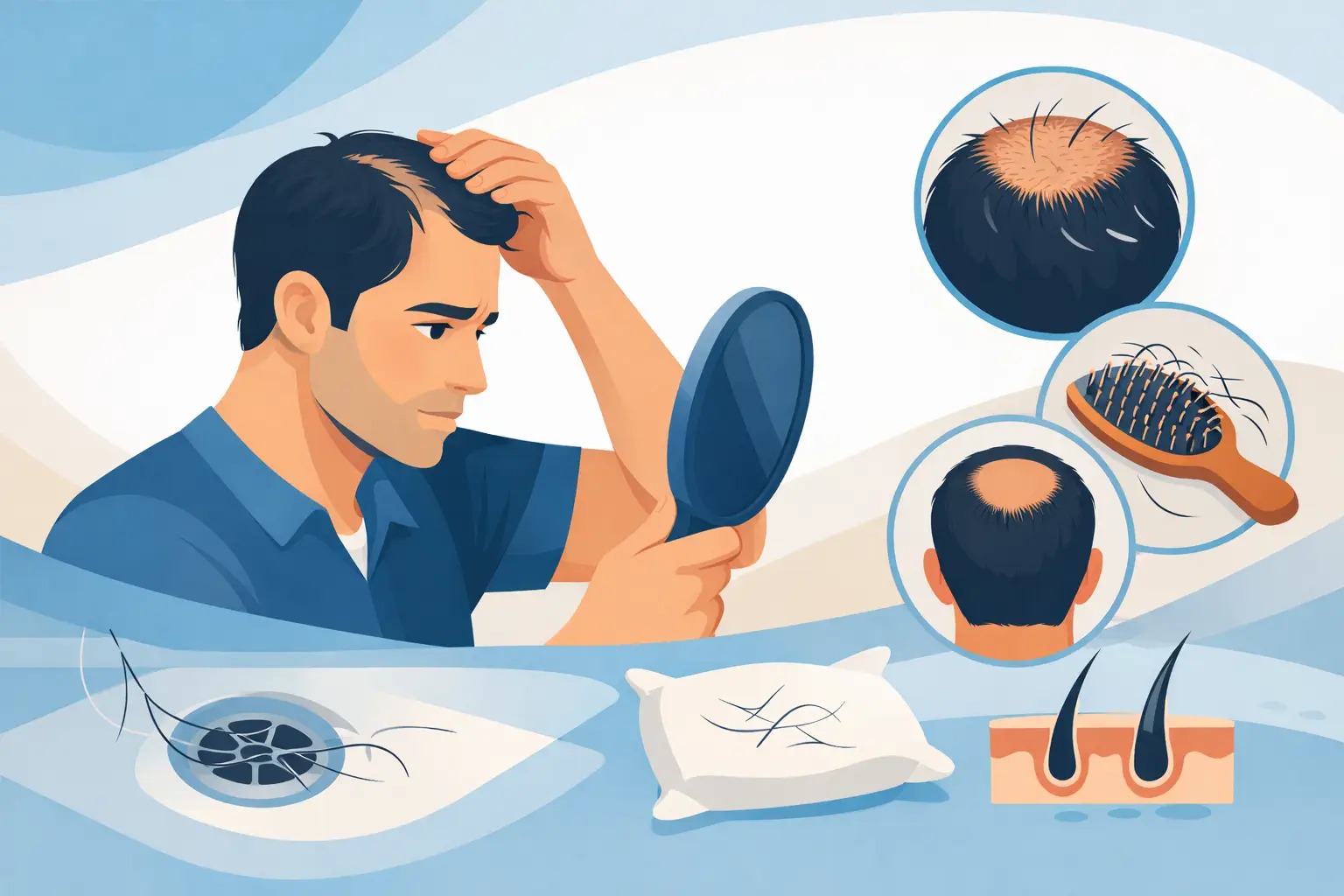
You notice more hair in the shower drain, a little more scalp showing under bright bathroom light, or a hairline that looks different in photos than it did a year ago. The question that follows is usually immediate and personal: am I losing hair permanently, or is this something that can recover on its own?
That question matters because not all hair loss means the same thing. Some shedding is temporary and reversible. Some thinning is progressive and needs treatment early if you want the best chance of preserving density. The hard part is that both can start subtly, and waiting too long often makes people wish they had gotten answers sooner.
Am I losing hair permanently or is it temporary?
The biggest difference comes down to what is happening inside the follicle. Temporary hair loss usually means the follicle is still alive and capable of producing healthy hair again once the trigger is addressed. Permanent hair loss usually means the follicle is shrinking over time, becoming less productive, or in some cases becoming scarred and unable to regrow hair normally.
Temporary shedding often appears suddenly. You may notice handfuls of hair after stress, illness, rapid weight loss, hormonal shifts, or starting and stopping certain medications. This type of shedding can feel dramatic, but the follicles are often still viable.
Permanent hair loss is more likely to be gradual. Hair may become finer before it truly disappears. A part may widen over months or years. The temples may recede slowly. Crown density may look weaker in overhead lighting before it becomes obvious from the front. That gradual miniaturization pattern is common in androgenetic alopecia, also called male or female pattern hair loss.
Common signs your hair loss may be permanent
If your hair is changing in a predictable pattern rather than shedding evenly all over, that is one of the strongest clues. Men often see recession at the temples or thinning at the crown. Women more often notice diffuse thinning through the top and a wider part while the frontal hairline may stay relatively intact.
Another sign is miniaturization. This means the strands themselves are getting thinner, softer, and shorter over time. If you compare recent photos to older ones and your hairline looks less dense or your scalp shows through more clearly in the same areas, that points more toward ongoing pattern loss than a temporary shedding episode.
Family history also matters. If close relatives experienced progressive thinning, especially at a similar age, your odds of permanent pattern hair loss are higher. Genetics are not the whole story, but they are a major part of it.
Duration matters too. If shedding or thinning has continued for more than six to twelve months without signs of recovery, it deserves a closer look. Temporary hair loss often improves once the underlying trigger is corrected. Permanent hair loss tends to keep progressing without intervention.
Signs your hair loss may be temporary
Temporary hair loss often has a clear trigger. A stressful event, surgery, childbirth, severe illness, a high fever, nutritional deficiency, or a major hormonal shift can push more hairs into the shedding phase at once. This is often called telogen effluvium.
In those cases, hair loss usually feels more diffuse than patterned. Instead of seeing only the temples or crown worsen, you may feel like your ponytail is thinner or your hair has lost volume all over. The scalp may still look relatively healthy, and short regrowth may begin to appear once your system stabilizes.
Some temporary hair loss is also tied to scalp inflammation or lifestyle factors. Harsh styling, tight hairstyles, poor nutrition, and untreated scalp conditions can all contribute. The key is that the follicle may still recover if the cause is identified and treated early.
Why guessing can lead you in the wrong direction
This is where many people get stuck. Pattern hair loss can start with extra shedding, so it gets mistaken for something temporary. On the other hand, temporary shedding can be intense enough to make people assume they are going bald permanently.
The issue is not just labeling it correctly. The issue is timing. If you have early-stage permanent thinning, the best treatments usually work better at slowing progression and strengthening existing follicles than they do at restoring long-lost density. Waiting a year to “see what happens” can limit your options.
At the same time, jumping straight to a transplant without understanding whether the hair loss is active, stable, hormonal, inflammatory, or nutritionally driven is not the right move either. Good treatment starts with an accurate diagnosis.
What causes permanent hair loss?
The most common cause is androgenetic alopecia. In men, this often shows up as a receding hairline, crown thinning, or both. In women, it usually appears as reduced density across the top of the scalp. The follicles become increasingly sensitive to hormones over time, causing them to shrink and produce finer hairs until growth becomes very limited.
Other forms of permanent loss can involve scarring. These conditions are less common, but they are more urgent because inflammation can damage follicles permanently. If hair loss is accompanied by redness, burning, scaling, tenderness, or patchy areas that look smooth and scar-like, you should not delay a professional evaluation.
Traction alopecia can also become permanent if tension from extensions, braids, or tight styling continues for too long. Early traction damage may improve. Long-term damage may not.
What can be done if I am losing hair permanently?
If the answer is yes, that does not mean you are out of options. It means your treatment plan should be strategic.
For early or moderate thinning, non-surgical treatment may help preserve and improve existing hair. Depending on the cause and your goals, that can include hair loss medications, regenerative hair loss injections, low-level laser therapy, and personalized treatment planning based on scalp and follicle evaluation. These options are often used to slow progression, support thicker growth, and protect native hair.
For people with more advanced hairline recession or areas where follicles are no longer producing meaningful growth, hair transplantation may be the most effective way to restore density. FUE is especially appealing to many patients because it is minimally invasive, precise, and capable of producing natural-looking results when designed correctly. The right candidate, though, is not just someone with visible hair loss. It is someone with a stable enough pattern, healthy donor supply, and a plan for protecting existing hair moving forward.
That is why a medical evaluation matters. Treatment should fit the biology of your hair loss, not just the area you want fixed.
When to get evaluated for “am I losing hair permanently”
If you are asking the question repeatedly, that alone is a good reason to schedule an evaluation. Hair loss tends to feel smaller from day to day than it does over six months of photos. By the time it becomes obvious, you may already have significant miniaturization.
You should be especially proactive if your thinning has lasted more than a few months, your hairline is changing, your crown looks weaker, your part is widening, or you have a strong family history. Scalp symptoms like itching, burning, pain, or flaking also deserve attention, especially if they are paired with hair loss.
A proper consultation can help determine whether you are dealing with temporary shedding, permanent pattern loss, a mixed picture, or an inflammatory condition that needs prompt treatment. At a specialized practice like Austin Hair Clinic, that evaluation is about more than deciding whether you need a procedure. It is about identifying the cause, staging the loss, and building a plan that fits your goals, timeline, and level of hair loss.
The emotional side is real – and valid
People often minimize their own concern by saying it is “just hair.” Usually, it is not just hair. It is age, self-image, confidence, identity, and how you feel when you walk into work, go on a date, or look at yourself from angles you used to ignore.
That does not mean every person needs treatment. But it does mean your concern deserves a real answer instead of guesswork, internet myths, or waiting until the loss becomes harder to manage. Some people need reassurance that their shedding is likely temporary. Others need a plan before the thinning progresses further. Both are worth taking seriously.
If you are wondering whether your hair loss is permanent, the most helpful next step is not panic and it is not denial. It is clarity. The sooner you understand what your follicles are doing, the sooner you can make a confident decision about what comes next.