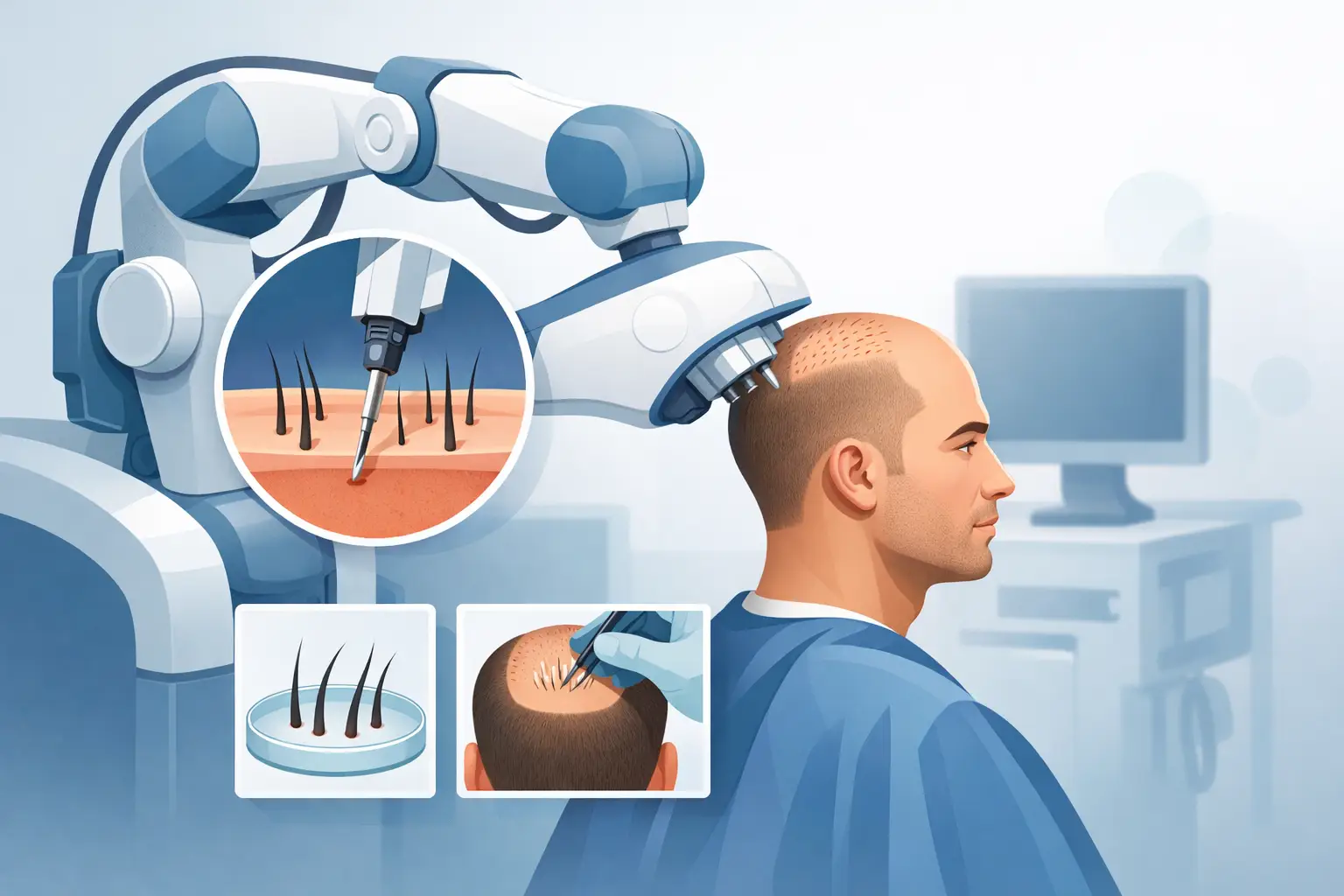
FUE Hair Transplant Austin: What to Expect
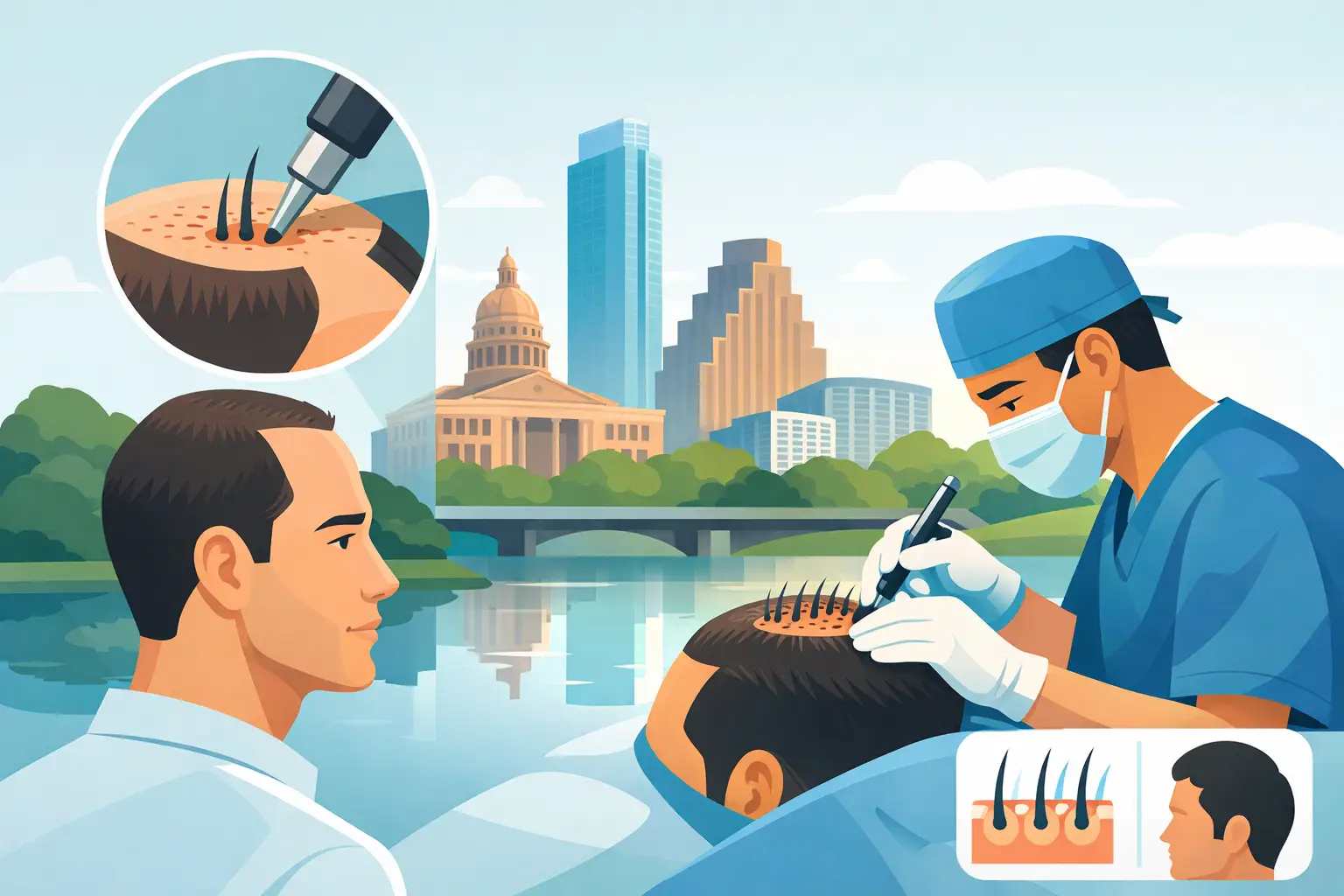
If you are researching fue hair transplant austin, you are probably not looking for vague promises. You want to know whether it works, whether it will look natural, how much downtime is involved, and whether you are a good candidate. Those are the right questions, because a hair transplant is not just about moving follicles. It is about restoring a hairline, improving density, and helping you feel more like yourself again.
FUE, or Follicular Unit Extraction, has become one of the most requested hair restoration procedures for a reason. It is minimally invasive, precise, and designed to create natural-looking results without the linear scar associated with older strip methods. For many men and women dealing with thinning hair, a receding hairline, or patchy facial hair, it offers a practical path forward.
Why FUE hair transplant Austin patients often prefer
FUE works by removing individual follicular units from a donor area, usually the back or sides of the scalp, and placing them where hair is thinning or absent. Because the grafts are extracted one by one, the procedure allows for careful placement and detailed design. That matters when the goal is not simply more hair, but a result that fits your age, facial features, and hair pattern.
Patients often prefer FUE because recovery is generally manageable and the procedure is highly customizable. It can be used to rebuild a hairline, fill in the crown, increase density in targeted areas, or restore eyebrows and beards. The flexibility is a major advantage, especially for people who want a tailored plan instead of a one-size-fits-all solution.
There are trade-offs, of course. FUE is technique-sensitive, and results depend heavily on donor supply, surgical planning, and graft handling. It is also not the right answer for every kind of hair loss. If shedding is still rapidly progressing, or if the donor area is weak, a broader treatment plan may be needed before surgery makes sense.
Who is a good candidate for FUE?
The best candidates usually have stable hair loss, healthy donor hair, and realistic expectations. Men with receding hairlines or thinning at the crown often do well. Women with pattern thinning may also be good candidates, especially when there is enough donor density and the hair loss pattern has been properly evaluated.
A consultation should look beyond the obvious thinning area. Hair restoration is long-term planning. That means evaluating scalp health, family history, the likely progression of hair loss, and whether non-surgical treatments should be part of the plan. In some cases, medications, regenerative hair loss injections, or low-level laser therapy may help protect existing hair and improve the overall outcome.
This is where physician oversight matters. A well-designed transplant should account for how your hair may change in the coming years, not just how it looks on procedure day.
What happens during an FUE procedure?
The process starts with design. Your provider maps the hairline or treatment area with attention to density, direction, and natural growth patterns. This step is easy to underestimate, but it is one of the biggest factors in whether a result looks convincing.
On procedure day, the donor area is trimmed and numbed with local anesthesia. Individual follicles are then extracted and prepared for implantation. Tiny recipient sites are created in the thinning area, and the grafts are placed with care to match the angle and distribution of surrounding hair.
Depending on the number of grafts, the procedure can take several hours. Some patients need a smaller session focused on a hairline. Others require a more extensive treatment to address multiple areas. In certain cases, advanced options such as robotic-assisted FUE may improve consistency and efficiency, but the technology is only as good as the treatment plan behind it.
Recovery and healing after FUE
One reason many patients choose FUE is that the healing process is usually straightforward. Most people return to non-strenuous work fairly quickly, though there will be visible signs of treatment at first. Small scabs in the recipient area and redness in both the donor and transplant sites are normal in the early phase.
The transplanted hairs typically shed after the procedure. That can be unsettling if you are not expecting it, but it is a normal part of the cycle. The follicles remain in place and gradually begin producing new hair in the months that follow.
Early growth often starts around three to four months, with more noticeable improvement developing after that. Cosmetic change continues over time, and fuller maturation may take close to a year, sometimes longer depending on the area treated. Facial hair and crown work can have slightly different timelines than frontal hairline restoration.
Recovery instructions matter. Protecting the grafts, following washing guidance, and avoiding unnecessary friction or strain in the early days can make a real difference.
Natural-looking results depend on more than graft count
A lot of marketing around hair transplantation focuses on numbers. Graft count matters, but it is not the whole story. Natural-looking outcomes depend on hairline design, graft placement, donor management, and the provider’s ability to create density where it counts most.
For example, building an aggressively low hairline on someone with ongoing hair loss may look appealing in the short term but create problems later. A more conservative, age-appropriate design often holds up better over time and looks more believable. The same is true for density. Strategic placement can create the appearance of fullness without overharvesting the donor area.
This is why good consultations are educational, not transactional. You should come away understanding what is achievable, what is not, and whether surgery should be combined with other therapies to support the best result.
Comparing FUE with other hair loss options
Not every patient who asks about a transplant needs one right away. Some are in an earlier stage of thinning and may benefit from medical therapy first. Others may eventually combine surgery with supportive treatments to preserve surrounding hair.
FUT, the older strip method, can still be useful in select cases, especially when a larger number of grafts is needed and scar style is less of a concern. But many patients prefer FUE because it avoids a linear scar and offers more flexibility with shorter hairstyles.
Non-surgical options also play an important role. Medications can help slow progression. Regenerative therapies may support scalp health and hair quality. Laser treatments can be part of maintenance. For some people, the right answer is not either surgery or non-surgical treatment. It is a combination tailored to the pattern and pace of loss.
Choosing a clinic for fue hair transplant austin
If you are comparing providers, look beyond price. Hair transplantation is a medical and aesthetic procedure, which means experience, planning, and follow-through all matter. Ask who designs the hairline, who performs the extractions, who places the grafts, and how your candidacy is evaluated.
You should also ask to see before-and-after results that reflect cases similar to yours. A strong clinic should be able to explain not just the procedure, but the reasoning behind the treatment plan. That includes whether surgery is appropriate now, how many grafts may be needed, and what supportive therapies could help protect your investment.
The best patient experience also includes clarity. You should understand downtime, expected milestones, costs, and financing options before moving forward. Confidence comes from knowing what to expect, not from being sold a quick fix.
For patients seeking a comprehensive approach, Austin Hair Clinic offers consultations that evaluate both surgical and non-surgical options, with treatment planning centered on natural-looking results and long-term hair restoration.
Questions worth asking before you book
A strong consultation should answer practical concerns without glossing over limitations. Ask whether your donor area is strong enough, whether your loss appears stable, and what kind of result is realistic in one session. Ask how future thinning might affect your long-term plan.
It also helps to discuss lifestyle. If you wear your hair very short, donor management becomes even more important. If you are early in the hair loss process, preserving native hair may be just as important as adding transplanted grafts. If your concern is beard or eyebrow density, the design priorities will be different than for scalp restoration.
The right plan should feel personalized, not generic. Hair loss may be common, but your pattern, goals, and timeline are specific to you.
A well-done FUE procedure can do more than add hair. It can restore structure to a receding hairline, fill in areas that have made styling frustrating, and bring back a sense of control that hair loss often takes away. The next step is not rushing into surgery. It is getting a clear, expert assessment so you can make a confident decision for the version of yourself you want to see in the mirror.